Baked Moong Dal Chakli: Untested Diwali Recipe Trial
Baked moong dal chakli could bring a savoury change to a Diwali snack plate, but this version remains an untested kitchen trial. It combines soft-cooked yellow moong dal with rice flour, spices and a small amount of oil. The aim is a pressable spiral that becomes crisp in the oven. No one has yet verified this exact formula, so the quantities and oven setting below are starting points, not proven results.
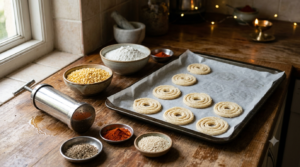
Illustrative setup for an untested baked moong dal chakli recipe, showing the proposed ingredients and spiral shaping process.
That distinction matters. A fried moong dal chakli method does not automatically work after you move it to the oven. The shape, moisture and texture can all change. This guide explains what to try, what to watch and what to record before calling it a dependable festive recipe.
Baked Moong Dal Chakli at a Glance
- Recipe status: Proposed small-batch experiment; not kitchen-tested.
- Main ingredients: Split yellow moong dal, rice flour, optional besan, oil and spices.
- Method: Cook and mash the dal, knead a pressable dough, shape spirals and oven-bake.
- Oven plan: Start with a preheated 180°C conventional oven, then assess and adjust; this is not a verified setting for this dough.
- Time, yield and shelf life: Not established. Judge the result by careful checks rather than a promised number.
- Priority: Try a modest batch before preparing snacks for guests or packing festive gift boxes.
Traditional chakli and murukku use varied flour blends. This version uses cooked moong, making moisture control crucial during baking.
Why Try Moong Dal in Oven-Baked Chakli?
Cooked moong dal contributes a smooth, soft base that may help bind the dry ingredients. Rice flour provides the main framework for the spiral. Oil may improve the bite, while sesame, cumin and ajwain add the familiar savoury notes.
These are formulation ideas, not findings from this recipe. The dal could also make chewy spirals if it holds too much water. Test that question before describing the texture as proven.
Baking changes another part of the process. Hot oil surrounds a fried chakli, whereas oven heat reaches an exposed tray more unevenly. As a result, thin outer ridges could colour before the inner coil dries. A compact, even spiral should make that problem easier to spot.
Compare the baked beetroot murukku trial for another pressed, oven-based savoury.
Baked Moong Dal Chakli Ingredients for One Small Trial
The following amounts define a test formula, not a demonstrated recipe. Keep a little extra rice flour and water nearby because cooked dal varies in moisture. Avoid doubling the mixture until one small tray gives useful observations.
| Ingredient | Proposed starting amount | Role in the test |
|---|---|---|
| Split yellow moong dal, dry | 1/4 cup | Cooked binder and flavour |
| Rice flour | 3/4 cup | Main body of the spiral |
| Besan (chickpea flour) | 1 tablespoon, optional | Test for dough handling |
| Neutral cooking oil | 1 tablespoon | Possible texture aid |
| White sesame seeds | 1 teaspoon | Flavour and texture |
| Cumin seeds | 1/2 teaspoon | Earthy seasoning |
| Ajwain (carom seeds) | 1/4 teaspoon | Sharp savoury note |
| Red chilli powder | 1/4 teaspoon, or to taste | Heat |
| Hing (asafoetida) | A small pinch, optional | Aromatic note |
| Salt | Start with 1/4 teaspoon | Seasoning; adjust in later trials |
| Water | As needed, added sparingly | Only if the dough cannot bind |
Use fresh, fine rice flour rather than coarse rice meal for the first attempt. Whole seeds can catch in a narrow chakli plate, so a wider star opening may be easier. Choose a clean press, a flat baking tray and baking paper suitable for your oven.
How to Test Baked Moong Dal Chakli Step by Step
This baked moong dal chakli sequence is a proposal, not a report from a completed kitchen test. Begin with a small batch, work carefully around hot equipment and change only one major variable at a time. No step promises a precise cooking time or a particular number of chaklis.
- Rinse and cook the dal. Wash the split yellow moong dal, then simmer it in clean water until fully soft. Drain any free liquid. Do not leave cooked dal standing for long at room temperature.
- Make a smooth mash. Mash the warm dal thoroughly. If watery liquid pools around it, drain again. Coarse pieces may obstruct the chakli press, so check the texture before adding flour.
- Combine the dry ingredients. Mix rice flour, optional besan, sesame, cumin, ajwain, chilli, hing and salt. Rub in the oil. This spreads the fat before the wet dal changes the dough.
- Bring the dough together. Mix in the moong mash in portions. Knead just enough to form a cohesive dough. Add water only in tiny amounts if dry cracks prevent it from binding.
- Check the press. Fit a medium star plate and test a short length of dough. It should leave the opening without excessive force or sticky slumping. Adjust with a small sprinkle of rice flour or a few drops of water as needed.
Shape, Bake and Assess the First Trial Tray
- Shape a test tray. Press small spirals with a modest gap between coils. Keep the thickness similar across pieces and join loose ends gently. Place them on a lined tray without crowding.
- Run the first oven trial. Preheat a conventional oven to 180°C as an experimental starting point. Bake on a middle rack and begin inspecting early. Oven type, spiral size and dough moisture may change the result greatly.
- Assess rather than guess. Watch for even drying and firm ridges. Turn the tray if your oven browns one side faster. Extend baking in short checks when the centre remains soft, while avoiding scorched edges.
- Cool and break-test. Transfer carefully to a rack and allow the spirals to cool. Break one open and examine the thickest part. If it remains gummy, the formula or drying step needs further work.
What Dough Texture Does Baked Moong Dal Chakli Need?
A useful dough should pass through the chakli press without tearing into crumbs. It should also hold its ridges after shaping, rather than spreading flat. The precise moisture point remains unknown for this mixture because the recipe has not undergone a practical trial.
In baked moong dal chakli, too little moisture can cause rough, broken spirals. However, adding water freely may leave a wet centre after baking. Work in small corrections. A pinch of rice flour can be more informative than a large addition, while a few drops of water can rescue dry cracks without flooding the dough.
Try pressing one short strand before shaping the entire batch. If the dough resists strongly, stop rather than forcing the press. A damaged press and uneven strands will tell you little about how the oven method performs.
How to Judge Baked Moong Dal Chakli Crispness Without a Fixed Time
For baked moong dal chakli, a fixed minute count would give false confidence. Oven heat varies, and the thickest coil may dry more slowly than its edges. Instead, use colour, touch after safe cooling and a break-test together. None of those checks alone proves safe long-term storage.
Look first for a surface that no longer appears damp or glossy. Check whether the ridges hold their shape when a cooled piece breaks. A gummy or paste-like centre suggests more work is needed. Deep colour at the outside, however, does not guarantee a fully dry core.
A small, separate test spiral helps. The baked methi mathri trial also uses a cooled sample to assess oven texture.
Remove the spiral with safe tools, cool it, then break it open. If the centre stays doughy while the outside browns too much, try a thinner spiral or revise the oven setting for the next trial. Do not solve every issue by adding more time.
Three Variables to Test in Baked Moong Dal Chakli
For baked moong dal chakli, the biggest unknown is how much water the dal carries into the dough. Once that changes, it becomes hard to compare batches. Record the dal’s drained texture and the amount of any added water before adjusting other ingredients.
Test One: Dal Moisture
Use the same measured dry dal and rice flour in two small portions. Mash one portion after thorough draining, then compare it with a slightly softer mash. Avoid changing oil and spice levels at the same time. Note which dough presses cleanly and which spiral dries more evenly.
Test Two: Spiral Thickness
Press a few compact, narrow spirals alongside slightly thicker ones from the same dough. Keep the tray position as consistent as possible. Then compare broken cross-sections after cooling. If thicker coils stay soft, shape may matter more than extra flour.
Test Three: Oil Level
Once the first dough presses cleanly, compare the proposed oil amount with a modestly adjusted portion. Do not assume more oil always means more crunch. Record whether the pieces hold their ridges, brown evenly and feel oily or dry after cooling.
Baked Versus Fried Moong Dal Chakli
Baking and frying differ mainly in how they transfer heat. A fried chakli enters hot oil, while a baked one rests on a tray in moving oven air. That means a straight swap from frying instructions may not give matching colour or texture. For a contrasting fried snack made with a press, see the pepper karasev trial.
| Question | Traditional fried approach | Proposed baked trial |
|---|---|---|
| Cooking medium | Hot cooking oil | Oven heat and tray |
| Main handling concern | Oil temperature and safe frying | Even drying through the coil |
| Texture expectation | Familiar crisp fried finish | Unknown until tested |
| Oil used | Oil for deep-frying | Measured oil within dough |
| Time or yield | Depends on chosen recipe | No validated figure |
Avoid claiming that the baked version is low-calorie or healthier without a reliable nutrition calculation and serving size.
Why Baked Moong Dal Chakli May Fail on the First Tray
A failed baked moong dal chakli tray does not mean the idea is unusable. It means the trial has found a variable worth changing. Keep the next test small and diagnose the symptom before adding extra ingredients.
The Dough Breaks While Pressing
The mixture may be too dry, grainy or stiff. Add a tiny amount of water, knead briefly and try one short strand. If the press plate has narrow gaps, switch to a wider one. Avoid turning the whole bowl into a soft batter.
The Spirals Spread or Lose Their Shape
The dal mash may carry too much water, or the dough may feel too loose. Try adding a little rice flour and test a single spiral. Also check whether the baking paper lies flat, since a tilted surface can distort the shape.
The Outside Browns but the Centre Stays Soft
The spirals may be too thick for the oven setting or too moist inside. Make a thinner shape in the next trial. If the current batch has a gummy centre, do not call it a crisp, shelf-stable snack merely because its surface looks golden.
The Finished Chakli Is Hard Rather Than Crisp
Firmness and crispness are different results. Excess flour, thick coils or uneven baking could contribute to a hard bite. Record the break-test rather than making another large batch immediately. A small oil adjustment or different coil size may be worth testing next.
Baked Moong Dal Chakli: Cooling and Storage Safety
No shelf life has been established for this untested baked moong dal chakli. It contains cooked dal, and the amount of moisture left after baking remains unknown. Therefore, it would be misleading to promise that an airtight jar keeps it safe for several days or weeks.
The World Health Organization’s five keys to safer food stress hygiene, thorough cooking and safe temperatures. India’s Food Safety and Standards Authority of India guidance for home kitchens also stresses clean handling and safe storage of cooked food.
Cool the test batch promptly on a clean rack. If the spirals remain moist or soft, treat them as cooked leftovers rather than pantry snacks. Refrigerate promptly in a covered food-safe container and consume soon. Refrigeration can soften the texture, but food safety comes before crunch.
The University of Minnesota Extension explains how moisture, packaging and heat affect food shelf life. Its general baked-goods guidance does not establish a safe duration for this moong dal formula. Discard any batch with mould, odd odours or clear spoilage signs; absence of those signs is not proof of safety.
Baked Moong Dal Chakli Kitchen-Test Notes for Diwali
A baked moong dal chakli trial needs notes, not just an attractive photograph. If baked moong dal chakli works, a short test log will help reproduce it. If it fails, the notes prevent another guess-heavy batch.
- Dal: Dry amount, cooking method and whether the mash was fully drained.
- Dough: Rice flour amount, water additions, press effort and visible cracks.
- Shape: Press plate used, spiral thickness and spacing between coils.
- Oven: Setting, rack position, fan mode and observations during baking.
- Cooling: Whether the pieces firmed, softened or cracked after cooling.
- Food-safety warning: Never taste raw or partly baked dough. Cooked dal does not make the added raw flours safe. Taste only after thorough baking and safe cooling.
- Tasting: Spice balance, tooth feel and the condition of the thickest centre.
- Storage: Packaging, storage temperature and any texture or spoilage changes.
Do not promise a yield or reuse another recipe’s cooking time. Repeat the trial before publishing dependable figures.
Practical Details That Often Get Missed
A coarse dal mash can clog the star plate, so smoothness matters before the tray reaches the oven. Large sesame seeds or whole spice pieces may also interrupt the pattern. Press one strand first and check the opening before filling the barrel.
Oven trays can differ in how quickly they brown the base. For that reason, record the tray material and lining. If you make a second test with a different pan, treat it as a new variable rather than proof the dough changed.
Spice choices deserve a note too. Compounded hing can contain wheat, while sesame and chickpea flour may matter for people with allergies. Check each ingredient label before serving guests. This formula should not be marketed as gluten-free or allergen-free without checking every ingredient and any cross-contact risk.
For a festive spread, serve any successful test portion separately from the main snacks. Label it as experimental when asking family members for feedback. That gives people a fair expectation and keeps an unproven recipe out of the gift-box plan.
The Sensible Next Step for This Diwali Trial
Baked moong dal chakli is a worthwhile concept to investigate, not a finished or guaranteed recipe. Start with the small formula, keep the coils even and let the break-test guide your next change. Above all, never infer shelf life from crisp appearance. Once repeated batches pass texture, handling and storage checks, the method can earn a more confident recipe description.
Frequently Asked Questions
Is baked moong dal chakli already a tested recipe?
No. The ingredient mix and oven procedure here are proposals for a first kitchen trial. They draw on familiar chakli methods, but no completed test supports this exact version. Expect to adjust the dough and document the result.
Can I use raw moong dal powder instead of cooked dal?
That would create a different formula and needs a separate trial. Dry moong flour absorbs water differently from cooked mashed dal. Do not substitute it directly and assume the same baking behaviour.
Does baked moong dal chakli need a chakli press?
A chakli press is the most practical way to create ridged spirals for this experiment. If you lack one, test small plain sticks instead. Their baking behaviour may differ, so note that the shapes are not equivalent.
What oven temperature should I try first?
The proposed starting point is 180°C in a preheated conventional oven. That setting comes from related baked chakli approaches, not a confirmed test of this dough. Watch closely and adjust to your equipment rather than trusting a fixed duration.
How long should I bake the spirals?
There is no tested cooking time for this version. The answer depends on coil thickness, dal moisture, tray and oven performance. Check early, then inspect the centre of a cooled test piece before deciding whether the trial worked.
How many chaklis will the ingredient list make?
The yield has not been measured, so giving an exact count would be misleading. Spiral size and press plate choice will change the number. Record the yield during a successful trial before adding it to a recipe card.
Can I store the baked chakli for Diwali gift boxes?
Not on the strength of this untested method. Its remaining moisture and safe shelf life have not been established. Until storage has been validated, avoid promising room-temperature keeping or preparing gift boxes days ahead.
Is this baked chakli healthier than fried chakli?
The method avoids a deep-frying bath, but that is not enough to prove a nutritional advantage. Ingredients, oil absorption in the fried comparison and serving size all affect the result. Avoid health labels without suitable nutrition analysis.
Can I prepare the dough the previous evening?
That change has not been tested. Since the dough contains cooked dal, do not leave it unrefrigerated overnight. For a first attempt, mix and shape it fresh so storage does not add another uncertain variable.