Roasted Chana Sattu Drink: Easy Savoury Recipe Guide
A roasted chana sattu drink can start with just packaged roasted gram flour and safe drinking water. Add a little lemon, roasted cumin and salt if you want a savoury version. This is a proposed home recipe, not a kitchen-tested formula, so treat every amount and the expected yield as a starting estimate.
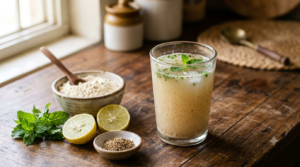
Illustrative roasted chana sattu drink with lemon, roasted cumin and ready-to-consume roasted gram flour.
The main trick is to mix the powder with a splash of water before filling the glass. That gives you more control over lumps and thickness. You can then taste and adjust without wasting a large batch.
Roasted chana sattu drink at a glance
This roasted chana sattu drink is a no-cook mixture of ready-to-consume roasted gram flour, drinking water and optional seasonings. The suggested version tastes savoury, with lemon for sharpness and roasted cumin for aroma. The measurements below have not been tested together, so the final flavour, texture and volume need a home trial.
- Main ingredient: packaged roasted chana sattu that the maker identifies as suitable for direct consumption.
- Method: make a smooth paste, add more water, then season.
- Suggested style: lightly salty and lemony; a sweet alternative appears below.
- Cooking: none for a product clearly labelled ready to consume.
- Estimated yield: roughly one small glass; not measured or confirmed.
- Testing status: proposed quantities only; no taste or yield test has been performed.
What makes chana sattu different from besan?
Chana sattu uses roasted Bengal gram, while ordinary besan is gram flour that does not necessarily undergo roasting. India’s Food Safety and Standards Authority of India (FSSAI) defines roasted Bengal gram flour, or chana sattu, separately from besan. For this uncooked drink, choose a packaged product that explicitly allows direct consumption.
The distinction matters because this method has no heating step. Therefore, do not replace the sattu with plain raw besan or an unidentified flour. You can check the FSSAI standards for chana sattu and besan if the product names confuse you.
Also check the ingredient list. Some packets labelled sattu contain other grains, so the taste and suitability may differ. If the instructions require cooking, follow the packet instead of this no-cook method. For a cooked use of roasted gram flour, see Bhimas Cook’s sattu paratha recipe.
Roasted chana sattu drink ingredients: untested starting amounts
These are provisional recipe-development quantities, not a tested ratio. The measurements suggest a single small serving, but no actual volume or portion count has been verified. Start here, taste cautiously and note what you change.
| Ingredient | Proposed amount | Purpose |
|---|---|---|
| Ready-to-consume roasted chana sattu | 2 level tablespoons | Roasted gram base |
| Safe drinking water | 225 ml, divided | Mixes and thins |
| Fresh lemon juice | 1 teaspoon to start | Adds tang |
| Roasted cumin powder | 1/8 teaspoon | Adds aroma |
| Regular or black salt | A very small pinch | Optional seasoning |
| Washed mint leaves | 2 or 3, optional | Fresh garnish |
The 225 ml water and two-tablespoon sattu pairing is only a trial suggestion. No one has checked whether it gives the ideal thickness. Leave out the salt altogether if you prefer, since lemon and cumin can carry much of the flavour.
How to make a roasted chana sattu drink
To make the proposed roasted chana sattu drink, first whisk the flour with a little drinking water. Then add the remaining water slowly and season the mixture. You do not need to cook it if your packaged roasted sattu is ready to consume. However, this exact method has not undergone a kitchen test.
- Check the packet. Confirm that the flour contains roasted chana and that the manufacturer permits direct consumption. Do not use an expired or damaged product.
- Start a paste. Put the suggested two tablespoons of sattu into a clean cup. Add a small splash of the measured water, then stir until the dry pockets disappear.
- Thin it gradually. Add more water in stages while stirring. Stop early if the texture already looks thin enough for you.
- Season gently. Add the proposed lemon juice and cumin. Stir in only a tiny pinch of salt if you want it.
- Taste and adjust. If it feels too thick, add water. If the lemon dominates, add a little more plain water before changing anything else.
- Pour and serve. Stir once more and pour into a clean glass. Add washed mint if you like its flavour.
This sequence is a sensible starting method rather than a promise of perfect results. Since sattu powder remains suspended in the water, a little settling may occur. Give the glass another stir when needed.
Why make a paste for a roasted chana sattu drink?
Adding a small amount of water lets you break up dry clumps before the drink becomes too thin. If you tip the flour straight into a full glass, the outside of each clump may become wet while powder stays inside. That can make the mixture harder to stir evenly.
The paste method also gives you an early texture check. If your packet contains a coarser grind, you may notice more graininess. That is a reason to adjust the water or stirring method, not to claim that a particular brand will dissolve completely.
Adjusting flavour without losing the roasted-gram taste
A good first trial changes one ingredient at a time, so you can tell what helped. The roasted flour is the base. Lemon, cumin and salt should remain optional accents rather than overpower it.
| If the drink seems… | Try this next |
|---|---|
| Too thick | Add a little drinking water and stir. |
| Too thin | Mix extra sattu with water separately, then combine. |
| Too sour | Dilute slightly; reduce lemon next time. |
| Too salty | Dilute; use less salt on the next trial. |
| Too plain | Try a small pinch of roasted cumin or a little lemon. |
| Lumpy | Press the lumps against the cup with a spoon. |
For a repeatable recipe, write down any adjustment you make. Otherwise, a pleasant first attempt can be difficult to recreate.
A simple sweet version to try instead
You can turn the same roasted chana sattu drink base towards a sweet flavour. Skip the salt and cumin first, then stir in a little sugar or finely powdered jaggery. Keep the water and roasted flour as the starting point while you test the sweetness.
For an untested sweet trial, begin with one teaspoon of sugar or fine jaggery powder. That figure is a tasting suggestion, not a verified recipe measurement. Adjust slowly because sweetness varies by ingredient and personal preference.
If the sweetener stays gritty, mix it with a small quantity of water separately before adding it. This version is an alternative, not a claim that the sweet and savoury drinks will have the same final volume. For a different jaggery-based drink, see Bhimas Cook’s panakam and vadapappu recipe.
Mistakes to avoid with roasted chana sattu drink
The biggest error is treating all gram flours as interchangeable. Use only ready-to-consume roasted chana sattu for this uncooked method. Plain besan belongs in recipes that cook it unless its own product instructions say otherwise.
- Using a large batch immediately: start small, because the proposed proportions have not been tested.
- Adding all the water at once: make the paste first so dry pockets are easier to find.
- Seasoning before tasting: begin with less lemon and salt, then adjust.
- Assuming sattu dissolves like sugar: expect a stirred flour mixture, not a transparent liquid.
- Ignoring the pack label: check the ingredients and any preparation directions before mixing.
These checks will help you diagnose a disappointing glass without automatically adding more flour. Sometimes the better fix is less lemon or a slower mixing step.
Food safety for a roasted chana sattu drink
Use safe drinking water, clean utensils and washed hands when you prepare the drink. The World Health Organization’s Five Keys to Safer Food include cleanliness and safe water. India’s Eat Right India food-handling checklist also calls for potable water and ice during food preparation.
Allergen note: Chana can cause allergic reactions. Avoid this drink if you have a chickpea allergy. Mixed-grain sattu may contain wheat or barley; check ingredients and the manufacturer’s allergen and cross-contact information. Do not assume it is gluten-free or allergy-safe.
Check the pack’s expiry information and follow its handling directions. Do not use sattu with signs of moisture damage, insects or an unusual smell. Prepare only the amount you plan to drink now; this untested article does not establish a safe storage period for a mixed sattu drink.
No medical benefits, nutritional values or special hydration claims have been calculated for this recipe. People managing diet-related medical needs can check the packet’s ingredients and seek individual advice from a qualified professional.
What if your first batch does not turn out well?
The outcome is not guaranteed because these amounts have not been tested in a kitchen. A thick texture, uneven stirring or an unbalanced lemon flavour can all spoil the first attempt. Fortunately, most ordinary flavour and texture issues are easy to assess one at a time.
First, try stirring a spoonful in a smaller cup to break up remaining lumps. Next, adjust the water if the texture feels heavy. Finally, if the taste still seems wrong, make a new small batch with fewer seasonings rather than adding several fixes at once.
Discard the drink if you suspect contamination or spoiled ingredients. Extra mixing cannot make unsafe food safe.
Before you make the next glass
The most useful first test records the packet name, proposed flour amount, water used and any changes to lemon or cumin. Also note the glass size after pouring. That simple record can turn an estimated yield into a measured one during an actual kitchen trial.
During the first trial, use the same level measuring spoon for each addition. Loosely filled and tightly packed spoons can hold different amounts of powder. To confirm the roasted chana sattu drink yield, measure the poured liquid rather than guessing from the glass size.
On a second attempt, change just one variable, such as water or lemon. Those notes can help you publish a reliable quantity later.
For now, use this roasted chana sattu drink recipe as a small-batch guide, not a tested house formula. Buy properly labelled roasted flour, build the paste first and keep seasoning modest. Once you have made and measured it, you can update the quantities and yield with real results.
Frequently asked questions
Can I make a roasted chana sattu drink without cooking?
Yes, if the packaged sattu contains roasted chana and its directions clearly allow direct consumption. This guide assumes that specific kind of product. If the packet calls for cooking, follow the manufacturer instead of using this no-cook method.
Is chana sattu the same as besan?
No. Chana sattu comes from roasted Bengal gram, while ordinary besan is gram flour without the same roasting requirement. Since this drink receives no heat, do not swap in plain besan simply because both look like flour.
How much sattu should I add to one glass of water?
This untested recipe proposes two level tablespoons with 225 ml of water as a starting point. Neither the ideal ratio nor the final serving size has been measured. Begin with less water if you like a thicker mix, then adjust after stirring.
Can I prepare this drink without lemon?
Yes. Lemon is an optional flavouring, so you can leave it out and taste the plain roasted-gram base. If you want more aroma, try a little roasted cumin or washed mint instead.
Can I add jaggery to sattu sharbat?
Yes, jaggery can serve as a sweetener in a proposed sweet variation. Start with a small amount, since the sweetness is a matter of taste. The suggested one teaspoon has not been tested or confirmed as an ideal measure.
Why does my roasted chana sattu drink have lumps or sediment?
Dry powder can form lumps if you add too much water at once, while flour particles may settle after mixing. Start with a paste and stir before drinking. A smooth-looking mix does not mean the flour has chemically dissolved into the water.
How long can I store a prepared sattu drink?
This recipe has no tested storage or shelf-life result, so it does not offer a keep-for-hours guarantee. Make a fresh, small portion and follow basic food hygiene guidance. Do not assume that refrigeration makes an untested storage time safe.
Is this recipe a guaranteed healthy or high-protein drink?
No specific health outcome or per-glass nutrient amount has been established for this version. The finished nutrition depends on the actual packet, quantity and additions. Use the product’s verified nutrition label rather than an unsourced claim about this untested mixture.