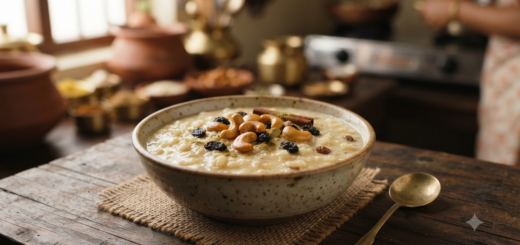
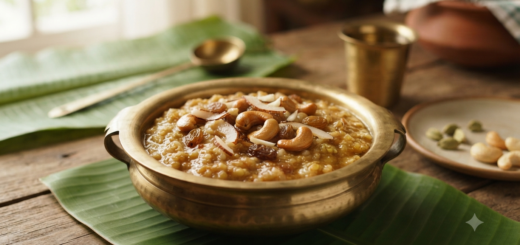
Panakam and Vadapappu Recipe: Sri Rama Navami Prasadam
Panakam and vadapappu are the two prasadams that define a South Indian Sri Rama Navami kitchen. One is a chilled jaggery drink, and the other is a bowl of soaked yellow moong dal. Both cool the body when the March sun turns harsh, so families have offered them to Lord Rama for generations.
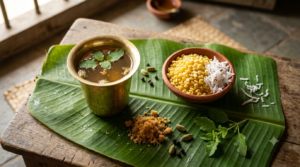
Chilled jaggery panakam and soaked moong dal vadapappu, offered together on Sri Rama Navami.
Because neither needs a stove, you can prepare both in under fifteen minutes. This guide walks you through every step, the tradition behind them, and the small mistakes that quietly spoil the taste.
Panakam and Vadapappu at a Glance
Here is the short version before we go deeper, so you can plan your naivedyam quickly.
- Panakam: a sweet, spiced jaggery drink served chilled.
- Vadapappu: raw moong dal, soaked and drained, offered plain.
- Cooking: none, since both are no-cook prasadams.
- Total time: about 10 to 15 minutes of hands-on work.
- Occasion: Sri Rama Navami, which falls on Thursday, 26 March 2026.
- Why these two: they are cooling foods for the onset of summer.
What Are Panakam and Vadapappu?
Panakam and vadapappu are a traditional pair of offerings that Telugu, Tamil, and Kannada families prepare together for Sri Rama Navami. Panakam is a jaggery-sweetened drink that carries dry ginger, cardamom, and crushed pepper. Vadapappu is simply moong dal that you soak, rinse, and drain, then offer without cooking.
The two almost always sit side by side on the offering plate. In Telugu homes people often add a third item, chalimidi, a soft rice-flour and jaggery sweet. In Tamil and Kannada kitchens the same dal becomes kosambari once you add coconut and a tempering. Still, the plain versions reach the deity first, since simplicity is the point.
Why Panakam and Vadapappu Are Offered on Sri Rama Navami
Tradition chooses these offerings for the season, not by accident. Sri Rama Navami marks the birth of Lord Rama on the ninth day of Chaitra month, and it lands right as summer begins. Because the weather turns hot, the prasadam stays cooling, hydrating, and light on the stomach.
Jaggery water restores energy and minerals lost to the heat, while pepper and dry ginger help digestion. Soaked moong dal, meanwhile, gives a gentle protein that the body handles easily in warm weather. So the pairing is really old summer wisdom dressed as devotion.
The festival also closes Vasanthotsavam, the spring celebration that begins with Ugadi, the Telugu new year. Scriptures place Lord Rama’s birth at midday, so devotees believe the noon muhurat is the most sacred moment of the day. You can read more background on the festival on this overview of Rama Navami.
The date shifts every year with the lunar calendar. In 2026, Rama Navami falls on Thursday, 26 March, with the Madhyahna muhurat around midday when Lord Rama is said to have been born. Since the timing changes annually, always confirm the current year’s date on a trusted panchang such as Drik Panchang before you plan your puja.
The Meaning Behind a Simple Offering
There is a quiet lesson in why these humble foods honour Lord Rama. Rama is remembered as Maryada Purushottam, the ideal of restraint and righteousness, so a plain, honest offering suits his character far better than anything rich. Because the prasadam asks for no fire and no fuss, anyone can prepare it, from a child to an elder.
The choice also reflects care for the people who receive it. When devotees gather in the midday heat for Rama’s birth, a cool jaggery drink revives them instantly. The soaked dal, meanwhile, fills the stomach without weighing it down. So the offering feeds both devotion and comfort at once, which is exactly why families have kept the tradition alive for so long.
How to Make Panakam and Vadapappu at Home
Both recipes are forgiving, so treat the quantities below as a starting point and adjust to taste. Prepare the dal first because it needs soaking time, then mix the drink closer to serving.
Panakam Recipe (Jaggery Drink)
You need jaggery, water, dry ginger powder, cardamom, and a little crushed black pepper. A squeeze of lemon and a few tulsi leaves are optional but lovely. Use good, clean jaggery because it decides the final flavour.
Ingredients:
- 1 cup jaggery, grated or powdered
- 3 to 4 cups water, at room temperature
- 1/4 teaspoon dry ginger powder (sonti or sukku)
- 1/4 teaspoon cardamom powder
- A pinch of crushed black pepper
- Optional: 1 teaspoon lemon juice, a few tulsi leaves
Method:
- Add the grated jaggery to the water and stir until it dissolves fully.
- Strain the liquid through a fine sieve or muslin, since jaggery often hides grit.
- Now stir in the dry ginger, cardamom, and pepper.
- Add lemon and tulsi if you want a brighter taste.
- Chill the panakam, then pour into glasses and offer.
Keep the water at room temperature while dissolving, because hot water dulls the fresh, raw taste that panakam is loved for. If you want it stronger, simply use less water, and if you want it lighter, add more. Some cooks also add a pinch of edible camphor or a few crushed tulsi leaves at the end, purely for aroma. Serve it within a few hours, since the fresh jaggery flavour fades once the drink sits overnight.
Vadapappu Recipe (Soaked Moong Dal)
Vadapappu is the easiest prasadam you will ever make. You soak moong dal, drain it well, and offer it plain. After the offering, you can dress the same dal into a salad for everyone to eat.
Ingredients:
- 1 cup yellow moong dal (pesara pappu)
- Water, enough to soak
- For the salad version, after offering: 2 tablespoons grated coconut, 1 chopped green chilli, a pinch of salt, and grated raw mango or cucumber
Method:
- Rinse the moong dal well, then soak it in water for 1 to 2 hours.
- Check it after an hour, because the dal should break easily when pressed.
- Drain thoroughly, and spread it on a cloth if any water remains.
- Offer this plain, soaked dal to Lord Rama as naivedyam.
- After the puja, mix in coconut, chilli, salt, and mango for a salad.
Do not over-soak the dal, since it turns mushy and loses its clean bite. Around ninety minutes usually gives the perfect texture.
Regional Variations of Panakam and Vadapappu
The core pairing stays the same across the south, yet each region adds its own touch. Knowing these variations helps you match the offering your family grew up with.
In Andhra and Telangana, cooks serve panakam and vadapappu with chalimidi and neer mor, a light spiced buttermilk. The dal here usually stays plain, or takes just a squeeze of raw mango juice for tang. In Tamil Nadu, the same soaked dal often becomes a tempered kosambari after the offering, seasoned with mustard and curry leaves.
In Karnataka, kosambari is the star, and cooks toss the moong dal with grated cucumber, coconut, and a mild tempering. The drink stays close to the Andhra style, though some homes add a little more lemon. Whichever version you follow, the plain naivedyam goes to the deity first, and the dressed salad follows for the family.
Common Mistakes Most Guides Skip
A few small errors turn out lovely-looking prasadam that tastes flat. These are the ones worth remembering.
- Skipping the strain: unstrained jaggery leaves grit and sand in the drink, so always filter it.
- Using hot water: heat kills the fresh flavour, therefore keep the water at room temperature.
- Over-soaking the dal: soak for about ninety minutes, because longer soaking makes it soft and pasty.
- Cooking the vadapappu: this dish stays raw and soaked, so it is not the same as cooked mudda pappu.
- Salting before offering: the naivedyam version stays plain, while salt and chilli come in only afterward.
Another quiet mistake is tasting the food before the puja. Traditionally, families offer prasadam first and taste it only after, so keep a small separate portion aside if you want to check the sweetness. A pinch of edible camphor is sometimes added to panakam too, but use it sparingly, since a little goes a very long way.
Prasadam Traditions and Serving
The naivedyam itself stays deliberately simple, since purity matters more than garnish. Offer the plain soaked dal and the chilled drink together, ideally in a clean brass or steel tumbler. Many families store panakam in an earthen pot, because clay keeps it naturally cool through the day.
Alongside these two, cooks often prepare neer mor and chalimidi to complete the spread. If you want the full step-by-step for each dish, our Sri Rama Navami panakam recipe and the vada pappu recipe break them down individually. For a sweet rice-flour offering to round out the plate, the kudumulu recipe pairs well with the same festival.
After the puja, share the prasadam with everyone at home. Because both items stay so light, they suit guests of every age and make a refreshing end to the celebration.
A Quick Health Note
Panakam tastes wonderful, yet it is essentially jaggery dissolved in water, so it carries real natural sugar. If you manage diabetes or watch your sugar intake, enjoy a smaller glass or cut the jaggery. The pepper, ginger, and tulsi are valued in home tradition for digestion and cooling, though they remain food, not medicine.
Vadapappu is raw soaked dal, which most people digest easily. Still, if raw lentils upset your stomach, you can lightly steam the dal after offering. Children and elders usually enjoy the soft, soaked dal without any trouble. As with any festival food, moderation keeps the day enjoyable for everyone.
Before You Offer
Panakam and vadapappu prove that the most meaningful prasadam is often the simplest. You need no special skill, no stove, and barely any time. Soak the dal early, mix the drink fresh, strain it well, and serve both chilled or cool. Do that, and your Sri Rama Navami offering will taste exactly the way generations of families have loved it.
Frequently Asked Questions
What is panakam made of?
Panakam uses jaggery dissolved in water, then flavoured with dry ginger, cardamom, and crushed black pepper. Some families add lemon juice or tulsi leaves. It is served chilled as a cooling summer drink and a Rama Navami offering.
Is vadapappu cooked or raw?
Vadapappu is raw. You soak yellow moong dal for one to two hours, drain it well, and offer it without cooking. This makes it different from mudda pappu, which is a cooked and mashed dal eaten with rice.
Why are panakam and vadapappu offered on Sri Rama Navami?
Families offer them because Rama Navami falls at the start of summer. Both foods stay cooling, hydrating, and light, so they suit the season. Devotees see the simple, pure offering as a fitting tribute to Lord Rama.
When is Rama Navami in 2026?
Rama Navami falls on Thursday, 26 March 2026. The main puja happens during the Madhyahna muhurat around midday. Because the date follows the lunar calendar, it changes every year, so confirm it on a panchang.
Can I make panakam in advance?
Yes, you can mix panakam a few hours ahead and keep it chilled. However, add lemon juice only close to serving, since it can turn slightly bitter if it sits too long. An earthen pot keeps the drink naturally cool.
What can I add to vadapappu after offering?
After the naivedyam, you can turn the plain dal into a salad. Add grated coconut, chopped green chilli, a pinch of salt, and grated raw mango or cucumber. This savoury version is often called kosambari in Karnataka.
What jaggery is best for panakam?
Use clean, good-quality jaggery, whether the dark country type or lighter blocks. Darker jaggery gives a deeper flavour, while lighter jaggery keeps the drink golden. Always strain the dissolved jaggery, because it can hide grit.
What other prasadams pair with panakam and vadapappu?
Neer mor and chalimidi pair beautifully with panakam and vadapappu. Neer mor is a light spiced buttermilk, while chalimidi is a rice-flour and jaggery sweet. Together they make a complete, cooling Rama Navami spread.