Bobbatlu Recipe Wheat Flour – Easy Homemade Sweet Flatbread
This Bobbatlu Recipe Wheat Flour swaps the usual refined maida for wholesome atta, so you get the same soft, jaggery-stuffed festival sweet with more fibre and a gentle nutty flavour. Bobbatlu is the Telugu name for the stuffed sweet flatbread that Maharashtra calls puran poli and Karnataka calls holige or obbattu. My mother makes a tray of these every Ugadi, and the wheat-flour version has become the one our family reaches for now. Below you get her exact measurements, the timings that actually work, and the small fixes that stop the filling from bursting through the dough.
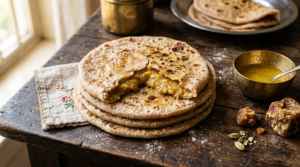
Soft whole wheat bobbatlu stuffed with chana dal and jaggery, cooked golden on a tawa.
Bobbatlu Recipe Wheat Flour at a Glance
- What it is: a soft flatbread stuffed with a sweet chana dal and jaggery filling called poornam.
- Also known as: puran poli, obbattu, holige, boli, and bakshalu across different states.
- This version: made with 100% whole wheat flour instead of maida, so it is heartier and higher in fibre.
- Makes: 8 bobbatlu in about 90 minutes, including 30 minutes of dough resting.
- Best for: Ugadi, Holi, Gudi Padwa, and everyday sweet cravings.
What Makes This Bobbatlu Recipe Wheat Flour Different
Most restaurant and shop bobbatlu use maida because it rolls thin and stays pale. Whole wheat flour behaves differently, so it helps to know what changes before you start. Atta keeps the bran and germ of the grain, which means more fibre and a lower glycaemic load than refined maida.
The trade-off is texture. Because the bran absorbs more water, a wheat dough feels stiffer and can tear if it is rolled too thin. So this Bobbatlu Recipe Wheat Flour leans on a longer rest and a slightly softer dough to stay pliable.
If you prefer the classic pale, ultra-thin style, our bobbatlu recipe with maida covers that method instead. For a filling-first walkthrough, the jaggery bobbatlu version goes deeper on the poornam.
Recipe Card
| Detail | Value |
|---|---|
| Prep time | 20 mins + 30 mins dough resting |
| Cook time | 40 mins |
| Servings | 8 bobbatlu |
| Difficulty | Medium |
| Cuisine | South Indian, Andhra |
Ingredients for Bobbatlu Recipe Wheat Flour
For the Dough (Whole Wheat Base)
- 2 cups whole wheat flour (atta)
- ¼ tsp salt
- 2 tbsp ghee or a neutral oil
- ¾ cup water, approximately
- A pinch of turmeric, optional, for a warm golden colour
- Extra wheat flour for dusting
For the Sweet Stuffing (Poornam)
- 1 cup chana dal (split Bengal gram)
- 1 cup jaggery, grated or chopped
- ½ tsp cardamom powder
- A pinch of nutmeg, optional
- 2 tbsp ghee for roasting the filling
These are the exact quantities we use at home. The jaggery-to-dal ratio sits at roughly one to one, which keeps the poornam sweet without turning sticky.
How to Make Bobbatlu Recipe Wheat Flour: Step by Step
1. Knead a Soft Dough
Combine the whole wheat flour and salt in a large bowl. Add the ghee and rub it through with your fingertips until the flour feels like damp crumbs. Now add water little by little, kneading as you go, until a soft and pliable dough forms.
Knead for about 8 to 10 minutes, because a well-worked dough rolls without cracking. Cover it and rest it for at least 30 minutes. The rest lets the gluten relax, so the atta becomes far easier to roll later.
2. Cook the Chana Dal
While the dough rests, rinse the chana dal well. Pressure cook it with 2 cups of water for 5 to 6 whistles on medium heat, until the dal mashes easily between two fingers. Let the pressure release naturally.
Strain the dal and save the cooking water, since it makes a lovely base for dal or soup later. If the dal holds too much moisture, the filling will stay loose, so drain it thoroughly.
3. Make the Sweet Filling
Grind the cooked dal with the jaggery, cardamom, and nutmeg into a smooth paste. Do not add water, because the filling needs to hold its shape. Transfer the paste to a pan on low heat.
Add 2 tbsp ghee and stir continuously for 8 to 10 minutes. The mixture is ready when it thickens and starts leaving the sides of the pan. Turn off the heat and let it cool completely before you stuff it.
4. Divide the Dough and Filling
Once the dough has rested and the poornam is cool, divide the dough into 8 equal balls. Divide the filling into 8 portions too. Keep both covered with a damp cloth so they do not dry out while you work.
5. Stuff and Roll
Flatten one dough ball with your fingers into a small cup. Place a portion of filling in the centre, then gently gather the edges to seal it fully. Dust lightly with flour and roll into a disc about 6 to 7 inches wide.
Roll with a light hand and even pressure, because pressing hard pushes the filling out. Keep the bobbatlu slightly thick rather than paper-thin. If a small tear appears, patch it with a pinch of dry flour and carry on.
6. Cook Until Golden
Heat a griddle or tawa on medium. Place the rolled bobbatlu on the hot surface and cook for 30 to 40 seconds, until small bubbles rise. Flip it, then smear a thin layer of ghee on both sides.
Cook each side for another 20 to 30 seconds, until golden brown spots appear. Serve warm with an extra dab of ghee. A medium flame matters here, because a very hot tawa browns the outside before the inside cooks.
Why Your Bobbatlu Recipe Wheat Flour Cracks (and How to Fix It)
Tearing is the single most common problem beginners hit, and it almost always traces back to one of three causes. This section is the part most recipes skip, so keep it handy the first few times.
- Dough too stiff: whole wheat flour drinks up water, so a dough that felt fine at first can tighten as it rests. Sprinkle a few drops of water and knead again until it softens.
- Filling too wet: if you skipped draining the dal or under-cooked the paste, the poornam stays loose and seeps out. Cook it longer until it leaves the pan.
- Rolled too thin or too fast: heavy pressure and a paper-thin roll force the filling through. Roll gently, and stop while the disc is still a touch thick.
Perfect bobbatlu take a little practice, so do not worry if the first one or two look rough. They still taste wonderful.
Pro Tips for Perfect Bobbatlu Recipe Wheat Flour
- Let the filling cool completely before stuffing, because a warm poornam turns the dough sticky and hard to seal.
- If the dough stiffens while you work, cover it with a damp cloth for 5 minutes, then knead again.
- Choose grated jaggery over sugar for a deeper, caramel-like sweetness that suits the warm spices.
- A pinch of turmeric in the dough gives that traditional golden hue without changing the taste.
- Roll on a lightly greased sheet of parchment if the atta dough keeps sticking to your board.
Bobbatlu Recipe Wheat Flour Substitutions and Swaps
This Bobbatlu Recipe Wheat Flour bends easily around what you have. For a lighter filling, swap half the chana dal for grated coconut cooked with jaggery. For a softer, more pliable dough, mix the atta with a little maida, though pure wheat keeps it healthier.
To make it vegan, use a neutral oil or coconut oil in place of ghee for both the dough and the filling. Palm jaggery works well when regular jaggery is hard to find, and it adds a smoky note many people love.
Storing and Freezing Bobbatlu Recipe Wheat Flour
Cooked bobbatlu keep at room temperature for up to 2 days in an airtight container. In the fridge they last 4 to 5 days. Reheat on a griddle with a light smear of ghee, so they turn soft and warm again rather than dry.
For longer storage, this Bobbatlu Recipe Wheat Flour freezes well. Stack cooled bobbatlu with parchment between each one, then seal them in a freezer bag for up to a month. Thaw at room temperature and reheat on the tawa before serving.
What to Serve With Bobbatlu Recipe Wheat Flour
Bobbatlu Recipe Wheat Flour is rich enough to eat on its own, warm off the pan. Many families in Andhra pour a spoon of extra ghee or warm milk over the top for a festive touch. Some prefer a small bowl of plain yogurt on the side to balance the sweetness.
During Ugadi and Holi, bobbatlu usually share the plate with savoury dishes like pulihora or a simple dal. That sweet-and-savoury pairing is a big part of why this flatbread anchors so many festival meals.
Nutrition in Bobbatlu Recipe Wheat Flour
| Nutrient | Amount (per bobbatlu) |
|---|---|
| Calories | ~320 kcal |
| Carbohydrates | ~50 g |
| Protein | ~6 g |
| Fat | ~11 g |
| Fibre | ~6 g |
These figures are estimates based on the quantities above and typical portion sizes. Because the wheat version keeps the grain’s bran, it carries more fibre than a maida bobbatlu of the same size. Jaggery is still a sugar, though, so anyone managing blood sugar or diabetes should treat bobbatlu as an occasional treat and check with their doctor about portions.
The Many Names of Bobbatlu Across India
This sweet flatbread travels under many names, and knowing them helps you spot the same dish on any regional menu. In Andhra Pradesh and Telangana it is bobbatlu or bakshalu. In Karnataka people call it obbattu or holige, while Maharashtra knows it as puran poli.
Tamil Nadu shortens it to boli, and Gujarat makes a related version called vedmi with toor dal. The filling changes a little from state to state, yet the heart of the dish stays the same. It appears at Ugadi, Gudi Padwa, Holi, Ganesh Chaturthi, and Diwali, which is why so many households treat it as the taste of a festival.
Before You Start Rolling
A good bobbatlu comes down to three things: a rested soft dough, a dry well-cooked filling, and a gentle hand at the rolling pin. Get those right and the wheat-flour version rewards you with a hearty, fibre-rich sweet that still feels indulgent. Keep the flame medium, cool your poornam fully, and do not chase a paper-thin roll. Make a batch of Bobbatlu Recipe Wheat Flour this festival season, and you may find, as our family did, that the atta version quietly becomes your default.
Frequently Asked Questions
Can I use sugar instead of jaggery?
Yes, you can. Traditional bobbatlu use jaggery for a deeper, richer taste, but plain sugar or palm jaggery both work. The flavour shifts slightly toward a cleaner sweetness, yet the recipe still turns out well.
Is soaking the dal necessary?
Soaking is not essential, though it helps. Soaking chana dal for 30 to 60 minutes shortens the cooking time and gives a softer, smoother filling. If you are short on time, you can pressure cook it straight away.
Why does whole wheat bobbatlu tear more than maida?
Whole wheat flour has bran that absorbs extra water, so the dough turns stiffer and less stretchy than maida. The fix is a softer, well-rested dough and a gentle roll. Keep the disc slightly thick and the tearing usually stops.
Can I make this recipe gluten-free?
Not easily, because wheat flour contains gluten that gives the dough its stretch. You could experiment with gluten-free blends, but the texture and traditional taste will change noticeably. A jowar or rice-flour dough needs a very different handling technique.
How long do bobbatlu stay fresh?
They keep for up to 2 days at room temperature and 4 to 5 days refrigerated in an airtight box. Frozen, they last about a month. Always reheat on a tawa with a little ghee to bring back the softness.
Is wheat flour bobbatlu healthier than the maida version?
It is a little more wholesome. Whole wheat keeps the fibre, protein, and minerals that refining strips out of maida, and it has a lower glycaemic index. It is still a jaggery-based sweet, so portion size matters most.
Which festivals are bobbatlu made for?
Bobbatlu are a festival staple across South India and Maharashtra. Families make them for Ugadi, Gudi Padwa, Holi, Ganesh Chaturthi, and Diwali. Many also cook them for weddings and other happy family occasions.
References
- Puran poli — regional names and history (Wikipedia)
- Jaggery — traditional unrefined sugar (Wikipedia)
For more festival sweets, see our Ugadi festival prasadam recipes.