Moong Dal Chilla with Paneer – Easy Tawa Recipe
Moong dal chilla with paneer is a savoury Indian pancake made from soaked yellow moong dal and a simple paneer filling. This version keeps the original recipe’s ginger, cumin and coriander flavours. It also explains how to fold the filling without losing it on the tawa.
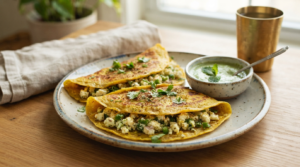
Golden moong dal chilla filled with crumbled paneer, fresh coriander and mild spices, served with green chutney.
The ingredient amounts below come from the previously published recipe. However, no independent kitchen-testing record was available for its timing or yield, so treat those figures as estimates rather than guarantees.
Moong Dal Chilla with Paneer at a Glance
- Main ingredients: split yellow moong dal, paneer, ginger, cumin and spices.
- Soaking: the original recipe suggests 6–8 hours. This exact recipe has not been independently timed or tested.
- Prep and cooking: the previous post listed 15 minutes of preparation and 20 minutes of cooking, excluding soaking. Both are untested estimates.
- Yield: not measured or verified. The number of chillas depends on your pan, ladle and thickness.
- Allergen: paneer contains milk. Check any packaged masala and chutney ingredients too.
Chilla is a familiar Indian way to turn a dal batter into a thin, savoury pancake. Adding crumbled paneer gives each fold a soft filling that contrasts with the browned edges.
Ingredients for Moong Dal Chilla with Paneer
For the chilla batter
- 1 cup split yellow moong dal, dry, before soaking
- 1-inch piece of ginger
- 1 green chilli, optional
- 1/2 teaspoon cumin seeds
- Salt to taste
- Water, added a little at a time while blending
- A little oil to grease the tawa
For the paneer filling
- 100 g fresh paneer, grated or crumbled
- 1/4 teaspoon black pepper
- 1/4 teaspoon chaat masala, optional
- Finely chopped fresh coriander leaves
These are the original published ingredient amounts, not a newly tested batch. Use fresh, properly chilled paneer and check its use-by instructions before cooking. Also check the spice blend if you need to avoid wheat or another allergen.
How to Make Moong Dal Chilla with Paneer
1. Rinse, soak and grind the dal
- Sort the dry moong dal and rinse it well under clean running water.
- Cover with fresh water and soak until soft enough for your blender. The original 6–8-hour guide is untested for this exact recipe.
- For a long soak, cover and refrigerate the bowl rather than leaving it in a hot kitchen. University of Maine Cooperative Extension offers general refrigerated-soaking guidance for dried legumes. Drain the soaking water, then rinse once more.
- Blend the soaked dal with ginger, chilli and cumin. Add water in small amounts until the batter spreads but does not run like water.
- Mix in salt. The original method allows a short rest, but a measured resting time has not been verified.
The batter should be smooth and pourable, yet thick enough to hold its shape briefly. If it runs across the entire tawa at once, it may be too thin.
2. Mix the paneer filling
Combine the crumbled paneer, pepper, optional chaat masala and coriander in a bowl. Keep the mixture chilled while you prepare the pan. Since paneer already has a mild flavour, start with less masala and adjust to taste.
3. Cook and fold the chilla
- Warm a non-stick or well-seasoned iron tawa over medium heat and lightly grease it.
- Pour in a ladle of batter and spread gently into a circle. Avoid making it so thin that it tears.
- Cook until the top begins to set and the underside releases from the pan. Flip carefully and cook the second side until no wet batter remains.
- Turn it again if needed, scatter paneer over one half and fold the other half across the filling.
- Let the folded chilla warm through, then remove it from the tawa. Repeat with the remaining batter and filling.
Folding after cooking both sides is a practical alternative to flipping loose paneer on top. Cooking time will vary by pan temperature, batter thickness and chilla size. So judge doneness by the fully cooked centre, not an untested minute count.
How to Serve Moong Dal Chilla with Paneer
Serve moong dal chilla with paneer hot, with mint chutney or plain curd. You can fold it into a half-moon or a loose roll, then finish with a little chopped coriander. A banana leaf or a simple ceramic plate works well for serving.
For another version without the paneer filling, see the site’s plain moong dal chilla recipe. You can also try moringa leaves paratha as a different savoury breakfast idea.
What Can We Say About the Protein?
Moong dal and paneer are both foods that contain protein. However, this article cannot give a reliable protein amount per chilla because the finished yield was never measured. Brands, actual portion size and any ingredient swaps also change the result.
The earlier claim of 14–18 g protein per serving has therefore been removed. This recipe also makes no promises about weight loss, muscle gain, digestion or blood-sugar control. If you need a precise nutrition figure for medical or dietary planning, calculate it from measured ingredients and the actual number of portions.
Allergens and Gluten Cross-Contact
Contains milk: paneer is a dairy product, so this recipe is not suitable for someone with a milk allergy. Curd served on the side also contains milk. The US Food and Drug Administration’s allergen guidance explains why checking packaged ingredient labels matters.
Moong dal is a legume, so anyone with a known allergy to moong or related ingredients should use guidance specific to their allergy. The basic dal batter contains no added wheat flour. Still, do not promise a gluten-free result without checking the chaat masala, other packaged ingredients and shared cooking equipment for cross-contact.
If you replace paneer with tofu, the dish will contain soy instead of milk unless another ingredient adds dairy. Always check the full ingredient list rather than assuming a substitution makes the meal allergen-free.
Storage and Reheating for Moong Dal Chilla with Paneer
Fresh chilla tastes best while the edges are still lightly crisp. If you cook extra portions, place them in shallow, covered containers and refrigerate promptly at 4°C or below. Do not leave cooked chilla or paneer filling at room temperature for more than two hours, or one hour when temperatures exceed 32°C.
The US Department of Agriculture’s leftover guidance gives a general refrigerated limit of 3–4 days for properly handled cooked leftovers. That is food-safety guidance, not a tested shelf-life for this recipe. Reheat leftovers until thoroughly hot throughout, reaching 74°C if you use a food thermometer.
For uncooked batter, the previous page claimed a 24-hour refrigerated life without supporting testing. Make the batter fresh when possible. If you prepare it ahead, keep it covered and cold, then use it promptly; no recipe-specific safe storage period has been validated. Never taste raw batter to judge whether it is safe.
Common Mistakes to Avoid
- Too much water: the batter can spread too far and tear. Add blending water gradually instead.
- Very high heat: the outside can brown before the middle cooks. Reduce the heat and check the centre.
- Paneer falling out: spread the filling on one half after the chilla has cooked on both sides, then fold.
- Old or poorly stored paneer: use paneer within its labelled storage instructions and keep it chilled before cooking.
- Assuming every batch takes 20 minutes: the original time was not independently tested, so use visual doneness cues.
Before You Cook
This moong dal chilla with paneer keeps the original dal-and-paneer combination while making the instructions easier to follow. Start with a batter that spreads gently, cook both sides fully, and fold in the paneer near the end. Remember that the published soak time, preparation time, cooking time and yield are not independently tested measurements.
FAQs About Moong Dal Chilla with Paneer
How much protein is in one chilla?
There is no verified per-chilla protein figure for this recipe. The amount depends on the actual number of portions and the ingredients used. A reliable calculation needs weighed quantities and a measured cooked yield.
Can I make it without paneer?
Yes. Leave out the filling for a plain version, or try a different filling that suits your preferences. The site’s plain chilla recipe gives another starting point, but changing the filling also changes its allergens and nutrition.
Is moong dal chilla with paneer gluten-free?
The listed basic batter ingredients contain no added wheat flour. However, packaged chaat masala and shared utensils may introduce gluten through ingredients or cross-contact. Check labels and use clean equipment if strict gluten avoidance matters.
Can I soak the dal overnight?
You can plan an overnight soak in the refrigerator. The original recipe suggests 6–8 hours, but that exact duration has not been tested here. Drain and rinse the dal before blending, then check whether it softens well enough for your mixer.
Can I pack the cooked chilla for lunch?
Yes, if you can keep it safely chilled until eating. Pack it in a clean container and use an insulated bag with a cold pack when refrigeration is unavailable. Reheat thoroughly when practical, and do not leave paneer-filled chilla in a warm bag for hours.
Is this a weight-loss or diabetes-friendly recipe?
No single recipe guarantees weight loss or improved blood sugar. Portion sizes, the rest of the meal and personal needs all matter. Anyone using a prescribed diet should follow individual advice rather than relying on a general recipe claim.
Can children eat moong dal chilla with paneer?
Children who tolerate the ingredients may enjoy a fully cooked, mild version. Reduce the chilli, cut it into manageable pieces and check for milk or legume allergies. Follow age-appropriate feeding guidance for younger children.
Can I make it without oil?
A suitable non-stick pan may need little or no added oil. However, sticking and browning will depend on the pan’s condition and heat. Watch the underside closely and loosen it gently before turning.


