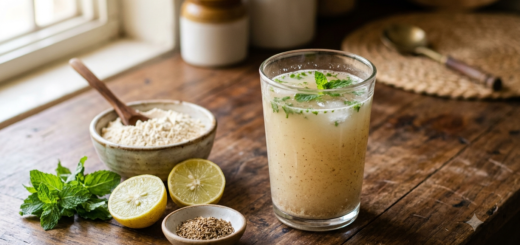
Roasted Poha Flour Drink: Small-Batch Recipe Trial
A roasted poha flour drink starts with dry-toasted flattened rice, ground into a powder and gently cooked with milk or water. This small-batch version is a recipe proposal, not a completed kitchen trial. The ingredient amounts, finished volume and texture descriptions below are untested estimates. You can use the method to make one careful test batch, then record what actually happens.
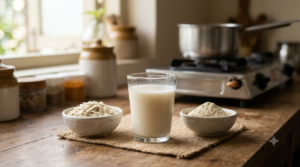
Illustrative roasted poha flour drink with a bowl of dry-toasted flattened rice and ground poha powder.
The distinction matters because ground poha does not behave like instant coffee or sugar. Its rice particles may thicken during heating, settle in a glass or feel gritty if the grind stays coarse. A good first attempt measures those changes rather than promising a perfectly smooth drink.
Roasted poha flour drink at a glance
This proposed roasted poha flour drink is a lightly sweet, cooked rice-flake beverage rather than a no-cook flour sherbet. The idea is to toast clean, dry poha, grind it finely, whisk the powder into cold liquid and heat the mixture while stirring. The proportions are starting points, not kitchen-verified results.
- Base: plain, unseasoned flattened rice, also called poha or aval.
- Liquid: pasteurised milk and safe drinking water; a water-only trial is possible.
- Flavour: a little sugar and optional ground cardamom.
- Proposed starting quantity: 25 g poha plus 200 ml milk and 50 ml water.
- Estimated yield: roughly one small cup, perhaps 200–260 ml; not measured.
- Texture goal: pourable and lightly creamy; actual thickness is unknown.
- Trial status: no batch has been prepared, tasted or measured for this article.
What exactly is poha flour?
Poha consists of flattened rice flakes. For this trial, poha flour simply means those flakes after dry roasting and grinding. It is not roasted Bengal gram flour, nor is it necessarily the same as commercially milled raw rice flour. Those ingredients can give different textures and need different preparation.
Choose plain poha without masala, oil or added nuts. Medium flakes may be easier to spread in a pan, while very thin flakes can scorch quickly. Package condition matters more than the name: avoid flakes with insects, damp patches, mould or an unusual smell. Follow the pack’s preparation instructions where they differ from this proposal.
Bhimas Cook also has a thin poha chivda roasting guide. That snack keeps flakes whole and crisp. Here, you grind the dry flakes and cook their powder in liquid, so the texture target changes completely.
Roasted poha flour drink ingredients: untested amounts
Use a kitchen scale if available because a spoonful of loose flakes is hard to repeat. This table gives one proposed test formula. It is not a measured recipe yield, and no taste panel has checked its sweetness. Record every change before you publish a confirmed version.
| Ingredient | Proposed amount | Role in the trial |
|---|---|---|
| Plain dry poha | 25 g | Roasted flour base |
| Pasteurised milk | 200 ml | Liquid and creamy flavour |
| Safe drinking water | 50 ml | Helps disperse the powder |
| Sugar | 1 teaspoon to start | Optional sweetness |
| Ground cardamom | A small pinch | Optional aroma |
The milk and water total 250 ml before heating. That number is not the final yield. Some liquid may evaporate, while the poha powder adds solids.
The suggestion of a 200–260 ml finished drink is only a broad planning estimate. Measure the actual liquid after cooking and pouring.
Preparing the pan, grinder and measuring cup
A dry, heavy-bottomed kadai or frying pan helps you toast the flakes gently. You also need a clean grinder, saucepan, whisk or spoon, measuring jug and serving cup. Keep your utensils dry while handling the uncooked flakes. Moisture can make the powder clump before you use it.
Set out the milk and water only when you are ready to cook. If you have a fine sieve, keep it nearby for checking the grind. A sieve may remove coarse bits, but it will also change the amount of powder that reaches the saucepan. Therefore, weigh the usable powder again if you sieve it.
How to make roasted poha flour drink
To make the proposed roasted poha flour drink, first toast the dry flakes, then grind them after cooling. Mix the powder with cold liquid before applying heat, and stir as the mixture cooks. This sequence should help you watch for lumps. The exact time, smoothness and serving volume still need a real test.
Stage one: toast and grind the poha
- Inspect the poha. Measure 25 g of clean, plain, dry flakes. Reject damp, mouldy or insect-damaged ingredients. Do not grind wet or soaked poha for this method.
- Toast gently. Spread the flakes in a dry pan over low heat. Turn them often so one patch does not brown too quickly. Stop when the flakes seem dry and crisp rather than dark or burnt. No validated roasting time exists for this batch.
- Cool before grinding. Move the flakes onto a clean, dry plate. Let them cool before placing them in a grinder, and follow the grinder maker’s instructions.
- Grind and check. Pulse the cooled flakes into a fine powder. If the grind feels coarse, pulse again. Note whether any coarse fraction remains; do not silently change the measured flour weight.
Stage two: mix, cook and measure
- Make a cold slurry. Whisk the ground poha with the proposed 50 ml water in a saucepan. Add a little at a time so dry pockets break apart.
- Add milk and cook. Stir in the 200 ml pasteurised milk. Heat gently, stirring and scraping the base. Bring the liquid to a thorough simmer and keep it moving until the powder cooks through and the mixture no longer tastes floury. The heating duration is not trial-verified.
- Sweeten and assess. Remove from the heat when it remains pourable. Add the proposed teaspoon of sugar and optional cardamom, stirring until mixed. Allow it to cool to a safe sipping temperature before tasting.
- Record the result. Pour into a measuring jug, note the actual volume, then serve. Write down whether it feels thin, creamy, thick or gritty. Those are observations to collect, not results already obtained.
Take care around the hot pan and steam. Avoid using a fixed minute count as proof of safe cooking because pan size and heat vary. If the mixture scorches, smells wrong or shows signs of contamination, discard it rather than masking the problem with spice.
Why heat a roasted poha flour drink after grinding?
Dry roasting aims to remove some surface moisture and create a toasted flavour. It does not establish that homemade flour is ready for a raw, no-cook beverage. Cooking the flour in liquid is the more cautious method for this proposed recipe, especially when the package does not say the flakes are ready for direct consumption.
Heat also changes how rice starch behaves in water. You may see a light mixture grow thicker as it warms. That outcome depends on grind size and liquid ratio, so it remains a prediction until the batch is made. Do not treat a toasted smell or crisp flake as a substitute for safe handling.
What texture should the roasted poha flour drink have?
The target for this roasted poha flour drink is a pourable, lightly creamy texture, not a spoon-thick rice pudding. However, the proposed 25 g to 250 ml starting ratio has not been tested. It may finish thin, gritty or much thicker than expected. Measure the real result before calling any texture a guaranteed feature.
Three checks can make a trial useful. First, watch whether the powder disperses without dry lumps. Next, check how the liquid coats a spoon after heating.
Finally, let a small sample cool safely and note any thickening or settling. A drink can look smooth while hot but feel heavier later.
If you want a thinner result, add a little safe liquid while it cooks and record the amount. If it is already too thin, run another test with a different poha weight. Adding raw powder at the end would create new uncooked lumps, so avoid that shortcut.
Water-only and lightly flavoured trial variations
For a dairy-free experiment, replace the suggested milk with the same starting volume of safe water. The final flavour and mouthfeel will differ, so do not present it as an equivalent tested substitute. A labelled, unsweetened plant drink is another possible variation, but check its allergens and heating directions first.
Start with one flavour change per batch. Sugar makes a neutral baseline, while cardamom adds aroma without needing a second syrup. If you use jaggery, dissolve a modest amount separately and check for grit before adding it. Do not assume the same spoon measure gives the same sweetness as sugar.
Keep citrus out of the milk version during this first test. Acid may affect milk texture and make it harder to judge the rice-flour thickness. Once the base works, a separate trial can explore other flavours without confusing the results.
Roasted poha is not chana sattu or a fasting recipe
This recipe begins with flattened rice. Chana sattu begins with roasted gram, so the taste, protein content and behaviour in water differ. Bhimas Cook’s roasted chana sattu drink uses labelled ready-to-consume roasted gram flour and a no-cook mixing method. Do not carry that no-cook assumption into homemade poha powder.
| Drink | Base | Approach |
|---|---|---|
| This poha drink | Toasted flattened rice | Grind, then cook in liquid |
| Chana sattu drink | Roasted Bengal gram flour | Follow ready-to-consume pack directions |
| Fasting beverage | Varies by observance | Check the specific household rules |
Poha is rice, and some fasts restrict rice or grains. Therefore, this drink is not automatically suitable for Ekadashi, vrat or any other fasting day. Family and regional observances differ. This article is an everyday kitchen experiment, not a ritual-compliant fasting formula.
A repeatable small-batch kitchen test
The best way to improve a roasted poha flour drink is to change one variable at a time. Begin with the proposed formula, use the same brand of poha and weigh the dry flakes. Then record the results. A second trial can adjust the flour amount without changing the milk, water and sweetener together.
| Test item | Starting proposal | Record after making |
|---|---|---|
| Dry poha | 25 g | Actual grams ground and used |
| Milk and water | 200 ml + 50 ml | Any added liquid |
| Toast and cook | Gentle heat, visual checks | Actual elapsed time and observations |
| Finished yield | Unknown; estimate 200–260 ml | Measured poured volume |
| Texture | Goal: pourable | Hot, warm and cooled observations |
| Flavour | Lightly sweet goal | Sweetness, toastiness, grit |
Make notes in ordinary words. A useful entry might say that the drink held a thin coating on the spoon, or that sediment appeared after standing. Such entries become genuine evidence only once someone actually prepares the batch. Until then, neither a tasting note nor a precise yield belongs in the published recipe.
Roasted poha flour drink troubleshooting
When a roasted poha flour drink fails, first identify whether the problem began during grinding, mixing or cooking. Each stage needs a different correction. These suggestions are possible fixes to test, not solutions proved by this recipe.
| Problem | Likely cause to check | Next trial |
|---|---|---|
| Dry lumps | Powder met hot liquid too fast | Whisk into cold water first |
| Grainy mouthfeel | Coarse grind | Grind finer; note sieved weight |
| Too thick | Too much powder or evaporation | Add measured liquid while cooking |
| Too watery | Too little powder for this goal | Increase flour in a fresh cooked test |
| Burnt note | High pan heat or poor stirring | Discard; restart on lower heat |
| Settling | Suspended rice particles | Record it; stir before serving |
A failed test is still informative when you record what happened. However, do not rescue a spoiled ingredient or badly held milk by reheating it. Heat and flavour adjustments cannot reliably undo every food-safety problem.
Food handling, cooling and storage precautions
Start with clean hands, a clean grinder and safe drinking water. Use pasteurised milk, and check the date and storage instructions on both packets. The World Health Organization’s Five Keys to Safer Food stress cleanliness, thorough cooking, safe temperatures and safe raw materials.
Prepare only a small portion for prompt serving. If you need to cool a cooked milk drink, cool it safely and refrigerate promptly rather than leaving it on a counter. The recipe has no tested shelf life, and there is no verified number of days for storing its prepared drink or homemade flour.
The Food Safety and Standards Authority of India’s Eat Right India label guide advises checking ingredient lists, allergens, expiry information and storage instructions. Keep any leftover dry flakes sealed according to their packet, away from dampness and pests. Do not assume dry roasting sterilises a suspect packet.
Be especially careful when serving young children, older adults, pregnant people or anyone with a weakened immune system. Food hygiene matters more than a claimed health benefit. If you cannot establish safe handling or storage history, discard the mixture.
Milk, nut and grain allergy checks
The proposed base contains milk, a major allergen. If you have a milk allergy, do not use the milk version. Lactose intolerance is a different issue, and lactose-free milk is not a safe substitute for someone allergic to milk protein. Also check any plant drink for soy, nuts or other labelled allergens.
Plain rice-based poha is not the same as wheat flour, but factory cross-contact can still matter for people with coeliac disease or severe allergies. Check the actual packet before making a gluten-free claim. Do not add almond, peanut or cashew toppings without considering the people who will drink it.
The US Food and Drug Administration’s food-allergy label guidance explains why ingredient declarations matter. For this Indian kitchen trial, follow local product labels first and avoid ingredients that trigger a known allergy.
Small mistakes that make the trial misleading
A common mistake is reporting the starting 250 ml liquid as the final yield. Cooking changes the amount, so pour and measure after heating. Another is giving a fixed roasting time despite unknown flake thickness and pan heat. Use the clock to record the trial, not to invent a universal instruction.
- Do not call the recipe kitchen-tested until you have made and measured it.
- Do not label a smooth-looking drink grit-free without tasting it safely.
- Do not treat poha flour and chana sattu as interchangeable powders.
- Do not claim the result is high-protein, diabetic-friendly or suitable for fasting without appropriate evidence.
- Do not store homemade powder or the finished drink for an invented number of days.
The first useful outcome is a reliable record. Once you have it, adjust the ratio and repeat the test. A recipe that openly reports one successful batch is more valuable than one that promises texture and yield nobody has checked.
Before you make the first glass
Use this roasted poha flour drink as a controlled starting experiment. Weigh the flakes, toast them gently, grind them after cooling and cook the slurry thoroughly. Then measure the finished cup and write down its actual texture. These steps offer a clear trial method, but they do not guarantee a particular drink.
For now, the responsible label is untested small-batch recipe. Replace estimates only after a real kitchen run records the amount used, cooking observations, yield and flavour. Until then, avoid nutrition claims and keep food safety ahead of convenience.
Frequently asked questions
Can I make a roasted poha flour drink without milk?
Yes, you can propose a water-only trial, but its flavour and body will differ. Replace the milk with safe drinking water and keep the grinding and cooking steps. The final thickness and yield are untested, so record the result before calling it a confirmed variation.
Can I simply stir roasted poha powder into cold water?
This guide does not recommend a raw, no-cook method for homemade powder. Dry roasting alone does not validate the powder as safe for direct consumption. Instead, whisk the powder into cold liquid and cook the mixture. Follow any different safety instructions on your packaged ingredients.
How much poha flour should I use for one glass?
The proposed starting point is 25 g of dry poha with 250 ml of combined milk and water. It is not a proven one-glass formula because heating changes volume and texture. Weigh the powder that actually goes into the pan, then measure the poured result.
Why is my poha drink thick or lumpy?
Rice particles can thicken a drink during heating, while dry powder can form lumps when it meets liquid too quickly. Start with a cold slurry and stir often. If it becomes too thick, add a measured splash of liquid during cooking and record that change.
Is roasted poha flour the same as chana sattu?
No. Roasted poha flour comes from flattened rice, whereas chana sattu comes from roasted Bengal gram. They are different ingredients with different preparation needs. The ready-to-consume sattu mixing method does not automatically make homemade poha powder suitable for an uncooked drink.
Is this drink suitable for Ekadashi or other fasting days?
Do not assume so. Poha comes from rice, and some fasting practices restrict rice or other grains. The permitted foods depend on the particular observance and family tradition. This is a regular kitchen trial, not a fasting-specific recipe.
Can I prepare the roasted poha flour drink ahead of time?
No tested make-ahead or shelf-life period exists for this recipe. Prepare a small quantity for prompt drinking, and refrigerate perishable leftovers promptly if you keep any. Follow food-safety guidance rather than relying on smell or appearance to prove that stored milk is safe.
Does this recipe make a high-protein health drink?
No nutrition analysis has been done for the proposed formulation. Rice-based poha and milk contribute different nutrients, but the amount per serving depends on what you actually use. Check the ingredient labels and seek qualified advice if you need a medically tailored diet.