Ragi Ambali Drink: Small Cooked Batch Recipe Trial
Ragi ambali drink begins with a simple step that matters: cook the finger millet flour thoroughly before thinning it into a pourable drink. This small-batch recipe trial uses ordinary ragi flour, water and optional buttermilk. It aims for two small tumblers without making a large pot of porridge.
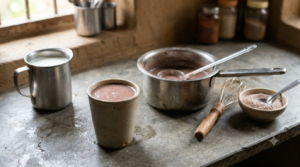
A small serving of cooked ragi ambali with an earthy colour and smooth, pourable texture.
Kitchen-test status: This is a proposed formula, not a batch we have cooked or measured. Ingredient weights, cooking time, serving volume and final yield are starting estimates. Confirm them in a real kitchen before describing the result as tested.
Ragi Ambali Drink: Quick Batch Notes
- Base: 25 g plain ragi flour with 350 ml measured water, plus up to 50 ml more for thinning.
- Optional finish: 100 ml plain, freshly prepared or commercially packaged buttermilk.
- Cooking: Make a cold slurry, stir it into hot water, then cook the whole mixture thoroughly.
- Trial simmer: Allow roughly 8–10 minutes after the mixture resumes a gentle simmer. This is an untested kitchen estimate, not a validated safety time.
- Estimated yield: About 400–480 ml with buttermilk, depending on evaporation and dilution. Measure before publishing a confirmed yield.
- Style: Savoury, softly earthy and easy to pour, not a thick spoonable ragi mudde.
What This Small Cooked Batch Is Designed to Test
The challenge with ragi is not finding a long ingredient list. It is controlling how fast the flour thickens when heat reaches its starch. A small change in water can turn a drink into porridge, so the first trial needs measured liquid.
This ragi ambali drink trial keeps the cooked base separate from the buttermilk until the heat drops. That gives the cook two useful checks: the texture of fully cooked ragi and the final texture after dilution. Neither result needs a claimed health benefit to make the recipe useful.
Ragi, also called finger millet or ragulu in Telugu, appears in many South Indian foods. For a different cooking method, see Bhimas Cook’s ragi ribbon pakoda trial. Its dry, crisp finish needs a very different flour-to-water balance.
Ingredients for the Ragi Ambali Drink Trial
For a repeatable ragi ambali drink, use a kitchen scale and measuring jug if you have them. Spoon measures vary with how tightly the flour settles, so the weight takes priority during the trial.
| Ingredient | Proposed amount | Purpose |
|---|---|---|
| Plain ragi flour | 25 g | Forms the cooked base |
| Cool drinking water | 75 ml | Mixes a lump-free slurry |
| Water for saucepan | 275 ml | Cooks the slurry |
| Extra drinking water | 0–50 ml | Adjusts the finished texture |
| Plain buttermilk, optional | 100 ml | Adds a tangy savoury finish |
| Salt | A small pinch; adjust after cooking | Seasons the drink |
| Roasted cumin powder, optional | 1/8 tsp | Adds aroma |
The 25 g weight is a proposed starting point, not a conversion from a fixed spoon count. If you prefer tablespoons, weigh your own spoonfuls and record the total. Use clean drinking water and plain flour with intact packaging and no off smell.
Equipment: A small heavy-bottomed saucepan, whisk, spatula, jug and two clean tumblers. A wide saucepan loses more water than a narrow one, so record the pot used.
How to Cook the Ragi Ambali Drink
The method keeps every bit of raw flour inside the cooking stage. A whisk helps disperse the fine grains before they turn sticky, while gentle heat makes the saucepan easier to control. Follow any cooking directions printed on your flour pack.
- Measure the ingredients. Weigh 25 g ragi flour. Measure 75 ml cool water, 275 ml water for the saucepan, and the optional finishing liquids separately. Do not add the extra thinning water yet.
- Make a smooth slurry. Whisk the flour into the 75 ml cool water until you cannot see dry patches. Scrape the sides of the bowl because dry flour often hides just above the liquid line.
- Heat the pan water. Bring 275 ml water to a boil in the saucepan. Lower the heat, then pour in the slurry slowly while whisking. Keep stirring so the mixture does not clump at the first contact with heat.
Finish cooking and season the base
- Cook thoroughly. Bring the combined mixture back to a gentle bubbling simmer. Stir across the base and corners of the pan. For this untested trial, begin with about 8–10 minutes of simmering, adjusting as needed for the pan and flour. This is only a trial window, not a guaranteed safe endpoint.
- Check the cooked base. Look for an even texture without flour pockets or dry streaks. If it seems uneven or still floury, continue cooking and stirring. Do not taste the slurry or partially cooked flour.
- Thin only after cooking. Take the pan off the heat. Stir in up to 50 ml extra drinking water if the base is too thick. Record exactly how much you use so another batch can match it.
- Finish and serve. Let the cooked base cool until comfortably warm, then whisk in 100 ml plain buttermilk if using. Add a pinch of salt and optional roasted cumin. Pour into clean tumblers and serve promptly.
How to judge the pouring texture
A ragi ambali drink should flow from a jug in a steady stream rather than fall in soft lumps. It can still coat the sides of a glass lightly. If it becomes spoonable, note the texture before you add water.
Warm ragi can appear thin but thicken further as it cools. Therefore, judge the drink at the temperature you actually plan to serve it. A recorded before-and-after check is more useful than an untested promise of perfect consistency.
Why Raw Ragi Flour Must Be Cooked
Do not blend uncooked ragi flour straight into buttermilk or water and serve it as a drink. Flour is generally a raw agricultural product, and milling does not reliably destroy harmful microbes. The US Food and Drug Administration’s flour-safety guidance says flour-containing food should be thoroughly cooked before eating.
The US Centers for Disease Control and Prevention likewise warns against tasting raw flour or uncooked batter. In India, the Food Safety and Standards Authority of India’s home food-safety guidance also stresses thorough cooking and clean handling.
For a ragi ambali drink, dry roasting alone is not a reason to assume ordinary flour is ready to drink. Use the cooked method here and check the product label. Wash hands, whisks and counters after handling raw flour, and keep it away from ready-to-eat ingredients.
This is also why the roasted chana sattu drink is a separate recipe. That trial starts with packaged ready-to-eat roasted gram flour; raw ragi flour has a different preparation requirement.
Fixes for a Thick, Lumpy or Grainy Batch
Most first-batch issues come from slurry mixing, heat or dilution. The fixes below are test decisions, not evidence that this particular batch has already worked.
| What happens | Likely cause | Next action |
|---|---|---|
| Lumps form quickly | Dry flour hits hot water | Whisk flour with cool water first; whisk as you pour |
| Mixture sticks to pan | Heat too strong or stirring too slow | Lower heat and sweep the whole pan base |
| Base stays grainy | Uneven slurry or incomplete cooking | Continue cooking and stirring; do not serve raw pockets |
| Drink becomes thick | Starch thickens as it cools | Add measured water after the flour has cooked |
| Buttermilk separates | Base was too hot | Cool the base further before adding dairy next time |
Do not fix a thin drink by stirring raw flour into the finished tumbler. That would bypass the cooking step. Instead, note the excess dilution and reduce the water slightly in a later batch.
If the pan scorches badly, start again rather than scraping burnt residue into the drink. Also discard the batch if an ingredient appears spoiled. More seasoning will not correct a food-safety problem.
Plain Water or Buttermilk: Which Finish Works?
A plain ragi ambali drink keeps the cooked millet flavour in front. Use the cooked base, salt and optional cumin, then adjust with clean water. It is the simplest way to assess thickness without another ingredient changing the result.
Buttermilk gives a tangier finish and makes a slightly larger batch. Add it only after the flour has cooked and cooled enough to avoid unwanted curdling. Use a fresh, food-safe dairy product and keep the drink out of prolonged room-temperature holding.
If you avoid dairy, leave it out rather than replacing it with an untested ingredient. A third variation would make the first trial harder to judge. Readers looking at another flour-based drink can compare Bhimas Cook’s roasted poha flour drink trial, which uses a different grain and method.
Ragi Ambali Drink Kitchen Test Record
The most valuable result from this recipe is a record that a second cook can repeat. Measure the actual yield after the drink reaches serving temperature. Do not print a fixed serving count until those numbers exist.
| Trial item | Starting target | Record after cooking |
|---|---|---|
| Flour weight | 25 g | Actual measured weight |
| Starting water | 350 ml total | Any change made |
| Simmer stage | About 8–10 min, estimated | Time and texture checks |
| Extra water | 0–50 ml | Amount needed to pour |
| Buttermilk | 0 or 100 ml | Amount and temperature added |
| Final yield | 400–480 ml with dairy, estimated | Measured ml at serving temperature |
| Servings | About two small tumblers, estimated | Glass size and actual count |
Test the plain cooked base before you test the buttermilk version. That isolates the biggest variable: how much water the flour needs. If the first result is too thick, change only the final dilution in the next run.
Write down the flour brand and grind as well, because fine and coarse powders may behave differently. A photograph of the mixture pouring from a spoon can help document texture. It should not replace a measured yield.
Small Habits That Improve the First Trial
- Use a saucepan with enough room to whisk without splashing hot liquid.
- Keep the slurry bowl close to the stove so the flour does not settle before pouring.
- Measure the thinning water separately; pouring straight from the tap makes the result hard to repeat.
- Hold the whisk low in the pan so you reach the corners where paste collects.
- Record the glass size in millilitres rather than calling every tumbler one serving.
- Keep the optional salt and cumin light until you know the base’s natural flavour.
These small controls matter because ragi flour can hide texture changes behind its dark colour. Look at how the liquid moves, not just how it looks. The goal is a repeatable cooked drink, not a dramatic photograph.
Before You Make a Second Batch
Start with 25 g ragi flour and 350 ml measured water, then cook the slurry thoroughly. Thin it only after cooking, and add optional buttermilk after the base cools. The reported 400–480 ml yield is an estimate awaiting a kitchen test.
Once you have recorded the actual liquid used and the final pour, the ragi ambali drink recipe can move from proposal to tested instruction. Until then, it should stay clearly labelled as a trial.
Frequently Asked Questions
What is ragi ambali drink?
Ragi ambali drink is a pourable preparation made from cooked finger millet flour and water. Some savoury versions also include buttermilk and seasoning. This particular small-batch formula has not yet undergone a kitchen test.
Can I mix ragi flour with cold water and drink it?
No, not when you are using ordinary raw ragi flour. Cold water helps make a lump-free slurry, but the slurry must then be thoroughly cooked. Follow the flour package’s cooking directions.
How much ragi flour should I use for two glasses?
For this trial, start with 25 g of flour and the measured liquids above. Two small glasses are an estimated result, not a tested serving count. Measure the final drink before treating that yield as confirmed.
Why does my ragi drink become thick after cooking?
Millet starch absorbs water and thickens during heating, and the mixture may firm up further as it cools. Add measured drinking water after thorough cooking. Then note how much you needed so you can adjust the next batch.
Do I have to add buttermilk?
No. The cooked millet base can be seasoned and thinned with drinking water alone. Buttermilk is an optional finishing ingredient that changes flavour and the estimated total volume.
Can I use malted ragi powder instead of plain ragi flour?
This formula assumes ordinary plain ragi flour, not a flavoured or ready-to-eat malt mix. Products differ in their processing and added ingredients. Check the label and use the manufacturer’s preparation instructions before changing the recipe.
How do I know when the flour is cooked?
Cook the entire slurry until it has simmered thoroughly and no dry flour pockets remain. Time alone is not a universal safety guarantee because stoves, pans and flour products vary. Never sample raw or partly cooked batter.
Can I make a large batch using these quantities?
Scaling is best left until the small recipe works consistently. A deeper pot changes stirring and heating, while a large volume may produce different thickness. First measure one complete batch, then repeat it before doubling.