Pepper Karasev for Diwali: Untested Recipe Trial
Pepper karasev should taste boldly peppery, crisp through the centre, and light enough to snack on without a greasy finish. This version is an Untested Recipe Trial, so the quantities below are a controlled first-batch starting point rather than a finished Bhimas Cook recipe. The batch still needs to be cooked, timed, weighed after cooling, and checked for crispness before publication as a tested recipe.
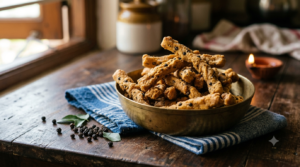
Illustrative pepper karasev showing the intended thick, crisp strands and visible coarse black pepper for this untested Diwali recipe trial.
The aim is simple: keep the ingredient list short, use coarse black pepper for flavour, and make the frying cues clear enough to diagnose a failed first batch. Pepper karasev is often made with a murukku press at home, although the older method rubs dough through a perforated ladle directly over hot oil.
Pepper Karasev at a Glance
- Recipe status: Untested Recipe Trial; kitchen verification is still required.
- Style: thick South Indian kara sev with black pepper as the main heat.
- Trial flour ratio: 1 cup besan to 1/4 cup rice flour.
- Texture target: crisp after cooling, not brittle, hard or oily.
- Shaping tool: murukku press with a thick round-hole plate, or a sturdy perforated ladle.
- Frying target: medium-hot oil with steady bubbling, not aggressive smoking.
- Yield: do not publish a fixed yield until the cooled batch has been weighed.
Published karasev formulas vary widely in their besan-to-rice-flour ratio. Some use almost equal parts, while others use much less rice flour. For this pepper karasev trial, the lower rice-flour ratio is deliberate because it should keep the bite closer to thick kara sev rather than a very brittle murukku.
Why This Untested Recipe Trial Needs a Kitchen Check
A flour ratio can look convincing on paper and still fail in hot oil. Besan absorbs water differently between brands, while rice flour changes the final snap. The diameter of the press holes also changes cooking time, so a three-minute batch in one kitchen may need longer elsewhere.
That is why Bhimas Cook should not publish an exact frying time or finished yield yet. The first batch should establish how much water the flour actually takes, how the dough presses, how quickly the strands colour, and how much finished pepper karasev remains after cooling.
This approach matches the site’s existing test-first work on ragi ribbon pakoda and whole wheat shankarpali. Both recipes treat appliance behaviour and frying cues as variables to verify rather than numbers to guess.
Pepper Karasev First-Batch Formula
This pepper karasev formula is intentionally small, so one failed test does not waste much flour or oil. Use a kitchen scale wherever possible because cup packing can shift the balance. Keep the black pepper coarse, since fine pepper powder gives heat but less of the characteristic pepper bite.
| Ingredient | Starting quantity | Purpose |
|---|---|---|
| Besan | 1 cup, about 120 g | Main body and gram-flour flavour |
| Rice flour | 1/4 cup, about 35 g | Supports crispness |
| Black pepper | 2 tsp, coarsely crushed | Main heat and aroma |
| Cumin seeds | 1/2 tsp | Warm savoury note |
| Asafoetida | 1/8 tsp | Traditional savoury aroma |
| Salt | 1/2 tsp to start | Seasoning; adjust after test batch |
| Hot oil or softened butter | 1 tbsp | Shortens the dough and helps tenderness |
| Water | Start with 70 ml | Add only until the dough presses smoothly |
| Neutral frying oil | As needed for a safe frying depth | Deep-frying medium |
The 70 ml water figure is a starting point, not a finished measurement. Add most of it first, then work in one teaspoon at a time. Record the final water used because that is the number readers need once the pepper karasev has been tested successfully.
Why not use more rice flour in the first trial?
More rice flour can increase crispness, but it can also make thick strands brittle or chalky. Established recipes range from very little rice flour to equal parts rice flour and besan. Therefore, this trial starts on the besan-forward side and uses texture after cooling as the deciding test.
How to Mix Pepper Karasev Dough
Start by sieving the besan and rice flour into a wide bowl, because dry lumps become hard spots in the press. Add the crushed pepper, cumin, asafoetida and salt. Then mix thoroughly so the pepper does not collect in one section of the dough.
- Add the hot oil or softened butter to the flour mixture. Stir with a spoon to distribute it, then let the mixture cool before touching it or kneading. Once cool, rub out any remaining clumps with your fingertips.
- Pour in about 60 ml water first. Mix, then add the remaining water gradually only if needed.
- Knead just until the dough becomes smooth and pressable. Do not work it like bread dough.
- Cover the dough while the oil heats, because the surface can dry and crack at the press.
- Grease the inside of the murukku press lightly before loading a small portion.
The correct dough should feel softer than a firm chapati dough yet should not stick heavily to your fingers. If the press needs excessive force, add water one teaspoon at a time. If the dough slumps or feels pasty, mix in a small measured amount of besan before continuing.
How to Fry Pepper Karasev
The safest first test is a small batch in medium-hot oil. If you use a thermometer, a trial range around 175–180°C is a reasonable starting point for karasev-style frying, but the final published range should come from your own kitchen test. Without a thermometer, use a pea-sized piece of dough as the cue.
Drop that small piece into the oil. It should rise steadily with active bubbles and should not darken at once. If it sits low and absorbs oil, the oil is too cool. If it races to the surface and browns quickly, the oil is too hot.
- Load only enough dough for one small batch into the press.
- Hold the press a safe distance above the kadai and press thick strands in loose circles.
- Avoid covering the entire oil surface, because crowding drops the temperature sharply.
- Let the first side firm before turning the strands gently with a slotted spoon.
- Continue frying while the bubbles remain strong. Remove the batch when bubbling becomes much quieter and the strands feel firm.
- Drain well, then cool one sample completely before judging crispness.
Do not decide the texture while the pepper karasev is still hot. Steam remains inside the strand, so a hot piece may feel softer than it will after several minutes. The cooled bite is the real test for whether the first batch needs more frying time.
Traditional perforated-ladle method
Traditional kara sev can be made by rubbing a ball of dough across a strong perforated ladle so short strands fall into the oil. This gives a more irregular, shop-style shape. However, it places your hand closer to hot oil, so a murukku press is the safer starting tool for an untested home-kitchen trial.
Pepper Karasev Frying Cues That Matter More Than Minutes
A timer is useful, but it should not be the only doneness signal. Strand thickness, oil depth and batch size all change the cooking rate. For pepper karasev, the useful cues are the rate of bubbling, the feel of a cooled sample, and whether the centre tastes cooked rather than floury.
| What you see | Likely cause | Next action |
|---|---|---|
| Fast browning outside | Oil too hot | Lower heat before the next batch |
| Greasy, heavy strands | Oil too cool or dough too wet | Heat oil fully; check dough consistency |
| Hard after cooling | Dough too dry or strands over-fried | Add a little water or shorten frying |
| Soft after cooling | Under-fried or crowded batch | Fry smaller batches slightly longer |
| Strands break at press | Dough too dry | Add water one teaspoon at a time |
| Dough will not hold shape | Dough too wet | Add measured besan gradually |
Change only one variable between test batches when possible. Otherwise, a better result will not tell you whether the improvement came from water, temperature, rice flour or frying time.
How to Measure the Final Yield Before Publication
Yield is the easiest recipe detail to overstate because hot fried snacks continue losing steam while they cool. For this pepper karasev trial, weigh the empty cooling tray first. Then weigh the fully cooled snack and subtract the tray weight.
Also note the approximate cup volume after breaking the strands into serving pieces. Weight is the more reliable figure, while cups help home cooks picture the batch size. Do not estimate a yield from the flour weight because the finished result depends on water loss and oil absorption.
Use this first-batch test record
| Test item | Record in kitchen | Publish only after confirmed |
|---|---|---|
| Total water used | Exact ml | Yes |
| Press plate | Hole size or plate type | Yes |
| Oil temperature | Starting and steady range | Yes |
| Batch size | Dough weight or press load | Yes |
| Frying time | Minutes per batch | Yes |
| Final cooled yield | Grams and approximate cups | Yes |
| Texture | Crisp, hard, oily or soft | Yes |
A second batch is worth doing if the first required any formula change. That repeat tells you whether the correction is reproducible rather than accidental. Once the same pepper karasev result appears twice, the recipe card can use the measured quantities with much more confidence.
Pepper Karasev Troubleshooting Before the Diwali Batch
Festival cooking magnifies small recipe errors because a large batch repeats them several times. Therefore, test the pepper karasev as a small batch before scaling. A dough that presses easily at 150 g flour may become difficult when a large bowl sits uncovered beside a hot stove.
If the first batch tastes too mild, increase coarse pepper slightly rather than adding lots of chilli powder. The point of this version is the black-pepper flavour. If the pepper tastes harsh, reduce the next batch and crush the pepper a little coarser so the heat arrives in short bursts.
If you want to build a full festive spread, pair this savoury with the site’s Diwali sweets recipes. For another savoury test-style recipe, the thin poha chivda trial follows the same rule: record the real kitchen result before promising fixed timing or shelf life.
Oil Safety While Frying Pepper Karasev
Deep frying needs a stable kadai, dry tools and a clear work area. Never add wet utensils near hot oil, and do not fill the kadai so high that bubbling dough can push oil over the rim. Keep children away from the stove during pressing and turning.
The Food Safety and Standards Authority of India guidance on used cooking oil advises against repeated frying with deteriorated oil. FSSAI also says to discard oil when it becomes dark, murky, excessively foamy or smoky. Those cues matter more than trying to save every last spoonful after a long Diwali frying session.
For besan, the FSSAI guidance on pulses and besan recommends buying clean, properly packed product and checking the label. Fresh besan also helps the flavour because stale gram flour can taste bitter before the pepper even goes in.
Cooling and Storage: Keep the Claim Conservative
Cool pepper karasev completely before it goes into any container. Warm snack releases steam, and trapped steam quickly destroys crispness. Use a clean, dry, airtight container only after the centre of the batch has reached room temperature.
Do not publish a fixed shelf-life claim for this untested formula. Smell, appearance and crispness may indicate changes in quality, but they cannot establish microbial safety or a safe storage duration. The safe storage period remains unverified, even if the snack seems crisp and smells normal.
Discard any snack that shows visible mould, unusual moisture or an off smell. However, the absence of these warning signs does not prove the snack is safe. Do not use home sensory checks to set a best-before or safety period.
Pepper Karasev: What to Confirm Before You Publish
The first version of this article should stay labelled Untested Recipe Trial until the kitchen work is complete. That label is not a weakness. It tells readers exactly what is known and what still needs proof.
- Confirm the final water quantity in millilitres.
- Confirm the preferred press plate and strand thickness.
- Record the oil temperature or reliable visual cue.
- Record the actual frying time for each batch.
- Cool a sample fully before approving the texture.
- Weigh the final cooled pepper karasev yield.
- Repeat the formula if you changed any ingredient or frying setting.
- Keep safe storage duration unverified; do not infer it from smell, crispness or observations over several days.
Once those points are measured, replace the trial wording with the tested values and update the recipe status. Until then, this article gives a transparent starting formula without pretending the pepper karasev has already passed Bhimas Cook’s own kitchen standard.
Frequently Asked Questions
What is pepper karasev made from?
Pepper karasev is usually made from besan, some rice flour, black pepper, salt and a small amount of fat in the dough. Cumin and asafoetida are common additions. The dough is pressed or rubbed into hot oil and fried until crisp.
Should black pepper be coarse or finely powdered?
Coarsely crushed black pepper suits this recipe better because it gives both aroma and small bursts of heat. Fine pepper powder can make the heat feel flatter and more uniform. Crush it fresh before mixing whenever possible.
What should pepper karasev dough feel like?
The dough should feel smooth, pliable and easy to press without becoming sticky. If it cracks at the press, it needs a little more water. If it slumps or produces greasy strands, it may be too wet.
How do I know the oil is ready for karasev?
Drop a pea-sized piece of dough into the oil. It should rise steadily with active bubbles and should not brown immediately. A sinking piece suggests cool oil, while instant darkening means the oil is too hot.
Why is my karasev hard after cooling?
Hard karasev often points to dry dough, too little shortening fat, very thin strands or excessive frying. Change one factor at a time in the next batch. Always judge hardness only after a sample has cooled completely.
Why does karasev become oily?
Oiliness often comes from frying at too low a temperature, crowding the kadai or using dough that is too soft. Let the oil recover between batches and press smaller loads. Then compare the cooled texture before changing the flour ratio.
Can I make pepper karasev without a murukku press?
Yes. The traditional method uses a strong perforated ladle and rubs the dough through the holes above the oil. However, that method puts your hand closer to hot oil, so a press is easier and safer for many home cooks.
How long does pepper karasev stay crisp?
This trial does not claim a fixed storage period because the formula has not been kitchen-tested. Cool the snack fully and store it in a clean, dry airtight container. Neither crispness nor a normal smell establishes a safe shelf life, so no storage-duration promise is made.