Whole Wheat Shankarpali: Crispy Sweet Diamond Cuts
Whole wheat shankarpali should be crisp at the edges, flaky through the centre, and sweet enough for a Diwali snack without turning hard like a sugar biscuit. Atta behaves differently from maida, so the real work is in the dough feel and frying temperature. Here is a first-trial formula with clear dough and frying cues, so you can judge each batch as you cook.
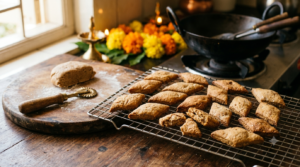
Crisp whole wheat shankarpali diamond cuts prepared as an atta-based sweet snack for a Diwali faral spread.
Untested recipe trial: Bhimas Cook has not cooked and verified this particular formula. Treat the measurements as a starting point and judge the dough, frying and final crispness using the checks below. Exact cooking time, number of pieces and shelf life are not established.
Whole Wheat Shankarpali at a Glance
- Style: sweet, fried diamond cuts made with atta instead of maida.
- Texture target: crisp outside, dry and flaky inside, never dense or chewy.
- Sweetness: mildly sweet so the wheat flavour still comes through.
- Critical dough cue: firm and smooth enough to roll, but not soft like chapati dough.
- Critical frying cue: the oil should bubble steadily around a test piece without browning it fast.
- Home-cook tip: note how much milk your atta takes and check the first fully cooled piece before frying the rest.
Traditional shankarpali is commonly made with maida, sugar, ghee and milk or water. Whole wheat versions are well established, but atta absorbs liquid differently and browns faster. That makes a copied maida ratio unreliable unless you judge the dough by feel.
Why Whole Wheat Shankarpali Needs Different Dough Cues
Whole wheat flour contains the bran and germ that refined flour removes. As a result, it usually needs a little more patience during mixing because the flour keeps absorbing moisture after the first knead. The ICMR-National Institute of Nutrition Dietary Guidelines for Indians discuss whole grains as part of dietary choices.
That does not make a fried sweet a health food. Sugar and frying fat still matter, so the useful reason to choose atta here is flavour, texture and preference rather than a “guilt-free” label. The wheat gives a nuttier taste and a deeper brown colour than classic maida shankarpali.
What the dough should feel like
The dough should feel firm when you press it, yet it should not crumble into dry chunks. It should come together without sticking to your palm, and a rolled sheet should show only small edge cracks. If the dough feels as soft as roti dough, the pieces may absorb more oil or lose their clean shape.
Do not chase a perfectly silky dough by pouring in extra milk. Instead, rest the firm dough first, because atta continues hydrating during that pause. After resting, knead it briefly and add only a teaspoon of liquid at a time if cracks run through the centre.
Whole Wheat Shankarpali First-Batch Formula
This starting formula makes enough dough to practise rolling and frying in small batches without preparing a large festive quantity. Weighing the ingredients is important because cup measurements vary, especially for atta. Keep an extra spoonful of milk aside rather than adding all the liquid at once.
| Ingredient | Untested starting amount | Purpose |
|---|---|---|
| Whole wheat atta | 250 g | Main structure |
| Fine sugar | 65 g | Sweetness and browning |
| Ghee | 45 g | Short, flaky bite |
| Milk | 85 ml to start, plus up to 20 ml if needed | Hydration and dough binding |
| Cardamom powder | 1/2 tsp | Festive aroma |
| Fine salt | 1 small pinch | Balances sweetness |
| Neutral frying oil | Enough for deep frying in a small kadai | Even cooking |
The flexible number here is the milk, because flour absorption changes with brand, milling and storage. Start with 85 ml and let the dough tell you whether it needs more. If the dough still cracks after resting, add the reserved milk gradually.
How to Make Whole Wheat Shankarpali
- Dissolve the sugar. Warm the measured milk gently and stir in the sugar until most crystals dissolve. Keep it warm, not boiling, then stir in the ghee so it melts into the mixture.
- Mix the dry ingredients. Put the atta, cardamom and salt in a wide bowl. Pour in the warm milk-ghee mixture gradually while mixing with your fingers or a spoon.
- Build a firm dough. Press the crumbs together before adding more liquid. Knead only until the dough forms a firm ball, because aggressive kneading can make fried wheat dough tougher.
- Rest before judging hydration. Cover the dough and leave it until the flour has absorbed the liquid fully. Then knead briefly and inspect the surface.
- Adjust only if needed. If the dough splits through the centre when pressed, add milk one teaspoon at a time. If it feels soft or tacky, dust in a small measured amount of atta and record the correction.
- Roll evenly. Divide the dough into manageable portions. Roll each portion to an even medium thickness so the diamonds fry at the same rate.
- Cut clean diamonds. Trim rough edges, then cut strips in one direction and diagonal lines in the other. Keep uncooked pieces covered while you finish rolling the rest.
Cutting and frying the diamond pieces
- Run one oil test. Add a single scrap of dough to the oil. It should sink briefly, then rise with steady small bubbles rather than racing to the top and darkening.
- Fry in small batches. Add enough pieces to move freely. Stir gently after the surface firms, then fry until they look evenly golden-brown and feel lighter when moved with the slotted spoon.
- Cool completely. Drain well and spread the pieces in one layer. Judge crispness only after they are fully cool, because hot shankarpali can seem softer than the final texture.
Do not use colour alone to judge doneness
Atta naturally darkens faster than maida, so a deep brown surface can arrive before the centre dries. Break open one piece from the first batch after it cools. The centre should look dry and layered rather than doughy or compact.
If the outside is dark while the middle is soft, lower the heat before the next batch. If the pieces stay pale for too long and feel greasy, the oil is probably too cool. Use the next small batch to correct the heat rather than changing two variables at once.
Whole Wheat Shankarpali Frying Cues That Matter
The best frying guide is behaviour, not an invented minute count. When the oil is in the right range, a test piece produces a steady halo of bubbles and rises without violent foaming. The batch should colour gradually, which gives the centre time to lose moisture.
A hard fast sizzle usually means the oil is too hot, while sluggish bubbles often mean it is too cool. Frying on moderate heat is especially important for whole wheat shankarpali because sugar and wheat solids both encourage browning. Keep the batch size small enough that the oil temperature does not crash.
Why a thermometer is useful in the test kitchen
If you have a frying thermometer, use it to notice how oil heat changes between batches. However, watch the bubbles and colour too, because the way a piece behaves tells you when to reduce the heat.
The Food Safety and Standards Authority of India advises against repeatedly reusing frying oil. For a home batch, use a smaller kadai so you need less oil, then follow FSSAI guidance for handling used cooking oil rather than reheating it again for frying.
How to Check Your First Batch of Whole Wheat Shankarpali
Use the first small batch to learn how your atta and oil behave. Make only one adjustment at a time, so you know whether a change in milk, thickness or heat improved the crispness.
| What to check | What to notice | Good sign |
|---|---|---|
| Actual milk used | Whether the dough needed extra milk | Firm dough with only fine edge cracks |
| Rest period | Whether resting eased rolling | Dough rolls without crumbling |
| Rolled thickness | Whether each sheet is even | Pieces cook through before over-browning |
| Oil condition | Bubble pattern and oil heat | Steady bubbles and gradual colour |
| Frying time | Whether the centre dries without darkening fast | Dry centre after cooling |
| Final yield | Count and weigh your own finished batch if useful | Size and thickness affect the number of pieces |
| Day-one texture | Break one fully cooled diamond | Crisp bite, no raw floury centre |
| Storage check | Check for moisture, softness or off odours | Discard pieces with spoilage signs |
Keep one cooled diamond aside to break open before serving the batch. A close look at its centre gives you more useful information than surface colour alone.
What a crisp finished piece should look like
A passing batch should be crisp after cooling, not merely crisp while hot. The centre should be dry, and the surface should not feel greasy. The sweetness should taste integrated into the dough rather than forming hard sugary spots.
If the texture is not right, change only one major variable in the next small batch. For example, reduce the liquid slightly for a dense dough, lower the frying heat for dark outsides, or roll thinner if the centres stay soft despite gentle frying. Note what changed if you want to repeat the result next time.
Why Whole Wheat Shankarpali Turns Hard, Soft or Oily
| Problem | Likely cause | Next-batch fix |
|---|---|---|
| Hard, tooth-breaking bite | Dough too dry, too little fat, or over-kneading | Increase liquid cautiously or shorten kneading |
| Soft after cooling | Pieces too thick or centre under-fried | Roll more evenly and fry more gently |
| Dark outside, soft centre | Oil too hot | Lower heat before adding the next batch |
| Greasy surface | Oil too cool or batch too crowded | Use smaller batches and re-stabilise heat |
| Crumbly dough | Atta needs more hydration | Rest first, then add milk by teaspoons |
| Pieces puff too much | Dough too soft or rolled too thin | Keep dough firm and thickness even |
Most failures are linked, so resist fixing everything at once. A softer dough may roll beautifully but can fry differently, while hotter oil may create faster colour but worse centre texture. The kitchen log makes those trade-offs visible.
Can You Call Whole Wheat Shankarpali “Healthy”?
It is more accurate to call this an atta-based version than a healthy sweet. Whole wheat retains more of the grain than refined flour, but the recipe still contains added sugar and frying fat. ICMR-NIN dietary guidance encourages whole grains while also asking people to be mindful of foods high in added fat and sugar.
That wording protects reader trust. The selling point should be the nutty wheat taste, crisp bite and maida-free ingredient choice, not a promise that deep-frying disappears nutritionally. Serve it as a festive snack and keep the health claims modest.
Serving Whole Wheat Shankarpali for Diwali
Serve the cooled diamond cuts with tea or include them in a mixed Diwali faral box. They pair well with savoury snacks because the sweetness is mild. For a fuller festival spread, Bhimas Cook already has a Diwali sweets guide that helps plan the sweet side of the menu.
If you want another whole-wheat festive comparison, see the wheat flour gavvalu recipe. The site also has a ragi ribbon pakoda test-style recipe that uses the same principle of recording real cooking behaviour before locking in time and yield.
Cooling and Storing Whole Wheat Shankarpali
Let the diamond cuts cool completely before putting them in a clean, dry, airtight container. Trapping steam can soften the surface, so spread the pieces in a single layer while they lose heat. Check a piece from the middle of the batch before storing everything.
There is no verified shelf-life figure for this untested formula, especially because it contains milk. Keep the container away from heat and moisture, avoid handling the snacks with wet fingers, and discard any pieces that smell stale or show spoilage. For longer storage, use a recipe with an established tested keeping time.
Frequently Asked Questions
Can I make whole wheat shankarpali without maida?
Yes. Whole wheat shankarpali can be made entirely with atta, but the dough needs different handling from maida dough. Keep it firm, rest it before adding extra liquid, and fry gently because whole wheat browns faster.
Why is my whole wheat shankarpali hard?
A hard batch often starts with dough that is too dry or over-worked. Let the atta hydrate before adding more flour, and knead only until the dough holds together. After frying, judge the final bite only when the pieces are fully cool.
Why does shankarpali become soft after cooling?
Soft centres usually mean the pieces were too thick or the oil browned the outside before the middle dried. Lower the frying heat and keep the rolled sheet even. Break one cooled piece open before frying the rest.
Should shankarpali dough be soft or stiff?
Use a firm dough, not a soft chapati-style dough. It should roll without sticking and may show small cracks around the edges. If it crumbles through the centre, rest it first and then add a little liquid.
Can I use jaggery instead of sugar?
You can develop a jaggery version, but it should be tested as a separate recipe. Jaggery changes moisture, flavour and browning, so a one-for-one swap can alter the dough and frying behaviour. Do not assume the same liquid quantity will work.
What oil is best for frying shankarpali?
Use a neutral edible oil that suits deep frying and has no strong flavour. More important than the brand is keeping the oil from overheating or cooling too much. FSSAI also advises against repeatedly reusing the same oil for frying.
How long does whole wheat shankarpali stay crisp?
There is no tested storage duration for this specific formula. Cool the pieces completely and place them in a clean, dry, airtight container. Check for softness or spoilage before serving, and do not assume they will keep as long as a different recipe.
Can I bake or air-fry this same dough?
Not as a guaranteed one-step swap. Baking and air frying remove the immersion-frying environment, so colour, moisture loss and texture can change. Use a separately tested baking or air-fryer recipe if you need reliable temperature and timing guidance.