Moong Dal Payasam Without Coconut Milk (Easy Recipe)
Moong dal payasam without coconut milk can stay creamy when you combine roasted yellow moong dal, jaggery, and dairy milk in the right order. The key is simple: never pour hot jaggery syrup into boiling milk, because that can split the dairy. This refreshed method keeps the familiar South Indian flavour while making the no-coconut version much more reliable.
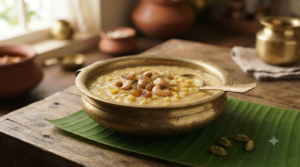
Creamy moong dal payasam made with dairy milk, jaggery, roasted moong dal, ghee, cashews and raisins.
If you prefer the coconut-based version, see our moong dal payasam with coconut milk. For a dairy-free variation, use our moong dal payasam without milk instead.
Moong Dal Payasam Without Coconut Milk: Quick Summary
This version uses full-fat dairy milk rather than coconut milk. Jaggery gives the dessert its caramel-like sweetness, while roasted moong dal adds body and a nutty aroma. Because jaggery and hot milk can separate, the safest method cools one component before they meet.
- Main base: yellow split moong dal, also called pasi paruppu.
- Sweetener: jaggery, melted separately and strained if needed.
- Milk: full-fat dairy milk for a smooth, rich finish.
- Best texture: soft dal with a little grain left, not a complete paste.
- Most important rule: do not mix boiling milk with hot jaggery syrup.
- Serving: warm is best, although chilled payasam also works.
Recipe Card
| Detail | Amount |
|---|---|
| Prep time | 10 minutes |
| Cook time | 30 to 35 minutes |
| Total time | 40 to 45 minutes |
| Servings | 5 to 6 |
| Difficulty | Easy |
| Best served | Warm or lightly chilled |
Ingredients for Moong Dal Payasam
These quantities give a medium-thick payasam that still pours easily. Since jaggery varies in sweetness, start at the lower end and adjust after tasting the dal-jaggery base.
- 1 cup yellow split moong dal
- 2 1/2 cups water for cooking the dal
- 3 cups full-fat dairy milk
- 3/4 to 1 cup grated jaggery
- 1/4 cup water for melting the jaggery
- 1 1/2 tablespoons ghee
- 10 to 12 cashew nuts
- 10 to 12 raisins
- 1/2 teaspoon green cardamom powder
- 1 small pinch of salt
Use clean jaggery powder if you trust the source. Otherwise, melt it with water and strain it, because traditional jaggery can contain fine residue. Whole milk gives the best body, while toned milk makes a lighter payasam.
How to Make Moong Dal Payasam Without Coconut Milk
The sequence matters more than any special equipment. First roast and cook the dal, then sweeten it with jaggery. Separately heat the milk, let one component cool slightly, and only then combine them so the milk stays smooth.
1. Roast the moong dal
Place the moong dal in a heavy pan over low to medium heat. Roast for 3 to 4 minutes until it smells nutty, then switch off the heat. Do not brown it deeply, because a dark roast can make the payasam taste bitter.
Let the dal cool for a minute, then rinse it well. Roasting before rinsing keeps the aroma while still removing dust and loose starch. This small step also gives the finished moong dal payasam a cleaner flavour.
2. Cook the dal until soft
Add the rinsed dal and 2 1/2 cups water to a pressure cooker. Cook for about 2 to 3 whistles on medium heat, then allow the pressure to release naturally. The dal should crush easily between your fingers, although a few soft grains can remain.
If you use a regular pot, simmer the dal until tender and add hot water when needed. Stir more often near the end because the dal can catch on the base. Lightly mash only part of it so the payasam keeps some texture.
3. Make and strain the jaggery syrup
Add the grated jaggery and 1/4 cup water to a small saucepan. Warm it on low heat until the jaggery dissolves, then strain the liquid if you see any grit. You do not need a thick syrup, so stop once the jaggery has melted.
Pour the strained syrup into the cooked dal. Simmer the mixture for 3 to 4 minutes, because this helps the lentils absorb the jaggery flavour. Then switch off the heat and keep the pan aside.
4. Heat the milk separately
Bring the milk to a gentle simmer in a clean saucepan. Keep the heat low and stir every minute, since milk can scorch at the bottom. Simmer for about 5 minutes if you want a slightly richer body, then turn off the heat.
Now allow either the milk or the dal-jaggery mixture to lose some heat. The goal is to avoid combining two very hot mixtures. Experienced home cooks use this temperature gap because it greatly lowers the chance of curdling.
5. Combine milk and jaggery without curdling
When one mixture is warm rather than boiling, slowly add the milk to the dal-jaggery base while stirring. Keep the flame off during this step. Once everything looks smooth, place the pan on the lowest heat for only 1 to 2 minutes if needed.
Do not bring the finished payasam to a rolling boil. Jaggery can encourage dairy milk to split when both are very hot. Traditional home-cooking methods use the same safeguard for dairy versions of jaggery payasam.
6. Fry the nuts and finish
Heat the ghee in a small pan, then fry the cashews until golden. Add raisins and cook only until they puff. Pour this tempering into the payasam, then add cardamom and a tiny pinch of salt.
Rest the moong dal payasam for 5 to 10 minutes before serving. It thickens as it stands, so keep it slightly looser than your ideal final texture. If needed, stir in a little warm milk just before serving.
Why This Moong Dal Payasam Does Not Curdle
The old version of this recipe added jaggery syrup to hot milk while the mixture simmered. That method can work with some jaggery, yet it also raises the chance of the milk splitting. A safer approach keeps jaggery and dairy apart until one side has cooled.
Jaggery is not chemically identical from batch to batch, so its acidity and mineral content can vary. For that reason, the same technique may succeed once and fail the next time. Cooling one component gives you a wider margin for error without changing the dessert’s flavour.
- Cook the dal fully before adding jaggery.
- Melt jaggery with only a little water.
- Heat the milk separately.
- Let either the milk or jaggery mixture cool from boiling to warm.
- Combine slowly while stirring.
- Avoid a strong boil after the dairy and jaggery meet.
Texture Guide: Thin, Creamy, or Thick
Moong dal payasam naturally becomes thicker after cooling because the cooked lentils continue to absorb liquid. Therefore, a pan that looks perfect on the stove can become too dense later. Stop cooking while the payasam still flows easily from a ladle.
| Problem | Likely cause | Fix |
|---|---|---|
| Too thick | Dal absorbed too much liquid | Add warm milk a little at a time |
| Too thin | Too much liquid | Simmer before adding jaggery and milk together |
| Grainy | Dal undercooked or milk split | Cook dal softer; avoid boiling after jaggery |
| Too sweet | Jaggery quantity too high | Add more cooked dal and warm milk |
| Flat flavour | Dal not roasted | Roast lightly next time and finish with cardamom |
For a spoonable dessert, use the recipe as written. If you want a looser festive payasam, add another 1/2 cup warm milk at the end. Add it gradually, because the final thickness depends on how soft the dal became.
Common Mistakes to Avoid
The easiest mistake is rushing the final mixing step. If both the jaggery mixture and milk are bubbling hot, the milk may separate. Another common mistake is cooking the dal until completely gluey, which removes the gentle texture that makes lentil payasam distinctive.
- Skipping the roast: the dessert loses much of its nutty aroma.
- Using too much water for jaggery: the payasam becomes thin before milk goes in.
- Boiling after mixing: this increases curdling risk.
- Over-mashing the dal: the dessert turns pasty rather than creamy.
- Adding nuts too early: they soften and lose their toasted bite.
- Serving immediately: a short rest lets the texture settle.
Variations and Substitutions
If you want a richer dairy version, you can use 2 1/2 cups milk plus 1/2 cup evaporated milk. However, avoid adding condensed milk unless you also reduce the jaggery. Our condensed milk moong dal payasam handles that sweeter style separately.
For a fully dairy-free sweet, use the linked no-milk version rather than forcing a plant milk into this exact method. Almond or oat milk can work, but each brand reacts differently to heat and jaggery. Coconut milk also gives a different regional flavour, so it deserves its own recipe.
Serving, Storage, and Reheating
Serve this moong dal payasam warm after a festive meal or family lunch. It also tastes good chilled, although the texture becomes much thicker in the refrigerator. If you plan to chill it, keep the hot payasam slightly thinner.
Because this recipe contains dairy, refrigerate leftovers promptly in a clean covered container. The Food Safety and Standards Authority of India advises keeping leftovers cold below 5°C and reheating cooked food thoroughly. For best quality, finish this payasam within 2 to 3 days.
Reheat only the portion you need, and use low heat. Add a splash of milk while stirring because chilled dal thickens. Avoid repeated boiling, since that can damage the texture and raises the chance of separation.
Nutrition Note
This is a dessert, so jaggery and ghee contribute a meaningful amount of sugar and energy. Moong dal also adds protein, fibre, and minerals, while milk contributes protein and calcium. Exact nutrition changes with the jaggery brand, milk fat, serving size, and garnish.
For a precise calculation, weigh the ingredients you actually use and check them in a verified nutrient database such as USDA FoodData Central. That approach is more reliable than copying one fixed calorie number from another payasam recipe.
When to Choose This Version
Choose this recipe when you want a coconut-free South Indian lentil dessert but still enjoy dairy. It suits cooks who like the flavour of jaggery yet want a milk-based finish. It is also useful when coconut milk is unavailable or when guests prefer a milder coconut-free taste.
Choose the coconut-milk version when you want a more traditional Kerala-style profile. Choose the no-milk version when you need to avoid dairy. Keeping these variations separate also prevents ingredient substitutions from changing the recipe so much that the method no longer makes sense.
Moong Dal Payasam: Final Tips Before You Cook
Roast the dal gently, cook it until soft, and keep the jaggery syrup thin. Most importantly, control the temperature when dairy meets jaggery. That one change fixes the biggest weakness in many quick payasam recipes and gives you a smoother result.
Start with 3/4 cup jaggery if your family prefers moderate sweetness, then adjust before adding milk. Keep the finished dessert a little loose, because it thickens as it rests. Finally, add the ghee-fried nuts at the end so they stay aromatic and crisp.
Frequently Asked Questions
Can I make moong dal payasam without coconut milk?
Yes. Use dairy milk instead of coconut milk, but add it carefully when jaggery is involved. Heat the milk separately, then combine it with the dal-jaggery mixture only after one side has cooled from boiling to warm.
Why did my moong dal payasam curdle?
The most likely cause is mixing hot jaggery syrup with very hot dairy milk. Jaggery batches vary, so the risk is not identical every time. Next time, cool either the milk or the jaggery base before combining them.
Should I roast moong dal before making payasam?
Roasting is strongly recommended because it removes the raw lentil aroma and adds a nutty note. Roast only until fragrant and lightly coloured, then rinse before cooking. A dark roast can make the dessert taste bitter.
Can I use sugar instead of jaggery?
Yes. Sugar gives a cleaner, lighter sweetness and it is less likely to split dairy milk. However, the flavour will move closer to a milk kheer and away from the deep caramel note that jaggery provides.
Can I make this payasam without a pressure cooker?
Yes. Simmer the roasted and rinsed dal in a heavy pot until it becomes fully tender. Add hot water as needed and stir often near the end, because soft lentils can stick to the base.
Why does payasam become thick after cooling?
Cooked moong dal continues absorbing liquid as the dessert rests. Therefore, the payasam naturally firms up after it leaves the stove. Add a little warm milk before serving if the chilled or rested payasam becomes too thick.
Can I make this recipe vegan?
Not with dairy milk and ghee, but you can make a vegan variation. Use the dairy-free recipe linked above, or choose coconut milk with a plant-based fat. A direct one-for-one plant milk swap may need testing because brands behave differently.
How long can I store moong dal payasam?
Refrigerate it promptly in a covered container and use it within about 2 to 3 days for best quality. Keep the refrigerator cold, and reheat only what you need. If it smells sour or looks unusually separated, discard it.