Sweet Potato Gulab Jamun: Untested Recipe Trial
Sweet potato gulab jamun is a Diwali dessert variation that combines cooked sweet potato, milk powder and flour in soft, syrup-soaked balls. This untested recipe trial provides measured ingredients, a cautious frying method and practical troubleshooting steps. The most important step is frying one test ball before cooking the entire batch.
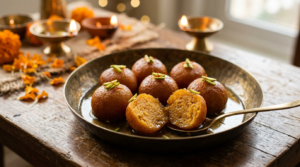
Illustrative image of sweet potato gulab jamun. The photograph does not document a completed test of this recipe.
Untested Recipe Trial: This exact sweet potato gulab jamun formula has not undergone a completed kitchen trial. The ingredient quantities, expected yield, frying range and syrup proportions are proposed starting points rather than verified results. Because sweet potatoes differ in moisture, the dough may need small adjustments. Always check the test ball for complete cooking before proceeding.
Allergen information: This recipe contains wheat (gluten) from maida and milk from milk powder and ghee. Optional pistachios or other nut garnishes introduce tree nuts. Check packaged ingredient labels and prevent cross-contact when cooking for anyone with food allergies.
Sweet Potato Gulab Jamun at a Glance
Sweet potato gulab jamun uses cooked sweet potato as part of the dough instead of relying entirely on concentrated milk solids. The sweet potato contributes starch, moisture and natural sweetness. However, that moisture also makes the dough harder to control than a traditional khoya-based version.
- Recipe status: Untested formulation requiring a kitchen trial.
- Main ingredient: 250 g cooked and cooled sweet potato mash.
- Proposed yield: Approximately 16–18 small jamuns, subject to final dough adjustments.
- Frying target: Start around 140°C, adjusting based on the test ball.
- Preferred method: Slow frying in small batches.
- Syrup flavour: Cardamom and rose water, with optional saffron.
- Main challenge: Preventing excess moisture from weakening the balls.
- Essential test: Cut open a fully fried test jamun and check the centre before tasting.
The proposed formula uses milk powder for body and a familiar gulab jamun flavour. Maida provides structure, while a small amount of ghee helps bring the dough together.
Why Sweet Potato Gulab Jamun Needs Careful Frying
Traditional gulab jamun uses milk-based dough, often made with khoya or milk powder. Sweet potato changes the mixture because it adds starch, fibre, sugars and water. Consequently, a dough that appears firm during shaping may soften or spread during frying.
High frying temperatures create another problem. The outer surface can become dark while the middle remains dense or undercooked. Therefore, this trial favours low, controlled heat rather than the higher temperatures often used for pakora or chips.
King Arthur Baking’s gulab jamun recipe specifies 300°F, approximately 149°C, for its tested milk-based version. It also highlights the need for smooth dough balls and controlled frying. That is useful background guidance, but it does not validate the exact temperature or ingredient ratios of this sweet potato variation.
For this trial, begin around 140°C and watch the first ball closely. The proposed working range is approximately 135–145°C. However, use the cooked centre and even browning as the final checks rather than treating those temperatures as guaranteed results.
Ingredients for Sweet Potato Gulab Jamun
Measure the cooked sweet potato after peeling and cooling. Raw weight is less reliable because different sweet potatoes absorb or release different amounts of moisture.
Ingredients for the untested dough formula
| Ingredient | Trial quantity | Purpose |
|---|---|---|
| Cooked sweet potato mash | 250 g | Provides the main body and sweetness |
| Full-fat milk powder | 35 g | Adds milk solids and structure |
| Maida | 25 g | Helps bind the dough |
| Ghee | 5 g | Helps soften and shape the mixture |
| Baking soda | Up to 1/16 tsp | Small trial amount for leavening |
| Salt | One small pinch | Balances sweetness |
| Milk | 0–2 tsp, only if needed | Adjusts dry dough |
| Neutral frying oil or ghee | As required | Deep frying |
Important: The quantities above form an experimental starting formula. Additional flour or milk powder may be necessary if the cooked mash contains excess water. Record adjustments so the next attempt can use the same measurements.
Ingredients for cardamom-rose syrup
| Ingredient | Quantity | Purpose |
|---|---|---|
| Sugar | 300 g | Sweet syrup base |
| Water | 375 ml | Keeps syrup light |
| Green cardamom | 4 pods | Provides aroma |
| Rose water | 1 tsp | Adds floral flavour |
| Lemon juice | 1 tsp, optional | Helps limit sugar crystallisation |
| Saffron | 6–8 strands, optional | Adds colour and aroma |
Use a light syrup rather than a thick one-string syrup. A heavy syrup may struggle to penetrate the fried jamuns. The sugar and water quantities here also require kitchen validation with this specific dough.
How to Prepare Sweet Potato Gulab Jamun Dough
Preparing the dough begins with moisture control. The sweet potato should be fully cooked and easy to mash, but it should not contain unnecessary cooking water. Steam cooking is a useful starting method because it avoids immersing the sweet potato in water.
Step 1: Cook and prepare the sweet potato
Wash the sweet potato thoroughly. Steam it until completely tender, then allow it to cool enough for safe handling. Remove the skin and mash the flesh until smooth.
Spread the mash on a plate for approximately 10–15 minutes so excess steam can escape. Then weigh 250 g of the prepared mash. Avoid adding water during mashing because excess moisture makes the dough harder to shape.
If the mash looks unusually wet, let more steam escape before mixing it with the dry ingredients. Do not add raw flour repeatedly to compensate for a watery mash without testing the texture.
Step 2: Combine the dry ingredients
Mix the milk powder, maida, salt and measured baking soda in a separate bowl. Break up any lumps before adding the mixture to the sweet potato.
Use the baking soda sparingly because too much may weaken the dough or create an undesirable texture. For accurate measurement, use a small measuring spoon rather than an uncontrolled pinch.
Step 3: Make a soft dough
Add the dry ingredients and ghee to the cooled sweet potato mash. Combine them gently until the mixture forms a soft dough. Avoid vigorous kneading because excessive mixing may make the finished jamuns dense.
Cover the dough and let it rest for about 10 minutes. Then check whether a small portion holds its shape. If it cracks from dryness, add milk one teaspoon at a time. If it spreads or feels too sticky, add a teaspoon of maida or milk powder and reassess.
Step 4: Shape smooth dough balls
Lightly grease your palms with ghee. Divide the dough into small, even portions, using approximately 17–18 g per ball as an initial target.
Roll each portion gently until the surface becomes smooth and free from visible cracks. Avoid pressing firmly, since tight shaping can make the centre dense. Keep the shaped balls covered while preparing the frying oil.
If the balls flatten after resting on a plate, the dough may contain too much moisture. Correct the mixture before frying because weak balls may split in hot oil.
How to Prepare the Gulab Jamun Sugar Syrup
The syrup should be ready before frying begins. This allows the cooked jamuns to move into warm syrup without an extended delay. A light consistency is especially useful for an experimental sweet potato dough.
- Pour 375 ml water into a saucepan and add 300 g sugar.
- Add four lightly crushed green cardamom pods.
- Add the optional saffron strands if using them.
- Heat gently while stirring until the sugar dissolves completely.
- Bring the syrup to a gentle boil, then simmer for approximately five minutes as a trial starting point.
- Switch off the heat and stir in one teaspoon of rose water.
- If using optional lemon juice, add one teaspoon after switching off the heat and stir gently.
- Cover the saucepan and keep the syrup warm, not actively boiling, while frying the jamuns.
The syrup should flow easily from a spoon. It should not form a thick thread between your fingers. If it becomes too concentrated, carefully stir in a small amount of hot water and warm it gently.
Rose water varies in strength between brands, so adjust the aroma cautiously. Excess rose water can dominate the sweet potato and cardamom flavours.
Sweet Potato Gulab Jamun Frying Guide
Sweet potato gulab jamun needs careful temperature control because the outside may brown before the centre cooks. This trial uses approximately 140°C as the starting oil temperature, with 135–145°C as a provisional working range. The correct setting for this formula remains unverified until a successful kitchen trial.
Step 1: Heat the frying oil gradually
Choose a deep, heavy-bottomed kadai or saucepan. Add enough frying oil or ghee for the balls to move freely without touching the bottom continuously. Leave ample space above the oil to prevent overflowing.
Heat the oil gradually over medium-low heat. Use a cooking thermometer and begin near 140°C. Keep the heat adjustable because adding dough balls can temporarily lower the temperature.
Do not allow water to contact the hot oil. The USDA Food Safety and Inspection Service warns that deep-frying oil can cause serious burns and fires. Never leave the pan unattended, and never use water on an oil fire.
Step 2: Fry one test ball first
Place one shaped dough ball carefully into the oil using a suitable slotted spoon. Watch how it behaves during the first minute. It should begin cooking gradually rather than turning dark immediately.
Allow the outer surface to set before moving the ball gently. Turn it as needed for even browning. The classic milk-based recipe from King Arthur Baking uses approximately six to eight minutes, but that timing is not validated for this sweet potato formula.
Remove the ball only after it has fried evenly. Let it drain briefly on a rack or absorbent paper. Allow it to cool enough for safe handling, then cut it completely through the centre.
Check before tasting: The centre must be fully cooked, with no raw flour paste, wet dough or uncooked core. If the centre is undercooked, do not taste the ball. Adjust the frying method and prepare another test ball. Taste only a fully cooked sample after it has cooled to a safe eating temperature.
Step 3: Adjust the dough or heat
If the outside turns dark before the centre cooks, reduce the frying temperature. Smaller portions may also cook more evenly. If the ball breaks apart, review the dough moisture and shape before trying again.
Make one adjustment at a time and fry another test ball. This makes it easier to identify the cause of a failed attempt. Do not fry the entire batch until a test ball holds together and cooks properly.
Step 4: Fry the remaining jamuns
Once the test ball succeeds, fry the remaining dough in small batches. Start with approximately five or six balls, depending on pan size and available space. Avoid crowding because the oil temperature can fall quickly.
Maintain steady, moderate bubbling as the balls cook. Turn them carefully for even colour without pressing their surfaces. Remove each batch once the jamuns have cooked through and developed an even golden-brown exterior.
Do not rely on colour alone. If later batches look different from the successful test ball, cut another fully fried sample and inspect the centre before serving.
How to Soak Sweet Potato Gulab Jamun in Syrup
After frying, allow the jamuns to drain briefly. Then transfer them carefully into the warm syrup. The syrup should feel warm but should not be bubbling vigorously.
Use a spoon to coat the jamuns gently, taking care not to crush their surfaces. Allow sufficient time for the syrup to move into the crumb. Because this exact formula remains untested, the ideal soaking duration has not yet been established.
A practical trial can begin with a 30-minute check, followed by further soaking if needed. Cut one jamun to see how far the syrup has penetrated. The centre should already be fully cooked from frying; syrup soaking is not a substitute for cooking.
If the syrup mostly remains outside, it may be too thick or the jamun crust may have become too firm during frying. Record the result before changing the next batch.
Sweet Potato Gulab Jamun Troubleshooting
Several problems can appear during this recipe trial. Most relate to dough moisture, ball size, mixing technique or frying temperature. The following table provides initial corrections rather than guaranteed solutions.
| Problem | Possible cause | Suggested correction |
|---|---|---|
| Cracks while shaping | Dry dough or coarse mash | Add milk one teaspoon at a time and reshape |
| Breaks in oil | Excess moisture, weak structure or too much soda | Add a little maida or milk powder, then test again |
| Flattens before frying | Dough is too wet | Adjust with small amounts of dry ingredients |
| Dark outside, raw centre | Excessive frying heat | Lower temperature and try smaller balls |
| Dense cooked centre | Overworked dough or excessive dry ingredients | Mix more gently and review the formula |
| Greasy surface | Oil too cool or overcrowded pan | Allow temperature to recover and fry smaller batches |
| Little syrup absorption | Thick syrup or firm outer crust | Use lighter warm syrup and review frying heat |
| Strong sweet potato taste | Natural ingredient flavour or weak syrup aroma | Adjust cardamom and rose water carefully |
If a jamun breaks apart during frying, remove the loose pieces carefully once safe to do so. Avoid adding more balls until the oil returns to the intended range. Frying broken pieces repeatedly may leave unwanted crumbs in the oil.
How to Recognise Properly Cooked Jamuns
A successfully cooked test jamun should hold its shape and have a firm enough surface to survive gentle handling. After cutting, its centre should show a cooked crumb rather than a sticky, raw flour mixture.
The inner texture may differ from a traditional khoya jamun because sweet potato contains more starch and moisture. However, a moist centre must not be confused with raw dough. If you cannot confidently establish that the centre has cooked fully, continue adjusting the trial rather than serving it.
Once fully cooked and safely cooled, a small sample can be tasted before syrup soaking. This helps distinguish dough flavour from syrup flavour. The remaining jamuns can then undergo the planned soaking test.
Can You Make Sweet Potato Gulab Jamun Without Milk Powder?
A milk-powder-free variation is possible in principle, but removing milk powder changes this formula significantly. Milk powder contributes dry solids as well as flavour, so a direct omission may leave the dough too soft or structurally weak. Any substitute would need separate testing.
For a dairy-free version, both milk powder and ghee need attention. Replacing ghee with suitable oil does not automatically make the original quantities reliable. Therefore, a dairy-free sweet potato jamun should be treated as a separate recipe trial rather than a guaranteed substitution.
Can You Use Atta Instead of Maida?
Whole wheat atta may produce a firmer or grainier jamun because it differs from refined maida. It also changes the balance of flour, water and starch. Consequently, a direct replacement cannot be promised to deliver the same texture.
If experimenting with atta, make a small separate batch and record how much flour the dough requires. Fry one test ball and inspect its centre before continuing. Remember that both atta and maida contain wheat gluten, so neither suits a wheat-free diet.
Diwali Serving Ideas for Sweet Potato Gulab Jamun
Sweet potato gulab jamun can be served in shallow bowls with a spoonful of cardamom-rose syrup. A few saffron strands add a festive touch, while chopped pistachios can provide colour and crunch.
Optional nut disclosure: Pistachios, almonds and similar garnishes contain tree nuts. Leave them out for guests who need to avoid those allergens, and prevent cross-contact during preparation. Removing the garnish does not eliminate the wheat and milk already present in the dough.
For a Diwali sweet spread, pair the syrupy jamuns with a drier snack such as whole wheat shankarpali. A mix of textures can make the dessert selection more interesting.
You can also explore more festive ideas in our Diwali sweets recipes guide. If you have extra sweet potatoes for a savoury dish, try sweet potato chaat.
Serve only after checking that the jamuns have cooked properly. Do not treat the natural sweetness of sweet potato as evidence that the finished dessert contains little sugar. The recipe includes added sugar syrup and deep frying.
What to Record During an Untested Recipe Trial
A useful recipe trial records more than whether the dessert tasted good. Sweet potato moisture, dough consistency and frying heat can all affect the outcome. Keeping simple notes makes the next batch easier to improve.
- Sweet potato: Record the cooked mash weight and variety, if known.
- Dough: Note the final milk powder and flour amounts.
- Shaping: Record the number of balls and their approximate weights.
- Frying: Note the thermometer reading and the time needed to cook a test ball.
- Centre: Check whether the fully fried ball has an evenly cooked crumb.
- Syrup: Record its consistency and how well the jamun absorbs it.
- Result: Describe the cooked texture, flavour and any breakage.
Photographs of the dough, fried ball and cut centre can also help compare attempts. A second successful batch using the same measurements would provide stronger support for a repeatable recipe.
Before You Make the Full Diwali Batch
This sweet potato gulab jamun recipe remains an untested formulation, so the first batch should be treated as a kitchen experiment. Start with measured ingredients, avoid excess water in the mash and use a thermometer if available.
Most importantly, fry one ball and confirm that the middle is fully cooked before tasting or proceeding. If the result fails, adjust one variable and try again. The goal is a reliably cooked, syrup-soaked sweet potato jamun rather than an attractive exterior hiding an uncooked centre.
Frequently Asked Questions
Is sweet potato gulab jamun a tested recipe?
No. This exact formula is an untested recipe trial with proposed ingredients and cooking steps. Published gulab jamun methods provide background guidance, but the sweet potato dough needs its own kitchen validation. A successful test ball is essential before cooking the full batch.
What is the best temperature for frying sweet potato gulab jamun?
Approximately 140°C is the proposed starting temperature for this trial. The suggested working range is 135–145°C, but it has not been validated for this formula. Adjust the heat according to the test ball and check that the centre cooks fully.
Why does sweet potato gulab jamun break while frying?
Excess moisture, weak dough structure, shaping cracks or too much baking soda may cause breakage. Correct the dough in small steps, then fry another test ball. Avoid changing several ingredients at once because that makes the problem harder to diagnose.
Can I taste the dough before frying?
No. The dough contains raw maida, which should not be eaten uncooked. Fry the test ball completely, cut it open and ensure that the centre contains no raw flour paste. Taste it only after full cooking and safe cooling.
Can I skip the lemon juice in the syrup?
Yes. Lemon juice is optional and mainly helps reduce sugar crystallisation. If using it, add one teaspoon after switching off the syrup heat. Stir gently, then add the fully cooked jamuns while the syrup remains warm.
Does sweet potato gulab jamun contain gluten?
Yes. This formula contains maida, which is wheat flour and therefore contains gluten. It also contains milk powder and ghee. The recipe is not suitable for people who must avoid wheat, gluten or milk ingredients.
Are nuts required for this recipe?
No. Pistachios, almonds and similar garnishes are entirely optional. They add visual appeal and texture but are not part of the main dough. Avoid them when serving someone with a tree-nut allergy, and take care to prevent cross-contact.
Can sweet potato gulab jamun be air-fried?
This formula has not been tested in an air fryer. Air frying may create a different crust and affect syrup absorption. A separate trial would be needed to establish a suitable cooking temperature, duration and final texture.
Why is my gulab jamun dark outside but uncooked inside?
The oil may be too hot, or the dough balls may be too large. Lower the frying temperature and test a smaller ball. Do not serve the jamuns until the centres have cooked fully, regardless of the outer colour.
Can sweet potato gulab jamun taste like traditional gulab jamun?
It may develop a similar syrupy character, but sweet potato will contribute its own flavour and texture. Milk powder, cardamom and rose water help create a familiar festive dessert profile. The exact flavour balance remains subject to the kitchen trial.