Aava Pulihora Recipe: Authentic Andhra Temple-Style Tamarind Rice
This aava pulihora recipe recreates the mustard-scented tamarind rice that Andhra and Telangana temples hand out as prasadam, and the single trick most home cooks miss is when to add the mustard. “Aavalu” means mustard seeds in Telugu, so aava pulihora is simply classic tamarind rice lifted with a fresh mustard paste. The pungency is glorious when you get it right.
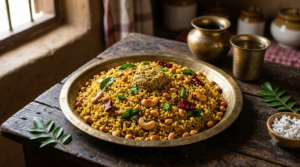
Aava pulihora — Andhra tamarind rice folded with fresh mustard paste and a peanut-cashew tempering.
It also turns harsh and bitter when you get it wrong, which is exactly what happens if you grind the mustard too early or fold it into hot rice. Below, this aava pulihora recipe gives you exact gram measures, the temple-kitchen sequence, and the small timing rules that separate a fragrant pulihora from a flat one.
Aava Pulihora at a Glance
- What it is: Andhra-style tamarind rice flavoured with freshly ground mustard paste.
- Total time: about 1 hour, plus a 2-hour rest for the flavours to bloom.
- Serves: 4 to 6 as a light meal or offering.
- Skill level: moderate, because the timing matters more than any hard technique.
- Best for: Sankranti, Ugadi, Varalakshmi Vratam, Ganesh Chaturthi, and everyday travel food.
Because tamarind and sesame oil both slow spoilage, this rice has always doubled as journey food and festival prasadam. That is why grandmothers pack it for long train rides. Bhimas Cook is a home-kitchen blog, and this version follows the measurements my mother uses in Andhra Pradesh rather than a scaled temple batch.
What Makes This Aava Pulihora Recipe Different
Most online versions treat aava pulihora as ordinary tamarind rice with a spoon of mustard stirred in. That undersells it. In a proper aava pulihora recipe, the mustard paste is added last and only after the rice has cooled, so its raw heat perfumes the dish instead of scorching it.
The tamarind is also cooked down until the oil separates, which deepens the sourness the way a temple pulusu does. Get those two moves right and the rest is easy.
Why the Mustard Turns Bitter
Ground mustard develops a sharp, almost acrid edge when it sits or meets heat for too long. So you grind it fresh, keep it coarse, and fold it into rice that is at room temperature. If you stir mustard paste into steaming rice, the warmth cooks it and the flavour sours. This one rule fixes the most common complaint about home aava pulihora.
Ingredients for Aava Pulihora Recipe
These quantities are measured for a reliable result, so weigh where you can. The list splits into four small stages, which keeps the process calm even for a first attempt.
For the Cooked Rice
- 250 g Sona Masuri rice, uncooked (about 1.25 cups)
- 600 ml water, for cooking
- ¼ tsp turmeric powder
- ¾ tsp salt
For the Tamarind Extract
- 50 g seedless tamarind
- 80–100 ml hot water, to soak and extract
For the Mustard Paste
- 2 tsp mustard seeds
- 1 dried red chilli
- A pinch of salt
- 1 tbsp water
For the Tempering and Final Mix
- ¼ cup sesame (gingelly) oil
- 1 tbsp urad dal (black gram)
- 1 tbsp chana dal (Bengal gram)
- ½ tbsp peanuts
- ½ tbsp cashew pieces
- 2 dried red chillies, broken
- ½ tsp mustard seeds, for tempering
- 8–10 curry leaves
- ¼ tsp asafoetida (hing)
- 2–3 green chillies, slit (optional)
- ¼ tsp turmeric powder
- Salt to taste, about 1 tsp
How to Make Aava Pulihora Recipe Step by Step
Read the whole sequence once before you start, since two stages depend on the rice being fully cool. Everything else can be prepped while it cools.
Step 1: Cook and Cool the Rice
Wash the rice until the water runs clear. Then cook it with the water, turmeric, and salt until the grains are separate and just firm, never mushy. Firm grains hold their shape when you fold in the sauce.
Now spread the rice on a wide plate or tray. Let it cool completely to room temperature, because warm rice ruins both the mustard and the texture. Add a teaspoon of sesame oil while it cools if you want extra shine.
Step 2: Extract the Tamarind
Soak the tamarind in hot water for about ten minutes. After that, mash it with your fingers and strain out the fibres. You want a thick, pouring pulp rather than a watery juice. Slightly aged tamarind gives a rounder sourness, so use it if you have it.
Step 3: Grind the Mustard Paste Fresh
Grind the mustard seeds with the dried red chilli and a pinch of salt, adding just enough water for a coarse paste. Do not make this ahead of time. Mustard oxidises fast, and an early paste is the usual reason a batch tastes bitter. Set it aside and grind it only when the rice is nearly cool.
Step 4: Build the Tempering
Heat the sesame oil in a wide pan on medium. Add the ½ tsp mustard seeds first, and once they splutter, add the urad dal, chana dal, peanuts, and cashews. Fry until golden but not dark.
Next add the broken red chillies, curry leaves, hing, and slit green chillies. Now lower the heat, stir in the turmeric, and move quickly so it does not burn.
Step 5: Cook the Tamarind Into the Oil
Pour the tamarind pulp straight into the hot tempering. Let it simmer for six to eight minutes until it thickens and the oil starts to separate at the edges. This step is what gives temple pulihora its glossy, concentrated tang. Taste and add salt, then turn off the heat and let the mixture cool a little.
Step 6: Fold Everything Together
Add the cooled rice to the cooled tamarind base and fold gently with a wooden spoon. Once the colour is even, sprinkle in the fresh mustard paste and fold again. Because the rice is cool, the mustard stays fragrant rather than harsh. Now rest the pulihora, uncovered, for at least thirty minutes, though two hours is better.
The Temple-Style Resting Secret
Temple cooks never serve pulihora the moment it is mixed. They let it sit so the tamarind, mustard, and oil soak into every grain. A rest of two hours transforms the dish, and it genuinely tastes better the next morning. So make it ahead when you can, and always taste for salt again after resting, since rice absorbs seasoning as it stands.
Aava Pulihora Recipe vs Other Pulihora Styles
Pulihora comes in several regional forms, and knowing the difference helps you pick the right one for a festival. The tamarind base stays similar, while the souring or flavouring agent changes. Here is how the popular versions compare.
| Style | Souring / Flavour Agent | Best Known For |
|---|---|---|
| Aava pulihora | Tamarind plus fresh mustard paste | Pungent temple prasadam |
| Chintapandu pulihora | Tamarind only | The everyday classic |
| Nimmakaya pulihora | Fresh lemon juice | Bright, quick festival rice |
| Chintakaya pulihora | Raw green tamarind | Seasonal, sharply sour |
If you like this mustard version, the lemon-based nimmakaya pulihora is a lighter cousin worth trying. Both share the same tempering, so once you learn one, the others follow easily.
Common Mistakes to Avoid
A few small errors trip up an otherwise good aava pulihora recipe. So watch for these before you cook.
- Warm rice: folding sauce into hot rice makes it sticky and dulls the mustard.
- Basmati rice: its long grains and aroma fight the dish, so stick with Sona Masuri.
- Early mustard paste: grinding it in advance is the top cause of bitterness.
- Burnt turmeric: add it off high heat and mix fast, or it turns bitter and dark.
- Thin tamarind: if you skip the simmer, the rice tastes watery instead of tangy.
Storage, Food Safety, and Travel Tips
Aava pulihora is a natural travel food, because tamarind and sesame oil slow spoilage. At a cool room temperature it stays good through the day, which is why it packs so well for journeys and festival distribution. Keep it covered in a clean, dry container and use a dry spoon each time.
In hot or humid weather, refrigerate it within a few hours instead, since cooked rice can grow bacteria when left warm too long. It keeps in the fridge for about a day, so reheat gently with a splash of water, or bring it to room temperature before serving. When in doubt about any rice dish left out, throw it out rather than risk it.
Nutrition Information (Approximate Per Serving)
| Nutrient | Amount |
|---|---|
| Calories | 360–380 kcal |
| Carbohydrates | 58–60 g |
| Protein | 7–8 g |
| Fat | 12–15 g |
| Fibre | 3 g |
These figures are estimates for a standard serving of this aava pulihora recipe, so they shift if you add more nuts or oil. Roughly speaking, one portion carries about 370 calories, with most of the energy from rice and healthy fats from the sesame oil and nuts.
Serving Suggestions
Serve aava pulihora warm or at room temperature, whichever suits the day. A spoon of plain yoghurt cools the tang beautifully, while a crisp papad adds crunch. Many devotees simply eat it on its own, exactly as they receive it as prasadam. For a festive plate, pair it with Annavaram prasadam or other offerings.
When Andhra Families Make Aava Pulihora
This dish appears at almost every South Indian festival, and each occasion gives it a slightly different role. Households prepare it for Sankranti, Ugadi, Varalakshmi Vratam, and Ganesh Chaturthi, often as one of several rice offerings. Temples make it in vast batches for annadanam, where thousands of pilgrims receive it after darshan. That festive role is why an aava pulihora recipe earns a permanent place in Andhra kitchens.
You can read more about the tradition of tamarind rice offerings on Wikipedia’s Pulihora page, and about large-scale temple food service at the official TTD website.
Before You Serve
A great aava pulihora recipe rests on three habits: cool the rice fully, grind the mustard fresh, and let the finished rice sit before serving. Nail those and the exact grams matter far less than you would think. Start with these measures, then adjust the tamarind and mustard to your own taste over time. That is precisely how every family kitchen arrives at its own signature pulihora.
Frequently Asked Questions
What is aava pulihora?
Aava pulihora is Andhra-style tamarind rice flavoured with freshly ground mustard paste. “Aavalu” means mustard in Telugu, so the name simply points to that pungent mustard note. It is especially popular as temple prasadam across Andhra Pradesh and Telangana.
Why does my aava pulihora taste bitter?
Bitterness almost always comes from the mustard paste. If you grind it too early or stir it into warm rice, it oxidises and turns harsh. Grind it fresh and fold it into fully cooled rice to keep the flavour clean and fragrant.
Can I use store-bought tamarind paste?
Yes, store-bought tamarind paste works when you are short on time. Dilute it with a little warm water and simmer it in the tempering as usual. Fresh soaked tamarind still gives a deeper, more temple-like sourness, so use it when you can.
Why is sesame oil preferred?
Sesame or gingelly oil carries the roasted, earthy aroma that defines South Indian temple cooking. It also keeps longer than many oils, which suits a dish made to travel. Groundnut oil is a fair substitute, though the flavour shifts noticeably.
Which rice is best for aava pulihora?
Sona Masuri is the ideal choice, because its short grains stay separate and absorb the sauce well. Avoid basmati, since its aroma and long grains clash with the tamarind and mustard. Cook the rice slightly firm for the best texture in your aava pulihora recipe.
How long does aava pulihora stay fresh?
At a cool room temperature it keeps well through the day, which is why it travels so well. In hot or humid conditions, refrigerate it within a few hours and use it within about a day. Reheat gently with a splash of water, or serve it at room temperature.
Do temples add jaggery to pulihora?
Most temple versions keep it purely tangy, without sweetener, to preserve the sharp prasadam character. Some home cooks add a small piece of jaggery to round off very sour tamarind. It is optional and regional, so adjust it to your family’s taste.