Gutti Vankaya Curry Recipe: Authentic Andhra Stuffed Brinjal
This Gutti Vankaya curry recipe turns a handful of baby brinjals into the tangy, peanut-rich stuffed curry that Andhra families cook for weekend lunches and festive spreads. In Telugu, gutti means stuffed and vankaya means brinjal, so the name simply describes small eggplants packed with a roasted spice masala and simmered in a glossy tamarind gravy.
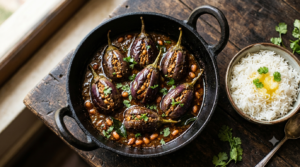
Small brinjals stuffed with peanut-sesame masala, simmered in a tangy Andhra tamarind gravy.
The trick that separates a great version from a soggy one is the balance of freshly roasted peanuts, sesame, and coconut, plus brinjals tender enough to soak up flavour without turning bitter. Cook this Gutti Vankaya curry recipe once with the measurements below, and you will not reach for a restaurant menu again.
Gutti Vankaya Kura at a Glance
- Cuisine: Andhra and Telangana style, vegetarian.
- Core masala: roasted peanuts, sesame seeds, and dry coconut.
- Gravy base: tamarind, onion, and ginger-garlic, mildly spiced.
- Total time: roughly 55 to 65 minutes for 4 to 5 people.
- Best served with: hot rice and ghee, or soft roti and chapati.
Recipe Card
| Detail | Value |
|---|---|
| Prep time | 20 minutes |
| Cook time | 35–45 minutes |
| Total time | 55–65 minutes |
| Servings | 4–5 |
| Difficulty | Medium |
What Makes This Gutti Vankaya Curry Recipe Special
Because the flavour lives entirely in the masala, this Gutti Vankaya curry recipe leans on three roasted nuts and seeds instead of heavy cream or cashew paste. Peanuts bring body, sesame adds a nutty depth, and dry coconut rounds it off. The tamarind then cuts through that richness so the curry never feels greasy.
Andhra kitchens treat this dish as special-occasion food, since stuffing each brinjal by hand takes patience. That effort pays off when the eggplants collapse into the gravy and release the spice from within. Many online versions skip the coconut or overload the tamarind, so the notes below fix the two mistakes that ruin the balance most often.
Gutti Vankaya Curry Recipe: Ingredients You Need
Gather everything before you start, because the roasting and stuffing move quickly once the pan is hot. The quantities below feed four to five people as a main curry with rice.
Main Ingredients
- 12–14 small tender brinjals (baby eggplants), about 500g
- Tamarind – 1 tablespoon, soaked to make about ¼ cup extract
- Turmeric powder – ½ teaspoon
- Kashmiri red chilli powder – 1 teaspoon (adjust to taste)
- Oil – 3 tablespoons
- Salt – about 1½ teaspoons, to taste
- Fresh coriander leaves – 2 tablespoons, chopped
For the Stuffing Masala
- Raw peanuts – ⅓ cup (about 50g)
- White sesame seeds – 2 tablespoons
- Dry coconut (kopra) or desiccated coconut – 2 tablespoons
- Coriander seeds – 1 tablespoon
- Cumin seeds – 1 teaspoon
- Fenugreek seeds – ¼ teaspoon (optional)
- Dry red chillies – 3–4, adjusted to your spice level
- Salt – 1 teaspoon
For Tempering
- Mustard seeds – 1 teaspoon
- Urad dal – ½ teaspoon (optional)
- Curry leaves – 1 sprig
- Onion – ½ cup, finely chopped
- Ginger-garlic paste – 1 tablespoon
If you want a restaurant-style aroma, add a 1-inch piece of cinnamon and two cloves to the roasting pan. These whole spices are optional, yet they lift the masala noticeably.
How to Make Gutti Vankaya Curry Recipe Step by Step
Follow this Gutti Vankaya curry recipe in the order given, since the masala must cool before you grind it. Each stage is short, so read through once before you switch on the stove.
Step 1: Soak the Tamarind
Soak 1 tablespoon of tamarind in ¼ cup of warm water for 15 minutes. Squeeze out the pulp and discard the fibres. Keep this tangy extract aside for the gravy.
Step 2: Roast and Grind the Masala
Heat a pan on low-medium flame and dry roast the peanuts until fragrant, which takes about 3 minutes. Then add the sesame seeds, coriander seeds, cumin, fenugreek, and dry red chillies. Roast for another 2 to 3 minutes until aromatic, and finally toss in the dry coconut for one minute.
Let everything cool completely, because hot spices turn oily when ground. Grind it into a slightly coarse powder with 1 teaspoon of salt.
Step 3: Prepare the Brinjals
Wash the brinjals and pat them dry. Make a deep cross (X) cut from the base of each one, but stop about three-quarters of the way so the stem end stays intact. Drop the cut brinjals into salted water for a few minutes, since this stops browning and draws out any bitterness.
Step 4: Stuff the Brinjals
Gently open each brinjal at the cuts and press the masala inside. Fill them generously, yet handle them carefully so they do not split. Set the leftover masala aside, because it thickens and flavours the gravy later.
Step 5: Temper and Sauté
Heat 3 tablespoons of oil in a deep kadai or heavy pan. Add the mustard seeds and wait until they crackle, then add urad dal and curry leaves. Stir in the chopped onion and sauté until translucent, roughly 3 minutes. Add the ginger-garlic paste and cook until the raw smell fades.
Step 6: Build the Gravy and Cook
Add turmeric and chilli powder to the aromatics, followed by the reserved masala. Sauté on low for 2 to 3 minutes so the spices bloom. Pour in the tamarind extract with ⅔ to ¾ cup of water and stir well. Now place the stuffed brinjals upright in the pan and sprinkle a little salt over them.
Cover and simmer on low heat for 20 to 25 minutes. Turn the brinjals gently halfway through, because the skin tears if you stir roughly. The curry is ready when the eggplants feel soft and the gravy turns glossy.
Step 7: Rest and Garnish
Switch off the flame and let the curry rest for 10 to 15 minutes before serving, since resting lets the gravy settle into the brinjals. Garnish with fresh coriander. Serve it hot with steamed rice, chapati, or millet rotis such as jowar and bajra.
Best Brinjals for This Gutti Vankaya Curry Recipe
The brinjal makes or breaks this dish, so pick with care. Choose small, firm, purple ones where the green stalk covers at least a third of the vegetable, because a long stalk signals a tender, low-seed eggplant. Striped light-purple varieties hold their shape best during the long simmer.
Avoid large or spongy brinjals, since they carry more seeds, taste bitter, and can double the cook time. If you press one and it feels hollow or very light, leave it behind. Buy a couple extra, as a torn brinjal is easy to lose while stuffing.
Pro Tips for the Best Gutti Vankaya Curry Recipe
A few small habits push this Gutti Vankaya curry recipe from good to memorable. None of them add time, yet each one improves the final texture.
- Roast the peanuts and spices on a low flame, because a rushed roast tastes raw while a scorched one turns bitter.
- Grind the masala slightly coarse, since a grainy texture clings to the brinjals better than a fine paste.
- Keep the water minimal so the gravy stays thick and coats each piece.
- If you like a mellow tang, cut the tamarind in half and stir in a teaspoon of jaggery for balance.
- Always rest the finished curry before serving, as the flavour deepens noticeably in those few minutes.
Gutti Vankaya Curry Recipe Variations to Try
This dish shifts from home to home across Andhra, Telangana, and Rayalaseema. The table below compares the popular versions so you can match one to your taste or pantry.
| Version | Key difference | Best for |
|---|---|---|
| Classic gravy (this recipe) | Peanut-sesame masala in tamarind gravy | Rice and roti meals |
| Dry curry | No gravy, roasted and semi-dry | Lunchboxes and sides |
| No onion, no garlic | Satvik masala for fasting days | Festival and pooja meals |
| Without peanuts | Extra sesame and coconut for allergies | Peanut-free households |
| Coconut-forward | Heavier coconut, milder tang | Coastal-style richness |
If you prefer a drier side dish, try the Gutti Vankaya dry curry instead. For pooja days, the no onion no garlic version works well. Allergy-conscious cooks can follow the peanut-free recipe, while a coconut-forward koora suits coastal tastes.
Gutti Vankaya Curry Recipe Problems, Solved
Even a simple curry can go wrong, so here are the usual issues and quick fixes. Most problems trace back to the brinjal choice or the heat level.
- Brinjals break apart: the heat was too high or you stirred too hard. Keep the flame low and turn them gently.
- Gravy too thin: simmer uncovered for a few extra minutes, because the leftover masala thickens as it cooks.
- Curry tastes bitter: the brinjals were old or overgrown. Fresh, tender ones and a quick salt-water soak prevent this.
- Stuffing falls out: you cut the brinjal too deep. Keep the stem end joined so the masala stays put.
What to Serve With Gutti Vankaya Curry Recipe
Steamed rice with a spoon of ghee is the classic partner, since the mild fat balances the tangy spice. The curry also pairs beautifully with plain roti, chapati, or jowar rotis. For a fuller Andhra thali, add a bowl of pappu (dal), a dry poriyal, and papad.
Leftover gravy from this Gutti Vankaya curry recipe tastes even better the next day, so it makes a handy lunchbox curry too. A splash of sesame oil on top before serving adds a subtle Andhra touch that many cooks swear by.
Storing and Adapting Your Gutti Vankaya Curry Recipe
- Richer flavour: swap a handful of peanuts for 10g of cashews.
- No sesame: increase the dry coconut slightly to keep the body.
- No tamarind: stir in 1 tablespoon of lemon juice at the end for a mild tang.
- Milder heat: reduce the red chillies or use paprika in place of chilli powder.
- Storage: refrigerate in an airtight container for up to 3 days and reheat gently. For longer storage, freeze the curry without fresh coriander for up to a month.
Gutti Vankaya Curry Recipe Allergen Notes
This curry contains peanuts and sesame, which are both common allergens, so skip it or use the peanut-free variation if anyone at the table is sensitive. The dish is naturally vegetarian and vegan. When served with rice or gluten-free rotis, it stays gluten-free as well. Anyone managing a serious food allergy should confirm every ingredient label before cooking.
Nutrition Information (Approx. Per Serving)
| Nutrient | Amount |
|---|---|
| Calories | 300–350 kcal |
| Protein | 8–10 g |
| Fat | 18–22 g |
| Carbohydrates | 25–30 g |
| Fibre | 6–8 g |
These figures are approximate and shift with the exact oil and nut quantities you use. Treat them as a guide rather than a precise count. For the botanical background of the vegetable, see the eggplant entry on Wikipedia, and for the wider cuisine, the Andhra cuisine overview.
Before You Cook
Gutti Vankaya Kura rewards a little patience more than any fancy technique. Pick tender brinjals, roast the masala slowly, and keep the flame low while the stuffed eggplants simmer. Get those three things right and this Gutti Vankaya curry recipe turns out glossy, tangy, and deeply satisfying every single time. Pair it with hot rice and ghee, and you have an Andhra classic that easily beats a restaurant plate.
Frequently Asked Questions
Is this Gutti Vankaya curry recipe difficult for beginners?
No, it is a medium-level recipe that beginners can manage with care. The only fiddly part is stuffing the brinjals without breaking them. Work gently, keep the flame low, and the rest is straightforward roasting and simmering.
Can I make Gutti Vankaya Kura without peanuts?
Yes, you can. Increase the sesame seeds and coconut, or add roasted cashews to keep the masala rich. This also makes the curry safe for anyone with a peanut allergy.
Why do my brinjals turn bitter?
Bitterness usually comes from old or overgrown brinjals with too many seeds. Choose small, firm, tender ones and soak the cut pieces in salted water for a few minutes before stuffing.
How spicy is this curry?
It sits at a mild to moderate heat when made with Kashmiri chilli powder. You can raise or lower the spice by adjusting the dry red chillies and chilli powder to taste.
Can I prepare the masala in advance?
Yes, the roasted spice powder keeps well in an airtight jar for up to two weeks. Making it ahead cuts your cooking time on a busy day. Store it away from moisture so it stays fragrant.
Is Gutti Vankaya Kura gluten-free?
Yes, the curry itself contains no gluten. Served with rice or gluten-free rotis, the whole meal stays gluten-free naturally.
What is the best way to store leftovers?
Refrigerate the curry in an airtight container for up to 3 days and reheat gently before serving. For longer storage, freeze it without the fresh coriander for up to a month, then thaw and warm it through.