Sakkarai Pongal Without Dal: Easy Jaggery Rice Recipe
Sakkarai Pongal Without Dal is a soft jaggery-rice sweet that keeps the festive flavour while skipping moong dal completely. The key is to cook the rice until it is very soft before jaggery goes in. Sugar makes late-stage softening much harder.
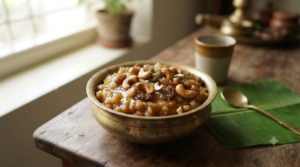
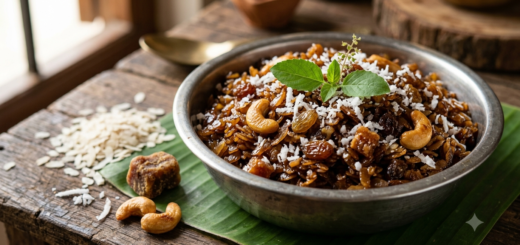
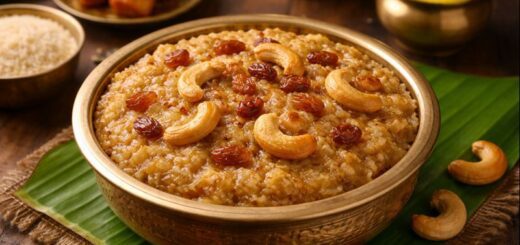
Soft sakkarai pongal without dal made with rice, jaggery, ghee, cardamom, cashews and raisins.
This is a practical home-style variation, not a claim that every traditional sakkarai pongal recipe omits dal. Many common versions use moong dal, while family methods vary across South India. For festival context, the Ministry of Tourism describes Pongal as a Tamil harvest celebration centred on thanksgiving. Its account also notes the symbolic act of boiling over a pot of food: Incredible India.
Sakkarai Pongal Without Dal at a Glance
- Prep time: about 10 minutes
- Cook time: about 30 to 35 minutes
- Total time: about 40 to 45 minutes
- Serves: 4 small dessert portions
- Main base: raw rice, jaggery, ghee and cardamom
- Texture: soft, glossy and spoonable rather than dry or grainy
- Best shortcut: pressure-cook the rice until mashable before adding jaggery
For Sakkarai Pongal Without Dal, the most important ratio is simple. Use enough water to make the rice softer than ordinary steamed rice. Start with one cup of raw short-grain rice and about 3½ cups water in a pressure cooker. Keep extra hot water ready, because rice variety and age can change how much liquid it absorbs.
Ingredients for Sakkarai Pongal Without Dal
| Ingredient | Quantity | Why it matters |
|---|---|---|
| Raw short-grain rice | 1 cup | Builds the soft, creamy base |
| Water | 3½ cups, plus extra if needed | Helps the rice become mashable |
| Grated jaggery | 1 to 1¼ cups | Adds caramel sweetness and colour |
| Ghee | 3 tablespoons | Adds aroma, gloss and richness |
| Cashews | 10 to 12 | Adds crunch |
| Raisins | 1 tablespoon | Adds small bursts of sweetness |
| Cardamom powder | ½ teaspoon | Gives the classic warm aroma |
| Dry ginger powder | ⅛ teaspoon, optional | Adds gentle warmth |
| Nutmeg | Very small pinch, optional | Adds depth without dominating |
| Salt | Tiny pinch | Balances the sweetness |
Sakkarai Pongal Without Dal tastes best with clean, good-quality jaggery. Grate it before measuring, since packed blocks vary in density. The Food Safety and Standards Authority of India sets standards for jaggery and cane jaggery, including limits on moisture and extraneous matter: FSSAI food standards. For home cooking, straining the melted jaggery also removes visible grit.
How to Make Sakkarai Pongal Without Dal
Sakkarai Pongal Without Dal works best when you treat the rice and jaggery as two separate stages. First, cook the rice until it can be mashed with the back of a spoon. Then add strained jaggery syrup and finish with ghee, cardamom and roasted nuts.
Step 1: Rinse and soak the rice
Rinse one cup of raw rice two or three times until the water looks mostly clear. Then soak it for 10 minutes while you grate the jaggery and measure the garnishes. The short soak is not essential, but it helps the grains hydrate more evenly.
Step 2: Pressure-cook until very soft
Drain the rice and add it to a pressure cooker with 3½ cups water and a tiny pinch of salt. Cook until the rice is much softer than table rice and releases easily when pressed. In a standard stovetop cooker, this is usually around three to four whistles, followed by a natural pressure release.
Cooker size, flame strength and rice age all affect whistle count, so use texture as the real test. If the rice still looks separate, add ¼ to ½ cup hot water and cook a little longer. Do not add jaggery yet, because the rice should be fully soft before the sweetener enters the pan.
Step 3: Make Jaggery Syrup for Sakkarai Pongal Without Dal
Add one cup grated jaggery to a small pan with about ¼ cup water. Warm it on low heat until the jaggery dissolves, then strain it through a fine metal sieve. There is no need to cook a one-string syrup for this recipe. A thick syrup can make the finished pongal sticky or grainy.
Taste the syrup after straining if you are comfortable doing so. Add up to another ¼ cup jaggery only when you want a sweeter result. This staged approach is easier to control than starting with an extremely sweet ratio.
Step 4: Mash the rice before sweetening
Open the cooker after the pressure drops naturally. Mash the hot rice until most grains lose their shape, while leaving a little texture. If the mixture looks dry, stir in a few tablespoons of hot water before the jaggery syrup goes in.
Sakkarai Pongal Without Dal should look loose at this stage, because the mixture thickens as jaggery cooks and again as it cools. A dry base now usually becomes a stiff pongal later.
Step 5: Add jaggery and simmer gently
Pour the strained jaggery syrup into the mashed rice and stir well. Keep the heat low to medium-low, because jaggery can catch on the bottom once the mixture thickens. Cook for about five to seven minutes, stirring often, until the pongal looks glossy and cohesive.
If it thickens too quickly, add hot water one tablespoon at a time. Do not chase a dry finish in the pan, since sakkarai pongal firms up during resting. Turn the flame down whenever you see rapid bubbling or caramelised patches around the edges.
Step 6: Fry the nuts and finish
Heat three tablespoons of ghee in a small pan. Fry the cashews until golden, then add the raisins and cook just until they puff. Pour everything into the pongal, including the fragrant ghee, and stir in cardamom plus the optional dry ginger and nutmeg.
Rest Sakkarai Pongal Without Dal for five minutes before serving, because the rice absorbs flavour as it settles. If it becomes thicker than you like, loosen it with a spoonful of hot water. Serve warm, with a little extra ghee only if you want a richer finish.
Why Sakkarai Pongal Without Dal Works
The usual role of moong dal is to add body, nuttiness and a softer porridge-like texture. When you remove it, the rice has to do more work. That is why this method uses extra water, thorough mashing and a slightly looser finish before resting.
The order of ingredients also matters. Jaggery goes in only after the rice is fully cooked. Therefore, the grains can soften before the concentrated sugar syrup arrives. Finally, the ghee goes in near the end, which preserves its aroma and helps the pongal look glossy instead of greasy.
What changes when moong dal is omitted?
Without moong dal, the flavour becomes more directly about rice, jaggery and ghee. The texture is slightly less nutty and less creamy, yet it can still be soft and luxurious when the rice is cooked properly. You also remove the separate dal-roasting step, which makes the process simpler on a busy festival morning.
If you want the classic rice-and-dal profile instead, use the site’s sweet pongal with jaggery. If your main concern is avoiding a cooker, the stovetop sakkarai pongal method is the better comparison.
Sakkarai Pongal Without Dal Troubleshooting
Sakkarai Pongal Without Dal is forgiving once the rice reaches the right softness. Most problems come from four points. These are undercooked rice, too little water, early jaggery or excessive final cooking. Fix the texture while the pongal is still hot, because it thickens further as it cools.
| Problem | Likely cause | Fix |
|---|---|---|
| Rice stays grainy | Rice was not soft enough before jaggery | Add hot water and cook the rice more before sweetening |
| Pongal turns hard | Too little water or too much simmering | Stir in hot water one spoon at a time |
| Sweetness feels harsh | Too much jaggery added at once | Start with 1 cup and increase only after tasting |
| Jaggery tastes gritty | Syrup was not strained | Dissolve and strain jaggery before mixing |
| Bottom starts sticking | Heat is too high after sweetening | Lower the flame and stir more often |
| Ghee floats separately | Too much ghee added too early | Add it near the end and mix thoroughly |
Why Did My Sakkarai Pongal Without Dal Become Thick After Cooling?
Cooked rice keeps absorbing moisture as it rests, so sweet pongal naturally becomes thicker after cooling. This is more noticeable in a dal-free version because the rice forms nearly the whole base. Reheat it gently with a small splash of hot water, then stir until the original spoonable texture returns.
Why is my jaggery pongal not smooth?
The usual reason is that the rice was still firm when the jaggery went in. Mash the rice thoroughly before adding the syrup, and keep the base slightly loose. Also avoid making a thick jaggery syrup, because concentrated syrup can create a sticky texture instead of a soft, integrated one.
Ingredient Choices for Sakkarai Pongal Without Dal
For Sakkarai Pongal Without Dal, short- or medium-grain rice is easier to soften than long-grain basmati. Sona Masuri, Ponni raw rice or another everyday raw rice works well. Use what you normally cook at home, but adjust water until the grain turns very soft.
Jaggery colour can range from pale gold to deep brown, so the pongal colour will vary too. Darker colour does not automatically mean better quality. More important signs are a clean aroma, no visible debris and a taste that is sweet without an off or fermented note.
Can I add milk?
You can add a small splash of warm milk for a creamier texture, but it is not needed for this version. If you use milk, add it after the jaggery has cooked into the rice and keep the heat gentle. For a dairy-free version, skip milk and replace ghee with coconut oil.
If you specifically want a richer milk-based recipe, use the site’s sakkarai pongal with milk. Keeping the variants separate helps each recipe answer a distinct cooking need instead of mixing several methods into one page.
Should I add edible camphor?
Edible camphor is optional, and the safest default is to leave it out unless the product is clearly sold and labelled for food use. Never substitute puja camphor, medicinal camphor or camphor oil. Camphor ingestion can be toxic in sufficient amounts, as medical toxicology literature documents: PubMed camphor poisoning guideline.
If your family traditionally uses food-grade edible camphor, use only the tiniest quantity called for by that product and household practice. When you are unsure about the label or source, omit it completely. Cardamom, ghee and nutmeg already provide plenty of aroma.
Serving and Storing Sakkarai Pongal Without Dal
Serve Sakkarai Pongal Without Dal warm rather than piping hot. The jaggery and cardamom flavours become clearer after a short rest. A small bowl is enough, since the dish is rich in rice, jaggery and ghee. You can offer it as part of a festive meal or serve it as a simple dessert.
Cool leftovers promptly, transfer them to a clean covered container and refrigerate. For best texture, use them within two to three days. Reheat only the portion you need, then loosen it with hot water or milk until soft again.
A note on nutrition
The older version of this page gave a single calorie figure, but that number can be misleading because jaggery, ghee and serving size vary widely. This refresh removes the unsupported estimate. Treat sakkarai pongal as a sweet dish, and adjust portion size to your own dietary needs rather than assuming one fixed nutrition value.
Common Mistakes to Avoid
- Adding jaggery before the rice is soft: cook and mash the rice first.
- Using too little water: dal-free pongal needs a soft rice base, not separate grains.
- Cooking jaggery to a thick syrup: dissolve, strain and stop; no string consistency is needed.
- Starting with too much jaggery: one cup is easier to adjust than an overly sweet pot.
- Letting the final mixture dry out: switch off while it is still slightly loose.
- Using non-food camphor: omit camphor unless it is specifically intended for food.
- Calling jaggery “sugar-free”: jaggery is still a concentrated sweetener, even though it is less refined than white sugar.
Before You Serve
The best Sakkarai Pongal Without Dal is soft enough to fall slowly from a spoon, with no firm rice in the centre. Keep the recipe simple: fully cooked rice, strained jaggery, ghee and cardamom do most of the work. Once that base is right, nuts and optional spices are finishing touches rather than fixes.
This version is especially useful when you have no moong dal at home or prefer the flavour of rice and jaggery on their own. It is also faster because there is no dal to roast separately. Most importantly, the method explains how to prevent the two common failures: grainy rice and a pongal that sets too hard.
Sakkarai Pongal Without Dal FAQs
Can I make sakkarai pongal without moong dal?
Yes. A dal-free sakkarai pongal can be made with rice, jaggery, ghee and cardamom, although the texture differs from the common rice-and-moong-dal version. Cook the rice extra soft, mash it well and keep the mixture slightly loose before resting so it stays spoonable.
Which rice is best for sakkarai pongal without dal?
Short- or medium-grain raw rice works best because it softens and mashes easily. Sona Masuri and Ponni raw rice are practical choices, but another everyday raw rice can work too. Avoid judging by cooking time alone, since older rice may need more water and a longer cook.
How much jaggery should I use for one cup of rice?
Start with one cup of grated jaggery for one cup of raw rice, then increase up to about 1¼ cups if you prefer a sweeter result. Jaggery sweetness varies by batch, so staged addition is more reliable than assuming one fixed ratio will suit every brand and household.
Can I make this without a pressure cooker?
Yes. Use a heavy-bottomed pot and cook the rice with about four cups of water over low to medium heat until very soft. Stir occasionally and add more hot water when needed. The stovetop method takes longer, but the jaggery and finishing steps stay the same.
Can I make a vegan version?
Yes. Replace ghee with coconut oil and do not add milk. The flavour will be different because ghee contributes a distinctive aroma, but the rice-and-jaggery base still works. Use roasted cashews and cardamom to keep the finished sweet fragrant and rich.
Is jaggery healthier than white sugar?
Jaggery is less refined and can contain small amounts of minerals, but it is still mostly sugar and should not be treated as a free food. Choose it here mainly for flavour and tradition. If you need to limit added sugar, reduce the quantity and portion size.
Can children eat this sweet pongal?
Older children can eat a suitable portion if the ingredients fit their diet, but take care with whole nuts because they can be a choking risk for young children. Chop or omit nuts when needed, and avoid edible camphor unless you are certain the product is food-grade and appropriate.
Why does my pongal taste burnt after adding jaggery?
Jaggery-rich mixtures scorch faster than plain cooked rice, especially in a thin pan or over high heat. Lower the flame as soon as the syrup goes in, stir across the bottom and sides, and add a spoonful of hot water if the mixture thickens too quickly.
Can Sakkarai Pongal Without Dal Be Made Ahead?
Yes, but aim to finish the cooking close to serving time because the texture is best while fresh and warm. If you make it earlier, keep it slightly looser than usual. Reheat gently with a little hot water, then add a small spoon of ghee just before serving if desired.