Cherupayar Payasam with Cow Milk: Easy Jaggery Recipe
Cherupayar payasam with cow milk is a creamy South Indian lentil dessert made with roasted moong dal, jaggery, milk, cardamom and ghee. The flavour is familiar, but one step decides the result: keep hot jaggery away from actively boiling milk. This refreshed method cooks the dal and milk first, then adds warm jaggery syrup off the heat for a smoother finish.
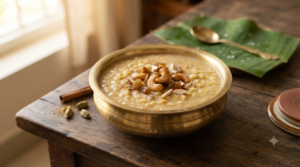
Creamy cherupayar payasam made with cow milk, roasted moong dal and jaggery, finished with ghee-roasted cashews and raisins.
This is a dairy variation rather than the classic Kerala parippu pradhaman. Kerala Tourism describes payasam as a major part of Onam sadya and lists parippu pradhaman among the many versions. Traditional Kerala lentil payasam usually leans on coconut milk, while this recipe makes cow milk the main creamy base.
Cherupayar Payasam with Cow Milk at a Glance
- Prep time: about 10 minutes
- Cook time: about 30 to 35 minutes
- Serves: 4
- Main ingredients: split yellow moong dal, cow milk, jaggery, ghee and cardamom
- Best texture: creamy and pourable when warm, slightly thicker after resting
- Most important rule: add jaggery after the milk-and-dal base comes off the heat
The old version had the right ingredient idea, but it asked you to rinse the dal before roasting and then simmer milk after adding jaggery. This refresh reverses those two weak points. Dry roasting works better before rinsing, while the off-heat jaggery step lowers the chance of split milk.
Ingredients for Cherupayar Payasam with Cow Milk
| Ingredient | Quantity | Purpose |
|---|---|---|
| Yellow split moong dal | 1/2 cup | Nutty lentil base |
| Full-fat cow milk | 3 cups | Creamy dairy body |
| Water | 2 cups, plus 1/4 cup for jaggery | Cooks dal and dissolves jaggery |
| Grated jaggery | 3/4 cup | Sweetness and caramel flavour |
| Ghee | 2 tbsp | Richness and garnish |
| Cashews | 10 | Crunch |
| Raisins | 10 | Sweet garnish |
| Cardamom powder | 1/2 tsp | Aroma |
| Dry ginger powder | 1/4 tsp, optional | Warm spice note |
| Salt | 1 small pinch | Balances sweetness |
Use full-fat milk if you want the richest texture because low-fat milk stays thinner. Jaggery varies in sweetness and flavour, so taste before adding more. If the jaggery has visible sediment, dissolve and strain it before it meets the payasam.
How to Make Cherupayar Payasam with Cow Milk
The method is simple once you separate the cooking into three parts: dal, milk and jaggery. Keep them separate until each part is ready. Then combine them gently so the payasam stays creamy.
Cook the Dal and Milk Base
- Dry roast the dal. Put the unwashed moong dal in a heavy pan over low to medium heat. Stir for 2 to 3 minutes until it smells nutty. Stop before it turns dark brown, because heavily roasted dal takes longer to soften.
- Cool and rinse. Let the roasted dal cool for a minute or two. Rinse it two or three times, then drain well.
- Cook until very soft. Add the dal and 2 cups water to a heavy saucepan. Bring it to a boil, then lower the heat. Cook until the grains crush easily between a spoon and the side of the pan.
- Mash only part of it. Press a small portion of the cooked dal with the back of a ladle. Leave some grains intact because that light texture makes parippu payasam more interesting than a completely smooth pudding.
- Add the milk. Pour in the cow milk and stir well. Keep the flame low. Simmer for about 6 to 8 minutes, stirring often so the milk does not catch at the bottom.
Finish Cherupayar Payasam with Cow Milk Without Curdling
- Make jaggery syrup separately. Warm the jaggery with about 1/4 cup water only until it dissolves. Strain it if needed, then let the syrup cool until warm rather than piping hot.
- Switch off the milk base. When the dal is fully tender and the milk looks slightly creamy, turn off the heat. Let the pan stand for about 5 minutes.
- Add jaggery slowly. Pour the warm jaggery syrup into the milk-and-dal base in a thin stream while stirring. Add cardamom, dry ginger if using, and a pinch of salt. Do not return the finished payasam to a hard boil.
- Finish with ghee-roasted garnish. Heat the ghee in a small pan. Fry cashews until golden, then add raisins until they puff. Pour everything, including the ghee, over the payasam.
At this stage, the payasam should look a little looser than your final target. Moong dal continues to absorb liquid while resting, so a pot that looks perfect on the stove can become too thick later. Add a splash of warm milk if you need to loosen it before serving.
Why Cherupayar Payasam with Cow Milk Can Curdle
Milk and jaggery do not always behave the same way from batch to batch. Jaggery can contain natural acids, minerals or tiny impurities, while high heat makes milk proteins less stable. Therefore, adding very hot jaggery syrup to boiling milk can create grainy or visibly split payasam.
The safer kitchen rule is straightforward: finish cooking the dal and milk first, switch off the heat, cool the jaggery syrup until warm, then combine slowly. If you are using a new jaggery batch, test one spoonful in a small cup of the milk base before adding the rest.
Once jaggery is mixed in, avoid aggressive boiling. Gentle residual heat is enough to blend the flavours. This one change gives cherupayar payasam with cow milk a much more repeatable texture.
Traditional Kerala Version vs This Cow-Milk Version
Kerala-style parippu pradhaman usually uses coconut milk with lentils and jaggery. Kerala Tourism’s sadya guide describes payasam as part of the traditional feast and notes coconut-milk and milk-based varieties. That makes the cow-milk version best understood as a home variation, not a replacement for pradhaman.
| Feature | Cow-milk version | Traditional coconut version |
|---|---|---|
| Main liquid | Dairy milk | Coconut milk |
| Flavour | Milky, kheer-like | Coconut-rich, deeper Kerala profile |
| Jaggery handling | Add carefully off heat | Still avoid prolonged boiling after thick coconut milk |
| Texture | Creamy and soft | Rich, glossy and aromatic |
If you want the more traditional coconut-milk profile, use Bhimas Cook’s cherupayar parippu payasam with coconut milk. If you need a strictly coconut-free larger batch, compare the separate parippu payasam without coconut recipe.
Texture Guide: Fix Thin, Thick or Grainy Payasam
| Problem | Likely cause | Best fix |
|---|---|---|
| Too thin | Dal is undercooked or milk base needs more reduction | Cook before adding jaggery until the dal is fully soft |
| Too thick | Dal absorbed liquid while resting | Stir in warm milk a little at a time |
| Grainy after jaggery | Milk began to split | Stop heating and stir gently; do not boil again |
| Gritty | Jaggery had sediment | Dissolve and strain syrup before use |
| Burnt flavour | Milk caught on the bottom | Move the clean top portion to another pan without scraping |
| Too sweet | Jaggery added all at once | Loosen with warm milk and adjust cardamom |
Do not try to fix scorched payasam by scraping the bottom layer back into the pot. Burnt milk spreads its flavour quickly. Instead, transfer the unburnt portion to a clean vessel and leave the stuck layer behind.
Optional Variations That Still Work
Add a Small Coconut-Milk Finish
If you like a hint of coconut but still want cow milk to lead, stir in 2 to 4 tablespoons of thick coconut milk after switching off the heat. Keep it as a finishing accent rather than the main liquid. This gives a rounder aroma without turning the recipe into full Kerala pradhaman.
Use Sugar Instead of Jaggery
Sugar gives a lighter colour and a cleaner milk-cardamom flavour. It is also easier to combine with hot milk. Start with less than you think you need, then adjust near the end because sweetness becomes more obvious as the dessert cools.
Make It Richer Without Cream
You do not need heavy cream for a rich result. Full-fat milk, properly softened dal and gentle reduction give enough body. Cream can make the dessert heavy and can blur the roasted lentil flavour that should remain noticeable.
Common Mistakes to Avoid
- Roasting wet dal: dry roast first, then rinse after it cools briefly.
- Adding jaggery to boiling milk: combine off heat so the dairy stays more stable.
- Over-roasting the dal: a light nutty aroma is enough; dark dal takes longer to cook.
- Mashing everything smooth: keep a little lentil texture for a better mouthfeel.
- Cooking until very thick: the payasam thickens as it rests, so stop while it still pours easily.
- Skipping the jaggery strain: strain any syrup that shows grit or sediment.
- Using high heat after milk goes in: milk can scorch before you notice a problem on the surface.
These mistakes matter more than adding extra spices. Once the dal is soft, most of the recipe is about heat control. That is why cherupayar payasam with cow milk becomes much easier when you treat milk and jaggery as separate components until the final stage.
Serving and Storage for Cherupayar Payasam with Cow Milk
Serve the payasam warm for a softer, more aromatic texture, or chill it if your family prefers a thicker dessert. A small bowl works well after a festive meal because jaggery, milk and ghee make this a rich sweet.
If you make it ahead, keep the finished payasam slightly loose. Cool it promptly and refrigerate in a covered container. FSSAI food-safety guidance recommends refrigerating perishable cooked foods within two hours, so do not leave milk payasam sitting at room temperature through the afternoon.
Reheat only the portion you need over low heat. Add a splash of milk first if it has thickened in the refrigerator. Stir often because the dal settles at the bottom and can catch easily during reheating.
What to Serve with This Payasam
Parippu payasam is naturally at home after a South Indian vegetarian meal, especially during festive lunches. The dairy version is also easy to serve as a standalone dessert because its flavour sits between traditional parippu pradhaman and moong dal kheer.
For a different texture, Bhimas Cook’s rice payasam recipe uses rice and milk instead of lentils. That version is smoother, while this one keeps the roasted dal flavour and a gently grainy body.
Cherupayar Payasam with Cow Milk: Final Notes
The most reliable method is to roast the dal dry, cook it until soft, simmer it with milk on low heat and add jaggery only after switching off the flame. Keep the finished dessert slightly loose because it will thicken as it rests.
If you remember only one rule, make it this: never hard-boil milk after jaggery goes in. That one habit protects the texture and makes cherupayar payasam with cow milk much easier to repeat for festivals, family lunches or a simple weekend dessert.
Frequently Asked Questions
Can I make cherupayar payasam with cow milk instead of coconut milk?
Yes. Cherupayar payasam with cow milk works well when full-fat dairy milk replaces coconut milk. The main difference is jaggery handling, because hot jaggery can sometimes split dairy. Cook the milk-and-dal base first, then add warm jaggery syrup off the heat.
Why does milk curdle when I add jaggery?
Jaggery can contain natural acids, minerals or impurities that make hot milk less stable. The risk rises when both mixtures are very hot. Dissolve and strain the jaggery separately, cool it until warm, and stir it into the milk base after switching off the heat.
Should I add jaggery before or after the milk?
Add milk to the cooked dal first and let that base finish cooking. Then switch off the heat and add the warm jaggery syrup slowly. This order gives you better control because you avoid prolonged boiling after dairy and jaggery meet.
Can I make this payasam in a pressure cooker?
Yes. Pressure-cook the roasted and rinsed dal with water until it becomes completely soft, then move to the milk stage. Cooker size and pressure vary, so use tenderness rather than a fixed whistle count as your guide.
Can I use sugar instead of jaggery?
Yes. Sugar gives a paler colour and a cleaner milk flavour, while jaggery adds deeper caramel notes. Sugar is also easier to simmer with milk, so it is useful when a jaggery batch repeatedly causes curdling.
Why does the payasam become thick after cooling?
Cooked moong dal keeps absorbing liquid as it rests. Therefore, stop cooking while the payasam still looks slightly loose. If it becomes too thick later, stir in warm milk a little at a time until the texture returns.
Can I make parippu payasam ahead for a festival lunch?
Yes. Make it a few hours ahead, cool it promptly and refrigerate it in a covered container. Keep the texture a little loose because it will thicken. Before serving, warm gently and adjust with a small splash of milk if needed.
Can I add coconut milk as well as cow milk?
Yes, but keep it a small finishing addition if you want cow milk to remain the main flavour. Stir in a few tablespoons of thick coconut milk after switching off the heat. For a fully coconut-based method, use a dedicated parippu pradhaman recipe instead.