Instant Pal Payasam Recipe: Easy Creamy Milk Dessert
Instant pal payasam recipe is the faster stovetop route to creamy South Indian milk-and-rice payasam when you do not want a long, slow reduction. This version uses a small quantity of soaked rice, full-fat milk, and sugar, so it thickens in about 35–45 minutes without turning into a heavy rice pudding. The key is simple: cook the rice fully before adding sugar, keep the pan uncovered, and stir more often as the milk reduces.
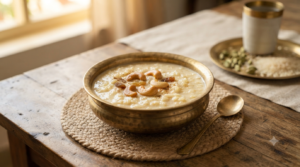
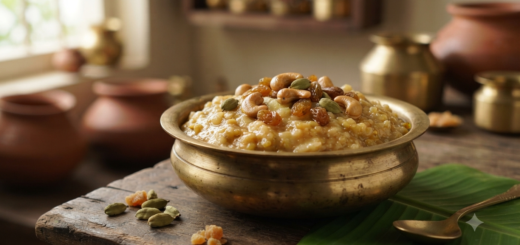
Creamy paal payasam made with milk, rice and sugar, finished with cashews and raisins.
This is a quick home method, not the same as a long-simmered temple or Kerala-style paal payasam. Traditional versions often rely on a slower reduction for deeper colour and flavour. Kerala Tourism, for example, describes paal payasam as a milk, rice, and sugar dessert cooked in a thick-bottomed pan until the milk reduces. See the Kerala Tourism paal payasam reference.
Instant Pal Payasam Recipe at a Glance
- Prep time: 15 minutes, including soaking
- Cook time: about 35–45 minutes
- Yield: 4–5 small dessert servings
- Best rice: short-grain raw rice, Sona Masuri, Ponni, or broken raw rice
- Main ingredients: milk, rice, sugar, cardamom
- Texture: pourable when hot, thicker after cooling
- Important rule: add sugar only after the rice becomes soft
The fastest dependable route is not to overload the pan with rice. Too much rice absorbs the milk before the dessert develops a smooth, pourable consistency. A wide, heavy-bottomed saucepan also helps because the milk reduces evenly while the rice cooks.
Ingredients for This Instant Pal Payasam Recipe
| Ingredient | Quantity | Why it matters |
|---|---|---|
| Full-fat milk | 1 litre | Gives the richest body and flavour |
| Raw rice | 1/4 cup, about 50 g | Thickens the milk without making it stodgy |
| Sugar | 1/2 cup, about 100 g | Add after the rice softens |
| Cardamom powder | 1/4 tsp | Adds classic aroma |
| Ghee | 1 tsp | For roasting nuts; optional |
| Cashews | 8–10 | Optional garnish |
| Raisins | 1 tbsp | Optional garnish |
| Saffron | Few strands | Optional, not essential |
Use fresh, good-quality milk because the flavour stays front and centre. Short-grain rice gives a creamier finish than basmati, while broken rice cooks slightly faster. If you only have basmati, use it, but expect more distinct grains.
Sugar can be adjusted after the rice cooks. Start with 1/2 cup, taste carefully, and add a little more if your family prefers a sweeter payasam. For a jaggery version, use the separate paal payasam with jaggery recipe because jaggery needs different handling with hot milk.
How to Make Instant Pal Payasam Recipe Step by Step
1. Rinse and soak the rice
Rinse 1/4 cup rice two or three times, then soak it for 15 minutes. Soaking shortens the time needed for the centre of each grain to soften. Drain the rice well before it goes into the milk.
Do not grind the rice into flour. If you prefer a softer texture, pulse the drained rice once or twice so a few grains break. That gives the payasam more body while still leaving visible rice.
2. Bring the milk to a gentle boil
Pour 1 litre full-fat milk into a wide, heavy-bottomed saucepan. Heat it over medium heat until it reaches a gentle boil, then immediately reduce the flame. Stir across the bottom and corners because milk catches there first.
Keep the pan uncovered. A lid can trap foam and make milk boil over quickly, especially on a strong flame. If your pan is narrow, use a lower flame and allow a little more cooking time.
3. Cook the rice in the milk
Add the drained rice to the gently simmering milk and stir well. Cook on low to medium-low heat for about 25–30 minutes. Stir every few minutes at first, then more often as the milk thickens.
The rice is ready when a grain mashes easily between two fingers or against the side of the spoon. If the rice is still firm but the mixture looks too thick, add 2–4 tablespoons hot water or hot milk. Continue cooking until the rice is completely soft.
4. Add sugar only after the rice softens
Add 1/2 cup sugar once the rice is fully cooked. Stir until the sugar dissolves, then simmer for another 5–7 minutes. The mixture may look slightly thinner just after the sugar goes in, but it thickens again as it simmers.
Turn off the heat while the payasam is still a little looser than your final target. Rice keeps absorbing liquid as it rests, so hot payasam should pour easily from a ladle. If you cook it until very thick in the pan, it can become heavy after cooling.
5. Finish with cardamom, cashews, and raisins
Stir in 1/4 teaspoon cardamom powder after switching off the flame. If using nuts, warm 1 teaspoon ghee in a small pan. Fry the cashews until pale golden, then add raisins for a few seconds until they puff.
Pour the garnish over the payasam and mix once. Saffron is optional, so do not add it only for colour. The basic milk-rice-sugar version already has the clean flavour people expect from paal payasam.
Why This Instant Pal Payasam Recipe Works
The speed comes from proportion and technique, not from an instant mix. This instant pal payasam recipe uses a smaller rice quantity, so it cooks through before the milk needs hours of reduction. Soaking also hydrates the grains before they enter the saucepan, which shortens the simmer.
A wide heavy pan matters just as much. It gives the milk more surface area, so some water evaporates while the rice cooks. Meanwhile, the starch released from the rice adds body without needing cornflour, condensed milk, or another thickener.
This approach also keeps the page distinct from the slower Kerala-style pal payasam recipe, which is better when you want deeper slow-cooked flavour. Choose this instant pal payasam recipe when time matters more than long reduction.
Instant Pal Payasam Recipe: Texture Checkpoints
The easiest way to judge payasam is by texture, not by a rigid clock. At around 20 minutes, the rice should be swelling but still firm. Near 30 minutes, it should mash easily and the milk should lightly coat the spoon.
After sugar goes in, simmer only until the mixture looks glossy and slightly creamy. Draw a line through the payasam on the back of a spoon. If the line remains visible for a moment, the dessert has enough body for serving.
- Too thin: simmer uncovered for 5 more minutes, stirring often.
- Too thick: stir in hot milk, 2 tablespoons at a time.
- Rice still hard: add a splash of hot water or milk and keep cooking.
- Milk caught on the bottom: pour the unstirred upper portion into a clean pan; do not scrape the scorched layer.
Common Instant Pal Payasam Recipe Mistakes
Using too much rice
A rice-heavy ratio turns payasam into a dense pudding before the milk has time to develop flavour. For 1 litre milk, 1/4 cup raw rice is enough for a creamy home-style consistency. If you prefer a thinner dessert, use 3 tablespoons instead.
Adding sugar before the rice is soft
Cook the rice fully first, then sweeten. This makes the texture easier to control and avoids chasing undercooked grains in a thick, sweet mixture. It also lets you adjust sweetness after you see how much the milk has reduced.
Leaving the milk unattended
Milk can rise suddenly or scorch on the bottom, so this is not a set-and-forget recipe. Keep the flame moderate and stir more often near the end. A wooden spatula with a flat edge works well because it reaches the base of the pan.
Trying to make jaggery payasam the same way
Jaggery changes the method because acidic or impure jaggery can split hot milk. Do not simply swap sugar for jaggery in this instant pal payasam recipe. Follow a jaggery-specific method that cools or manages the syrup before combining it with milk.
Can You Make Instant Pal Payasam Recipe Faster With a Pressure Cooker?
Yes, but the safest shortcut is to pressure-cook the rice with water first, then finish the dessert with milk on the stovetop. This cuts the rice-softening time without putting foaming milk under pressure. Always follow your cooker’s manufacturer instructions if you use it for dairy.
- Pressure-cook 1/4 cup rinsed rice with 3/4 cup water until very soft.
- Bring 1 litre milk to a gentle boil in a heavy pan.
- Add the cooked rice and simmer for 12–15 minutes.
- Add sugar and simmer for another 5 minutes.
- Finish with cardamom and optional ghee-roasted nuts.
This route gives a faster family dessert, although the flavour will be lighter than a long-reduced version. If you want an even richer shortcut, see the paal payasam with condensed milk variation.
How Traditional Paal Payasam Differs
Traditional paal payasam is less about speed and more about slow concentration. Kerala Tourism’s published recipe uses rice, milk, sugar, and saffron, then cooks the mixture in a thick-bottomed pan until the milk reduces substantially. That slower approach develops a deeper colour and a fuller cooked-milk flavour.
This quick version keeps the same core identity but changes the technique. It uses a smaller batch, soaked rice, and a wider pan to shorten the process. So it is best described as an instant pal payasam recipe for home cooking, not a replica of a specific temple prasadam.
That distinction matters because temple recipes can have their own ingredients, equipment, and ritual context. A home recipe should not claim to reproduce a temple’s exact prasadam unless the temple itself publishes that method.
Instant Pal Payasam Recipe: Serving, Storage, and Reheating
Serve payasam warm, at room temperature, or chilled. It thickens as it cools, so stir in a little warm milk before serving if the texture becomes too dense. For a festive meal, small portions work well because milk payasam is rich.
Because this dessert contains cooked milk and rice, cool leftovers promptly. FoodSafety.gov advises refrigerating perishable foods within two hours, or within one hour when the surrounding temperature is above 32°C. See the FoodSafety.gov chilling guidance.
Store the payasam in a clean, covered container in the refrigerator. FoodSafety.gov also advises using refrigerated leftovers within 3–4 days. Reheat only the portion you need, and add a little milk while warming because chilled rice absorbs extra liquid.
Easy Variations for This Instant Pal Payasam Recipe
- Plain version: skip nuts, raisins, saffron, and ghee. Use only milk, rice, sugar, and cardamom.
- Broken-rice version: use broken raw rice for a softer, quicker texture.
- Saffron version: soak a few strands in warm milk and add them at the end.
- Extra-rich version: replace part of the final milk with a small amount of condensed milk and reduce the sugar.
- Jaggery version: use a jaggery-specific recipe instead of a direct sugar swap.
For the cleanest flavour, change only one thing at a time. Too many additions can hide the simple milk-and-rice character that makes paal payasam distinct. The base recipe is also easier to scale once you know the texture you prefer.
Instant Pal Payasam Recipe: Final Tips Before You Cook
Start with a wide heavy pan, keep the flame controlled, and make sure the rice becomes fully soft before sweetening. Those three choices solve most texture problems. Also remember that payasam thickens after cooking, so stop while it still flows from the ladle.
If you want a fast dessert for a family meal, this instant pal payasam recipe is the better fit. If you want deeper slow-cooked flavour for a special feast, use the longer Kerala-style method instead. Both are valid, but they answer different cooking needs.
Frequently Asked Questions
What is pal payasam made from?
Pal payasam is primarily made from milk, rice, and sugar. Cardamom, ghee, cashews, raisins, or saffron may be added depending on the household style. The simplest versions rely on just the three core ingredients and slow cooking.
What is the best rice for pal payasam?
Short-grain raw rice works especially well because it softens easily and gives the milk a creamy body. Sona Masuri, Ponni, broken raw rice, or another everyday short-grain rice are good choices. Basmati also works, but it gives a more separate-grain texture.
Can I make this instant pal payasam recipe without soaking the rice?
Yes, but expect a longer cooking time. Unsoaked rice may need an extra 10 minutes or more before the centre softens. Soaking for 15 minutes is a small step that makes the quick method more reliable.
Can I make pal payasam without nuts and ghee?
Yes. Nuts and ghee are optional garnishes, not structural ingredients. Milk, rice, sugar, and cardamom are enough for a simple version, so you can leave the garnish out for preference or allergy reasons.
Can I use jaggery instead of sugar?
You can make paal payasam with jaggery, but do not treat it as a direct one-for-one swap in boiling milk. Jaggery can make milk split, depending on acidity and impurities. Use a jaggery-specific method and combine the components carefully.
Why does pal payasam become thick after cooling?
Cooked rice keeps absorbing liquid as the dessert rests, so the payasam naturally becomes thicker. This is why the hot mixture should look slightly looser than the texture you want to serve. Add warm milk later if it becomes too dense.
Can I serve pal payasam cold?
Yes. Chilled pal payasam is pleasant and often tastes richer because the texture becomes thicker in the refrigerator. Cool it safely first, then refrigerate promptly and serve it cold in small bowls.
How long can pal payasam stay in the refrigerator?
General food-safety guidance for cooked leftovers is 3–4 days in the refrigerator. Cool the payasam promptly and keep it in a covered container. If it has been left at room temperature too long, do not rely on smell alone to judge safety.