Moong Dal Payasam Without Milk | Easy Jaggery Recipe
Moong dal payasam without milk is a simple South Indian sweet made with roasted yellow moong dal, jaggery, water, cardamom, and nuts. This version uses no dairy milk and no coconut milk in the base recipe, so the creamy body comes from well-cooked dal itself. It is useful when you want a lighter payasam, need a dairy-free dessert, or simply do not have milk at home.
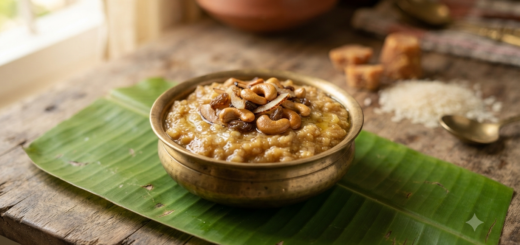
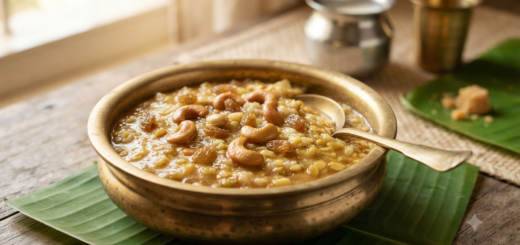
Homemade moong dal payasam without milk, prepared with jaggery, cardamom, roasted cashews and raisins.
The key is not to make the dal watery at the start. Cook it until soft, mash only part of it, then add strained jaggery syrup and adjust the final consistency with hot water. The payasam thickens as it rests, so stop cooking while it is still slightly looser than your preferred serving texture.
Moong Dal Payasam Without Milk at a Glance
- Main ingredients: yellow moong dal, jaggery, water, cardamom, cashews, raisins.
- No milk needed: the base recipe has no dairy milk and no coconut milk.
- Texture: soft, spoonable, and creamy from the cooked dal rather than added milk.
- Sweetness: 1/2 cup jaggery gives moderate sweetness; increase it if you prefer a festival-style payasam.
- Cooking time: about 30 to 35 minutes with a pressure cooker.
- Serves: about 4 small dessert portions.
This water-only method also keeps the intent separate from a moong dal payasam with coconut milk. If you specifically want the richer coconut version, use that recipe instead of changing this base halfway through.
Recipe Card
| Detail | Amount |
|---|---|
| Prep time | 10 minutes |
| Cook time | 25 minutes |
| Total time | 35 minutes |
| Servings | 4 small bowls |
| Difficulty | Easy |
| Base recipe | No dairy milk or coconut milk |
Ingredients for Moong Dal Payasam Without Milk
- 1/2 cup yellow moong dal, about 100 g
- 1 1/2 cups water for pressure cooking, plus extra hot water as needed
- 1/2 cup grated or powdered jaggery for moderate sweetness
- 1/3 cup water for dissolving jaggery
- 1/2 teaspoon green cardamom powder
- 10 to 12 cashews
- 1 tablespoon raisins
- 1 1/2 teaspoons coconut oil or neutral oil
- 1 tablespoon small fresh coconut pieces, optional
- A tiny pinch of salt, optional
If you avoid only liquid milk but still use dairy, replace the coconut oil with ghee. For a fully vegan moong dal payasam without milk, keep the coconut oil or use another neutral cooking oil.
Jaggery strength varies by brand and batch, so 1/2 cup is a practical starting point rather than a universal sweetness rule. For a sweeter temple-style or festival-style bowl, add a little more only after tasting the cooked payasam.
How to Make Moong Dal Payasam Without Milk
- Dry-roast the dal. Put the dry moong dal in a heavy pan over low to medium heat. Roast for 4 to 5 minutes, stirring often, until it smells nutty and turns slightly deeper yellow. Do not brown it heavily.
- Rinse and cook. Let the roasted dal cool for a minute, then rinse it well. Add it to a pressure cooker with 1 1/2 cups water and cook until very soft. In many stovetop cookers this takes about 3 whistles, but cooker size and heat vary, so check the texture rather than relying only on whistle count.
- Mash lightly. When the pressure drops naturally, open the cooker. Mash roughly half the dal with a ladle. Leave some soft grains intact because they give the payasam a more pleasant body.
- Make the jaggery syrup. Warm 1/2 cup jaggery with 1/3 cup water until dissolved. If your jaggery contains visible grit or sediment, strain the syrup before using it.
- Combine on low heat. Pour the jaggery syrup into the cooked dal. Simmer for 4 to 5 minutes while stirring so the sweetness spreads evenly.
- Adjust the consistency. Add 1/4 to 1/2 cup hot water if the mixture looks too thick. Keep it slightly loose because it thickens as it cools.
- Finish the tempering. Heat coconut oil in a small pan. Fry cashews until pale golden, then add raisins and optional coconut pieces. Stir for a few seconds and pour everything into the payasam.
- Add cardamom and rest. Stir in cardamom and the optional tiny pinch of salt. Rest the payasam for 5 minutes before serving so the flavours settle.
How to make it without a pressure cooker
You can make the same recipe in a heavy saucepan. Roast and rinse the dal, then simmer it with about 2 to 2 1/2 cups water until completely soft. Add more hot water in small amounts if the pan dries before the dal is tender.
Stovetop timing often ranges from 25 to 35 minutes, depending on the dal and pan. Once the grains crush easily between a spoon and the side of the pan, continue with the jaggery step.
Why This Moong Dal Payasam Without Milk Still Tastes Creamy
The creaminess comes from starch and softened lentils, not from milk. When moong dal cooks until tender, part of it breaks down into the cooking water. A light mash then gives the liquid enough body to feel like payasam rather than sweet dal soup.
That is why water control matters more in a moong dal payasam without milk. Too much water at the beginning dilutes both texture and flavour. It is easier to start slightly thick and loosen the finished dessert with hot water.
Roasting also changes the flavour. It gives the dal a warm, nutty aroma that helps replace some of the richness people usually expect from milk or coconut milk.
The Best Jaggery Ratio and Consistency
| Preference | Jaggery for 1/2 cup dal | Result |
|---|---|---|
| Lightly sweet | 1/3 cup | Dal flavour stays prominent |
| Balanced | 1/2 cup | Best starting point for this recipe |
| Festive sweet | Up to 3/4 cup | Richer and more dessert-like |
Use the table as a taste guide, not a rigid rule. Jaggery varies in sweetness, moisture, and flavour, so the same cup measure can taste different from one batch to another. If you are unsure, begin with the balanced amount and adjust before the final rest.
The finished payasam should fall slowly from a ladle. If it sits in a mound, add hot water a tablespoon at a time. If it runs like thin soup, simmer uncovered for a few more minutes before adding the fried nuts.
Common Problems and Easy Fixes
| Problem | Likely cause | Fix |
|---|---|---|
| Payasam is watery | Too much cooking water | Simmer uncovered and mash a little more dal |
| Payasam is too thick | It cooled and set | Add hot water in small amounts while reheating |
| Dal tastes grainy | Dal was undercooked | Cook until the grains crush easily before adding jaggery |
| Jaggery syrup feels gritty | Natural sediment in jaggery | Dissolve and strain the syrup |
| Flavour tastes flat | Dal was not roasted or cardamom was old | Roast gently and use freshly crushed cardamom |
| Payasam is overly sweet | Too much jaggery for the batch | Add a little cooked moong dal or hot water |
One common mistake is adding jaggery before the dal is fully soft. Finish cooking the lentils first, then add the sweetener. This makes the texture much easier to control.
Variations Without Losing the Core Recipe
Completely vegan version
The base recipe is already vegan when you use coconut oil or neutral oil. Do not add ghee. Cashews, raisins, cardamom, and jaggery can stay the same.
Coconut milk variation
If your goal is dairy-free rather than literally milk-free, you can stir in a small amount of coconut milk at the end. Keep the heat low and avoid prolonged boiling after adding it. For a full coconut-milk method, use the site’s dedicated coconut milk recipe instead so this page remains focused on the water-only version.
More jaggery-forward version
If jaggery flavour is the main thing you want, compare the site’s moong dal payasam with jaggery. That version is richer and is better suited to readers who are not specifically trying to avoid milk.
Serving Ideas for Moong Dal Payasam Without Milk
Serve moong dal payasam without milk warm for the softest texture and strongest cardamom aroma. Small bowls work best because jaggery desserts are naturally rich even when the recipe contains no milk.
For a festival meal, serve it after the savoury dishes or as part of a traditional sweet course. If preparing it as an offering in your own family tradition, follow the ingredient and preparation customs observed in your household or place of worship.
Avoid treating edible camphor as a default ingredient. It is not needed for this recipe. If your family tradition uses it, use only a product clearly sold as food-grade edible camphor and follow the product directions carefully.
Storage, Reheating, and Food Safety
Payasam tastes best when freshly made. If you have leftovers, cool them promptly, cover them, and refrigerate them rather than leaving the pot on the counter for hours. The Food Safety and Standards Authority of India advises keeping leftover cooked food cold, ideally below 5°C, and reheating stored cooked food thoroughly before eating.
For home quality, try to finish this payasam within about 2 days. Reheat only the portion you need over low heat and add a splash of hot water because the dal thickens in the refrigerator. FSSAI’s Food Safety at Home guidance also stresses safe cold storage and thorough reheating.
Nutrition: What This Recipe Does and Does Not Offer
Moong dal contributes protein, carbohydrate, and fibre, while cashews add fat and some protein. However, jaggery is still a concentrated sweetener, so this remains a dessert rather than a low-sugar health food.
A fixed calorie number can mislead because the total changes with jaggery quantity, oil, nuts, and serving size. For ingredient-level nutrient data, the ICMR-National Institute of Nutrition Indian Food Composition Tables are a stronger reference than a generic calorie estimate copied from another payasam.
What Makes This Version Different
Most moong dal payasam recipes depend on coconut milk, dairy milk, or both. This version is deliberately different: it uses water as the only cooking liquid and gets its body from the lentils. That makes the recipe useful for dairy-free cooking and for kitchens where coconut milk is unavailable.
It also avoids pretending that one nutrition figure fits every variation. More importantly, the recipe gives texture fixes and sweetness ranges, because those are the two places where home batches differ most.
Moong Dal Payasam Without Milk: Final Tips
- Roast the dal gently before washing and cooking for a deeper aroma.
- Cook the dal until fully soft before you add jaggery.
- Start with 1/2 cup jaggery, then adjust to your taste.
- Keep the payasam a little loose while hot because it thickens as it rests.
- Use coconut oil for a fully vegan version and ghee only if dairy is acceptable.
- Refrigerate leftovers promptly and reheat them thoroughly.
If you want a simple sweet with pantry ingredients, moong dal payasam without milk is one of the easiest ways to turn dal and jaggery into dessert. The water-only base keeps the flavour clean, while roasting, cardamom, and fried nuts provide the depth that milk usually supplies.
Frequently Asked Questions
Can I make moong dal payasam without coconut milk?
Yes. This recipe uses only water in the base, so coconut milk is not required. The cooked and lightly mashed moong dal creates enough body for a creamy spoonable texture.
Is moong dal payasam without milk vegan?
It can be fully vegan. Use coconut oil or a neutral oil for frying the nuts instead of ghee, and do not add dairy milk.
Why is my moong dal payasam too thick after cooling?
Cooked moong dal continues to absorb liquid as it rests, so the payasam naturally thickens. Add a little hot water while reheating and stir until it returns to the consistency you like.
Can I make this payasam without a pressure cooker?
Yes. Simmer the roasted and rinsed dal in a heavy saucepan until it becomes completely soft. Keep extra hot water nearby because stovetop cooking loses more water through evaporation.
How much jaggery should I use for 1/2 cup moong dal?
Start with 1/2 cup jaggery for balanced sweetness. Use closer to 1/3 cup for a lighter dessert or up to 3/4 cup if you prefer a much sweeter festive-style payasam.
Can I add regular milk later?
You can, but then the recipe is no longer milk-free. If you want a dairy version, use a recipe designed around milk so the liquid ratio and heating method stay balanced.
Can I use sugar instead of jaggery?
Yes, but the flavour changes. Jaggery gives a deeper caramel and molasses-like note, while white sugar produces a cleaner, simpler sweetness.
How long can I keep leftover payasam?
For best home quality, use it within about 2 days and keep it refrigerated. Cool it promptly, store it covered, and reheat the portion you plan to eat until thoroughly hot.
Do I need edible camphor in moong dal payasam?
No. Cardamom is enough for this recipe. If edible camphor is part of your family tradition, use only a food-grade product and follow its directions rather than adding an unmeasured amount.