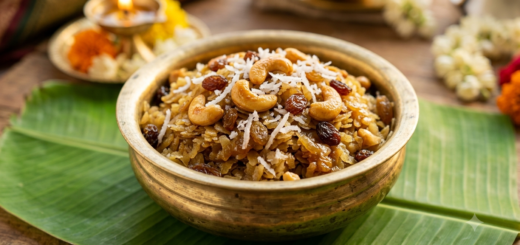
Pal Payasam Recipe Kerala Style: Creamy Rice Payasam
Pal Payasam Recipe Kerala is a slow-cooked milk, rice, and sugar dessert that becomes creamy without condensed milk or thickeners. This refreshed version keeps the classic Kerala method simple, while giving you clear ratios, doneness cues, and fixes for scorching or over-thickening.
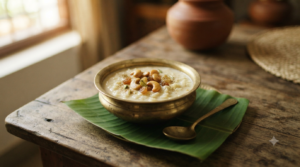
Creamy Kerala-style pal payasam made slowly with milk, rice and sugar for a traditional home-style dessert.
The base idea is traditional: rice cooks gently in milk until tender, then sugar finishes the dessert. Kerala Tourism also describes paal payasam as a rice, milk, and sugar sweet, with slow reduction as the key technique. This home recipe is not an exact temple prasadam formula, because temple methods and large-batch proportions are different.
Pal Payasam Recipe Kerala at a Glance
- Style: classic Kerala milk-and-rice payasam.
- Prep time: about 10 minutes.
- Cook time: about 60 to 75 minutes on the stovetop.
- Serves: 5 to 6 small dessert portions.
- Best rice: Kerala raw rice, unakkalari, matta broken rice, or another short-grain raw rice.
- Texture: loose and pourable when hot, thicker after cooling.
- Main rule: keep the heat low after the first boil, because milk catches quickly in a thin pan.
The Pal Payasam Recipe Kerala method below uses a home-friendly ratio rather than a festival-sized batch. That makes the milk easier to control, so first-time cooks can judge rice softness and reduction without wasting ingredients.
The official Kerala Tourism paal payasam recipe uses milk, rice, sugar, and saffron. Its method also relies on low heat and reduction, which is the part worth copying at home.
Recipe Card
| Item | Details |
|---|---|
| Prep time | 10 minutes |
| Cook time | 60-75 minutes |
| Total time | 70-85 minutes |
| Servings | 5-6 small bowls |
| Difficulty | Easy, but needs attention |
| Best vessel | Heavy-bottomed saucepan or uruli |
Cook time changes with pan width, burner strength, and milk quantity. Therefore, use the visual cues below instead of relying only on the clock.
Ingredients for Pal Payasam Recipe Kerala
- 1 litre full-fat milk
- 1/4 cup raw rice, about 45 to 50 g
- 1/3 to 1/2 cup sugar, according to taste
- 1/2 cup water, optional for the first stage of cooking
- 1/4 teaspoon cardamom powder, optional
- 1 teaspoon ghee, optional
- 6 to 8 cashews, optional
- 1 tablespoon raisins, optional
- 4 to 5 saffron strands, optional
For the cleanest traditional flavour, milk, rice, and sugar are enough. In this Pal Payasam Recipe Kerala version, the optional flavourings stay separate so you can taste the base before adding them.
Cardamom, saffron, cashews, and raisins are home-style additions, so use them only if your family likes them.
Which rice works best for Pal Payasam Recipe Kerala?
Kerala raw rice or unakkalari gives the dessert a more regional character, while short-grain white rice gives a soft and creamy finish. Broken rice also works well because it releases starch faster and cooks evenly.
Avoid strongly aromatic basmati if you want the milk flavour to stay dominant. However, basmati still works in a pinch, so there is no need to postpone the recipe.
How to Make Pal Payasam Recipe Kerala Step by Step
- Rinse the rice. Wash the rice two or three times, then drain it well. Do not scrub it aggressively, because a little surface starch helps the payasam thicken.
- Heat the milk. Pour the milk into a heavy-bottomed pan and bring it to a gentle boil. Stir along the base and corners while it heats, since those areas catch first.
- Add the rice. Reduce the flame before adding the rice. If your pan tends to scorch, add up to 1/2 cup water at this stage so the rice cooks more gently.
- Cook slowly. Simmer uncovered on low to medium-low heat for about 35 to 45 minutes. Stir every few minutes, and scrape the base with a flat spoon so no milk solids burn.
- Check the grain. Press a rice grain between two fingers. It should mash easily without a hard centre, while the milk should look visibly thicker.
- Add sugar. Stir in 1/3 cup first, then taste after it dissolves. Add more only if needed, because sweetness becomes stronger as the payasam reduces.
- Finish the texture. Simmer for another 10 to 15 minutes after adding sugar. Stop when the payasam coats the spoon but still falls from it in a steady stream.
- Add optional flavouring. Stir in cardamom or saffron at the end. If using nuts and raisins, fry them briefly in ghee and add them just before serving.
- Rest before serving. Turn off the heat and rest the payasam for 10 minutes. It thickens as it cools, so do not reduce it to pudding consistency in the pan.
Pal Payasam Recipe Kerala: Texture and Doneness
Finished paal payasam should be creamy and pourable, with fully cooked rice suspended through the milk. The Pal Payasam Recipe Kerala texture is closer to a loose rice pudding than a thick custard, especially while hot.
It should not set like custard, because cooling will thicken it further.
The colour may stay ivory or deepen toward beige after longer cooking. A pale pink tone can develop during extended reduction, but do not force that colour with excessive heat because scorched milk tastes bitter.
Three doneness cues that matter more than time
- The rice mashes easily and has no chalky centre.
- The milk coats the back of a spoon instead of running off like plain milk.
- A spoon dragged across the pan base leaves a brief trail before the liquid closes over it.
These cues matter because stovetops vary. Therefore, a wide uruli may finish faster than a narrow saucepan even when both start with the same quantity.
Why This Pal Payasam Recipe Kerala Uses Moderate Sugar
The older post used 3/4 cup sugar for 1 litre of milk, which makes a very sweet home batch. This refresh starts at 1/3 cup and lets you increase it gradually, so the milk and rice still taste distinct.
Traditional or temple-style batches may be much sweeter than this home version. Kerala Tourism, for example, publishes a large-batch recipe with a high sugar ratio. Taste preference matters, so adjust only after the rice is fully cooked.
Pal Payasam Recipe Kerala: Common Mistakes and Fixes
The milk scorched at the bottom
Transfer the unburnt payasam immediately to a clean pan without scraping the burnt layer. Then continue on low heat, because stirring the scorched base back in can spread bitterness through the whole batch.
The payasam is too thin
Keep it uncovered on low heat for another 5 to 10 minutes, while stirring more often. Do not add cornflour, because slow reduction gives a cleaner flavour and keeps the recipe closer to the Kerala method.
The payasam became too thick
Add warm milk a little at a time, then stir until the texture loosens. This often happens after refrigeration, since the rice keeps absorbing liquid while the dessert rests.
The rice is still hard
Add a small splash of hot milk or water and cook longer on low heat. Sugar can slow softening once added, so always make sure the rice is tender before sweetening.
Classic Stovetop vs Quick and Jaggery Versions
| Version | Best for | Main difference |
|---|---|---|
| Classic stovetop | Deep milk flavour | Slow reduction with rice |
| Quick cooker version | Less active cooking | Pressure cooking shortens stove time |
| Jaggery version | Deeper caramel note | Sweetener and handling change |
If you need a faster method, use Bhimas Cook’s instant pal payasam recipe. If you want a jaggery-sweetened version, follow the separate paal payasam with jaggery recipe, because hot jaggery syrup and milk need more careful handling.
Is This the Same as Ambalapuzha Palpayasam?
No. This is a practical Kerala home-style paal payasam, not a claim to reproduce the exact Ambalapuzha Sree Krishna Temple prasadam. The famous temple sweet has its own large-batch process, vessel choices, proportions, and serving tradition.
You can borrow one lesson from that style: patience matters. Slow cooking gives milk time to concentrate, so the flavour becomes deeper without condensed milk or artificial thickening.
Serving Pal Payasam in a Kerala Meal
Paal payasam works well as the sweet finish after a Kerala lunch, and it also fits festive meals. The Pal Payasam Recipe Kerala approach is especially useful when you want a familiar dessert that can be made ahead and served warm or chilled.
Kerala Tourism lists payasam among the desserts served with sadya, the traditional vegetarian feast.
Serve it warm if you want the milk aroma to feel stronger. Chilled payasam is also pleasant, although it becomes thicker, so loosen it with a little milk before serving if needed.
Simple garnish choices
- Serve plain for the cleanest milk-and-rice flavour.
- Add a few ghee-fried cashews for crunch.
- Add raisins only if you like extra sweetness.
- Use saffron sparingly, because it can dominate the soft milk flavour.
Storing and Reheating Pal Payasam Recipe Kerala
Cool leftover payasam promptly, cover it, and refrigerate it below 5°C. The Food Safety and Standards Authority of India advises cold storage below 5°C for leftovers, so do not leave milk-based payasam at room temperature for long periods.
For best quality, use refrigerated payasam within 1 to 2 days. Reheat it gently until steaming, while stirring from the base, and add a splash of milk if the rice has absorbed too much liquid.
See the FSSAI Food Safety at Home guidance for general leftover handling. If the payasam smells sour, looks split, or sat out for several hours in warm weather, discard it.
What Beginners Get Wrong With Pal Payasam Recipe Kerala
The biggest mistake is trying to make slow-cooked flavour with high heat. Strong heat may reduce the milk faster, yet it also increases the chance of scorching before the rice softens.
Another mistake is chasing a dark pink colour. Colour is not the main quality test, so focus on soft rice, concentrated milk, and a clean caramelised aroma instead.
Finally, do not add every possible garnish just because the recipe allows it. A restrained version often tastes more distinctly like paal payasam, while heavy cardamom, saffron, nuts, and raisins can turn it into a different style of kheer.
Before You Serve
This Pal Payasam Recipe Kerala works best when you judge texture rather than cooking by the minute. Keep the heat gentle, soften the rice before adding sugar, and stop cooking while the payasam is still slightly loose.
For a classic bowl, start with only milk, rice, and sugar. Then add cardamom or nuts only if they suit your family style.
Frequently Asked Questions
What is paal payasam made of?
Paal payasam is mainly made with milk, rice, and sugar. Home versions may also include cardamom, saffron, ghee, cashews, or raisins, while simpler traditional versions can stay close to the three core ingredients.
What is the best rice for Kerala pal payasam?
Kerala raw rice, unakkalari, or broken matta-style raw rice are good regional choices. Short-grain white rice also works well because it softens evenly and helps the milk become creamy.
Can I make pal payasam in a pressure cooker?
Yes, a pressure cooker can shorten active cooking time. However, milk can foam and scorch, so use a tested method and keep the heat controlled rather than converting the stovetop recipe by guesswork.
When should I add sugar to paal payasam?
Add sugar after the rice is fully soft. If you add it too early, the rice may take longer to tenderise, so check the grain first and sweeten only near the end.
Why does paal payasam turn pink?
Long, gentle cooking can deepen the milk from white toward beige or pale pink as it concentrates. The colour varies with milk, vessel, heat, and cooking time, so a white batch can still taste excellent.
Can I use jaggery instead of sugar?
Yes, but jaggery changes both flavour and technique. Add it carefully because acidic or impure jaggery can split hot milk, so a dedicated jaggery payasam method is safer than a direct one-for-one swap.
What is the difference between paal payasam and palada payasam?
Paal payasam uses rice cooked in sweetened milk, while palada payasam uses rice ada, which are thin rice flakes or pieces. Both are milk-based Kerala sweets, but their texture and preparation are different.
Can I serve pal payasam cold?
Yes. Chill it only after it has cooled safely, then keep it refrigerated. Because the rice absorbs milk while resting, stir in a small amount of cold milk before serving if the texture becomes too thick.