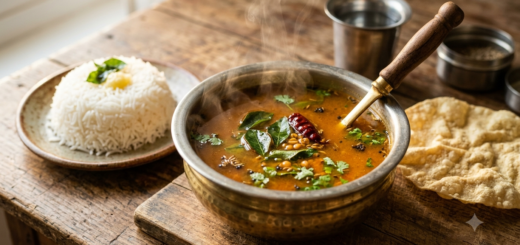
Rasam Recipe Without Garlic – Easy South Indian Method
A good rasam recipe without garlic should not taste like a rasam with something missing. Yet that is exactly what happens in most home kitchens, because cooks simply leave the garlic out and change nothing else. Garlic was doing real work in that pot, so the broth turns thin and flat once it goes. This guide fixes that with the two levers South Indian cooks have used for generations: bloomed asafoetida and a fresh pepper-cumin edge.
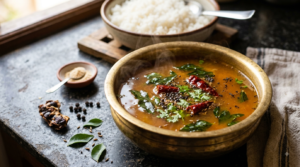
A garlic-free South Indian rasam finished with a curry leaf and mustard seed tempering.
Everything below is a tested, everyday rasam recipe without garlic, not a festival showpiece. You will also find the froth rule that decides whether your rasam smells alive or dull, a troubleshooting table for the five things that usually go wrong, and honest nutrition numbers rather than borrowed ones.
Rasam Recipe Without Garlic at a Glance
- Total time: about 30 minutes, with roughly 10 minutes of active work.
- Yield: 4 servings of thin, spoonable broth, or 6 smaller bowls served over rice.
- The key swap: asafoetida carries the savoury depth that garlic used to provide.
- The key technique: pull the pot off the heat when it froths, because a hard boil destroys the aroma.
- Diet fit: this rasam recipe without garlic is vegan when you temper in oil, and it suits no-onion no-garlic satvik cooking.
- Skill level: easy, though the tamarind and salt balance takes one or two attempts to judge.
What Garlic Does, and How This Rasam Recipe Without Garlic Replaces It
Garlic contributes three things to a traditional rasam: sulphurous pungency, a savoury base note, and a slight body that keeps the broth from tasting like spiced water. So a rasam recipe without garlic has to replace all three. Asafoetida covers the first two, while black pepper and cumin rebuild the finish.
Asafoetida works because it is an oleo-gum-resin carrying its own organosulphur compounds. That is why Jain and temple kitchens have leaned on it for centuries. Pepper and cumin then supply the warm bite that would otherwise fade, so the broth still tastes complete.
Most competing recipes stop at “skip the garlic”. Because they never address the flavour gap, readers end up disappointed and blame the recipe. The substitutions below are the actual difference between a flat bowl and a good one.
Buying the Right Asafoetida (Read the Label)
Pure asafoetida resin is rarely sold for home cooking, since it is too strong to measure by the pinch. What you buy is usually compounded hing. The Food Safety and Standards Authority of India (FSSAI) defines compounded asafoetida as asafoetida blended with gum arabic and edible starches or edible cereal flour.
This matters for two reasons. If you cook gluten-free, check whether the carrier is wheat flour or rice flour, because many popular brands use wheat. Also, a heavily bulked hing is weaker, so you may need a slightly larger pinch than the recipe states.
Recipe Card
Here are the working numbers for this rasam recipe without garlic, scaled for a family of four.
| Detail | Value |
|---|---|
| Prep time | 10 minutes |
| Cook time | 20 minutes |
| Total time | 30 minutes |
| Servings | 4 (about 1.2 litres of broth) |
| Cuisine | South Indian |
| Diet | Vegetarian, vegan with oil, no onion, no garlic |
| Difficulty | Easy |
Ingredients for This Rasam Recipe Without Garlic
Measure the tamarind and hing carefully, because those two decide whether the rasam recipe without garlic lands or falls flat.
- 3 medium ripe tomatoes (about 300 g), roughly chopped
- 2 tablespoons thick tamarind paste, or 25 g whole tamarind soaked in warm water
- 1 tablespoon rasam powder, fresh if possible
- 1/2 teaspoon turmeric powder
- 1/2 teaspoon freshly crushed black pepper
- 1/2 teaspoon cumin seeds, crushed coarsely, for the base
- 1/4 teaspoon compounded asafoetida, or a generous pinch of pure resin
- 1 teaspoon salt, adjusted after tasting
- 1 teaspoon jaggery, optional but useful with very sour tamarind
- 4 cups water, plus 1 cup for the tamarind extract
- 2 tablespoons chopped coriander leaves
For the tempering:
- 2 teaspoons sesame oil, ghee, or a neutral oil
- 1 teaspoon mustard seeds
- 1/2 teaspoon cumin seeds
- 2 dried red chillies, broken
- 1 sprig curry leaves, about 10 to 12 leaves
Sesame oil is the traditional choice in Tamil Nadu kitchens, so use it if you have it. Ghee gives a rounder aroma but makes the dish non-vegan.
Step-by-Step Method for This Rasam Recipe Without Garlic
Step 1: Extract the Tamarind and Build the Base (12 minutes)
Soak the tamarind in 1 cup of warm water for five minutes. Squeeze it with your fingers, then strain and discard the fibre. If you use ready paste, simply whisk it into warm water until no lumps remain.
Crush the chopped tomatoes with your hand or a masher directly in the pot. Add the turmeric, crushed pepper, crushed cumin, and half the salt. Pour in the tamarind extract and simmer uncovered for about seven minutes, until the raw tamarind smell disappears.
Hand-crushing matters more than it sounds. Blended tomatoes make the rasam cloudy and slightly pasty, while crushed ones leave the broth clear.
Step 2: Dilute and Season (3 minutes)
Add 4 cups of water and the remaining salt. Stir in the rasam powder and the jaggery if you are using it. Let the pot sit on medium heat while you prepare the tempering.
Step 3: Temper and Bloom the Hing (2 minutes)
Heat the oil in a small pan until it shimmers. Add mustard seeds and wait for them to pop, then add cumin seeds, red chillies, and curry leaves. Switch off the flame, count to two, and only then stir in the asafoetida.
That pause is deliberate. Asafoetida scorches within seconds on a live flame and turns bitter, which is the single most common reason a garlic-free rasam tastes wrong.
Step 4: Froth, Rest and Serve (4 minutes)
Return to the main pot and watch the surface closely. A white foam will rise around the edges just before boiling point. Pour in the hot tempering at that moment and take the pot off the heat immediately.
Scatter the coriander leaves over the top and cover the pot for two minutes. Resting lets the tempering aroma settle into the broth. Serve hot over steamed rice, or in a cup alongside a heavier meal.
The Froth Rule: Never Let Rasam Reach a Rolling Boil
This is the technique most written recipes get wrong. Rasam powder is ground from roasted coriander, pepper, cumin, and chilli, and those aromatic oils are volatile. A rolling boil drives them off in under a minute.
So the traditional instruction for any rasam recipe without garlic is to switch off at the froth stage, not the boil stage. Your broth will also stay clear instead of turning muddy. If you have ever wondered why restaurant rasam smells stronger than yours, this is usually the reason.
Homemade Rasam Powder in Two Minutes
Store-bought powders vary enormously in heat and freshness, so a quick fresh grind is worth the effort. Dry roast the following on low heat until they turn fragrant, then cool and grind coarsely.
- 2 teaspoons coriander seeds
- 1 teaspoon black peppercorns
- 1 teaspoon cumin seeds
- 2 dried red chillies
- 1/4 teaspoon fenugreek seeds
Fenugreek burns faster than everything else, so add it in the last thirty seconds. This quantity makes roughly one tablespoon, which is exactly what the recipe needs.
Troubleshooting Your Rasam Recipe Without Garlic
Five problems account for almost every failed pot. Each one has a quick fix, so work through the table before blaming the recipe.
| Problem | Likely cause | Fix |
|---|---|---|
| Tastes flat or watery | Not enough salt, or hing skipped | Add salt first, then a pinch of hing bloomed in a spoon of hot oil |
| Bitter aftertaste | Burnt asafoetida or fenugreek | Discard that tempering and redo it off the flame |
| Too sour | Over-strong tamarind extract | Add hot water and a teaspoon of jaggery, then simmer briefly |
| Cloudy and thick | Blended tomatoes or over-boiling | Crush tomatoes by hand next time and stop at the froth |
| Weak aroma | Old rasam powder or a rolling boil | Grind a fresh batch and temper at the very end |
None of these mistakes ruin the pot permanently, except burnt hing. Because that bitterness spreads through the whole broth, a fresh tempering is the only real remedy.
Variations on This Rasam Recipe Without Garlic
| Variation | What changes | Best for |
|---|---|---|
| Pepper-cumin rasam | Double the pepper, skip the rasam powder | Colds and sore throats |
| Lemon rasam | Replace tamarind with juice of one lemon, added off the heat | A lighter, fresher tang |
| Dal rasam | Stir in half a cup of cooked toor dal before diluting | A heartier, more filling bowl |
| Mysore-style rasam | Grind coconut and coriander seeds into the base | A thicker, milder Karnataka version |
| Tomato-free rasam | Drop tomatoes and raise tamarind slightly | Days when tomatoes are expensive or unavailable |
If you want the onion left out as well, our no-onion no-garlic satvik rasam follows the same base with a festival-day framing. Readers who prefer a sharper, peppery bowl can compare the method in our black pepper rasam recipe.
Pressure Cooker and Instant Pot Notes
Rasam does not benefit from pressure cooking, since the point is a short, gentle infusion. Use the cooker only for the dal in a dal rasam, and build the broth separately afterwards.
On an Instant Pot, use sauté mode at the lowest setting for the tomato stage. Switch the appliance off before the froth stage, because the residual heat of the inner pot keeps cooking longer than a stovetop pan does.
Rasam Recipe Without Garlic: Nutrition Per Serving
| Nutrient | Approximate amount |
|---|---|
| Energy | 45 to 60 kcal |
| Carbohydrates | 7 to 9 g |
| Protein | 1 to 2 g |
| Fat | 2 to 3 g |
| Fibre | 1 to 2 g |
| Sodium | 350 to 500 mg, depending on added salt |
These figures are calculated estimates for one quarter of this rasam recipe without garlic, not laboratory values. For context, a 2017 study in Pharmacognosy Journal that chemically standardised rasam measured its energy content at 15.13 kcal per 100 g, which is very low because the dish is mostly water and spice. Verify your own version against a database such as USDA FoodData Central if you track intake closely.
Rasam has been reviewed in the pharmacognosy literature as a traditional functional food, largely because of its spice content. Traditional South Indian practice treats it as an appetiser and digestive aid. Those are cultural and preliminary research claims, not medical advice, so anyone managing a health condition should speak to a qualified professional.
A note on salt and sodium. Rasam is naturally salt-forward, since salt is what makes the tang readable on the tongue. If you are watching sodium, cut the salt to three-quarters of a teaspoon and lean harder on pepper and hing instead.
Serving and Storing Your Rasam Recipe Without Garlic
Serve this rasam recipe without garlic either poured over hot rice with a spoon of ghee, or drunk from a cup after a heavier course. It pairs well with a dry vegetable poriyal and appalam. For a fuller South Indian meal, many households serve it after a Kerala-style sambar rice course.
Refrigerate leftovers in an airtight container for up to two days. Reheat gently on the stove with a splash of hot water, and stop well before boiling. Rasam does not freeze well, because the tempering aroma disappears entirely on thawing.
Mistakes Most Garlic-Free Rasam Guides Repeat
Three claims about cooking a rasam recipe without garlic circulate widely online, and none of them hold up in a real kitchen. Correcting them is the fastest way to improve your result.
“Just leave the garlic out.” This is the core error, because nothing replaces the savoury base and the broth tastes hollow. Bloom hing instead, every single time.
“Simmer for fifteen to twenty minutes after adding rasam powder.” A long simmer at that stage strips the aroma rather than deepening it. Two minutes to the froth stage is enough.
“Rasam without garlic is automatically fasting-friendly.” Vrat rules differ by family and tradition, and some observances exclude tamarind, tomatoes, or regular salt as well. Check your own household practice rather than assuming.
Before You Cook
A rasam recipe without garlic succeeds on two decisions rather than a long ingredient list. Bloom your asafoetida off the flame so it never scorches, and kill the heat at the froth rather than the boil. Get those right and the broth tastes complete, even though the garlic is gone.
Start with slightly less tamarind than you think you need, since you can always add more. Taste once before the tempering goes in, then adjust salt only. If you prefer the traditional version, our garlic rasam without tomato takes the opposite approach.
Frequently Asked Questions
Does a rasam recipe without garlic taste good?
Yes, provided you replace what garlic contributed. In a rasam recipe without garlic, asafoetida supplies the savoury, sulphurous depth, while black pepper and cumin restore the warm finish. Cooks who simply omit garlic without substituting anything are the ones who find the result flat.
What can I use instead of garlic in rasam?
Asafoetida is the standard substitute across South Indian and Jain kitchens. Use a quarter teaspoon of compounded hing, bloomed in hot oil off the flame. Adding freshly crushed black pepper and a little extra cumin completes the replacement.
Is this rasam recipe without garlic suitable for satvik or Jain cooking?
The recipe uses no onion and no garlic, so it fits most satvik and Jain kitchens. Confirm that your asafoetida brand is acceptable to your tradition, since carriers differ. Some strict observances also restrict tomatoes, in which case use the tomato-free variation above.
Can I make rasam without tamarind?
Yes. Replace the tamarind with the juice of one lemon, stirred in after you switch off the heat. Lemon juice turns bitter when boiled, so timing matters more here than with tamarind.
Why does my rasam taste bitter?
Burnt asafoetida is the usual culprit, followed by scorched fenugreek in the rasam powder. Both burn within seconds. Redo the tempering off the flame and add it fresh to the pot.
Can I add dal to this rasam?
Half a cup of cooked toor dal turns the broth into a heartier, slightly cloudy rasam. Stir it in before you dilute with water. Expect to add a little extra water, because dal thickens the pot as it stands.
How long does rasam keep in the fridge?
Two days is a safe limit for refrigerated rasam in an airtight container. The aroma fades noticeably after the first day. Reheat gently and refresh with a small pinch of crushed pepper if it tastes dull.
Is rasam healthy?
Rasam is low in energy and rich in spices, so it sits comfortably in most everyday diets. Sodium is the one figure worth watching, since the dish relies on salt for balance. Anyone on a restricted diet should confirm portions with a qualified professional.
Is this rasam recipe without garlic vegan?
Yes, simply temper in sesame oil or a neutral oil instead of ghee. Every other ingredient in the recipe is already plant based. Sesame oil is also the more traditional choice in Tamil Nadu households.