Black Pepper Rasam Recipe (Milagu Rasam): Easy Home Method
This black pepper rasam recipe gives you a thin, peppery, garlic-scented broth in about 25 minutes. It needs no shop-bought rasam powder at all. Tamil kitchens call it milagu rasam, and it is the pot people reach for when the weather turns or appetite disappears.
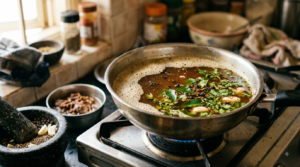
Pepper rasam at the froth stage — the moment to switch off the heat, before it reaches a rolling boil.
Almost every household version uses the same eight or nine ingredients, so the recipe is rarely where things go wrong. Heat control is, and that is what this guide fixes first.
Black Pepper Rasam Recipe at a Glance
- Milagu means black pepper in Tamil, so milagu rasam simply means pepper rasam.
- This black pepper rasam recipe needs no shop-bought powder, because the spices are crushed fresh.
- Total time is roughly 25 minutes, and about 10 of those are hands-off simmering.
- Rasam must never reach a rolling boil, since hard boiling turns the pepper harsh and dulls the aroma.
- The rasam is ready when a light foam rises at the edges, not when it bubbles hard.
- It serves four people alongside rice, or two if you drink it as a soup.
Black Pepper Rasam Recipe Card
Everything below scales cleanly, so simply double every quantity for eight servings.
| Detail | Value |
|---|---|
| Prep time | 10 minutes |
| Cook time | 15 minutes |
| Total time | 25 minutes |
| Servings | 4 (with rice) |
| Cuisine | Tamil Nadu, South Indian |
| Difficulty | Easy |
Ingredients for This Black Pepper Rasam Recipe
Measure everything before the pan goes on, because the tempering stage moves fast. Quantities below suit four servings poured over rice.
- 2 teaspoons whole black peppercorns
- 1 teaspoon cumin seeds (jeera)
- 5 to 6 garlic cloves, peeled
- 1 lemon-sized ball of tamarind, or 1 teaspoon tamarind paste
- 2 small tomatoes, roughly crushed by hand
- 2 cups water, plus a little more if the rasam thickens
- ½ teaspoon turmeric powder
- ¾ teaspoon salt, adjusted at the end
- 1 tablespoon sesame (gingelly) oil or ghee
- ½ teaspoon mustard seeds
- 1 dried red chilli, torn
- A generous pinch of asafoetida (hing)
- 10 to 12 fresh curry leaves
- 2 tablespoons chopped coriander leaves with tender stalks
Two of these carry more weight than the rest. Sesame oil is the traditional fat here, and it holds the pepper aroma better than a neutral oil does. Asafoetida looks optional but is not, since it supplies the savoury base note that keeps a spice-only rasam from tasting flat.
Use whole peppercorns rather than the fine powder in your pepper mill. Pre-ground pepper loses its volatile oils within weeks, so it delivers heat without fragrance.
How to Make Black Pepper Rasam Recipe Step by Step
Step 1: Soak the tamarind (10 minutes, hands-off)
Soak the tamarind ball in half a cup of warm water for 10 to 15 minutes. Then squeeze it firmly with your fingers and strain the pulp into a bowl. Discard the fibres and seeds. If you are using paste instead, simply dissolve one teaspoon in half a cup of warm water.
Step 2: Crush the pepper, cumin and garlic (5 minutes)
Put the peppercorns, cumin seeds and peeled garlic into a mortar and pestle. Pound until the pepper cracks into coarse, uneven pieces. Do not grind this to a powder, because coarse fragments release flavour slowly through the simmer instead of all at once. A few short pulses in a small mixie jar work too if you are short on time.
Step 3: Temper the spices (3 minutes)
Heat the sesame oil in a wide pan over medium heat. Add the mustard seeds first and wait until they crackle, which takes about 30 seconds. Next add the torn red chilli, the asafoetida and the curry leaves. Stand back slightly here, since the curry leaves will spit.
Step 4: Cook the tomatoes (3 minutes)
Add the crushed tomatoes and the turmeric powder. Mash them lightly against the base of the pan while they soften. After about two minutes the tomatoes will collapse and the mixture will smell sweet rather than raw. That change in smell is your cue to move on.
Step 5: Simmer with the crushed spice (10 minutes)
Pour in the tamarind water, the two cups of plain water and the salt. Bring it to a gentle simmer, then stir in the crushed pepper, cumin and garlic mix. Keep the flame low from this point onward. Let it sit at a bare simmer for 8 to 10 minutes, until the sharp tamarind smell disappears completely.
Step 6: Finish and rest (2 minutes)
Switch off the heat as soon as a pale foam gathers around the rim. Scatter the chopped coriander over the surface and cover the pan immediately. Let it rest for three or four minutes before serving, because the trapped steam carries the pepper aroma back into the broth.
The Froth Test: How to Know Rasam Is Ready
Most versions of this black pepper rasam recipe give a fixed simmering time. That instruction fails the moment your pan or flame differs from theirs. Experienced cooks watch the surface instead. A finished rasam develops a fine, pale, slightly bubbly collar around the edge of the pan while the centre stays almost still.
That foam appears when the tamarind and dal proteins have cooked through and the liquid is just below a true boil. If the whole surface is churning, you have gone too far. If the liquid still looks flat and glassy after eight minutes, the raw tamarind edge is probably still there. Give it two more minutes.
Smell is the second check. Raw tamarind smells sour and slightly green, while cooked rasam smells rounded and peppery. Trust your nose over the clock.
Why You Should Never Boil This Rasam
Black pepper carries its fragrance in volatile oils, and those oils escape with steam. A hard boil drives them off within a minute or two, which leaves behind the raw pungency and none of the perfume. This is the single most common reason a homemade pepper rasam tastes sharp but smells of nothing.
Boiling causes a second problem as well. Tamarind turns noticeably bitter when it is cooked aggressively, and the crushed garlic can develop a scorched edge. Keep the flame at its lowest setting once the spice mix goes in. Lift the pan off the heat if it starts to climb.
One more practical note about equipment. Tamarind is acidic, so avoid unlined aluminium or bare cast iron, which can react and leave a metallic taste. Stainless steel, an eeya chombu, or any non-reactive pan works well.
Milagu Rasam Podi: The Make-Ahead Shortcut
If you cook this black pepper rasam recipe often, a small batch of pepper rasam powder saves the crushing step. Dry roast the ingredients separately, because they brown at different speeds.
- 2 tablespoons black peppercorns
- 2 tablespoons cumin seeds
- 1 tablespoon toor dal
- 4 dried red chillies
- 1 teaspoon coriander seeds
Roast the toor dal first until it turns golden, then the coriander seeds, then the chillies, and finally the pepper and cumin for under a minute. Cool everything completely before grinding, since warm spices go pasty in the jar. Grind to a coarse powder and store it in an airtight container away from the stove.
Use 2 to 2½ teaspoons of this powder in place of the freshly crushed mix. The powder keeps its punch for about two to three weeks, after which the pepper aroma fades noticeably. Fresh crushing still wins on flavour, so treat the podi as a weekday compromise rather than an upgrade.
Troubleshooting: Five Problems and Their Fixes
Nearly every complaint about a black pepper rasam recipe traces back to one of five causes. Find yours in the table below and adjust on the spot.
| Problem | Likely cause | Fix |
|---|---|---|
| Tastes bitter | Tamarind boiled hard, or garlic scorched | Add a small piece of jaggery and dilute with hot water |
| Too sour | Excess tamarind, or unstrained pulp | Add half a cup of hot water and a pinch of jaggery |
| Too spicy | Pepper ground fine instead of cracked | Dilute, then add a spoon of ghee to soften the heat |
| No aroma | Pre-ground pepper, or a rolling boil | Crush fresh pepper and stir it in off the heat |
| Tastes flat | Asafoetida or salt skipped | Add a pinch of hing bloomed in hot ghee |
Jaggery deserves a word of caution. A pea-sized piece balances sourness, while a spoonful turns the rasam sweet and ruins it. Add a little, taste, and stop early.
Black Pepper Rasam Recipe Variations Worth Trying
Pepper rasam changes shape from one household to the next. Every version below is authentic somewhere.
- Without tomato: skip the tomatoes and increase the tamarind slightly. This is the version many Tamil families make during a cold.
- Without garlic: leave the garlic out and add an extra pinch of asafoetida to compensate for the missing savoury note.
- With dal: stir in half a cup of cooked, mashed toor dal at the simmer stage for a thicker rasam.
- In ghee: swap the sesame oil for ghee if you want a richer broth, which suits a plain rice meal well.
- Lemon finish: skip tamarind entirely and squeeze half a lemon in after switching off the heat.
If you prefer the garlic-free route, our rasam without onion and garlic covers the sattvic method in full. For the opposite direction, the garlic rasam without tomato leans hard on garlic and tamarind alone.
Black Pepper Rasam Recipe Nutrition, and One Figure Worth Correcting
These values are estimates for one of four servings, calculated from standard ingredient data rather than laboratory testing. Actual numbers shift with oil quantity and tomato size.
| Nutrient | Per serving (estimate) |
|---|---|
| Calories | 45 to 60 kcal |
| Carbohydrates | 4 to 6 g |
| Protein | 0.5 to 1 g |
| Fat | 3 to 4 g |
| Fibre | 1 to 2 g |
| Vitamin C | 2 to 5 mg |
That last row matters, because recipe sites routinely claim pepper rasam supplies 60 to 70 mg of vitamin C per serving. The arithmetic does not support it. Raw tomatoes contain roughly 13.7 mg of vitamin C per 100 grams, according to the USDA FoodData Central database. Two small tomatoes therefore hold about 20 mg in total.
Split that across four servings and you get around 5 mg before cooking. Vitamin C also degrades under heat, so a ten-minute simmer removes a good share of what remains. Rasam is a fine light dish, yet it is not a meaningful vitamin C source, and no honest recipe should suggest otherwise.
Is Pepper Rasam Actually Good for a Cold?
Pepper rasam is not a treatment for infection, though it is a genuinely comforting thing to eat when you are unwell. The warmth, steam and salt make a thin, easy meal go down when solid food feels like too much effort. That is the honest version of a claim you will see stated far more confidently elsewhere.
Research on black pepper does exist. A 2023 review in the journal Molecules gathered the clinical evidence on piperine, the main active compound in black pepper. Trials linked it with better blood lipid markers and stronger antioxidant activity. You can read the review on PubMed Central.
None of that studies a bowl of rasam, and none of it concerns colds or fevers. Treat pepper rasam as food and tradition rather than medicine. If a fever, cough or sore throat persists beyond a few days, see a doctor instead of a rasam pot.
Serving, Storage and Reheating
Serve this black pepper rasam recipe hot over steamed rice with a teaspoon of ghee. A dry vegetable poriyal and appalam round out the plate. It also works poured into a tumbler and sipped on its own. Many Tamil homes start lunch exactly that way.
Leftovers keep in an airtight container in the fridge for up to two days. Reheat gently on low heat and stop before it bubbles, because a second boil strips whatever aroma survived the first cook. Do not freeze it, since the tempering separates and the texture turns watery on thawing.
How This Black Pepper Rasam Recipe Differs from Other Rasams
Rasam is a family of dishes rather than a single recipe, and the differences are worth knowing before you choose one.
| Type | Defining spice | Best for |
|---|---|---|
| Milagu rasam (pepper) | Coarse black pepper and cumin | Cold evenings, light appetite |
| Tomato rasam | Tomato and rasam powder | Everyday meals, milder palates |
| Poondu rasam (garlic) | Whole garlic cloves | Strong, pungent flavour |
| Paruppu rasam (dal) | Cooked toor dal | A thicker, more filling bowl |
Pepper is what sets this one apart. A tomato rasam leans on packaged rasam powder. This black pepper rasam recipe builds its flavour from spices you crush minutes before cooking.
If you would rather use a ready mix, our guide to rasam with MTR rasam powder covers the proportions. A rasam recipe without garlic suits anyone avoiding alliums.
Before You Cook This Black Pepper Rasam Recipe
Get three things right and it will work on the first attempt. Crush the pepper coarsely instead of grinding it. Keep the flame low once the spices go in. Then switch off the moment foam appears at the edge.
Everything else is adjustable to your taste, so treat the salt, sourness and heat as yours to tune.
Start with the base version above before you experiment. Once you know how it should smell and look, the dal, tomato and lemon variations become easy to judge. For a fuller South Indian meal, pair it with our sambar without a pressure cooker.
Frequently Asked Questions
Can I make this black pepper rasam recipe without tamarind?
Yes. Squeeze half a lemon into the rasam after switching off the heat, and skip the tamarind step entirely. The sourness is brighter and less deep, so add it gradually and taste as you go. Never simmer the rasam after adding lemon juice, because heat turns it bitter.
How much pepper should I use for mild rasam?
Reduce the peppercorns from 2 teaspoons to 1 teaspoon and leave out the dried red chilli. That gives a warm, fragrant broth without real heat, which suits children and anyone sensitive to spice. Increase the cumin slightly to keep the flavour balanced.
Can I cook this black pepper rasam recipe in a pressure cooker?
You can cook it in the cooker body, but never seal it with the weight on. Rasam depends on gentle open simmering, so pressure cooking overcooks the pepper and destroys the aroma. Treat the cooker as a plain pot if that is what you have.
Why did my rasam turn bitter?
Bitterness almost always comes from boiling the tamarind hard or burning the garlic during tempering. Dilute the rasam with hot water and stir in a pea-sized piece of jaggery to rebalance it. Next time, keep the flame low from the moment the tamarind goes in.
Should I add dal to pepper rasam?
Dal is optional and regional. Half a cup of cooked, mashed toor dal makes the rasam thicker and more filling. The dal-free version stays thin enough to drink as a soup. Many Tamil households make the clear version specifically when someone is unwell.
Can I use pepper powder instead of whole peppercorns?
You can, though the result is noticeably weaker in aroma. If you use powder, add it in the last two minutes of simmering. Its oils escape quickly, so an early addition is wasted. Use about 1 teaspoon of fresh powder for 2 teaspoons of whole pepper.
How long does this black pepper rasam recipe stay good?
Refrigerated in an airtight container, it keeps for up to two days. Reheat only the portion you need and warm it gently without boiling. Discard it if it smells fermented or tastes fizzy, which can happen faster in warm weather.
Is asafoetida really necessary in this recipe?
It is close to essential in a rasam this simple. Asafoetida supplies a savoury depth that pepper and cumin alone cannot provide, so skipping it usually leaves the broth tasting thin. If you must omit it for dietary reasons, add an extra clove of crushed garlic instead.
Nutrition figures on this page are estimates for general information only and are not dietary or medical advice. Consult a qualified professional for guidance on your own diet or health.