Garlic Rasam Without Tomato — Authentic Poondu Rasam in 20 Minutes
Garlic rasam without tomato is the version South Indian kitchens made long before tomatoes became an everyday staple. It is a thin, peppery, tamarind-sharp broth built almost entirely on crushed garlic, and it comes together in about twenty minutes. Yet the difference between a bowl that tastes bright and one that tastes flat has nothing to do with the ingredient list. It sits in a single step that most home cooks get wrong, and this guide fixes it.
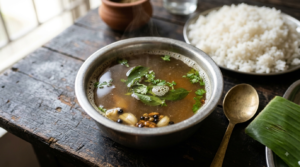
Clear, tamarind-based garlic rasam without tomato, finished with a fresh mustard and curry leaf tempering.
Bhimas Cook is a home-kitchen recipe blog. The cooking notes here come from repeated home testing, while any health comments are general information only and not medical advice.
Garlic Rasam Without Tomato at a Glance
- Total time: about 20 minutes, including 5 minutes of tamarind soaking
- Serves: 3 people as an accompaniment to rice, or 2 as a soup
- Souring agent: tamarind only, so the broth stays clear instead of cloudy
- Garlic: 8 to 12 cloves, lightly crushed and never finely chopped
- Dal: optional; the classic Kongunad version skips it entirely
- The one rule: switch off the flame the moment a light froth rises, because a hard boil turns rasam bitter
Because this recipe leans on garlic rather than tomato, the flavour reads warmer and rounder. Tomato brings fruity acidity, while tamarind brings a cleaner, sharper sourness that lets the pepper and garlic come forward.
Why Garlic Rasam Without Tomato Tastes Clearer Than the Usual Version
Garlic rasam without tomato tastes clearer because tomato pulp is what clouds an ordinary rasam. When you strain tamarind water and add nothing else solid, the broth stays translucent. You can see the peppercorns settle at the base of the bowl.
This style is often called poondu rasam, since poondu means garlic in Tamil. Home cooks across Tamil Nadu and Kerala make it during monsoon weeks and after heavy meals. In many households it is also the standard dish when someone has a blocked nose or a dull appetite.
The general description of rasam holds true here: a thin, tangy broth, eaten mixed into rice or sipped on its own. What changes is the flavour engine. Instead of tomato acidity, you get garlic sweetness layered under pepper heat.
Poondu Rasam Versus Milagu Rasam
People often confuse the two, though the difference is simple. Milagu rasam leads with black pepper and uses garlic sparingly. Poondu rasam flips that ratio, so garlic dominates while pepper supports it.
If your throat feels scratchy, push the pepper up to a full teaspoon. If you want the garlic to shine, keep pepper at half a teaspoon and add four extra cloves.
Garlic Rasam Without Tomato Recipe Card
| Detail | Value |
|---|---|
| Prep time | 10 minutes |
| Cook time | 10 minutes |
| Total time | 20 minutes |
| Servings | 3 servings |
| Cuisine | South Indian, Tamil Nadu |
| Difficulty | Easy |
Ingredients for Garlic Rasam Without Tomato
Every quantity below is measured for three servings. Scale the garlic and pepper first if you want a stronger bowl, because the water stays the same.
- Garlic cloves — 8 to 12, peeled and lightly crushed
- Black peppercorns — 1/2 teaspoon
- Cumin seeds — 1/2 teaspoon, plus 1/4 teaspoon for the tempering
- Dried red chillies — 2 whole
- Tamarind — a gooseberry-sized ball, soaked in hot water
- Asafoetida (hing) — a generous pinch
- Turmeric powder — a pinch
- Jaggery — a small pinch, optional but recommended
- Mustard seeds — 1/2 teaspoon
- Curry leaves — 1 sprig
- Ghee or a neutral oil — 2 teaspoons
- Salt — to taste, added near the end
- Water — about 2 cups in total
- Coriander leaves — a few sprigs, chopped, for garnish
Two ingredients here were missing from the older version of this recipe. Asafoetida is what gives rasam its familiar savoury base note, so skipping it leaves the broth tasting oddly plain. A pinch of jaggery does not sweeten anything, though it rounds off tamarind’s sharp edge and makes the rasam taste finished.
How to Make Garlic Rasam Without Tomato Step by Step
Read step 5 before you start. It is the step that separates a good bowl from a bitter one, and it takes seconds rather than minutes.
Step 1: Soak and Extract the Tamarind (5 minutes)
Drop the gooseberry-sized tamarind ball into 1/2 cup of hot water. Let it sit for five minutes until it softens. Squeeze the pulp thoroughly with your fingers, then strain the liquid into a jug and discard the fibres.
Top the strained extract up with another 1.5 cups of water. This diluted tamarind water is the entire body of the rasam, so taste it now. It should read pleasantly sour, not puckering.
Step 2: Crush the Spices and Garlic (2 minutes)
Pound the peppercorns and 1/2 teaspoon of cumin seeds in a mortar until coarsely broken. Fine powder is a mistake here, because it clouds the broth and dulls the aroma. A few whole peppercorns left in the mix is perfectly fine.
Crush the garlic cloves separately with the flat of a knife or a single pestle strike. You want them split and bruised, not minced. Whole crushed cloves release flavour slowly and stay soft enough to eat with rice.
Step 3: Simmer the Tamarind Water First (5 minutes)
Pour the diluted tamarind water into a saucepan. Add the turmeric, asafoetida, curry leaves, crushed garlic and the coarse pepper-cumin mix. Simmer on low heat for about five minutes.
This stage removes the raw smell of tamarind, which is the reason it comes before the tempering. If you skip it, the finished rasam carries a green, slightly metallic edge. Keep the heat low, since a rolling boil at this point starts the bitterness problem.
Step 4: Season and Add the Jaggery (1 minute)
Now add the salt and the pinch of jaggery. Salt goes in late on purpose, because tamarind and salt boiled together for long stretches taste harsher. Stir once and let the mixture continue on low heat.
Step 5: Switch Off at the Froth, Not at the Boil (1 minute)
Watch the surface closely. A pale, foamy froth will rise across the top within a minute or two. The instant it appears, turn the flame off completely.
Do not let the rasam reach a rolling boil, and do not simmer it for five more minutes afterwards. Hard boiling drives off the volatile aromatics and pushes the crushed pepper into bitterness. This single habit improves a rasam more than any other change you can make.
Step 6: Temper and Finish (2 minutes)
Heat the ghee in a small pan. Add mustard seeds and wait until they pop fully, then add the remaining 1/4 teaspoon of cumin and the torn red chillies. Pour this straight over the switched-off rasam.
Scatter the chopped coriander leaves on top and cover the pan immediately. Let it steep for five minutes before serving. That covered rest is when the tempering aroma actually moves into the broth.
Why You Should Never Boil Garlic Rasam Without Tomato
Here is a correction worth stating plainly, because an earlier version of this page carried the error too. Older instructions told you to bring the rasam to a boil and simmer it for five minutes at the end. That is exactly what makes garlic rasam taste dull and faintly bitter.
Traditional South Indian kitchens never boiled rasam hard. Part of the reason is practical history: rasam was cooked in eeya chombu, a tin-alloy vessel with a low melting point. Long boiling with acidic tamarind and salt was avoided in those vessels as a matter of routine.
The taste logic outlived the vessel, and it still governs how garlic rasam without tomato should be cooked. Crushed pepper and cumin give up their aroma quickly, so extended heat only burns off what you crushed them for. Switch off at the froth and the difference is obvious in the first spoonful.
Common Mistakes That Ruin Garlic Rasam Without Tomato
Most failed batches trace back to one of five errors. Each has a straightforward fix.
| Problem | Cause | Fix |
|---|---|---|
| Bitter aftertaste | Boiled too long after adding pepper | Switch off at first froth |
| Harsh, sharp sourness | Too much tamarind, no jaggery | Add water and a pinch of jaggery |
| Cloudy broth | Spices ground to a fine powder | Crush coarsely in a mortar |
| Flat, savourless taste | Asafoetida skipped | Add a pinch during the simmer |
| Burnt, acrid garlic | Garlic fried too hard in tempering | Add garlic to the tamarind water instead |
The last row is worth a second look. Many recipes fry garlic in the tempering until golden, though that browning is unforgiving. Adding crushed garlic to the simmering tamarind water instead gives you mellow, sweet cloves every time.
What If the Rasam Tastes Watery?
A watery rasam usually means the tamarind was under-extracted rather than over-diluted. Squeeze the soaked pulp harder next time, since a soft squeeze leaves most of the sourness behind. As an immediate rescue, simmer briefly with a little extra crushed garlic and a fresh pinch of pepper.
Three Garlic Rasam Without Tomato Variations Worth Trying
The base recipe is deliberately minimal, so it takes variations easily. Each one shifts the bowl in a different direction.
Dal Water Version
Stir two tablespoons of cooked toor dal, thinned with water, into the rasam just before you switch off. The broth turns softer and slightly opaque. Families who find pure tamarind rasam too sharp usually prefer this version.
Pepper-Forward Version
Raise the peppercorns to a full teaspoon and drop the red chillies to one. This lands closer to milagu poondu rasam, which many households make during cold weather. The heat is warming rather than fiery.
Lemon Version Without Tamarind
Skip tamarind entirely and simmer plain water with the garlic and spices. After switching off, stir in one to two tablespoons of lemon juice. Never boil after adding lemon, because heat turns citrus juice bitter almost immediately.
On days when both onion and garlic are avoided at home, this recipe will not suit you. Our rasam recipe without onion and garlic covers that version instead.
What to Serve With Garlic Rasam Without Tomato
The standard pairing is hot steamed rice, a spoon of ghee and a papad. A dry vegetable stir-fry on the side completes a South Indian lunch plate. Potato roast, beans poriyal and okra fry all work well.
Plenty of people skip rice altogether and drink it from a tumbler. Served that way, it makes a light evening meal on its own. If you are planning a fuller spread, our Tamil Nadu style sambar sits naturally alongside this rasam.
Storing and Reheating Garlic Rasam Without Tomato
Cool the rasam completely before refrigerating it in a covered glass or steel container. It keeps for two days, though the garlic flavour strengthens noticeably by day two. Some people prefer it that way, while others find it overpowering.
Reheat gently on low heat and stop well before boiling. A fresh tempering poured over the reheated rasam restores most of the lost aroma. Freezing is possible for up to a month, yet the texture and fragrance both suffer, so fresh is genuinely better here.
You can also prepare ahead by straining the tamarind water and crushing the spices in the morning. Both hold fine at room temperature for a few hours. The actual cooking then takes under ten minutes.
Nutrition Estimate Per Serving
| Nutrient | Approximate amount |
|---|---|
| Calories | 60 to 80 kcal |
| Fat | 3 to 4 g |
| Protein | 1 to 2 g |
| Carbohydrates | 7 to 10 g |
| Fibre | 1 to 2 g |
| Sodium | varies entirely with added salt |
One serving of garlic rasam without tomato is light by any measure. These figures are calculated from the quantities listed above and divided across three servings. Treat them as a rough guide rather than a lab measurement. Exact values shift with your ghee quantity and salt, and you can cross-check individual ingredients on the USDA FoodData Central database.
Is Garlic Rasam Without Tomato Healthy?
It is light, low in fat and warming, which is why it is served to people recovering from illness. That is a comfort-food tradition rather than a treatment. The United States National Center for Complementary and Integrative Health notes that evidence on garlic’s health effects remains mixed and largely inconclusive.
So enjoy this rasam as good, digestible food, not as medicine. Anyone on blood-thinning medication should ask a doctor before eating large amounts of garlic regularly. The same applies if you have acid reflux, since tamarind and pepper can aggravate it.
Substitutions and Kitchen Notes
If you have no tamarind, lemon juice added off the heat is the closest everyday swap. Kokum works too, though it delivers a softer, fruitier sourness that changes the character. Raw mango pulp is another regional option during summer.
Ghee gives the best aroma, yet sesame oil is traditional in many Tamil homes and works beautifully. Green chillies can replace red ones, but add them after switching off so they stay bright. Curry leaves are not optional in this recipe, since their aroma carries much of the finished smell.
A Note on the Smoked Charcoal Trick
Some cooks infuse rasam with smoke by placing a lit charcoal piece in a small bowl inside the pan and covering it. It does add a lovely depth. Only do this with a window open and never in a closed room, because burning charcoal releases carbon monoxide indoors.
Before You Cook
Garlic rasam without tomato rewards restraint more than technique. Crush your spices coarsely, simmer the tamarind water gently, and turn the flame off the second the froth rises. Those three habits matter more than the exact number of cloves you use.
Start with eight cloves on your first attempt, then push towards twelve once you know how your family takes it. If you prefer a milder bowl altogether, our rasam recipe without garlic follows the same no-boil principle with a gentler flavour.
FAQs About Garlic Rasam Without Tomato
Can I make garlic rasam without tomato and without tamarind?
Yes. Simmer plain water with the garlic, pepper, cumin and turmeric, then stir in one to two tablespoons of lemon juice after switching off the flame. Add the lemon only off the heat, because boiling citrus juice turns it bitter. The result is lighter and less deep than the tamarind version.
How many garlic cloves should I use?
Eight to twelve cloves for three servings is the usual range. Eight gives a balanced, family-friendly bowl, while twelve produces the strong version people make for colds. Crush them rather than chopping, so they release flavour slowly and stay edible with rice.
Why does my rasam taste bitter?
Almost always because it was boiled too long after the crushed pepper went in. Switch the flame off as soon as a light froth forms on the surface. Burnt garlic in the tempering is the second common cause, which is why this recipe adds garlic to the tamarind water instead.
Do I need dal for garlic rasam without tomato?
No, and the classic Kongunad version deliberately leaves it out. Dal water makes the rasam softer and slightly cloudy, so add two tablespoons of thinned cooked toor dal only if you want that. Without dal the broth stays clear and the garlic tastes sharper.
Can I use rasam powder instead of fresh spices?
You can, though it changes the dish considerably. Use one teaspoon of rasam powder in place of the crushed pepper and cumin, and add it during the simmer. Freshly crushed whole spices are what give poondu rasam its distinct aroma, so the shortcut costs you something real.
How long does it keep in the fridge?
Two days in a covered container is the safe window. Reheat gently without boiling, then pour over a fresh tempering to bring the aroma back. The garlic flavour intensifies overnight, which some people enjoy and others do not.
Can I freeze it?
Freezing works for up to a month in airtight portions, but it is not recommended. Thawed rasam loses its fragrance and the texture turns slightly flat. Since the whole dish takes twenty minutes, cooking fresh is usually the better call.
Is garlic rasam without tomato the same as poondu rasam?
They are the same dish under different names, since poondu simply means garlic in Tamil. Some poondu rasam recipes do include tomato, so the no-tomato label matters when you are searching. This version uses tamarind alone as the souring agent.
What can I serve alongside it?
Hot rice with ghee and papad is the classic combination. A dry stir-fry such as potato roast or beans poriyal rounds out the plate. Many people also drink it plain as a soup, especially in cold or damp weather.