Lauki Sambar Recipe – Easy Bottle Gourd Sambar Step by Step
This lauki sambar recipe turns one plain bottle gourd into a tangy South Indian stew in about 45 minutes. It leans on toor dal, tamarind and a hot curry-leaf tempering, so the result sits somewhere between a dal and a light stew.
Before you chop anything, though, do the one thing almost every recipe online skips. Taste a raw sliver of the gourd, because a bitter bottle gourd is not merely unpleasant. It is toxic, and cooking will not make it safe.
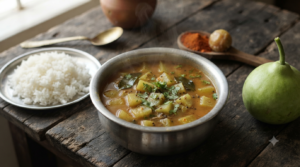
Lauki sambar simmering with soft bottle gourd cubes, toor dal and a curry leaf tempering.
The same dish travels under different names across the south. Tamil homes call it sorakkai sambar, coastal Karnataka makes sorekai bolu koddel, and Andhra kitchens say sorakaya sambar. The lauki sambar recipe below follows the everyday Tamil-Andhra style: pressure-cooked toor dal, soft gourd cubes, tamarind for sourness and a sizzling tempering stirred through at the end.
Lauki Sambar Recipe at a Glance
Here is the whole lauki sambar recipe in short form before the detail. Read the safety section below once, then you can cook this from memory forever.
- Tastes: tangy, mildly spicy, light. The gourd stays sweet and soaks up the tamarind.
- Takes: 15 minutes prep, 30 minutes cooking, roughly 45 minutes in total.
- Serves: 4 people with rice, or 5 to 6 as a side for idli and dosa.
- Non-negotiable: taste one raw piece of gourd first. Bitter means discard.
- Best texture: cook the dal fully, then give the gourd only one whistle.
| Detail | Value |
|---|---|
| Prep time | 15 minutes |
| Cook time | 30 minutes |
| Total time | 45 minutes |
| Servings | 4 |
| Cuisine | South Indian |
| Difficulty | Easy |
The Safety Check Most Lauki Sambar Recipe Guides Skip
Taste one raw sliver of bottle gourd before it goes into the pot. If it tastes bitter, throw the whole gourd away. Bitter bottle gourd carries high levels of cucurbitacins, which trigger vomiting, diarrhoea and gastrointestinal bleeding. No antidote exists, and heat does not break the compounds down, so cooking a bitter gourd will not rescue it.
This is not folklore. After deaths and hospital admissions linked to bottle gourd juice, the Indian Council of Medical Research (ICMR) set up an expert committee in October 2010, and its findings appeared in the Indian Journal of Medical Research. The committee’s core advice was blunt: do not consume bitter bottle gourd, and get medical help immediately if symptoms follow.
Cooks often assume juice is the only risk, so a cooked lauki sambar recipe feels safe by default. It is not. A case series in the Journal of Emergency Medicine recorded five adults who fell ill within 5 to 25 minutes of eating cooked bitter bottle gourd. Because the toxin survives the pot, the raw taste test is the only reliable filter you have.
Why Some Gourds Turn Bitter
Cucurbitacin levels rise when the plant grows under stress, such as drought, high heat or an over-long stay on the vine. Two gourds from the same crate can therefore behave differently. Test every single one, even if the last ten were sweet.
If a spoonful of the finished sambar tastes sharply bitter, stop eating it and discard the batch. Tamarind, jaggery and extra spice mask flavour, yet they do nothing to the compound itself. This is general food-safety information rather than medical advice, so speak to a doctor if anyone feels unwell.
Ingredients for Lauki Sambar Recipe with Exact Quantities
These quantities serve four. Everything in this lauki sambar recipe is standard Indian pantry stock, so nothing needs a special trip to the store.
- Toor dal (split pigeon peas) – 1/2 cup (100 g)
- Bottle gourd, peeled and cubed – 1 medium, about 300 g
- Onion – 1 medium, chopped
- Tomato – 2 medium, chopped
- Green chillies – 2, slit
- Tamarind pulp – 2 tbsp, or a lemon-sized ball soaked in warm water
- Sambar powder – 2.5 tsp
- Turmeric powder – 1/2 tsp
- Red chilli powder – 1 tsp
- Mustard seeds – 1 tsp
- Urad dal – 1/2 tsp
- Fenugreek seeds – 1/4 tsp (optional, adds depth)
- Asafoetida – a generous pinch
- Curry leaves – 8 to 10
- Oil – 1 tbsp
- Salt – to taste, roughly 1 tsp
- Coriander leaves – 1/4 cup, chopped
- Water – 3 to 4 cups in total
How to Pick the Right Bottle Gourd
Choose a young, firm gourd with smooth pale-green skin and no soft patches. It should feel heavy for its size, since a light one has already dried out inside. Press the skin with your thumbnail, because a tender gourd dents easily while an over-mature one resists.
Skip the giant ones. Large, over-ripe gourds carry hard seeds, a spongy core and a higher chance of bitterness. A 300 g gourd is the sweet spot for four servings.
How to Make Lauki Sambar Recipe Step by Step
The lauki sambar recipe runs in two tracks. Cook the dal and gourd in the pressure cooker while the tempering builds in a separate pan, then bring the two together at the end.
Step 1: Prep the Dal and Gourd (5 minutes)
Rinse the toor dal under cold water until the water runs clear. Soak it for 10 to 15 minutes if you have time, as soaked dal cooks faster and mashes smoother. Peel the gourd, taste a raw sliver, then cube the rest into bite-sized pieces. Chop the onion and tomato and slit the chillies.
Step 2: Pressure Cook the Dal (12 minutes)
Add the dal, turmeric and 2 cups of water to a pressure cooker with a pinch of salt. Cook for 3 whistles on medium flame, then let the pressure drop naturally. Open the lid and mash the dal lightly with the back of a ladle.
Step 3: Add the Gourd (5 minutes)
Now add the cubed gourd and 1/2 cup water to the same cooker. Close it and cook for exactly 1 whistle, then release the pressure. The cubes should hold their shape while yielding to a spoon.
Step 4: Make the Tempering (5 minutes)
Heat the oil in a deep pan on medium. Add mustard seeds and wait until they crackle properly. Then add urad dal, fenugreek seeds, asafoetida, curry leaves and green chillies, and stir for about 30 seconds until the urad dal turns golden.
Step 5: Cook the Onion and Tomato (4 minutes)
Add the chopped onion and cook until it turns soft and translucent, roughly 2 minutes. Then add the tomato and cook another 2 minutes until it collapses. Stir now and then so nothing catches on the base.
Step 6: Add Spices and Tamarind (3 minutes)
Sprinkle in the chilli powder and sambar powder, and stir for a minute until the mixture smells roasted rather than raw. Pour in the tamarind pulp with 1/2 cup water. Simmer for 2 minutes, because raw tamarind tastes flat until it cooks.
Step 7: Combine and Finish (7 minutes)
Tip the cooked dal and gourd into the pan and mix well. Adjust salt and add water until the sambar reaches the thickness you want. Simmer on low for 5 minutes so the flavours settle, then switch off and stir in the coriander leaves.
Cooker Timing That Makes or Breaks a Lauki Sambar Recipe
Most versions of this lauki sambar recipe tell you to pressure cook the dal and gourd together for 2 whistles. That single instruction is why so many home cooks end up with a cloudy sambar and no visible vegetable. Bottle gourd is around 92 percent water, so it collapses long before toor dal softens.
Cooking them in stages fixes it. Give the dal 3 whistles on its own, then return the gourd for 1 whistle only. If you prefer a one-shot method, cook both together for a single whistle on low flame and expect slightly firmer dal.
Working without a cooker changes the maths again. Simmer the dal in an open pot for 35 to 40 minutes, then add the gourd for the last 8 to 10 minutes. Our guide to a sambar recipe without a pressure cooker covers that route in detail.
Pro Tips for a Better Lauki Sambar Recipe
The tempering carries the whole dish, so never rush it. A slow sizzle pulls the flavour out of mustard, urad dal and curry leaves, while a hot pan burns them in seconds.
- Add a quarter teaspoon of fenugreek seeds to the tempering for the faintly bitter-sweet note that restaurant sambar has.
- Grind 2 tablespoons of fresh coconut with a teaspoon of roasted coriander seeds and stir it in for arachuvitta style.
- Keep the sambar thinner for rice and slightly thicker for idli or dosa.
- Add a small piece of jaggery if your tamarind runs very sour, since it rounds the edge without sweetening the dish.
- Finish with a teaspoon of ghee off the heat when you want a richer aroma.
Lauki Sambar Recipe Variations and Substitutions
The same lauki sambar recipe shifts shape from state to state. Coastal Karnataka cooks sorekai bolu koddel without coconut and adds jaggery for balance. Tamil Nadu often grinds fresh coconut with roasted spices instead. Kerala kitchens take a different turn again, which our Kerala style sambar with coconut walks through.
- No toor dal? Moong dal works and cooks faster, though the body turns lighter.
- No sambar powder? Mix 1 tsp coriander powder, 1/2 tsp cumin powder, a pinch of fenugreek and 1/2 tsp paprika for colour.
- No tamarind? Use 1 tbsp lemon juice off the heat, since boiling lemon turns it bitter.
- No curry leaves? Leave them out rather than substituting. Amchur changes the dish entirely.
If you like the sweeter Andhra balance, the jaggery sambar method uses the same base with a different finish.
Storing and Reheating Your Lauki Sambar Recipe
Refrigerate leftover lauki sambar in an airtight container for up to 3 days.
The lauki sambar recipe reheats well when you treat it gently. Sambar thickens as it cools because the dal keeps absorbing liquid, so add a splash of water while reheating. Warm it on the stove rather than at full microwave power, otherwise the gourd breaks apart.
Freezing works for up to a month, although texture suffers. The dal survives freezing well while the gourd turns soft, so freeze the dal base alone if you plan ahead and add fresh gourd on the day.
Lauki Sambar Recipe Nutrition Per Serving (Estimated)
These figures are an estimate for one of four servings, calculated from standard values in the USDA FoodData Central database and Indian food composition tables. Actual numbers shift with the amount of oil, dal and tamarind you use.
| Nutrient | Per serving (approx.) |
|---|---|
| Energy | 155 to 175 kcal |
| Carbohydrates | 23 to 26 g |
| Protein | 6 to 7 g |
| Fat | 4 to 5 g |
| Fibre | 4 to 5 g |
One serving of this lauki sambar recipe lands near 165 kcal with roughly 6 to 7 g of protein, which is higher than the 4 g figure many recipe pages quote. Raw bottle gourd itself contributes almost nothing, at about 14 kcal per 100 g, so the dal and the tempering oil account for nearly all of it.
Bottle gourd suits light, hydrating meals because of its water content and fibre. Still, treat these as general nutrition notes, not medical advice, and ask a doctor before using any vegetable to manage a health condition.
What to Serve With This Lauki Sambar Recipe
Steamed rice with a spoon of ghee is the classic partner for a lauki sambar recipe, and a dry vegetable poriyal on the side completes the plate. Idli, dosa, uttapam and medu vada all work well when you keep the sambar slightly thicker.
For a fuller South Indian spread, pair it with a millet dish or a protein-heavy breakfast such as Andhra pesarattu. Chapati is unconventional, yet it holds the sambar surprisingly well.
Lauki Sambar Recipe Mistakes to Avoid
Four mistakes account for nearly every disappointing pot. None of them is complicated to avoid once you know the pattern.
- Overcooking the gourd until it disappears. Give it one whistle, not three.
- Adding sambar powder to a dry pan and burning it. Always add tamarind and water within a minute.
- Skipping the simmer after combining, which leaves the tamarind tasting raw and sharp.
- Peeling too deep. Take off only the thin outer skin, since the layer under it holds flavour.
One more thing catches people out. Salt behaves differently once the sambar thickens, so taste and adjust after the final simmer rather than before it.
The Bottom Line
This lauki sambar recipe is a weeknight dish that rewards two small habits. Taste the raw gourd first, and cook the dal and the gourd in stages instead of together. Everything else, from the tempering to the tamarind, follows the standard South Indian rhythm you already know.
Make it once with the quantities above, then adjust the sourness and thickness to your own table. Sambar is forgiving, so the only real rule is the safety one.
Frequently Asked Questions
Is bitter bottle gourd really dangerous?
Yes. Bitter bottle gourd contains high levels of cucurbitacins, which can cause vomiting, diarrhoea, low blood pressure and gastrointestinal bleeding. The ICMR expert committee advised against consuming it at all, and there is no antidote. Discard the entire gourd if any part tastes bitter.
Does cooking remove the bitterness toxin?
No. Heat does not destroy cucurbitacins. Documented cases involve people who ate cooked bitter bottle gourd and developed symptoms within minutes, so the raw taste test before cooking is the only dependable safeguard.
Can I make this sambar vegan?
This lauki sambar recipe is already vegan as written, since the tempering uses oil rather than ghee. Just skip the optional ghee finish and check that your sambar powder contains no dairy ingredients.
Do I need to peel bottle gourd for sambar?
Yes, peel it, but only lightly. Remove the thin outer skin with a peeler and leave the pale flesh underneath, because that layer softens well and carries flavour. Scoop out the seed core only if the seeds feel hard.
How many whistles for lauki in a pressure cooker?
One whistle is enough for 300 g of cubed bottle gourd. Two or more whistles turn it to pulp. Cook the toor dal separately for 3 whistles first, then add the gourd for its single whistle.
Why is my sambar watery or bland?
Watery sambar usually means too much water went in before the final simmer. Simmer it uncovered for a few extra minutes to reduce it. Blandness normally traces back to under-roasted sambar powder or not enough salt.
Can I use other vegetables with the lauki?
Drumstick, brinjal, carrot and pumpkin all sit well alongside bottle gourd. Add firmer vegetables such as carrot with the dal, while quick-cooking ones go in with the gourd for that last whistle.
How long does lauki sambar keep?
A cooked lauki sambar recipe keeps for 3 days refrigerated in an airtight container and up to a month frozen. Reheat gently with a little water, since it thickens considerably as it sits.