Udupi Temple Sambar Recipe: Authentic Matha Style at Home
This Udupi temple sambar recipe recreates the mellow, coconut-ground sambar that devotees eat on banana leaves at the Sri Krishna Matha in coastal Karnataka. Yet it tastes nothing like the sharp, chilli-heavy sambar most of us make on a weekday. Because the Matha kitchen follows sattvic rules, onion and garlic never enter the pot, and the gentle sweetness comes from jaggery and fresh coconut. Get the freshly ground masala right, and the rest of the cooking is genuinely easy.
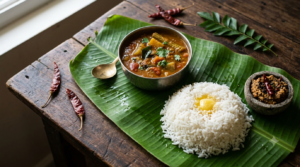
Udupi temple sambar recipe served hot with steamed rice and ghee, made with a freshly ground coconut masala and no onion or garlic.
A quick note first: Bhimas Cook is an independent home-cooking blog. We are not affiliated with Sri Krishna Matha, and we take no seva, donation or prasadam bookings of any kind. The Matha kitchen has never published its own measurements, so this is a faithful home adaptation of the temple style rather than a copy of the temple’s recipe. For darshan, seva or visit details, use the official Sri Krishna Matha website.
Udupi Temple Sambar Recipe at a Glance
Here is the shape of the Udupi temple sambar recipe before you start cooking. The active work is short, although the masala grinding is the step that decides everything.
Prep takes 15 minutes, while the cooking runs to about 40 minutes. So plan for roughly an hour in total, and expect one batch to serve four. The method is easy, although the fresh coconut masala is the step that decides the flavour.
- One cup of toor dal feeds four people generously with rice.
- The masala is roasted and ground fresh, never spooned from a packet.
- Jaggery is not optional here, since the sweet note is the Udupi signature.
- Asafoetida replaces onion and garlic, so do not skip it.
What Makes the Udupi Temple Sambar Recipe Different
Most sambar recipes online are hotel or household versions. Instead, they lean on dry sambar powder, tomato and a hard chilli hit. The Udupi temple sambar recipe moves in the opposite direction.
The difference is philosophical before it is culinary. Udupi cuisine grew out of the daily offerings cooked at the Krishna Matha, and Udupi cuisine still follows sattvic principles that exclude onion, garlic, meat and fish. Because those flavour bases are gone, the cook builds depth another way.
| Element | Temple style | Everyday or hotel sambar |
|---|---|---|
| Onion and garlic | Never used | Usually both, or shallots |
| Masala | Roasted first, then wet-ground with coconut | Dry sambar powder from a jar |
| Sweetness | Clear jaggery note, so it tastes mellow | Little or none |
| Heat level | Mild, so aroma leads | Noticeably hotter |
| Chilli | Byadagi, since colour matters more than heat | Guntur or mixed hot chillies |
| Finish | Ghee tempering, so hing is essential | Oil tempering, while hing is optional |
So the flavour target is balance, not force. A good pot of this sambar tastes sweet first, sour second and warm at the end.
The Sattvic Rules Behind Udupi Matha Cooking
Knowing why the kitchen cooks this way makes the Udupi temple sambar recipe easier to follow. Sri Madhvacharya founded the Matha in the 13th century, and its kitchens have served free daily meals, called annadana, ever since.
In fact, strict Matha cooking goes further than skipping onion and garlic. Some Udupi kitchens also avoid tomato, carrot and brinjal for ritual offerings, while the same dish cooked at home is usually more relaxed. Seasonal vegetables such as ash gourd, pumpkin, bottle gourd and the local Mattu gulla brinjal do most of the work.
During Chaturmasa, the four monsoon months, further ingredients are set aside for a period. That constraint is exactly why Udupi cooks became so inventive with coconut, tamarind and fresh grinding. The technique in this recipe is the direct result.
Two details most home versions get wrong
Two things are worth correcting, because they change the taste. First, asafoetida is the flavour bridge that stands in for onion and garlic, yet many home recipes leave it out entirely. Second, the final tempering is often called optional, although in Udupi cooking it is the step that carries the aroma to the table.
Ingredients for the Udupi Temple Sambar Recipe
Measure everything before the pan goes on the heat. The masala roasts quickly, so there is no time to hunt for fenugreek mid-way.
For the sambar base
- Toor dal (split pigeon peas) — 1 cup
- Water for the dal — 2¼ cups
- Turmeric powder — ½ tsp
- Tamarind — 1 lemon-sized ball, soaked in ½ cup warm water
- Mixed vegetables — 2 cups: ash gourd, bottle gourd, pumpkin, drumstick, carrot
- Jaggery, grated — 1 tbsp
- Salt — about 1¼ tsp, adjusted at the end
- Water for simmering — 1½ cups
For the fresh sambar masala
- Coriander seeds — 3 tsp
- Chana dal — 2 tsp
- Urad dal — 2 tsp
- Cumin seeds — 1½ tsp
- Fenugreek seeds — ¼ tsp
- Dried Byadagi or Kashmiri red chillies — 4
- Curry leaves — 10 to 12
- Grated fresh coconut — ¼ cup
- Coconut oil for roasting — 1 tsp
- Water for grinding — ⅓ cup
For the tempering
- Ghee — 1 tbsp, or coconut oil for a vegan pot
- Mustard seeds — ¾ tsp
- Asafoetida (hing) — ¼ tsp
- Dried red chilli, broken — 1
- Curry leaves — a sprig
Which vegetables the temple kitchen actually favours
First, cut everything into large, confident chunks of about two centimetres. Small dice turns to pulp while the dal is still catching up. Ash gourd and bottle gourd give the sweet, clean body that people recognise as temple sambar, so keep at least one of them in the mix.
Udupi Temple Sambar Recipe: Step-by-Step Method
Follow the order below. The dal and the masala can run side by side once you are comfortable, which cuts the total time to about forty minutes.
- Cook the dal. Rinse the toor dal until the water runs clear. Pressure cook it with 2¼ cups water, the turmeric and a pinch of salt for three to four whistles. Whisk the cooked dal smooth and set it aside.
- Soak the tamarind. Steep the tamarind ball in ½ cup warm water for five minutes. Squeeze it hard, then strain the pulp and keep the extract ready.
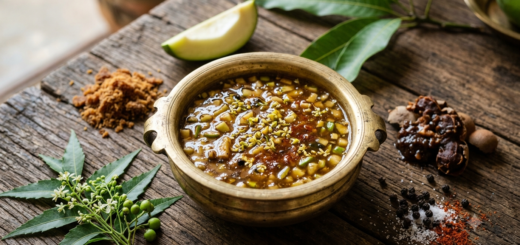
- Roast the masala. Warm 1 tsp coconut oil in a heavy pan on low heat. Roast the coriander seeds, chana dal, urad dal, cumin and fenugreek until the lentils turn golden, which takes three to four minutes. Add the chillies and curry leaves for a final minute.
- Grind the masala. Cool the roasted spices for five minutes. Grind them with the fresh coconut and ⅓ cup water into a smooth, thick paste. A slightly gritty paste is fine, although smoother is better.
Cook and finish the sambar
- Cook the vegetables. Bring the tamarind extract and 1½ cups water to a boil in a wide pot. Add the vegetables, cover, and cook until they are just tender, roughly eight to ten minutes.
- Bring it together. Stir in the whisked dal, the jaggery and the salt. Add the ground masala, then simmer gently for six to eight minutes. Never let it hit a rolling boil, because the coconut can split.
- Temper and finish. Heat the ghee, pop the mustard seeds, then add the hing, broken chilli and curry leaves. Pour it over the sambar and cover the pot for two minutes before serving.
How to tell it is ready
When it is done, the sambar should coat the back of a spoon without being thick. If it looks like soup, simmer a few minutes longer. The raw smell of coconut must disappear completely before you switch off the flame.
Pro Tips for the Udupi Temple Sambar Recipe
These details separate a decent pot from one that actually tastes like prasadam.
- Roast on low heat and stop the moment the lentils turn golden, since burnt fenugreek turns the whole pot bitter.
- Use fresh grated coconut when you can, because frozen coconut works but dry desiccated coconut flattens the aroma.
- Add the tamarind extract before the dal, not after, so the sourness cooks into the vegetables instead of sitting on top.
- Keep the chillies Byadagi or Kashmiri. They deliver the deep red colour without the heat that hides the sweetness.
- Rest the finished sambar for ten minutes with the lid on. The flavour settles noticeably in that short pause.
- Grind the masala the same day you cook, as the coconut in it will not keep.
Udupi Temple Sambar Recipe Troubleshooting
Of course, recipes rarely admit that sambar fails in predictable ways. This one does too, so every fault below has a fix you can apply mid-cook.
| Problem | Likely cause | Fix |
|---|---|---|
| Tastes flat | Masala under-roasted, or hing skipped | Add a pinch of hing to hot ghee, then stir it in |
| Too sour | Excess tamarind, or it boiled too long | Add jaggery, then whisk in a little more cooked dal |
| Bitter aftertaste | Burnt fenugreek seeds | Regrind a small fresh batch, then add it slowly |
| Watery body | Too much simmering water | Simmer uncovered until the body thickens |
| Looks split | Coconut paste hit a rolling boil | Lower the heat, then whisk briskly |
| Mushy vegetables | Cooked along with the dal | Next time, cook the vegetables separately |
| Raw coconut smell | Masala added at the end | Simmer six to eight minutes after adding it |
If the sambar is beyond rescue as a curry, thin it with water and serve it as saaru with rice. After all, nothing is wasted in a temple kitchen, and the same logic works at home.
Substitutions, Storage and Scaling
Swap ingredients carefully, because a few of them carry the identity of the Udupi temple sambar recipe.
- No fresh coconut: use 4 tbsp frozen grated coconut, or 3 tbsp desiccated coconut soaked in warm water.
- Out of tamarind: use 1 tbsp tamarind paste mixed into 1 cup water, then taste before adding more.
- Without jaggery: a small piece of palm sugar works, while white sugar tastes noticeably thinner.
- No pressure cooker: simmer soaked toor dal in a covered pot for 45 minutes, topping up water as needed.
Refrigerate leftovers in an airtight container for up to three days after cooking. Reheat gently with a splash of water, since the sambar thickens as it cools. Freezing works for a month, although the vegetables soften on thawing.
To scale up, double everything except the tamarind and salt. Increase those by about one and a half times, then adjust at the end. Sourness and salt build faster than the other flavours in a larger pot.
Nutrition and a Note on Ingredients
The figures below are estimates for one of four servings, calculated from standard values for cooked toor dal, mixed vegetables and coconut. Naturally, your result will shift with the vegetables and the ghee you use.
| Nutrient | Per serving (estimate) |
|---|---|
| Calories | 200 to 230 kcal |
| Protein | 9 to 11 g |
| Carbohydrates | 32 to 36 g |
| Fat | 6 to 8 g |
| Fibre | 6 to 8 g |
One caution worth knowing: most commercial asafoetida is compounded with wheat flour, so it is not gluten free unless the label says so. Coconut and mustard are also common allergens. If you are cooking for someone with a medical diet, check the labels and speak to a qualified dietitian rather than relying on a recipe estimate.
What to Serve With the Udupi Temple Sambar Recipe
Hot rice, a spoon of ghee and a papad is still the classic plate. The Udupi temple sambar recipe also suits idli, plain dosa and neer dosa, because its mild profile does not overwhelm a fermented batter.
For a fuller sattvic meal, pair it with a dry vegetable palya and a coconut chutney. If you would like a hotter, powder-based version instead, our sambar recipe with sambar powder takes a different route. The sambar without onion and garlic covers everyday sattvic cooking, while the Karnataka style bisi bele bath uses a similar fresh-ground masala in a one-pot rice dish.
Before You Cook
Above all, the single decision that matters is the masala. Grind it fresh with coconut on the day you cook, keep the chillies mild, and let the jaggery through. Everything else in this Udupi temple sambar recipe is forgiving.
Start with ash gourd or bottle gourd for your first attempt, since those two vegetables give the cleanest temple flavour. Then adjust the tamarind and jaggery to your own taste on the second round. If you ever eat at the Matha in Udupi, notice how restrained the sambar is, because that restraint is the whole point.
Udupi Temple Sambar Recipe FAQ
Is the Udupi temple sambar recipe made without onion and garlic?
Yes. Udupi Matha cooking follows sattvic rules that exclude onion, garlic, meat and fish. Instead, asafoetida takes their place as the savoury base note. Skipping the hing is the most common reason a home version tastes incomplete.
Why is Udupi sambar slightly sweet?
Jaggery and fresh coconut both add sweetness, and coastal Karnataka cooking traditionally balances sour tamarind with a sweet note. The result is mellow rather than sugary. So about one tablespoon of jaggery per cup of dal is the usual measure.
Can I use readymade sambar powder instead of grinding masala?
You can, although the dish will lose its defining character. If you must, blend 2 tbsp sambar powder with ¼ cup fresh coconut and a little water. That wet paste gets you closer than dry powder alone.
Which vegetables suit the Udupi temple sambar recipe best?
Ash gourd, bottle gourd, pumpkin and drumstick are the traditional choices, because they are mild and slightly sweet. Mattu gulla brinjal is the local favourite in Udupi itself. Strict Matha kitchens often avoid tomato and carrot, though home cooks use both freely.
Is this the actual recipe served at Sri Krishna Matha?
No, and any site claiming otherwise is guessing. In fact, the Matha kitchen has never published measurements for its annadana cooking. This is a home adaptation built on the documented Udupi method of fresh coconut masala, jaggery and sattvic ingredients.
How spicy is temple sambar?
The Udupi temple sambar recipe is mild by design. Four Byadagi chillies in a four-serving pot deliver colour and warmth rather than real heat. Add one hotter chilli if you want more bite, but keep the sweet and sour balance intact.
Can I make it in an Instant Pot?
Yes. Pressure cook the dal on high for eight minutes, then use sauté mode for the vegetables and the final simmer. Add the ground coconut masala only in sauté mode, since pressure cooking can split it.
How long does Udupi sambar keep?
Three days refrigerated in an airtight container, or about a month frozen. When reheating, use a splash of water and never boil the sambar hard. The coconut in the masala separates if the sambar is boiled twice.
What is annadana at the Udupi temple?
Annadana is the free daily meal served to all visitors at Sri Krishna Matha, a tradition running since Madhvacharya’s time. Devotees eat a simple sattvic meal of rice, sambar and vegetables. Visit details are on the official Matha site and on Karnataka Tourism.