Wheat Rava Upma Without Oil Instant Cooking Easy
Wheat Rava Upma Without Oil Instant Cooking Easy Process
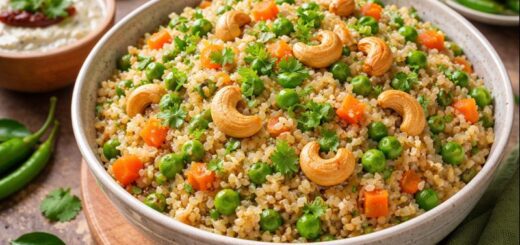
Wheat Rava Upma Without Oil Instant Cooking Easy Process is my go-to healthy breakfast when I want something light, quick, and nourishing. This South Indian style breakfast is a high-fibre and flavorful dish made with whole wheat rava, basic spices, and water — no oil — and you can prepare it in under 20 minutes with minimal effort. Upma itself is a traditional savory porridge from India made from coarse grains like semolina or wheat rava, and it’s enjoyed across many regions including Andhra Pradesh, Karnataka, and Tamil Nadu.
Recipe Card
| Prep Time | 10 mins |
|---|---|
| Cook Time | 15 mins |
| Total Time | 25 mins |
| Servings | 2–3 people |
| Difficulty | Easy |
Ingredients (Exact Quantities)
- 1 cup wheat rava (coarse whole wheat semolina)
- 2.5–3 cups water
- ½ medium onion, finely chopped
- ½ medium carrot, finely diced
- ¼ cup green peas (fresh or frozen)
- 1–2 green chilies, slit lengthwise
- ¼ tsp asafoetida (hing)
- ½ tsp mustard seeds
- ½ tsp cumin seeds
- Salt to taste (about ½–¾ tsp)
- Fresh curry leaves, 6–8 leaves
- Fresh coriander leaves, chopped (for garnish)
- Fresh lemon juice, 1–2 tsp (optional)
Step-By-Step Instructions With Timings
Step 1: Prepare Ingredients (2 mins)
Measure out and chop all vegetables first. Having everything ready makes the process super fast. I personally chop the onions and carrot while the pan heats up — this saves time later.
Step 2: Dry Roast Wheat Rava (3 mins)
Place a heavy-bottomed pan on medium flame. Add the 1 cup wheat rava and dry roast it for 2–3 minutes, stirring continuously until aromatic and slightly warm — this prevents clumping and enhances the nutty flavor. Once roasted, transfer to a bowl and set aside. Understanding Wheat Rava Upma Without is essential.
Step 3: Temper Spices Without Oil (3 mins)
Wipe the same pan clean and heat on medium. Add mustard seeds and cumin seeds, followed by curry leaves and asafoetida. Toast the spices dry for about 1–2 minutes until the mustard seeds start to pop. This dry tempering builds flavor even without oil.
Step 4: Sauté Vegetables (4 mins)
Add chopped onions, green chilies, carrots, and peas to the dry tempered spices. Stir continuously for 3–4 minutes on medium heat until onions soften slightly and the vegetables release some moisture.
Step 5: Add Water and Boil (2 mins)
Pour in 2.5–3 cups water and salt. Increase heat to bring it to a rolling boil. Boiling water quickly before adding the rava ensures even cooking without lumps. This relates to Wheat Rava Upma Without.
Step 6: Add Wheat Rava (2 mins)
Slowly sprinkle the roasted wheat rava into the boiling water while stirring constantly with a spatula or whisk. This prevents lumps from forming. Lower the heat to medium-low.
Step 7: Simmer and Cover (6 mins)
Cover the pan with a tight lid and let the upma cook on low flame for 6–7 minutes. Check occasionally; the wheat rava should absorb all water and become soft and fluffy.
Step 8: Final Touch (2 mins)
Once cooked, turn off the heat. Garnish with fresh coriander and squeeze lemon juice if desired. Serve hot immediately. Learn more about Wheat Rava Upma Without.
What I Love Most About This Upma
When I visited my cousin in Chennai, she made this oil-free wheat rava upma on a weekday morning, and I was surprised by how rich the texture and flavor were without any added fat. A few drops of lemon juice elevated the dish wonderfully, making it fresh and zesty — a contrast to typical heavy breakfasts.
Pro Tips From My Kitchen
- Dry Roasting Is Key: Roast the wheat rava on low flame until it smells nutty — this locks in flavor and prevents stickiness.
- Water Ratio: Use 2.5 cups water for medium texture or 3 cups for more moist, porridge-like upma.
- Lump-Free Trick: Always add wheat rava slowly into boiling water while stirring vigorously.
- Veggie Variations: Add finely chopped beans, capsicum, or tomatoes for extra nutrition and color.
- Spice Level: Adjust green chilies per your heat tolerance — I like adding one extra for a kick.
Chef’s Notes
Substitutions
- Vegetables: Use any seasonal veggies like beans, bell peppers, or zucchini.
- Tempering: Add dry roasted peanuts or cashews for crunch if not avoiding oil entirely.
- Lemon: Swap lemon juice with a dash of fresh grated coconut for a South Indian twist.
Storage Tips
Leftovers can be cooled and stored in an airtight container in the refrigerator for up to 24 hours. Reheat with a sprinkle of water on medium flame to restore texture.
Nutrition Information Per Serving (Approximate)
| Nutrient | Amount |
|---|---|
| Calories | ~180–200 kcal |
| Carbohydrates | 35–40 g |
| Protein | 5–6 g |
| Fat | ~1 g (no oil added) |
| Fiber | 3–4 g |
Nutrient values are based on aggregated data for wheat upma style dishes.
Health And Tradition
Upma is a traditional breakfast porridge made from coarse grains, and it appears in many regional variations across India. This oil-free wheat rava upma is especially good for those seeking a lighter, heart-healthy start to the day. I personally recommend pairing it with fresh chutney or plain yogurt to balance flavors and add probiotics.
FAQs About Wheat Rava Upma Without Oil Instant Cooking Easy Process
Can I make this upma gluten-free?
No, wheat rava contains gluten. For gluten-free alternatives, consider using millet rava or semolina made from rice or oats.
Is this suitable for diabetics?
Since this dish is high in fiber and uses whole grain wheat rava, it has a moderate glycemic impact, making it a reasonable choice for many people managing blood sugar levels — but consult your dietitian for personalized advice.
Can I add protein to this upma?
Yes, stir in cooked moong dal, tofu pieces, or boiled chickpeas for added protein without changing basic method.
Why does my upma turn sticky?
Sticky upma often results from adding rava too quickly into water or insufficient roasting — low and slow roasting helps prevent this problem.
For more general information on Upma as a breakfast dish, you can check the Upma page on Wikipedia which explains its cultural roots and variety of preparations. The dish’s simple base allows plenty of regional creativity while preserving tradition.