Wheat Upma Without Oil Recipe: Easy Vegetable Breakfast
Wheat upma without oil is an easy way to turn broken wheat, vegetables, and everyday spices into a warm South Indian-style breakfast. The method below uses dry roasting plus a small water-sauté instead of oil, so the grains cook soft without tasting flat. It also explains the water ratio, the safest way to handle mustard seeds without oil, and how to avoid sticky upma.
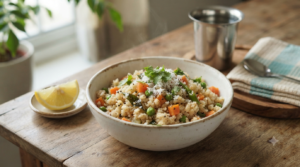
Oil-free wheat upma prepared with broken wheat, carrots, peas, curry leaves and fresh coriander.
Recipe note: “Wheat rava,” “godhuma rava,” “dalia,” and “broken wheat” can refer to slightly different grinds. Therefore, start with the water range below and adjust by texture rather than treating one ratio as universal.
Wheat Upma Without Oil at a Glance
- Prep time: about 10 minutes
- Cook time: about 18–22 minutes
- Total time: about 30 minutes
- Servings: 3 moderate portions
- Main grain: 1 cup wheat rava or broken wheat
- Starting water: 2 1/2 cups, with up to 1/2 cup extra if needed
- Oil: none added
- Best texture: soft grains that hold shape without becoming pasty
This version keeps the flavour from ginger, green chilli, curry leaves, cumin, vegetables, lemon, and fresh coriander. Because there is no oil to carry spices, the order of cooking matters more than it does in regular upma.
Ingredients for Wheat Upma Without Oil
Use coarse wheat rava or broken wheat rather than fine sooji. Fine semolina cooks much faster, so it needs a different water ratio and timing.
- 1 cup wheat rava or broken wheat
- 2 1/2 cups water, plus up to 1/2 cup extra if the grain needs it
- 1 small onion, finely chopped
- 1/3 cup carrot, finely diced
- 1/3 cup green peas, fresh or frozen
- 2 tablespoons finely chopped beans, optional
- 1–2 green chillies, slit or chopped
- 1 teaspoon finely chopped or grated ginger
- 1/2 teaspoon cumin seeds
- 1/2 teaspoon mustard seeds, optional
- 6–8 curry leaves
- A small pinch of asafoetida, optional
- 1/2–3/4 teaspoon salt, or to taste
- 1–2 teaspoons lemon juice, to taste
- 2 tablespoons chopped coriander leaves
If you want crunch, add dry-roasted peanuts after cooking rather than trying to fry nuts without oil. Also, skip asafoetida if you need a gluten-free spice mix unless the package is clearly labelled for your dietary needs.
How to Make Wheat Upma Without Oil
The most reliable method is to dry-roast the wheat first, then cook the aromatics with small splashes of water. After that, boil the measured water before adding the roasted grain gradually. This sequence gives the vegetables time to soften while reducing the chance of lumps.
- Dry-roast the wheat rava. Heat a heavy kadai or saucepan over medium-low heat. Add the wheat rava and stir for 3–5 minutes until it smells lightly nutty. Do not wait for deep browning. Transfer it to a bowl.
- Toast the whole spices briefly. Return the pan to low heat. Add cumin and, if using, mustard seeds. Stir for 20–30 seconds only. Since there is no oil, stop before the spices darken.
- Add aromatics with water. Add curry leaves, ginger, green chilli, onion, and 2 tablespoons water. Stir and cook for 2–3 minutes. Add another spoonful of water whenever the pan becomes dry.
- Cook the vegetables. Add carrot, peas, beans, asafoetida, and a pinch of salt. Water-sauté for 3–4 minutes, so the vegetables begin to soften without sticking.
Finish the Wheat Upma Without Oil
- Bring the cooking water to a boil. Add 2 1/2 cups water and the remaining salt. Increase the heat and bring it to a steady boil.
- Add the wheat rava slowly. Lower the heat to medium. Sprinkle in the roasted wheat with one hand while stirring with the other. This step matters because dumping it in at once can create dense lumps.
- Cover and cook. Reduce the heat to low, cover, and cook for 8–12 minutes. Stir once midway if needed. If the grains are still firm and the pan looks dry, add hot water 2 tablespoons at a time.
- Rest before serving. Switch off the heat and keep the pan covered for 3–5 minutes. Then fluff gently, add lemon juice and coriander, and serve hot.
Why the Water Ratio Is a Range
Broken wheat is sold in several sizes, so one fixed water ratio does not work for every packet. Coarser grains usually need more water and more time, while finer wheat rava softens faster. Therefore, the grain texture on your package matters more than the name printed on the front.
| Type of wheat rava | Start with | What to watch for |
|---|---|---|
| Fine wheat rava | 2 1/4–2 1/2 cups water | Check early because it thickens quickly |
| Medium broken wheat | 2 1/2 cups water | Add small splashes if the centre stays firm |
| Coarse dalia | 2 3/4–3 cups water | Allow extra covered cooking time |
These are practical starting ranges, not package specifications. If your brand gives cooking directions, use those first because processing and grain size can change absorption.
How Oil-Free Tempering Is Different
Traditional upma tempering uses oil or ghee to fry mustard seeds, dals, curry leaves, and chillies. In an oil-free version, you should not expect the same fried aroma or crisp lentil texture. Instead, use low heat for a brief dry toast, then switch quickly to water-sautéing.
Mustard seeds can scorch fast in a dry pan, so keep them optional and never wait for aggressive spluttering. Chana dal and urad dal also stay harder without oil; therefore, either omit them or dry-roast them separately until lightly golden before adding water.
How to Keep Wheat Upma Without Oil from Turning Sticky
Wheat upma without oil becomes sticky mainly when the grain is too fine, too much water is added at once, or the mixture is stirred continuously after thickening. Light roasting helps each grain hold its structure, while gradual addition to boiling water spreads the grain evenly.
- Roast the wheat rava before cooking unless your packet is clearly pre-roasted.
- Add the rava slowly to boiling water, not to lukewarm water.
- Stir well while adding the grain, then reduce stirring once it thickens.
- Use a heavy pan because thin pans develop hot spots.
- Rest the cooked upma for a few minutes before fluffing.
- Add extra hot water only in small amounts if the grain remains firm.
If the upma is already too wet, cook uncovered on low heat for a few minutes. If it is dry and grainy, sprinkle in hot water, cover again, and let steam finish the cooking.
Vegetable Variations That Still Stay Oil-Free
Carrot, peas, and beans work well because they soften in the same pan without releasing too much liquid. Capsicum can go in near the end, while tomato adds moisture and a tangy taste. If you use tomato, reduce the cooking water slightly and judge the final consistency before adding more.
For extra protein, serve the upma with plain curd, a bowl of sambar, or cooked pulses on the side. You can also fold in cooked moong dal after the wheat softens. However, these additions change the nutrition and texture, so treat them as meal variations rather than part of the base recipe.
Is Wheat Upma Without Oil Healthy?
Wheat upma without oil can fit into a balanced meal, especially when the wheat rava is genuinely whole-grain and the dish includes vegetables. The ICMR-National Institute of Nutrition advises eating a varied diet built around vegetables, whole grains, pulses or beans, and modest amounts of fats rather than treating one food as a complete health solution.
Whole grains retain bran, germ, and endosperm, while refined grains lose parts of that structure. Harvard T.H. Chan School of Public Health notes that whole grains generally provide more fibre and nutrients than refined grains. Therefore, check the ingredient label if you are choosing wheat rava for its whole-grain content.
This recipe makes no claim that removing oil automatically makes a meal “heart healthy,” suitable for diabetes, or useful for weight loss. Those outcomes depend on the total diet, portion size, medical needs, and the exact grain product. If you manage diabetes or another condition, use your clinician or dietitian’s advice for portions and meal pairing.
Wheat Rava, Dalia, and Sooji: Are They the Same?
Not always. “Wheat rava” is used loosely in Indian kitchens for coarse wheat products, while dalia usually means broken or cracked wheat. Sooji or Bombay rava is generally finer semolina, and it cooks faster than coarse broken wheat.
That naming difference explains why two recipes can give different water ratios and still both work. For this recipe, choose a coarse product that looks like small wheat granules rather than fine cream-coloured sooji. If the packet says broken wheat, dalia, samba wheat rava, or godhuma rava, check its grain size before measuring water.
Serving Ideas for Wheat Upma Without Oil
Serve the upma hot with lemon wedges, coriander, and a chutney that suits your meal. Coconut chutney tastes classic, while tomato or peanut chutney adds more punch. Plain curd also works well if dairy is part of your diet.
If you want the regular oil-tempered version, see Bhimas Cook’s home-style wheat rava upma recipe. For a vegetable-heavy version made with a standard tempering, compare the wheat rava upma with vegetables.
Storage and Reheating
Cool leftovers promptly and refrigerate them in a covered container. The U.S. Department of Agriculture advises using most cooked leftovers within 3–4 days and refrigerating perishable food within two hours. For best texture, however, wheat upma is usually nicer when eaten sooner rather than later.
To reheat, sprinkle 1–2 tablespoons water over each portion, cover, and warm until steaming hot. Stir once so the moisture spreads evenly. Avoid repeatedly cooling and reheating the same batch; portion leftovers before refrigerating if you expect to use them on different days.
Common Mistakes to Avoid
- Using a high flame for dry spices: mustard and cumin can burn quickly without oil.
- Adding all the rava at once: this encourages lumps and uneven cooking.
- Assuming every wheat rava needs three cups of water: grain size changes absorption.
- Overstirring after thickening: this can make the texture pasty.
- Calling every wheat rava whole grain: check the ingredient label because processing differs by product.
- Making medical claims from one ingredient: a recipe can be nutritious without being a treatment for any condition.
The biggest practical improvement is to cook by texture. Start with less water, keep hot water ready, and add it only if the grain remains firm. That approach is more reliable than forcing one ratio on every brand.
Wheat Upma Without Oil: Final Notes
Wheat upma without oil works best when you accept that it will taste different from oil-tempered upma. You gain a clean grain-and-vegetable flavour, while the lemon, ginger, chilli, and curry leaves do more of the seasoning work. The method is simple, but the low-heat spice step and gradual water control make the biggest difference.
For more information on balanced eating, see the ICMR-National Institute of Nutrition and Harvard’s whole-grains guide. For storage guidance, use the USDA leftovers guidance.
Frequently Asked Questions
Can I make wheat upma without oil and without onion?
Yes. Skip the onion and use ginger, green chilli, curry leaves, cumin, vegetables, lemon, and coriander for flavour. Since onion normally adds sweetness and body, add a little extra carrot or peas if you want a fuller taste.
Can I make wheat upma without oil in a pressure cooker?
Yes, but pressure-cooker timing depends heavily on the grain size and cooker type. For a first attempt, the stovetop method is easier because you can see when the wheat needs more water. Once you know your brand’s absorption, adapt the same ingredient ratio to your cooker.
Why is my wheat upma hard even after the water is absorbed?
The grain likely needs more water or more covered cooking time. Add hot water 2 tablespoons at a time, cover, and cook on low heat until the centre softens. Coarse dalia often takes longer than fine wheat rava.
Can I use regular sooji instead of wheat rava?
You can make upma with sooji, but it is not a one-for-one cooking substitute for coarse broken wheat. Fine semolina absorbs water faster and cooks in less time. Use a sooji-specific recipe if that is the grain you have.
Is wheat upma gluten-free?
No. Wheat naturally contains gluten, so wheat rava and broken wheat are not suitable for a gluten-free diet. The U.S. Food and Drug Administration lists wheat among gluten-containing grains; use a clearly labelled gluten-free grain if you need to avoid gluten.
Can I make this recipe without mustard seeds?
Yes. Cumin, ginger, green chilli, curry leaves, lemon, and coriander give enough flavour for a simple version. Skipping mustard also makes the dry-tempering step easier because cumin is simpler to toast briefly without oil.
What can I add for more protein?
Serve the upma with curd, sambar, or a pulse-based side, or fold in a small amount of cooked moong dal. These additions make the meal more substantial, while keeping the base wheat upma without added oil.
How do I make the upma softer without making it mushy?
Use enough water for the grain to cook through, but add extra water gradually rather than all at once. After the liquid absorbs, cover the pan and rest it for 3–5 minutes. Steam can soften the centre without making the surface watery.