Wheat Rava Upma Coconut Milk Recipe: Easy & Creamy
Wheat rava upma coconut milk style is a soft, savoury South Indian breakfast that uses broken wheat and coconut milk without turning the dish sweet or heavy. The key is not simply adding more coconut milk. Keep the total liquid close to what the wheat rava can absorb, then cook gently so the grains stay tender.
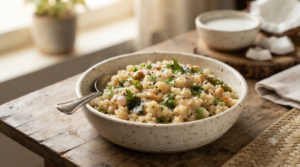
Creamy wheat rava upma cooked with coconut milk, curry leaves, mustard seeds and a light South Indian tempering.
This refreshed wheat rava upma coconut method uses 1 cup wheat rava with 3 cups total liquid as a practical starting point. One cup is unsweetened coconut milk and 2 cups are water. That keeps the coconut flavour clear while still giving the wheat enough moisture to cook through.
Wheat Rava Upma Coconut Recipe at a Glance
- Prep time: about 10 minutes
- Cook time: about 20 minutes
- Total time: about 30 minutes
- Servings: 3 to 4
- Best texture: soft, spoonable and grainy rather than runny
- Main ratio: 1 cup wheat rava to 3 cups total liquid
- Coconut milk: use unsweetened coconut milk, not a sweetened beverage
Wheat rava can vary from fine to coarse, so the liquid ratio is a starting point rather than a rigid rule. Fine godhuma rava often softens faster, while coarse broken wheat may need another splash of hot water near the end.
Ingredients for Wheat Rava Upma Coconut Milk Style
| Ingredient | Quantity | Why it is used |
|---|---|---|
| Wheat rava or godhuma rava | 1 cup | Main grain |
| Unsweetened coconut milk | 1 cup | Creaminess and coconut flavour |
| Water | 2 cups | Helps the rava cook without becoming too rich |
| Oil | 1 tablespoon | For tempering |
| Mustard seeds | 1 teaspoon | Traditional tempering flavour |
| Urad dal | 1 teaspoon | Light crunch |
| Chana dal | 1 teaspoon | Nutty bite |
| Onion | 1 small, finely chopped | Sweetness and body |
| Green chilli | 1 to 2, slit | Heat |
| Ginger | 1 teaspoon, finely chopped | Fresh aroma |
| Curry leaves | 8 to 10 | Tempering aroma |
| Salt | As needed | Seasoning |
| Fresh coriander | 2 tablespoons, chopped | Fresh finish |
| Lemon juice | 1 to 2 teaspoons, optional | Balances the richness |
Use full-fat coconut milk for the richest result, or light coconut milk for a gentler flavour. If the coconut milk is extremely thick, stir it well before measuring and keep a little hot water nearby. Avoid sweetened coconut cream because it changes the dish from savoury to noticeably sweet.
Why the Liquid Ratio Matters
Most plain godhuma rava upma recipes use roughly 2.25 to 3 cups of water for each cup of broken wheat, depending on grain size and desired texture. Multiple established South Indian recipe sources use about 3 cups for a soft version. For this coconut version, replacing part of that water with coconut milk keeps the familiar texture while adding flavour.
The old version of this recipe used 4 cups of liquid for 1 cup of wheat rava. That can work for a very soft porridge-like result, yet it is more likely to become heavy with thick coconut milk. Starting with 3 cups gives you more control because you can always add hot water later.
How to Make Wheat Rava Upma Coconut Milk Recipe
- Roast the wheat rava. Heat a heavy pan over medium-low heat. Add 1 cup wheat rava and roast for 3 to 4 minutes, stirring often. Stop when it smells lightly nutty; do not wait for deep browning.
- Prepare the tempering. Transfer the roasted rava to a bowl. Add 1 tablespoon oil to the same pan, then add mustard seeds. When they crackle, add urad dal and chana dal.
- Add the aromatics. Stir in curry leaves, green chilli and ginger. Add the chopped onion and cook until it turns soft and translucent.
- Add the liquids. Pour in 2 cups water and 1 cup unsweetened coconut milk. Add salt, then bring the mixture just to a gentle boil.
Finish the Wheat Rava Upma Coconut Method
- Add the rava slowly. Lower the heat. Sprinkle the roasted wheat rava into the liquid in a steady stream while stirring continuously. This is the most important step for avoiding lumps.
- Cook covered. Once the mixture thickens, cover the pan and cook on low heat for 8 to 10 minutes. Stir once midway if your pan tends to catch at the bottom.
- Check the grain. Taste a spoonful. If the wheat still feels firm, add 2 to 4 tablespoons hot water, cover again and cook for a few more minutes.
- Rest before serving. Turn off the heat and leave the pan covered for 5 minutes. Then fluff gently and finish with coriander and optional lemon juice.
Do not boil coconut milk hard for a long time. Gentle heat keeps the flavour cleaner and reduces the chance of the fat separating around the edges. Once the rava goes in, low heat also gives the grain time to hydrate evenly.
Wheat Rava Upma Coconut: How to Get the Texture Right
The best texture depends on the wheat rava you buy. Fine wheat rava behaves differently from large cracked-wheat pieces, so use the visual cues below instead of relying only on the clock.
- For soft but separate grains: start with the 1:3 grain-to-liquid ratio and rest the upma for 5 minutes after cooking.
- For a softer breakfast-bowl texture: add another 1/4 cup hot water near the end.
- For firmer upma: begin with 2 3/4 cups total liquid, then add more only if needed.
- For very coarse broken wheat: expect a longer cooking time and possibly another 1/4 to 1/2 cup hot water.
If the packet calls the grain dalia, broken wheat, samba wheat rava or godhuma rava, check the grind before cooking. A fine grind can turn soft quickly, while a coarse grind needs more time. That difference explains why one fixed ratio does not work perfectly for every brand.
Common Mistakes and Easy Fixes
Why did my upma become mushy?
Too much liquid is the usual reason. Thick coconut milk also makes the finished dish feel richer than the same amount of water. Next time, keep the total liquid near 3 cups for each cup of wheat rava and add extra hot water only after checking the texture.
Why is the wheat rava still hard?
The grain may be coarse, or the pan may have lost steam too quickly. Add a small splash of hot water, cover the pan and cook on low heat for another 3 to 5 minutes. Cold water slows the cooking, so hot water works better at this stage.
Why did lumps form?
Lumps form when the rava enters the liquid too quickly. Keep one hand stirring while the other hand sprinkles the grain in slowly. A wide pan also helps because the rava spreads through the liquid instead of landing in one thick mound.
Why does it taste too strongly of coconut?
Use less coconut milk and more water while keeping the same total liquid. A 3/4 cup coconut milk plus 2 1/4 cups water mix gives a milder result. Lemon juice, ginger and green chilli also help balance richness.
How This Version Differs From Other Upma Recipes
This recipe is not the same as regular rava upma made with sooji. Wheat rava is coarser and usually needs more time to soften. If you want the standard version, see the basic wheat rava upma recipe for a water-based method.
It also differs from upma made with grated coconut. Grated coconut adds texture and a fresh nutty bite, while coconut milk changes the cooking liquid itself. For a vegetable-heavy breakfast, the wheat rava upma with vegetables is a better fit.
Wheat Rava Upma Coconut Nutrition Notes
Wheat rava contributes carbohydrate and, when the product is whole-grain broken wheat, it retains the bran and germ that refined grains lose. The USDA MyPlate grains guidance lists bulgur or cracked wheat as a whole-grain example and notes that refining removes dietary fibre. Coconut milk contributes richness and fat. However, coconut is also a source of saturated fat, so calling this recipe automatically “heart healthy” would be misleading.
The American Heart Association advises limiting saturated fat as part of an overall heart-healthy eating pattern. If that matters for your diet, use light coconut milk, reduce the coconut-milk portion, and add more vegetables or a protein-rich side instead of increasing the coconut milk.
Nutrition also changes greatly by coconut-milk brand and serving size. For that reason, a single calorie figure can be misleading unless the exact product labels and final serving weights are calculated.
Serving Ideas That Balance the Coconut Flavour
This wheat rava upma coconut dish works best with sides that are fresh, tangy or spicy. Coconut chutney is traditional, although it doubles the coconut flavour. Peanut chutney, tomato chutney or a simple squeeze of lemon gives stronger contrast.
- Serve with tomato chutney for acidity and spice.
- Add a spoon of peanut chutney for a nutty, savoury side.
- Top with roasted cashews only when you want a richer breakfast.
- Add steamed peas or finely chopped carrots for colour and texture.
- Serve with plain curd only if you are not keeping the meal dairy-free.
If you prefer a fully plant-based plate, use vegetable oil instead of ghee and serve the upma with chutney or sautéed vegetables. Coconut milk itself contains no dairy ingredients, but packaged products can vary, so check the label if allergies are a concern.
Storage, Reheating and Food Safety
Cool leftovers promptly and refrigerate them in a shallow, covered container. The USDA Food Safety and Inspection Service advises refrigerating perishable leftovers within 2 hours and using most cooked leftovers within 3 to 4 days.
For best texture, this coconut-milk upma is still better within 1 to 2 days. Reheat it with a splash of water because the wheat continues to absorb moisture in the fridge. Stir halfway through reheating so the centre warms evenly.
If the upma has stayed at room temperature for more than 2 hours, discard it rather than refrigerating it for later. In very hot conditions above 32°C, the USDA shortens that window to 1 hour.
Wheat Rava Upma Coconut Variations
The wheat rava upma coconut base is easy to adjust once the liquid ratio is under control. Keep additions modest so the coconut milk remains part of the flavour rather than turning into a heavy sauce.
- Vegetable version: add 1/2 to 1 cup finely chopped carrot, peas and beans after the onion softens.
- Peanut version: fry 2 tablespoons peanuts with the tempering for crunch.
- Mild version: use one green chilli and extra ginger.
- More coconut flavour: add 2 tablespoons fresh grated coconut at the end instead of increasing coconut milk.
- Lower-richness version: use 1/2 cup coconut milk and 2 1/2 cups water.
When adding vegetables, cook them briefly before adding the liquid. If you add a large amount, you may need a little extra water because the vegetables and grain both absorb moisture.
What to Remember Before You Cook
The most reliable way to make wheat rava upma with coconut milk is to control the total liquid first. Use 3 cups liquid for 1 cup wheat rava, keep coconut milk to about one-third of that total, and adjust only after checking the grain.
Roast the rava lightly, add it slowly, and cook on low heat. Those three steps solve most texture problems. Once you know how your brand of wheat rava behaves, you can fine-tune the water by a few tablespoons instead of changing the whole recipe.
Frequently Asked Questions
Can I use canned coconut milk for wheat rava upma?
Yes. Use unsweetened canned coconut milk and stir it well before measuring because the cream often separates. If it is very thick, keep the coconut-milk quantity at 1 cup or less and make up the remaining liquid with water.
Can I use fresh coconut milk?
Yes, fresh coconut milk works well and gives a clean coconut aroma. Strain it before use so small coconut particles do not affect the texture. Keep the total liquid close to the same ratio and adjust only if your coconut milk is unusually thick or thin.
Is wheat rava the same as sooji?
Not always. Wheat rava or godhuma rava usually refers to coarser broken wheat, while sooji is generally finer semolina. Because the grain size differs, they do not always use the same cooking time or liquid ratio.
Can I make this recipe without onion?
Yes. Skip the onion and strengthen the tempering with ginger, curry leaves and a little extra coriander. You can also add peas or grated carrot for body without changing the basic method.
Can I make wheat rava upma coconut milk recipe without oil?
Yes, although the tempering will taste different. Dry-toast the mustard seeds and dals carefully, then add a spoonful of water before the aromatics so they do not scorch. For a dedicated no-oil method, see the wheat rava upma without oil recipe.
Is this recipe vegan?
It is vegan when you use vegetable oil and a coconut-milk product with no dairy ingredients. Do not finish with ghee if you want to keep it fully plant-based. Check packaged coconut milk labels when allergies or dietary restrictions matter.
Can I prepare it ahead for breakfast?
Yes, but the texture is best fresh. You can chop the aromatics and roast the wheat rava the night before, then cook in the morning. If you refrigerate cooked upma, reheat it with a small splash of water because it firms as it cools.
Why should I not use 2 cups coconut milk and 2 cups water?
You can if you deliberately want a very soft, rich result, but 4 cups total liquid is more than many wheat-rava methods need. A 3-cup starting point gives better control. If the grain remains firm, adding a little hot water later is easier than fixing an over-soft batch.