Rava Upma Recipe With Vegetables: Soft, Fluffy & Easy
Rava upma recipe with vegetables is an easy South Indian breakfast built around roasted semolina, a simple tempering, and finely chopped vegetables. The key to getting it right is not extra oil; it is the water ratio, the order of cooking, and adding the roasted rava slowly to boiling liquid. This version gives you soft, separate grains without a pasty finish.
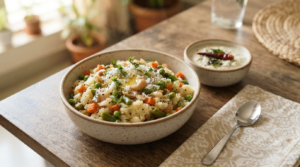
Soft and fluffy vegetable rava upma made with roasted sooji, carrots, beans, peas, curry leaves and a simple South Indian tempering.
Rava Upma Recipe With Vegetables at a Glance
This recipe uses 1.5 cups of rava with 3.75 cups of water, which is a practical 1:2.5 ratio for a soft but still fluffy result. Finely chopped carrot, beans, peas, and onion cook quickly, so the whole breakfast can be ready in about 30 minutes.
| Detail | Amount | Why it matters |
|---|---|---|
| Prep time | 10 minutes | Most of the work is chopping vegetables |
| Cook time | 18–20 minutes | Includes roasting, tempering, and steaming |
| Servings | 4 | Breakfast-size portions |
| Rava | 1.5 cups | Use regular Bombay rava or sooji |
| Water | 3.75 cups | Balanced 1:2.5 rava-to-water ratio |
| Best finish | Lemon + coriander | Add after cooking for fresher flavour |
Ingredients for Vegetable Rava Upma
Use regular semolina, also sold as rava or sooji. Fine and medium rava both work, although a coarser grind may need a little extra hot water near the end.
- 1.5 cups rava or sooji
- 3.75 cups water, plus up to 1/4 cup hot water if needed
- 2 tablespoons oil, or 1 tablespoon oil plus 1 tablespoon ghee
- 1 teaspoon mustard seeds
- 1 teaspoon urad dal
- 1 teaspoon chana dal
- 1 medium onion, finely chopped
- 1/2 cup carrot, cut into small dice
- 1/2 cup French beans, finely chopped
- 1/2 cup green peas, fresh or frozen
- 2 green chillies, slit or finely chopped
- 1-inch piece ginger, finely chopped or grated
- 10–12 curry leaves
- Salt to taste
- 2 tablespoons chopped coriander leaves
- 1 tablespoon lemon juice, optional
- 8–10 cashews, optional
If you use pre-roasted rava, you can shorten the first step. However, check the pack first because some products are only lightly roasted.
How to Make Rava Upma Recipe With Vegetables
The method is simple, but the sequence matters. Roast the rava first, cook the vegetables before adding water, bring the liquid to a full boil, and then rain in the rava while stirring.
- Roast the rava. Heat a heavy kadai or saucepan over medium-low heat. Add the rava and stir for 4–5 minutes until it smells nutty. Keep the colour pale rather than browning it deeply, then transfer it to a plate.
- Make the tempering. Add the oil or oil-ghee mixture to the same pan. When hot, add mustard seeds. After they splutter, add urad dal and chana dal, then cook until the dals turn light golden.
- Add aromatics. Add curry leaves, ginger, and green chillies. Stir briefly, then add the onion. Cook for about 2 minutes until the onion softens.
- Cook the vegetables. Add carrot, beans, and peas. Sauté for 3–4 minutes, so the vegetables lose their raw edge while still keeping some bite.
- Boil the water. Pour in 3.75 cups water and add salt. Increase the heat and wait for a strong boil because the rava hydrates more evenly in hot liquid.
- Add the rava slowly. Lower the heat to medium. Pour the roasted rava in a thin stream with one hand while stirring continuously with the other. This is the easiest way to prevent lumps.
- Steam on low. Once the mixture thickens, lower the heat. Cover and cook for 3–4 minutes. Turn off the heat, then leave it covered for another 2 minutes.
- Finish and serve. Fluff gently with a spoon. Add coriander and lemon juice after cooking, then serve while hot.
Best Water Ratio for Rava Upma
There is no single ratio for every pan, rava grind, or preferred texture. A useful working range is 2.25 to 3 cups of water for every cup of rava, while this recipe uses 2.5 cups per cup of rava for a soft, spoonable result that still holds its shape.
| Water per 1 cup rava | Expected texture | Best use |
|---|---|---|
| 2.25 cups | Firm and more separate | If you dislike soft upma |
| 2.5 cups | Soft, fluffy, balanced | Best starting point for vegetable upma |
| 2.75–3 cups | Very soft and moist | For a softer hotel-style texture |
Fine rava usually thickens faster, while coarse rava can need more liquid. If the upma looks dry before the grains soften, add hot water two tablespoons at a time instead of pouring in a large amount. Bhimas Cook also has a separate rava upma water-ratio guide for readers who want to tune the texture further.
Why This Rava Upma Recipe With Vegetables Avoids Lumps
Lumps form when dry rava hits liquid too quickly and the outer grains swell before the inside can disperse. Therefore, keep the water boiling and add the rava in a steady stream while stirring. A wide pan also makes the job easier because you have more room to move the spoon.
Roasting helps as well because it reduces the raw cereal taste and keeps the grains looser during cooking. Still, roasting alone cannot rescue cold water or a rushed pour. The combination of roasted rava, boiling liquid, and continuous stirring is what matters.
Common Problems and Quick Fixes
This rava upma recipe with vegetables usually fails because of texture, not flavour. The table below shows the most common problems and the fastest correction.
| Problem | Likely cause | Fix |
|---|---|---|
| Upma is dry | Too little water or very coarse rava | Stir in a little hot water, cover, and steam 2 minutes |
| Upma is pasty | Too much water or heavy stirring after thickening | Cook uncovered briefly, then rest before serving |
| Rava has lumps | Added too quickly | Whisk or press small lumps immediately while still hot |
| Vegetables are hard | Water added too early | Sauté chopped vegetables 3–4 minutes before boiling |
| Tempering tastes bitter | Dals or spices burned | Restart the tempering before adding vegetables |
If the pan catches at the bottom, do not scrape the burnt layer into the upma. Instead, move the unburnt portion to a clean pan and finish it there.
Vegetable Choices That Cook at the Same Speed
Carrot, French beans, peas, and capsicum work well because they can be cut small and cooked in a few minutes. Keep the pieces roughly the same size, so one vegetable does not stay raw while another turns soft.
You can also add corn, but use a modest amount because it changes the sweetness. Tomato is possible too; however, it adds moisture and acidity, so cook it until slightly soft before adding the measured water. Avoid large potato cubes unless you par-cook them first.
How to Adjust the Rava Upma Recipe With Vegetables
This rava upma recipe with vegetables is flexible, but each change affects texture. Make one adjustment at a time so you know what caused the difference.
- For richer flavour: use half oil and half ghee, then finish with roasted cashews.
- For more vegetables: increase the mixed vegetables by up to 1 cup, but keep them finely chopped.
- For less heat: use one slit green chilli, or remove the seeds before cooking.
- For no onion: skip the onion and add a pinch of asafoetida if you use it at home. See the no-onion upma method for a dedicated version.
- For a wheat-rava version: use a separate recipe because broken wheat absorbs water differently. The wheat rava upma with vegetables guide covers that method.
Serving Ideas for Vegetable Upma
Serve this rava upma recipe with vegetables hot because the texture firms as it cools. Coconut chutney is the classic partner, while peanut chutney gives a stronger roasted flavour. Sambar works well when you want a more substantial breakfast.
A squeeze of lemon can be enough on busy mornings. If the upma is for children or anyone who prefers mild food, reduce the chillies and serve plain curd on the side rather than mixing curd into the pan.
Storage and Reheating
Fresh upma has the best texture, so make only what you are likely to eat. If you have leftovers, cool them promptly, cover them, and refrigerate them. The Food Safety and Standards Authority of India advises keeping prepared leftovers cold below 5°C and reheating cooked food thoroughly before eating. See the FSSAI Food Safety at Home guidance.
For quality, this rava upma recipe with vegetables is best eaten within 1–2 days because semolina firms in the fridge. Add one or two tablespoons of water before reheating, then stir halfway through. USDA food-safety guidance says most properly chilled leftovers can generally stay refrigerated for 3–4 days, although texture may decline sooner. See the USDA leftovers guidance.
You can freeze upma if needed, but the texture may become softer after thawing. Therefore, portion it before freezing and reheat only what you plan to eat.
Nutrition: What This Breakfast Actually Provides
Rava is a wheat-based cereal, so this dish is mainly a carbohydrate-rich breakfast. The vegetables add volume, colour, and a broader mix of nutrients, while peas and the tempering dals add some protein. Oil, ghee, cashews, and portion size can change the final calorie value considerably.
Instead of treating one generic nutrition number as exact, use your ingredient labels if you need a precise count. The Indian Council of Medical Research–National Institute of Nutrition publishes the Indian Food Composition Tables, which explain why nutrient values depend on the actual foods and quantities used.
What to Do If the Upma Does Not Turn Out Right
A good result is not guaranteed by timing alone because rava grind, pan width, heat, and vegetable moisture vary. Fortunately, most texture problems are fixable while the upma is still hot.
- If it is too dry, add 2 tablespoons of hot water, cover, and rest for 2 minutes.
- If it is too wet, cook uncovered on low heat for 1–2 minutes, then switch off and rest.
- If it is lumpy, break the lumps gently while hot instead of stirring the whole pan aggressively.
- If the vegetables are undercooked, add a splash of hot water and steam briefly before serving.
The most important fallback is hot water. Cold water can stop the simmer suddenly, so it is harder to correct the texture evenly.
Rava Upma Recipe With Vegetables: Final Tips
The best rava upma recipe with vegetables depends on three controllable details: roast the rava gently, cook the vegetables before the water goes in, and add the rava only after the liquid boils. The 1:2.5 ratio is a reliable starting point, while a small splash of hot water lets you correct the texture without starting over.
Keep the seasoning simple the first time, then adjust chilli, lemon, ghee, and vegetables to your taste. That approach protects the soft grain texture, which is the part most likely to go wrong.
Frequently Asked Questions
What is the best rava-to-water ratio for vegetable upma?
For this recipe, use 2.5 cups of water for every 1 cup of rava. That gives a soft, fluffy texture without turning the upma into porridge. If your rava is coarse, add a little extra hot water only if needed.
Do I have to roast rava before making upma?
Roasting is strongly recommended unless the pack clearly says the rava is pre-roasted. A short dry roast removes the raw cereal smell and helps the grains stay looser. Keep the heat moderate because deeply browned rava changes the flavour.
Why does my vegetable upma become sticky?
Too much water and heavy stirring after the rava thickens are common causes. Use the measured ratio, add rava slowly, and stop vigorous stirring once it has absorbed most of the liquid. A short covered rest also improves the final texture.
Can I make this rava upma recipe with vegetables without onion?
Yes. Skip the onion and continue with ginger, green chilli, curry leaves, and vegetables. If you normally use asafoetida, a small pinch in the tempering adds savoury depth without onion or garlic.
Which vegetables are best for rava upma?
Carrot, French beans, green peas, and capsicum are reliable because they cook quickly when chopped small. Corn and tomato also work, although tomato adds extra moisture. Avoid large, slow-cooking vegetable pieces unless you cook them first.
Can I make vegetable upma in advance?
Yes, although fresh upma has the best texture. Cool leftovers promptly, refrigerate them in a covered container, and add a splash of water before reheating. For best eating quality, use the refrigerated upma within 1–2 days.
Can I use wheat rava instead of sooji in the same recipe?
Not as a direct one-for-one swap. Wheat rava, or broken wheat, is coarser and usually needs a different water ratio and longer cooking time. Use a wheat-rava-specific method rather than copying semolina timings.
What can I serve with vegetable rava upma?
Coconut chutney, peanut chutney, and sambar all pair well with vegetable rava upma. Lemon and coriander are enough for a lighter plate, while a spoon of curd can cool a spicier batch.
Is rava upma gluten-free?
No. Rava or sooji is made from wheat, so standard rava upma contains gluten. If you need a gluten-free breakfast, use a verified gluten-free grain recipe instead of simply swapping the grain without adjusting the cooking method.