Rava Kesari with Condensed Milk: Easy Creamy Recipe
Rava kesari with condensed milk is a creamy take on the familiar South Indian semolina sweet. Sweetened condensed milk brings richness and sweetness, but plain hot water still does the main work of softening the rava. The essential fix is to cook the grain until tender before stirring in the condensed milk.
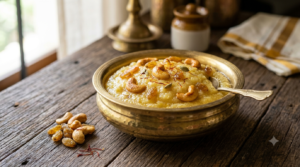
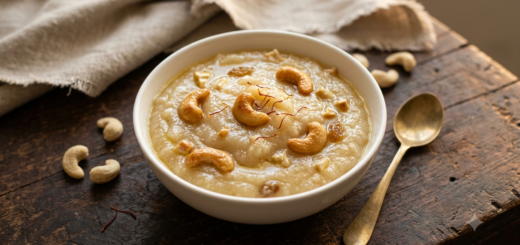
Creamy rava kesari with condensed milk, finished with golden cashews, raisins, saffron and ghee.
This version keeps the original recipe’s rava, ghee, saffron, cardamom, cashews and raisins. It also explains where every spoon of ghee goes and what to do if the pan dries out early. Kitchen testing note: no batch records were available for this refresh, so cooking times, final yield and the liquid adjustment have not been independently tested.
Rava Kesari with Condensed Milk at a Glance
- Main ingredients: fine rava (sooji), sweetened condensed milk, hot water and ghee.
- Method: fry the garnish, roast the rava, cook it in hot liquid, then add condensed milk.
- Ghee budget: four tablespoons in total, split as one for garnish, two for roasting and one for finishing.
- Liquid: start with the listed hot water and saffron milk; keep extra hot water ready if the rava stays firm.
- Timing and yield: use texture cues, not an unverified minute count or serving estimate.
The point of this variation is a soft, glossy sweet with a gentle saffron aroma. It suits festival meals, family gatherings or a small dessert after lunch. If you prefer a sugar-based version, the basic rava kesari recipe uses a different sweetening method.
Ingredients for Rava Kesari with Condensed Milk
Use the same measuring cup for the rava, condensed milk and water. The amounts below retain the post’s original ingredient list. The extra water is a contingency, not a claimed kitchen-tested correction.
- 1 cup fine semolina (rava or sooji)
- 1 cup sweetened condensed milk
- 1½ cups hot water to start, plus up to 1 cup more hot water available if needed
- ¼ cup ghee, equal to 4 tablespoons with a standard 240 ml measuring cup
- 8–10 saffron strands soaked in 2 tablespoons warm milk
- ½ teaspoon ground green cardamom
- 10–12 cashews
- 10–12 raisins
- Up to ¼ cup extra sugar, optional; decide only after tasting the sweetened mixture
For rava kesari with condensed milk, the sweetener is already part of the dairy ingredient. Start without extra sugar and adjust later if needed.
Important: buy sweetened condensed milk, not unsweetened evaporated milk. The products behave differently because the former already contains substantial sugar. Nestlé’s Milkmaid product information identifies milk solids and sugar as key ingredients.
Where the four tablespoons of ghee go
| Stage | Ghee | Purpose |
|---|---|---|
| Cashews and raisins | 1 tablespoon | Fry the garnish |
| Roasting the rava | 2 tablespoons | Coat grains while toasting |
| Finishing the sweet | 1 tablespoon | Stir in near the end |
| Total | 4 tablespoons (¼ cup) | Nothing left unallocated |
The old instructions used only three tablespoons from a four-tablespoon ingredient list. Adding the final tablespoon during finishing closes that gap. You can reduce the total ghee to suit taste, but that becomes a separate, untested variation.
How to Make Rava Kesari with Condensed Milk
Work over moderate heat while roasting and low heat once you add condensed milk. Set out all your ingredients first, since hot rava thickens quickly. The steps below use visible cooking cues rather than exact timings that have no supporting kitchen log.
1. Fry the cashews and raisins
Heat 1 tablespoon ghee in a heavy pan. Add cashews and stir until they look lightly golden. Add raisins briefly, then lift both out and reserve them. Keep any remaining ghee in the pan because it will flavour the rava.
2. Roast the semolina
Add 2 tablespoons ghee to the same pan, followed by the fine rava. Stir steadily over medium-low heat until the grains smell nutty and lose their raw aroma. A light golden shade is enough; dark brown grains may taste bitter.
Keep the rava moving, especially around the edges of a thin pan. If you use coarse semolina, expect a different cooking rate and more liquid demand. This recipe has not been measured with coarse rava.
3. Heat the water and saffron milk
Warm 1½ cups water with the saffron and its 2 tablespoons soaking milk in a separate vessel. Bring the mixture close to a gentle simmer. Meanwhile, keep additional hot water ready in a kettle or small pan.
The soaking milk counts as a little extra fluid, while the condensed milk comes later. Avoid dissolving all the optional sugar now. You cannot judge the final sweetness until the condensed milk goes in.
4. Cook the rava until tender
Reduce the heat. Carefully pour the hot water mixture into the toasted rava in stages, stirring continuously. The pan may sputter, so use a long spoon and keep your hands clear of the steam.
Let the grains absorb the liquid and swell. Do not taste raw or undercooked semolina; taste only after the rava has cooked thoroughly.
If the grains still feel firm when pressed with a spoon, or the pan dries out, stir in extra hot water a few tablespoons at a time and continue cooking. Once fully cooked, let a small sample cool before tasting. Do not add the entire water reserve automatically.
5. Add condensed milk on low heat
Once the rava is soft, stir in 1 cup sweetened condensed milk over low heat. Mix until the sweet spreads evenly through the grains. Keep scraping the base of the pan, since concentrated milk and sugar can stick or scorch.
Let a small spoonful cool before deciding whether you need more sugar. If you do, add it little by little and cook until dissolved. The original optional quarter cup is a ceiling, not a required addition. This keeps rava kesari with condensed milk from becoming excessively sweet.
6. Finish with the remaining ghee
Stir in the final 1 tablespoon ghee, the cardamom and most of the fried garnish. Stop cooking when the mixture looks glossy and soft enough to spoon. It will thicken further as it cools.
Rest briefly off the heat, then add the reserved nuts and raisins on top. Serve in small bowls while warm. No fixed serving count is claimed because the finished batch volume has not been measured.
Rava Kesari with Condensed Milk: Water and Texture
Do not count one cup of condensed milk as one cup of cooking water. Condensed milk contains moisture, yet much of its volume comes from concentrated milk solids and sugar. Its role here is mainly sweetening and enrichment. Hot water softens the semolina before the sweetener enters the pan.
The former 1:2.5 rava-to-liquid explanation simply added the water and condensed milk volumes together. That is not a reliable hydration ratio for rava kesari with condensed milk. Even the saffron soaking milk adds some liquid, so a single precise figure would hide how the grain actually cooks.
How much extra water should you add?
Begin with the original 1½ cups of water and the saffron milk. Then check whether the rava is tender by pressing the cooked grains with a spoon. If they remain firm, add hot water in small pours and keep cooking.
Taste only after the semolina has cooked thoroughly. The extra cup in the ingredient list is a reserve, not a required measured addition.
Different rava grinds, pans and heat levels change absorption. That is why rava kesari with condensed milk needs a tenderness check before the thick sweetener goes in. As a result, texture offers a better stopping point than an unsupported universal ratio. This adjustment is practical guidance, but the revised batch has not undergone a documented kitchen test.
Soft bowls versus firm slices
For soft, spoonable kesari, stop while it still flows slowly from the spoon. For pieces that hold their shape, let more moisture cook off after the grains are tender. Watch closely because condensed milk can catch at the bottom during this final stage.
A firm kesari can seem loose when hot and then set on cooling. For that reason, do not add a large amount of extra rava to fix a runny pan. Wait until it cools slightly before judging the final texture.
Why Rava Kesari with Condensed Milk Works
Sweetened condensed milk gives this dessert its creamy feel and already supplies much of the sweetness. It also blends quickly after the rava has softened. However, it is not a substitute for the water needed to hydrate dry semolina.
Ghee plays a separate role. Some toasts the grains, some carries flavour from the fried nuts, and the last spoon adds sheen. In contrast, ordinary sugar kesari cooks the rava with water before sugar and ghee build the final texture.
| Choice | Condensed milk version | Plain sugar version |
|---|---|---|
| Sweetener | Sweetened condensed milk | Granulated sugar |
| Main hydrating liquid | Hot water before condensed milk | Hot water |
| Sweetness control | Limited once milk is added | Easier to adjust sugar |
| Texture goal | Creamy and soft | Classic semolina sweet |
For a dairy-led alternative that does not use a tin, see the site’s milk rava kesari. It follows a different liquid and sweetening balance, so do not swap its measurements into this pan without testing. For a sugar-sweetened preparation with traditional finishing flavours, see the Iyengar-style rava kesari guide.
Common Problems with Rava Kesari with Condensed Milk
Why did the kesari turn lumpy?
Lumps can form when hot liquid meets dry rava unevenly. Add the water in stages while you stir, then press small lumps against the side of the pan. If a clump stays dry inside, give it more hot water and time to soften.
Why is the texture hard or chewy?
The semolina may not have cooked fully before the condensed milk went in. Add a splash of hot water, cover briefly over low heat and stir again. Check for tenderness before you try to cook the mixture down.
Why is it sticky or gummy?
Overcooking after the condensed milk goes in can leave a dense, sticky mixture. Under-roasted semolina and uneven hydration can also affect the feel. Next time, roast gently and cook the grain until tender before adding the sweetener.
What if the condensed milk sticks or browns?
Take the pan off the heat at once if you notice sticking. With rava kesari with condensed milk, a scorched patch can flavour the whole batch. Transfer the unburnt portion to a clean pan without scraping up scorched bits. After that, continue over lower heat and stir across the base often.
Allergens and Nutrition in Rava Kesari with Condensed Milk
This recipe contains wheat (gluten), milk and tree nuts (cashews). The semolina comes from wheat. Condensed milk, saffron soaking milk and ghee come from dairy, while cashews are tree nuts. Check packaged ingredients for other allergens and possible cross-contact.
Leaving out cashews removes the intentional nut garnish, but it does not make a batch safe if the utensils or ingredients contain traces. Anyone cooking for a person with a serious allergy should follow their specific medical advice. The Food Safety and Standards Authority of India allergen guidance identifies gluten cereals, milk and tree nuts as important allergen groups.
This is a rich sweet because it combines sweetened condensed milk, ghee and semolina. However, the earlier calorie, fat, carbohydrate and sugar figures had no traceable calculation for the finished recipe. They have therefore been removed rather than repeated as precise nutritional data.
For a reliable nutrition panel, weigh the ingredients, record the exact brands and measure the cooked yield. Then calculate values for a stated serving weight using label data. People managing blood sugar or other medical diets should judge the actual ingredients and seek individual professional guidance.
Substitutions and Flavour Variations
Saffron is optional, though it gives the sweet a pleasant fragrance and warm colour. Cardamom also lifts the flavour. If you leave either one out, the basic method stays the same.
For a nut-free garnish, omit the cashews and use raisins alone, but assess cross-contact carefully. For a vegan version, dairy condensed milk and ghee both need replacing. Coconut-based condensed products vary, so the amounts and final texture would need a separate recipe test.
Regular milk plus sugar is not a proven one-for-one replacement for condensed milk. If that is what you have, follow the linked milk rava kesari recipe instead. Avoid an untested direct substitution that could change both sweetness and moisture.
Storing and Reheating Rava Kesari with Condensed Milk
Serve rava kesari with condensed milk warm, but do not leave a dairy-rich batch sitting on the counter for a festival afternoon. Transfer leftovers to shallow, covered containers and refrigerate promptly at 4°C or below. Aim to refrigerate within two hours, or within one hour if the room exceeds 32°C.
General FoodSafety.gov leftovers guidance gives a maximum of three to four days for safely refrigerated cooked leftovers. Discard food that has exceeded safe room-temperature limits, even if it smells normal.
Reheat a portion with a small splash of water or milk. Stir frequently so the centre heats evenly, and bring reheated leftovers to at least 74°C throughout. Refrigerate the remaining portion immediately rather than heating the whole box repeatedly.
After opening a condensed milk pack, follow its own label for storage and use. Do not assume an unopened shelf-life statement applies after opening. Freezing the finished dessert may alter its texture, and no freeze-thaw quality test is available for this recipe.
Festival Serving and Cultural Context
Rava kesari is familiar at family celebrations across South India, and Karnataka cooks also use the name kesari bath. Saffron adds a gentle golden shade and light aroma, while cardamom and fried cashews provide the familiar finish.
For festival planning, you can pair the freshly prepared sweet with dishes from the site’s Diwali sweets collection. Store any extra portions promptly instead of leaving a serving tray out for hours.
Before You Serve
For rava kesari with condensed milk, the order matters more than the clock. Roast the grain, soften it with hot water and only then add the thick sweetener. Use the full four-tablespoon ghee allocation if you follow the listed ingredients.
Keep extra hot water beside the stove, since semolina absorption varies. This refresh does not claim a measured yield or a tested total cook time. Once the sweet looks glossy and the grains feel tender, garnish and serve warm.
Frequently Asked Questions on Rava Kesari with Condensed Milk
Can I make rava kesari with condensed milk without saffron?
Yes. Saffron adds fragrance and colour, but it is not essential to the method. Leave it out and use the same approach to cooking the semolina.
Do I need to add extra sugar?
Not necessarily. Sweetened condensed milk already contains sugar, so taste a cooled spoonful after mixing it in. Only then add a little more if you want a sweeter dessert.
Is this kesari gluten-free?
No. Rava is wheat semolina and contains gluten. A different grain would require its own recipe testing and strict attention to ingredient cross-contact.
How much water should I use for one cup of rava?
This version starts with 1½ cups hot water plus saffron soaking milk. Keep up to another cup of hot water nearby and add small amounts until the grain is soft. Do not treat condensed milk as the same volume of water.
Why does my kesari harden after cooling?
Semolina absorbs moisture as the dish rests, while ghee also firms when cool. Reheat one portion with a little water or milk if you prefer a softer texture. Warm it thoroughly before serving.
Can I make the recipe without cashews?
Yes, you can omit them or use raisins alone. That removes the deliberate cashew garnish, but it does not rule out cross-contact with nuts from other ingredients or tools.
Can I prepare this sweet before a festival?
Yes, provided you refrigerate it promptly and reheat it safely before serving. Do not leave it at room temperature for hours during celebrations. The finished texture may become firmer during chilling.
How long does it take and how many people does it serve?
The earlier 35-minute total and four-serving yield were not supported by kitchen records. This update therefore makes no verified timing or portion claim. The recipe gives a batch based on one cup of dry semolina, which you can divide into portions of your choice.