Rava Kesari with Condensed Milk: Easy Creamy Recipe
Rava kesari with condensed milk turns a simple semolina sweet into something rich, glossy, and impossible to stop eating. The condensed milk does the work of both milk and sugar, so you get a creamier mouthfeel with fewer separate ingredients to juggle. In my mother’s Andhra kitchen, this is the version we make when a festival calls for something a little more indulgent than the everyday sugar kesari.
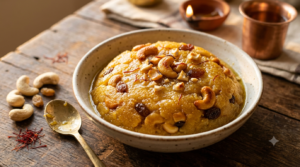
A warm bowl of rava kesari with condensed milk, garnished with golden cashews and saffron.
Because the method is forgiving, even a first-timer can pull it off, as long as you roast the rava well and keep stirring. Below is her exact recipe, plus the fixes for every way this sweet can go wrong.
Rava Kesari with Condensed Milk at a Glance
- What it is: a South Indian semolina pudding sweetened and enriched with sweetened condensed milk instead of plain sugar.
- Time: about 35 minutes from start to finish, so it fits a busy festival morning.
- Texture: soft, glossy, and creamy, since condensed milk adds fat and sweetness together.
- Best for: Ugadi, Diwali, Varalakshmi Vratam, or any day you want dessert without much fuss.
- Key skill: roasting the rava properly and adding hot liquid slowly while stirring.
Recipe Card
| Detail | Value |
|---|---|
| Prep Time | 10 minutes |
| Cook Time | 25 minutes |
| Total Time | 35 minutes |
| Servings | 4 |
| Difficulty | Easy |
Ingredients – Exact Quantities
These are the measurements my mother uses, tested over many festivals. Rava means semolina, sometimes labelled sooji on the packet.
- 1 cup fine semolina (rava / sooji)
- 1 cup sweetened condensed milk (about 240 ml)
- 1½ cups hot water
- ¼ cup ghee (clarified butter)
- 8–10 saffron strands, soaked in 2 tbsp warm milk
- ¼ cup sugar (optional, only if you want it sweeter)
- ½ tsp green cardamom powder
- 10–12 cashew nuts
- 10–12 raisins
One honest note before you start. The condensed milk is already very sweet, so most people can skip the extra sugar entirely. Add it only if your family likes a strong, syrupy sweetness.
How to Make Rava Kesari with Condensed Milk Step by Step
The whole dish comes together in one pan, apart from boiling the liquid separately. Keep the heat medium-low throughout, because condensed milk scorches quickly on high heat.
1. Roast the Semolina (5 to 7 Minutes)
Heat 2 tbsp ghee in a heavy, thick-bottomed pan on medium heat. Add the semolina and roast it for 5 to 7 minutes until it smells nutty and turns light golden. Stir the whole time so it never catches or burns. This roasting step is the single biggest reason a kesari turns out fluffy instead of gummy.
2. Fry the Nuts and Raisins (3 Minutes)
Push the rava aside or remove it, then add another 1 tbsp ghee to the pan. Fry the cashews until golden, then add the raisins and cook until they puff up. Remove them and set them aside for later. These add the crunch and little bursts of sweetness that make each bite interesting.
3. Boil the Liquid (5 Minutes)
In a separate pot, heat the 1½ cups hot water with the saffron-soaked milk. If you are using the optional sugar, add it now so it dissolves fully. Bring everything to a gentle boil, because the saffron releases its colour and aroma best in hot liquid.
4. Cook the Semolina (5 Minutes)
Lower the heat, then pour the hot liquid into the roasted rava slowly, stirring without stopping. Adding it in a thin stream while stirring is how you avoid lumps. Keep the flame medium-low so the semolina drinks up the water evenly and cooks soft.
5. Add the Condensed Milk and Simmer (7 Minutes)
Once the semolina thickens and looks porridge-like, pour in the sweetened condensed milk. Stir constantly as it blends into the rava, since this is when it turns creamy and glossy. Cook for about 7 minutes until the mixture pulls away from the sides of the pan.
6. Finish and Rest (3 Minutes)
Turn off the heat and sprinkle in the cardamom powder. Fold in the fried nuts and raisins, keeping a few back for garnish. Cover the pan and let the kesari rest for 3 minutes so the flavours settle before you serve.
The Right Consistency for Rava Kesari with Condensed Milk
Texture is where most people either win or lose with this sweet. The classic rava-to-liquid ratio sits around 1:2.5, which is exactly what this recipe uses once you count the condensed milk. Because condensed milk is thick and sticky, it counts as part of your liquid, not an extra.
If you want a softer, spoonable kesari, add a quarter cup more hot water while cooking. For firm slices you can cut into diamonds, cook a couple of minutes longer until it leaves the pan cleanly. Remember that kesari always sets firmer as it cools, so stop while it still looks slightly loose.
Why Rava Kesari with Condensed Milk Works
Rava kesari with condensed milk tastes richer than the plain sugar kind because condensed milk brings sweetness and dairy fat together in one pour. That fat coats each grain of semolina, which gives you the smooth, melt-in-mouth feel restaurants charge a premium for. You also skip the guesswork of dissolving sugar, since it arrives already blended into the milk.
Here is how the condensed milk version compares with a traditional sugar-and-water kesari.
| Feature | Condensed Milk Version | Traditional Sugar Version |
|---|---|---|
| Sweetener | Sweetened condensed milk | Plain sugar |
| Texture | Creamier, richer | Lighter, grainier |
| Richness | Higher (added dairy fat) | Depends on ghee alone |
| Sweetness control | Fixed by the tin | Fully adjustable |
| Best for | Festivals, treats | Everyday, lighter servings |
If you prefer full control over sweetness, our basic rava kesari recipe uses plain sugar instead. For a lighter dairy version without the tin, try the milk rava kesari.
Rava Kesari with Condensed Milk: Common Problems and Fixes
Almost every kesari mistake has a simple cause. Here are the ones people run into most, along with how to fix or prevent them.
Why did my kesari turn out lumpy?
Lumps form when the liquid hits the rava too fast or without stirring. Always pour hot liquid in a thin stream while you stir non-stop. If lumps still appear, mash them against the side of the pan with your ladle, because they break down as the rava keeps cooking.
Why is my kesari hard or chewy?
A hard kesari usually means the rava was not cooked enough before the condensed milk went in. Give the semolina time to fully absorb the water and soften first. Too little liquid does the same thing, so add a splash of hot water if it looks dry too early.
Why is my kesari sticky or gummy?
Under-roasted rava is the usual culprit behind a gluey texture. Roast until you smell that clear nutty aroma, and never rush it. Skimping on ghee also makes kesari gummy, so keep the fat close to the quarter cup listed.
Why did my condensed milk split?
Condensed milk can curdle if you add it while the pan is screaming hot. Lower the flame before it goes in, then stir gently and constantly. Adding it only after the rava has soaked up most of the water keeps everything smooth.
Pro Tips for Rava Kesari with Condensed Milk
- Roast with patience: the more fragrant the rava, the better the final texture, so never hurry this step.
- Keep the liquid hot: cold or lukewarm water almost guarantees lumps in the semolina.
- Time the condensed milk: add it after the rava drinks most of the water, which stops the milk from curdling.
- Serve warm: rava kesari with condensed milk tastes best warm, though it still pleases at room temperature during gatherings.
- Reserve garnish nuts: a few golden cashews on top make even a simple bowl look festive.
Rava Kesari with Condensed Milk: Substitutions and Variations
You can bend this recipe to suit what is in your pantry. If you have no condensed milk, replace 1 cup of it plus ½ cup water with 1¼ cups milk and ½ cup dissolved sugar. The result is slightly less rich but still lovely.
For a vegan bowl, use coconut condensed milk and swap ghee for a neutral oil or coconut oil. Skip the saffron if you like, and add a pinch of turmeric only for colour. You can also fold in a little pineapple or mango puree near the end for a fruity twist, though reduce the water slightly since the fruit adds moisture.
Storing and Reheating Rava Kesari with Condensed Milk
Cool the kesari fully, then store it in an airtight container in the fridge for 2 to 3 days. It firms up when chilled, which is normal because the ghee and semolina set. To bring back the soft, glossy texture, reheat it gently on the stove with a splash of milk or water.
Stir while reheating until the sheen returns, and it will taste freshly made. I would not freeze this sweet, since the texture turns grainy once thawed. For festivals, make it the same morning if you can.
Sugar and Calories in Rava Kesari with Condensed Milk
Because condensed milk is concentrated sugar and dairy, rava kesari with condensed milk is a genuinely rich sweet. A single serving lands at roughly 320 to 380 kcal, with a good part of that coming from sugar. The traditional sugar-and-water kesari sits a little lower, closer to 300 kcal per serving.
| Nutrient (per serving, approx.) | Amount |
|---|---|
| Calories | 320–380 kcal |
| Total fat | 10–15 g |
| Carbohydrates | 45–55 g |
| Sugars | 30–40 g |
| Protein | 4–6 g |
These figures are estimates and shift with your exact brands and portion size. If you are watching sugar or managing diabetes, treat this as an occasional festival sweet and keep portions small. Anyone on a restricted diet should check with their doctor before adding rich desserts regularly.
History and Cultural Significance
Rava kesari carries different names across the south, such as Kesari Bath in Karnataka and simply Kesari in Tamil Nadu. The word kesari itself comes from kesar, the Hindi word for saffron, which lends the dish its warm colour. Families prepare it for auspicious days, and temples often offer it as prasadam, the blessed food shared with devotees.
Its golden hue traditionally signals joy and prosperity, which is why it appears at weddings and festivals so often. Semolina desserts like this sit in a wider family of Indian dairy sweets. You can read about a related one, rabri, a condensed-milk sweet, or learn more about the base grain, semolina, if the background interests you. For more festive ideas, see our Diwali special sweets collection.
Before You Serve
Rava kesari with condensed milk rewards a little care more than any special skill. Roast the rava until fragrant, keep your liquid hot, and add the condensed milk gently once the semolina softens. Do those three things and you get a glossy, creamy sweet every single time. Serve it warm, garnish with a few golden cashews, and it will disappear faster than you expect.
Frequently Asked Questions
Can I make rava kesari with condensed milk without saffron?
Yes, saffron is optional here. You can skip it or use a small pinch of turmeric for the golden colour. Saffron mainly adds aroma and a festive touch, so the recipe still works well without it.
Do I need extra sugar if I use condensed milk?
Usually no, because sweetened condensed milk is already very sweet. Taste the mixture before adding any sugar, and only add the optional quarter cup if your family prefers a stronger sweetness.
Is rava kesari gluten free?
No, rava is semolina made from wheat, so it contains gluten. For a gluten-free version, try a millet-based semolina instead, though the texture will differ a little from the classic sweet.
How long does rava kesari with condensed milk stay fresh?
It keeps for 2 to 3 days in an airtight container in the fridge. Reheat gently with a splash of milk or water to restore the soft, glossy texture before serving.
Can I use milk instead of condensed milk?
Yes, you can swap in regular milk, but then you must add sugar separately for sweetness. Use about 1¼ cups milk plus half a cup of sugar in place of the condensed milk for a similar result.
Why does my kesari harden after cooling?
Kesari naturally firms up as it cools because the ghee and semolina set. This is normal and easily fixed. Just reheat with a little milk or water and stir until it turns soft and shiny again.
Can I make this sweet ahead for a festival?
You can make it a few hours ahead and reheat before serving. For the best texture, though, cook it the same day, since freshly made kesari has the glossiest finish and softest bite.