Rava Kesari Recipe Ingredients: Easy Step-by-Step Guide
The Rava Kesari Recipe Ingredients you need are simple pantry staples: semolina, ghee, sugar, nuts and a pinch of saffron. Yet the ratio between them decides whether your kesari turns out soft and glossy or dense and lumpy. This is my mother’s home-kitchen version from Andhra Pradesh, tested batch after batch, so the measurements and timings actually work the first time. Below you get exact quantities for 6 servings, the proportions that matter most, three popular variations, and honest fixes for the mistakes that trip up most beginners.
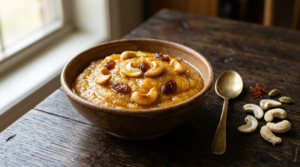
Soft, glossy rava kesari garnished with roasted cashews and raisins, served warm.
Rava Kesari At A Glance
Here is the quick version before we get into detail:
- Prep time: 10 minutes
- Cook time: 20 minutes
- Serves: 6
- Difficulty: easy, though the roasting step needs attention
- Core ratio: 1 cup rava, 2.5 cups water, 1 cup sugar, about 6 tablespoons ghee
- Also called: Kesari bath in Karnataka, and close to sheera in Maharashtra
Rava Kesari Recipe Ingredients With Exact Quantities
These Rava Kesari Recipe Ingredients are measured for 6 servings. Fine semolina, often sold as Bombay rava, gives the smoothest melt-in-mouth texture, so pick that over coarse rava if you can.
- Semolina (rava / sooji): 1 cup (about 160 g)
- Water: 2.5 cups (600 ml)
- Sugar: ¾ cup to 1 cup (190–200 g)
- Ghee (clarified butter): 6 tablespoons (about 90 ml)
- Cashews: 3–4 tablespoons (roughly 20–25 nuts)
- Raisins: 1 tablespoon (around 10–12 raisins)
- Saffron strands: 2–3 pinches (optional)
- Green cardamom powder: ½ teaspoon
- Natural orange food colour: 2–3 drops (optional, if you skip saffron)
Equipment You Will Need
- Heavy-bottom pan or kadai
- Measuring cups and spoons
- Wooden spatula
- Small pot for boiling water
How To Make Rava Kesari Step By Step
Once your Rava Kesari Recipe Ingredients are measured and lined up, the whole dish comes together in about 20 minutes of active cooking. Read all eight steps once before you start, because kesari moves fast once the water hits the rava.
Step 1: Prep Everything (0–2 minutes)
Measure every item first and keep the cashews and raisins in a separate bowl. If you are using saffron, soak the strands in 1 tablespoon of warm water. This releases the colour and aroma that you will fold in later.
Step 2: Roast The Nuts (2–5 minutes)
Heat 2 tablespoons of ghee in the pan on medium flame. Add the cashews and fry until golden, then lift them out. Now drop in the raisins and cook only until they puff up. Set both aside with the cashews.
Step 3: Roast The Rava (5–10 minutes)
Add the remaining 4 tablespoons of ghee to the same pan. Pour in the semolina slowly and roast it on low to medium-low heat. Stir without stopping until the rava smells nutty and turns a light golden shade. Good roasting is the single step that decides your texture, so do not rush it.
Step 4: Boil The Water (10–12 minutes)
While the rava roasts, bring 2.5 cups of water to a rolling boil in a separate pot. Stir in the soaked saffron water, and the orange colour too if you are using it. Keep this water hot and ready, because it must go into the rava while both are hot.
Step 5: Combine Rava And Water (12–15 minutes)
Lower the flame under the rava. Pour the boiling water in slowly while stirring continuously so lumps never get a chance to form. The semolina will drink up the water in about 3 to 4 minutes. If a few lumps appear, mash them against the side of the pan and they will smooth out.
Step 6: Add The Sugar (15–18 minutes)
Add the sugar to the cooked semolina and stir hard. The mixture loosens and looks watery for a moment, which is normal. Keep stirring, because the sugar melts and the kesari turns glossy and slightly loose again.
Step 7: Flavour And Finish (18–20 minutes)
Stir in the cardamom powder, roasted cashews and raisins. Cook for another 2 to 3 minutes until the mixture leaves the sides of the pan. A tablespoon of extra ghee here gives that restaurant-style shine. Turn off the heat once it clumps together softly.
Step 8: Rest And Serve (20–30 minutes)
Let the kesari rest off the heat for 5 to 10 minutes, since it firms up a little as it cools. Serve it warm in bowls, or press it into a greased mould and invert for neat squares.
The Right Rava Kesari Ratio: Water, Sugar And Ghee
The proportions are where most kesari goes wrong, so it helps to think in parts rather than fixed cups. For 1 cup of rava, water can range from 2 to 3 cups, and more water gives a softer, wetter kesari. My everyday ratio stays lighter, while celebration versions load on ghee and sugar for that dense wedding-hall finish.
| Style | Rava : Water : Sugar : Ghee | Result |
|---|---|---|
| Everyday (this recipe) | 1 : 2.5 : 1 : ⅜ cup | Soft, fluffy, not too rich |
| Melt-in-mouth | 1 : 3 : 1½ : 1 cup | Wet, glossy, indulgent |
| Wedding / celebration | 1 : 3 : 2 : 1 cup | Very sweet, deep colour, dense |
If you use coarse rava instead of fine, add about ½ cup more water because bigger grains soak up more. Never cut the ghee too far, since it is the fat that keeps the kesari from turning sticky and hard.
Choosing The Best Rava Kesari Recipe Ingredients
The best Rava Kesari Recipe Ingredients are the ordinary ones bought with a little care. A few smart choices at the shop change the final taste more than any technique.
- Rava: fine or medium semolina (Bombay rava) cooks evenly and stays smooth; whole-wheat rava works but needs 3 cups water.
- Ghee: use pure, good-quality ghee because it carries most of the flavour; homemade is best.
- Colour: soaked saffron gives real aroma, while a drop of natural orange colour only adds hue. A pinch of turmeric is a safe pantry substitute.
- Sugar: plain white sugar dissolves cleanest and keeps the colour bright.
Rava Kesari Recipe Ingredients You Can Substitute
Every item here can flex to suit your diet or pantry. These swaps keep the Rava Kesari Recipe Ingredients working even when you change one of them.
- For a creamier kesari: replace half the water with full-fat milk. Using only milk makes it heavy, so half-and-half is the sweet spot.
- For a vegan version: swap ghee for a neutral oil or coconut oil. The flavour shifts a little, though it still sets well.
- For a jaggery version: jaggery works but darkens the colour and changes the flavour, so add it only if you enjoy that earthy note.
- For fruit kesari: fold in cooked pineapple or ripe mango near the end.
Popular Rava Kesari Variations To Try
Once the base recipe feels easy, these variations give you a new dessert from the same method.
- Pineapple kesari: add fresh pineapple pieces or puree while cooking for a sweet-tangy bite.
- Mango kesari: a seasonal favourite where ripe mango adds both flavour and natural sweetness.
- Semiya kesari: made with roasted vermicelli instead of rava for a different, softer texture.
- Milk kesari: cooked in milk for a richer, halwa-like finish.
For a festival spread, this pairs beautifully with our rava laddu with jaggery and other homemade sweets.
Common Rava Kesari Mistakes And How To Fix Them
Kesari looks foolproof, yet the same handful of problems show up in most kitchens. Here is how to spot and rescue each one.
- Lumps: caused by cold water or slow stirring. Add hot water in a thin stream while stirring hard, and mash any lumps against the pan.
- Hard or dry kesari: usually too little water or ghee. Sprinkle in a splash of hot water and a spoon of ghee, then cook briefly.
- Sticky, gummy texture: the rava was under-roasted. Whitish specks after adding water are the tell, so cover and cook on low for 2 to 3 more minutes.
- Not glossy: hold back a tablespoon of ghee and stir it in at the very end.
Pro Rava Kesari Tips From My Kitchen
- Roast the semolina only on low flame, because high heat burns it before it toasts.
- Keep the water hot when it meets the rava, since hot water is what prevents lumps.
- Always add sugar after the rava is fully cooked, or the texture suffers.
- Stir in a little extra ghee at the end for a shine that lasts even after the kesari cools.
- A pinch of salt sharpens the sweetness without making the dish salty.
Rava Kesari Serving Ideas And Storage
Kesari tastes best warm, when it is soft and fragrant. In Karnataka it is served alongside khara bath as the classic breakfast combo known as chow chow bath, so try it with a savoury upma for a full plate. It also works as a temple-style prasadam or a quick festival dessert.
Leftovers keep in an airtight container in the fridge for up to 3 days. Reheat on low with a splash of milk or water to bring back the creamy texture, because cold kesari firms up and can look lumpy until warmed. For longer storage, it freezes well for up to a month.
Nutrition For These Rava Kesari Recipe Ingredients
Kesari is a treat, not an everyday food, since the Rava Kesari Recipe Ingredients lean heavily on sugar and ghee. The figures below are an approximate estimate per serving and shift with how much sugar and ghee you use.
| Nutrient | Approx. per serving |
|---|---|
| Calories | ~300–350 kcal |
| Carbohydrates | ~42–50 g |
| Protein | ~3–4 g |
| Total fat | ~11–14 g |
| Sugars | ~25–40 g |
Ingredient-level values can be checked on the USDA FoodData Central database. Because the dish is calorie-dense, enjoy it in moderation. If you manage diabetes or watch your sugar, treat kesari as an occasional portion and speak with your doctor or dietitian about what fits your plan.
Final Thoughts Before You Cook
Great kesari is not about a secret ingredient but about two habits: roasting the rava patiently and keeping the water hot. Nail those, hold the ghee steady, and the dish rewards you every time. Start with the everyday ratio above, then push toward the richer proportions once you know how your rava behaves.
Keep these Rava Kesari Recipe Ingredients stocked, and a warm, festive dessert is never more than half an hour away. For a milkier take, our condensed-milk kesari and the classic Iyengar-style rava kesari are worth a try next.
Frequently Asked Questions About Rava Kesari
What Is The Correct Rava To Water Ratio?
For 1 cup of rava, use 2.5 to 3 cups of water. Less water gives a firmer kesari, while more water makes it softer and wetter. Coarse rava needs the higher end because it absorbs more.
Can I Use Milk Instead Of Water?
Yes, and it makes the kesari richer. Most home cooks use half water and half milk for the best texture, because full milk alone can make the dessert heavy.
Why Roast The Rava First?
Roasting removes the raw smell and stops lumps from forming when water is added. It also builds a nutty flavour that plain boiled semolina never gets. Keep the heat low so the rava toasts without browning.
How Much Sugar Should I Add?
Start with ¾ to 1 cup of sugar for 1 cup of rava for a balanced sweetness. Celebration-style kesari can go up to 2 cups, though that is quite sweet. Add sugar only after the rava is fully cooked.
Why Did My Rava Kesari Turn Lumpy?
Lumps come from cold water or slow stirring when the water meets the rava. Always pour hot water in a thin stream while stirring hard. Any lumps that form can be mashed against the pan and will dissolve as it cooks.
Is Rava Kesari Healthy?
Kesari is calorie-dense because of its sugar and ghee, so it gives quick energy but is best enjoyed in moderation. It is a dessert rather than a daily dish. Those managing blood sugar should keep portions small.
Can I Add Fruit To Rava Kesari?
Yes. Pineapple and mango kesari are popular variations that add flavour and natural sweetness. Cook the fruit lightly and fold it in near the end so it does not turn watery.
How Long Does Rava Kesari Stay Fresh?
Stored in an airtight container in the fridge, kesari stays good for up to 3 days. Reheat it on low with a little milk or water to restore the soft texture. It can also be frozen for up to a month.
To see where this sweet sits within the wider family of semolina desserts across South Asia, the Suji ka Halwa reference on Wikipedia gives useful background.