Lemon Pulihora Recipe Ingredients: Easy Step-by-Step Guide
The Lemon Pulihora Recipe Ingredients are what turn plain rice into a bright, tangy South Indian classic in about half an hour. Also called Nimmakaya Pulihora or lemon rice, this dish leans on a handful of pantry staples, a quick tempering, and fresh lemon juice to deliver colour, crunch, and that unmistakable sour kick. It is a lunch-box favourite across Andhra Pradesh, Karnataka, and Tamil Nadu, and it stays tasty even when cooled. Get the balance right and every grain carries flavour without turning mushy.
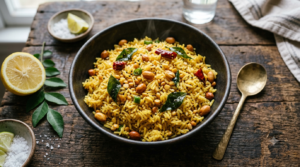
Bright, tangy lemon pulihora tempered with peanuts, curry leaves, and mustard seeds.
This guide breaks down the Lemon Pulihora Recipe Ingredients with exact quantities, the tempering order that actually matters, safe storage rules for a rice dish that often travels, and the small fixes that stop lemon rice from going bitter or clumpy. According to Wikipedia’s entry on Pulihora, the name simply means “sour” or “tangy” rice, made with souring agents like lemon, tamarind, or kokum.
🍋 Lemon Pulihora at a Glance
- Ready in: about 30 minutes, start to finish
- Serves: 4 as a light meal or side
- Souring agent: fresh lemon juice, added off the heat
- Key to success: fully cooled, separate rice grains
- Diet: naturally vegan and gluten-free
- Best for: quick lunches, tiffin boxes, and festival mornings
| Detail | Value |
|---|---|
| Prep time | 10 minutes |
| Cook time | 20 minutes |
| Total time | 30 minutes |
| Servings | 4 people |
| Difficulty | Easy |
🥣 Lemon Pulihora Recipe Ingredients (With Exact Quantities)
Here is the full list of Lemon Pulihora Recipe Ingredients for four servings. Everything is a common Indian pantry item, so you rarely need a special shopping trip.
- 2 cups cooked rice (long-grain or basmati), cooled to room temperature
- 2 tablespoons vegetable oil or sesame oil
- 1 teaspoon mustard seeds
- 1 teaspoon chana dal (split Bengal gram)
- 1 teaspoon urad dal (split black gram)
- 10–12 curry leaves
- 2–3 dry red chillies, broken (or 1 green chilli, slit)
- 1/4 teaspoon turmeric powder
- 1/3 cup roasted peanuts
- Juice of 2 medium lemons (about 3 tablespoons)
- Salt to taste
- Optional: 1 tablespoon roasted sesame seeds or grated coconut
- Optional: a pinch of asafoetida (hing) and 1/2 inch ginger, finely grated
Lemon quantities vary with the size and juiciness of the fruit, so add the juice gradually and taste as you go. Because the acid goes in at the end, you keep full control of the tang.
Why each of these Lemon Pulihora Recipe Ingredients matters
The rice is the canvas, so it should be firm and separate rather than soft. Mustard seeds, chana dal, and urad dal build the crackle-and-crunch base that defines a good tempering. Curry leaves and dry red chillies carry the aroma, while turmeric gives the golden colour people expect.
Peanuts add protein and bite, and the lemon juice brings everything alive. The optional hing and ginger are quietly common in many Andhra kitchens, since they deepen the flavour without stealing the show.
🍚 Picking the Best Lemon Pulihora Recipe Ingredients
Two of the Lemon Pulihora Recipe Ingredients deserve special care: the rice and the lemon. Rice choice changes the whole texture. Aged long-grain or basmati stays separate and firm, which is exactly what you want.
Fresh, starchy new-crop rice tends to clump, so it works less well here. Sona masoori, the everyday South Indian rice, is also excellent when cooked slightly firm.
Lemons matter too, though people rarely mention it. Thin-skinned, heavy lemons give more juice, while pale, light ones can taste sharp and thin. Roll the lemon firmly on the counter before cutting, since that breaks the pulp and releases more juice. If your lemons are very sour, start with one and add the second only if the dish needs it.
🍳 Step-By-Step Instructions
1. Prepare the rice (if not pre-cooked)
Wash 1 cup of uncooked rice and cook it with 2 cups of water in a pot or rice cooker until the grains are separate and fluffy, roughly 15 minutes. Spread the cooked rice on a wide plate to cool completely. This step prevents the rice from steaming and turning sticky once it meets the hot tempering.
2. Heat oil and temper the spices (5 minutes)
Heat 2 tablespoons of oil in a wide pan on medium heat. Add 1 teaspoon of mustard seeds and wait for them to crackle, which takes about 30 seconds. Then stir in 1 teaspoon each of chana dal and urad dal. Fry until both turn light golden, roughly a minute.
Now add the curry leaves and broken dry red chillies. Stir for about a minute until the leaves crisp and the kitchen fills with aroma. That fragrance is your signal that the base is ready. If you like hing and ginger, add them here for a few seconds.
3. Add turmeric and peanuts (2 minutes)
Sprinkle in 1/4 teaspoon of turmeric powder for that vibrant yellow. Add the roasted peanuts and fry gently for one to two minutes, so they turn crisp and take on the spice. Keep the heat moderate, because turmeric scorches quickly and turns bitter.
4. Mix the rice and lemon juice (8 minutes)
Lower the heat to a minimum. Add the cooled rice in spoonfuls rather than all at once, since smaller additions fold in more evenly. Sprinkle salt to taste and gently coat every grain with the tempering. Now turn off the heat completely.
Only after the pan is off the flame, drizzle in the juice of 2 lemons and toss gently. This is the single most important habit in the whole method. Heat makes lemon juice bitter, so the acid must always go in last, off the stove. Let the rice rest for a few minutes so the flavours settle before serving.
🔪 Lemon Pulihora Recipe Ingredients: Pro Tips
- Use room-temperature rice. Hot rice steams and clumps, while cool grains stay separate and soak up more flavour.
- Never boil the lemon. Add the juice off the heat, because cooking the acid makes the dish taste bitter instead of bright.
- Dry-roast the peanuts separately. A quick roast in a dry pan makes them crunchier, and that texture lifts the whole dish.
- Match the oil to the mood. Sesame oil gives a deeper, temple-style South Indian flavour, whereas a neutral oil keeps things light.
- Rest before serving. Ten minutes of resting lets the lemon and salt spread evenly through the rice.
🧠 Lemon Pulihora Recipe Ingredients: Substitutions and Variations
Half the charm of this dish is how easily the Lemon Pulihora Recipe Ingredients bend to what you have. These swaps keep the flavour intact while fitting different diets and tastes.
- Nut-free: skip the peanuts and use roasted pumpkin seeds or roasted chana (dalia) for crunch.
- Low-oil: use 1 tablespoon of oil and dry-roast the spices first to keep the aroma.
- Extra tang: add a pinch of citric acid or a little grated raw mango if lemons are weak.
- Richer version: stir in a spoon of grated coconut or a few cashews with the peanuts.
- Millet swap: replace rice with cooked foxtail or little millet for a lighter, higher-fibre bowl.
Every household tweaks the recipe a little. Some cooks add a smoky note by roasting the mustard until dark, while others slip in a hint of ginger. That flexibility is why lemon pulihora tastes slightly different in every Andhra home.
🍽️ How to Serve Lemon Pulihora
Lemon pulihora works beautifully on its own, yet a few sides make it a fuller meal. A bowl of plain curd or yogurt cools the tang and rounds out the plate. Crisp papad, fried vadiyalu, or a spoon of oil-based pickle add heat and crunch. For festivals, it often shares the plate with other prasadam rice dishes and a simple dal.
Because it holds up so well at room temperature, this is a natural choice for travel, picnics, and office lunches. That same quality, though, is exactly why storage deserves a closer look.
🧊 Storing Lemon Pulihora Safely
Cooked rice needs a little care, since it can carry a spore-forming bacterium called Bacillus cereus that survives boiling. If cooked rice sits in the warm “danger zone” too long, those spores can grow and produce toxins that reheating will not destroy. This matters for pulihora because it so often travels in tiffin boxes and festival hampers.
The safety rules are simple, and food agencies agree on them. Cool the rice quickly and refrigerate it within two hours of cooking, or within one hour on a hot day. Keep it in an airtight container at or below 4°C.
Store leftovers for a day or two for the best quality and safety, and reheat only once until piping hot, around 74°C. When in doubt, throw it out. The official food safety guidance spells out the same two-hour rule for all cooked foods.
For lunch boxes, pack the pulihora only after it has cooled, and try to eat it within four to five hours if it will not be refrigerated. An insulated box helps keep it out of the danger zone. These habits let you enjoy the make-ahead convenience without any worry.
🍏 Lemon Pulihora Recipe Ingredients: Nutrition Facts
These figures are approximate and depend on the exact Lemon Pulihora Recipe Ingredients and portions you use. Treat them as a general guide rather than exact medical values.
| Nutrient | Approx. per serving |
|---|---|
| Calories | ~205 kcal |
| Protein | 5.3 g |
| Carbohydrates | 30.5 g |
| Fat | 7.5 g |
| Sugar | 0.5 g |
The dish is naturally light, and most of its calories come from rice and oil. Peanuts add useful protein and healthy fat, so a single serving eats more filling than the numbers suggest.
⚠️ Lemon Pulihora Recipe Ingredients: Common Mistakes
Even with the right Lemon Pulihora Recipe Ingredients, a few small errors are behind almost every disappointing batch. Watch for these and the dish rarely fails.
- Adding lemon over heat: this is the top mistake, since it turns the tang bitter. Always add it off the flame.
- Using hot or fresh sticky rice: warm grains clump together, so cool them fully first.
- Burning the turmeric: high heat scorches it fast, which brings a harsh, bitter edge.
- Over-salting early: salt and lemon both intensify as the rice rests, so start light.
- Skipping the rest: serving straight away leaves the flavour uneven and flat.
🙋 Frequently Asked Questions
What are the essential Lemon Pulihora Recipe Ingredients?
The essentials are cooked rice, oil, mustard seeds, chana dal, urad dal, curry leaves, dry red chillies, turmeric, peanuts, and fresh lemon juice. Salt ties it together. Everything else, such as coconut, sesame, hing, or ginger, is an optional flavour booster you can add to taste.
Can I use leftover rice?
Yes, and leftover rice often works best because it is already cool and separate. Fluff it with a fork before tempering. Just make sure it was refrigerated safely and is no more than a day or two old.
Why does my lemon rice turn bitter?
Bitterness usually comes from cooking the lemon juice or burning the turmeric. Add the juice only after the heat is off, and keep the flame moderate while the turmeric goes in. Fresh, ripe lemons also taste sweeter than old, dried-out ones.
Is Lemon Pulihora spicy?
It is mild by default, and you control the heat with the chillies. Green chillies give a fresh, sharp heat, while dry red chillies add gentle warmth. Use fewer for children or a soothing lunch.
Can I make it vegan and gluten-free?
Yes on both counts. Lemon pulihora is naturally vegan, with no dairy in the base recipe. It is also gluten-free as long as your oil, spices, and asafoetida are pure and uncontaminated.
How long does Lemon Pulihora stay fresh?
Refrigerated in an airtight container, it keeps well for a day or two. Cool it within two hours of cooking and reheat only once until hot. For an unrefrigerated lunch box, eat it within about four to five hours.
Which rice suits the Lemon Pulihora Recipe Ingredients?
Aged long-grain rice, basmati, or firm-cooked sona masoori all work well. The goal is separate, non-sticky grains. Avoid very fresh or overcooked rice, since it clumps and turns the dish mushy.
Can I prepare it ahead for a festival?
Yes, and pulihora is ideal for making ahead. Cook the rice and the tempering separately in advance, then combine and add lemon just before serving. This keeps the texture fresh and the tang bright.
Before You Cook
Great lemon pulihora comes down to three habits: cool, separate rice, a patient tempering, and lemon added only off the heat. Nail those and the dish rewards you every time. Keep the storage rules in mind whenever it travels, and you get all the convenience with none of the risk.
For a closely related take on the same flavours, try our South Indian Lemon Rice recipe, or explore the tamarind version in our Andhra temple-style pulihora guide. Once you have these Lemon Pulihora Recipe Ingredients down, this becomes one of the quickest, most reliable meals in your kitchen.