Pulihora Temple Style Tamilnadu Best Tamarind Rice
Pulihora Temple Style Tamilnadu is the deep-brown, spice-heavy tamarind rice you remember from the prasadam counter, and it tastes nothing like a quick lemon-tamarind mix. The secret is a slow-cooked tamarind paste called pulikachal, a freshly roasted spice powder, and gingelly (sesame) oil that carries the whole aroma. Get those three right and even a home batch tastes close to what the madapalli, the temple kitchen, sends out on festival days. This guide gives you exact quantities, the correct rice to use, and the small steps most recipes skip.
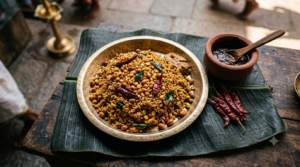
Authentic Pulihora Temple Style Tamilnadu — tamarind rice tossed with peanuts, roasted podi and curry leaves.
Pulihora Temple Style Tamilnadu at a Glance
- What it is: a tangy, spiced tamarind rice served as temple prasadam across Tamil Nadu.
- Local names: puliyodharai or puli sadam in Tamil, pulihora in Telugu, puliyogare in Kannada.
- Best rice: sona masoori or ponni raw rice, not basmati.
- Key fat: gingelly (sesame) oil, called nalla ennai, for that signature temple aroma.
- Make-ahead: the pulikachal paste keeps up to two weeks in the fridge.
- Naturally: vegan and gluten-free.
What Makes Pulihora Temple Style Tamilnadu Different
All South Indian states make a tamarind rice, yet each one tastes distinct. The Tamil Nadu temple version stands apart because it leans on a concentrated pulikachal and a roasted spice podi, so the rice turns dark and the heat builds as you eat. This is the puliyodharai famous at Srirangam and other Perumal temples.
Andhra pulihora, by comparison, stays a pale turmeric yellow. It uses green chilli and ginger in the tempering and a lighter hand with ground spice, so the sourness sits right up front. If you want that brighter style, our Andhra pulihora recipe covers it in full.
Karnataka’s puliyogare runs darker and sweeter still, because it adds coconut and extra jaggery to the spice paste. Knowing these differences helps you pick the flavour you actually want. For a citrus cousin of this dish, the lemon pulihora recipe swaps tamarind for lemon.
Tamil Nadu, Andhra, and Karnataka Compared
Here is how the three temple styles differ at a glance, so you can match the taste to the occasion. Pulihora Temple Style Tamilnadu sits at the darker, spicier end of the range.
| Style | Colour | Signature move |
|---|---|---|
| Tamil Nadu (puliyodharai) | Deep brown | Roasted podi plus thick pulikachal |
| Andhra (pulihora) | Pale yellow | Green chilli and ginger tempering |
| Karnataka (puliyogare) | Dark, sweeter | Coconut and extra jaggery |
Ingredients for Pulihora Temple Style Tamilnadu
The quantities below make four generous servings. Since the paste stores well, you can also double the pulikachal and keep half for later. Measure everything before you start, because the tempering moves fast once the oil is hot.
Main Ingredients
- 1½ cups raw sona masoori or ponni rice (about 4 cups cooked, cooled)
- 1 lemon-sized ball of tamarind (soaked for ½ cup thick pulp)
- ¼ teaspoon turmeric powder
- 2 teaspoons jaggery (optional, to round the sourness)
- 1½ teaspoons salt, adjusted to taste
For the Tempering
- 4 tablespoons gingelly (sesame) oil
- 1 teaspoon mustard seeds
- 1 tablespoon chana dal
- 1 tablespoon urad dal
- ¼ cup raw peanuts
- 8–10 dried red chillies
- ½ teaspoon asafoetida (hing)
- 1 sprig fresh curry leaves
For the Roasted Spice Powder
- 2 teaspoons coriander seeds (Iyengar-style cooks often skip these)
- 1 teaspoon fenugreek seeds
- 3 teaspoons sesame seeds
- 4 dried red chillies
Pulihora Temple Style Tamilnadu Recipe Card
| Detail | Value |
|---|---|
| Prep time | 30 minutes |
| Cook time | 40 minutes |
| Servings | 4 people |
| Difficulty | Medium |
How to Make Pulihora Temple Style Tamilnadu
The method has four parts: the tamarind pulp, the rice, the spice powder, and the pulikachal that ties it together. Work through them in order, so each component is ready when you mix. None of it is hard, although the pulikachal needs patience.
Step 1: Extract the Tamarind Pulp
Soak the tamarind in ½ cup of warm water for about 10 minutes. Squeeze it well, then strain out the seeds and fibre. You want a thick, concentrated juice, since this tangy base defines the whole dish.
Step 2: Cook and Cool the Rice
Rinse the rice until the water runs clear. Cook it with a 1:2 to 1:2.5 water ratio, so the grains stay firm and separate rather than mushy. Spread the cooked rice on a wide plate and drizzle a teaspoon of gingelly oil over it. Let it cool fully, because warm rice turns pasty when you mix in the paste.
Step 3: Roast and Grind the Spice Powder
Dry roast the coriander seeds, fenugreek, sesame seeds, and red chillies on low heat until fragrant. Cool them, then grind to a coarse powder. Keep it coarse on purpose, because a fine powder makes the rice sticky. This roasted podi is what gives the temple style its depth.
Step 4: Cook the Pulikachal
Heat 3 tablespoons of gingelly oil in a heavy pan. Add mustard seeds first, and when they splutter, add chana dal, urad dal, and peanuts. Roast until golden, then toss in the red chillies, curry leaves, and asafoetida.
Pour in the tamarind extract along with turmeric and salt. Simmer on low for 10 to 12 minutes, until the paste thickens and the oil separates at the edges. Stir in the jaggery to balance the tang, then switch off the heat. This thickened paste is the pulikachal, the heart of any Tamil temple puliyodharai.
Step 5: Mix, Then Rest
Add the cooled rice to a wide bowl and drizzle over the last of the oil. Spoon in the pulikachal a little at a time, so you can control the tang. Sprinkle the roasted spice powder and fold gently with a light hand, because broken grains ruin the texture. Let the rice rest for at least 15 minutes before serving, since the flavour deepens as it sits.
The Right Rice and Oil for Pulihora Temple Style Tamilnadu
Temple kitchens use short-grained sona masoori or ponni raw rice, not basmati. Short grains hold the pulikachal better and stay separate, whereas long basmati grains turn soft and slippery under the paste. Basmati will work in a pinch, yet the texture drifts away from the real thing.
Gingelly oil matters just as much. Its nutty aroma is exactly what your nose recognises as temple prasadam, so ordinary refined oil leaves the dish flat. If you must substitute, use groundnut oil rather than a neutral seed oil.
Pro Tips for Pulihora Temple Style Tamilnadu
These are the small details that separate a good batch from a memorable one. None of them add much work, although they change the result noticeably.
- Cook the tamarind fully. Simmer until the oil separates, otherwise a raw sour smell lingers.
- Use day-old or well-cooled rice. Freshly cooked rice holds moisture and dilutes the paste.
- Keep the podi coarse. A gritty texture is traditional, while a fine powder turns everything pasty.
- Add jaggery slowly. It should soften the tang, not sweeten the dish.
- Rest before serving. Priests at many Tamil temples let the rice sit so flavours settle in; a banana-leaf wrap for a few hours takes it further.
Substitutions and Storing Pulihora Temple Style Tamilnadu
This recipe is forgiving, so a few swaps still give good results. Cashews can stand in for peanuts if you want a richer bite. Ready-made tamarind concentrate works too, although you should simmer it longer to cook off the rawness.
The pulikachal is the real make-ahead hero. Stored in a clean, dry jar, it keeps up to two weeks in the fridge, so a big batch means quick tamarind rice any day. For longer storage, freeze it in small portions for a few months. Mixed rice itself is best eaten within a day, since the grains dry out after that.
Serving Pulihora Temple Style Tamilnadu at Festivals
Puliyodharai travels well, which is why it is a classic lunch-box and journey food. Serve it with papad or appalam and a spoon of plain yogurt to cut the tang. A simple potato fry on the side turns it into a full meal.
In temples this rice appears as prasadam through the year, though it gains extra significance on certain days. Vaikunta Ekadasi, Purattasi Saturdays dedicated to Lord Venkateswara, and Navratri all see large batches prepared. The pulihora offered at Tirumala is so loved that many home cooks chase its exact taste. You can read about temple prasadam traditions on the official Tirumala Tirupati Devasthanams site, and about South Indian food heritage at Incredible India.
Scaling Up for a Crowd
Pulihora Temple Style Tamilnadu is built for big batches, which is why it suits festivals and functions so well. To scale, multiply only the pulikachal and rice, while keeping the tempering roughly proportional.
Taste for salt and tang as you go, since a large pot concentrates flavour differently from a small one. Mix the rice in stages rather than all at once, so every grain gets an even coat. A light hand is safer, because you can always fold in more paste but cannot take it back out.
Temple cooks lean on this make-ahead logic too. They keep the pulikachal ready in advance, then mix fresh rice close to serving time. That way the grains never sit soaked for too long, and each plate tastes freshly made rather than tired.
Pulihora Temple Style Tamilnadu Nutrition Facts
| Nutrient | Approximate amount |
|---|---|
| Calories | 350–400 kcal |
| Carbohydrates | 65 g |
| Protein | 7 g |
| Fat | 10 g |
| Fibre | 3 g |
| Sodium | 550 mg (adjustable) |
These are estimates based on standard ingredients, so actual values shift with your brands and portions. The dish is naturally vegan and gluten-free. One caution: it contains peanuts, so skip them or swap in roasted chana if you are cooking for a peanut allergy, and go easy on the salt if you watch your sodium.
Frequently Asked Questions
Is pulihora the same as puliyodharai?
Yes, they are regional names for the same family of tamarind rice. Pulihora is the Telugu name, puliyodharai or puli sadam is Tamil, and puliyogare is Kannada. The base idea is identical, although the spice balance differs by region.
What is the difference between Tamil Nadu and Andhra style?
Tamil Nadu puliyodharai uses a roasted spice powder and a concentrated pulikachal, so it turns dark and spicy. Andhra pulihora leans on green chilli and ginger, stays pale yellow, and tastes sharper and lighter. The Tamil version is generally the deeper, more complex one.
Which rice is best for temple-style pulihora?
Sona masoori or ponni raw rice is the authentic choice. These short grains stay separate and soak up the paste well. Basmati can work, but its long grains soften too much and lose the traditional texture.
Can I make this vegan and gluten-free?
Yes, the recipe is naturally both. It contains no dairy and no wheat, since the flavour comes from tamarind, lentils, spices, and sesame oil. Just confirm your asafoetida is gluten-free, because some brands use wheat flour as a base.
Why is tamarind used in temple food?
Tamarind acts as a natural preservative, so the rice stays safe through long pooja hours without refrigeration. Its clean sourness also balances the spice and oil. Many traditions treat that tang as a mark of a well-made offering.
How long does the pulikachal paste keep?
Refrigerated in a clean, dry jar, the pulikachal keeps up to two weeks. You can freeze it in small portions for a few months. Because of this, cooks often make a large batch and mix fresh rice whenever they want.
Why does pulihora taste better after resting?
Resting lets the tamarind paste and spice powder soak evenly into every grain. Ten to fifteen minutes is enough, though a few hours is even better. This is why leftover puliyodharai often tastes richer the next day.
Before You Serve
Made well, Pulihora Temple Style Tamilnadu rewards a little patience more than any fancy technique. Use the right short-grained rice, cook the pulikachal until the oil separates cleanly, and let the mixed rice rest before you serve it.
Keep a jar of pulikachal ready in the fridge, and a temple-worthy plate of Pulihora Temple Style Tamilnadu is always only minutes away. Once you nail the balance of tang, spice, and gingelly oil, you will taste why this dish has stayed a temple favourite for generations. For more festive prasadam ideas, try our Sri Rama Navami prasadam recipes.