Pulihora Temple Style Andhra: Authentic Tamarind Rice Recipe
Pulihora Temple Style Andhra is the tangy tamarind rice you smell before you see it, carried in a stainless dabba from a temple queue or stirred in a Telugu kitchen on a festival morning. The taste is unmistakable, yet most home cooks miss the one thing that makes it taste like prasadam: a roasted spice powder folded in at the end.
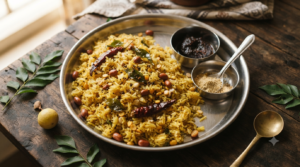
Tangy Pulihora Temple Style Andhra tamarind rice finished with roasted peanuts and sesame podi.
Get that right, and the rice turns fragrant, sour, and gently fiery all at once. This guide walks you through the exact ingredients, the temple secret most recipes skip, and the small timing habits that keep every grain separate instead of mushy.
Pulihora at a Glance
Before you start, here is the short version so you know what you are making and why it tastes the way it does.
- What it is: cooked rice tossed with a cooked tamarind paste, a tempering, and a roasted spice powder.
- Core flavour: sour first, then salty, then a slow chilli heat, with a nutty finish from peanuts.
- Why “temple style”: the roasted sesame-and-fenugreek podi and the no-onion, no-garlic method used for prasadam.
- Best served: warm or at room temperature, ideally rested an hour so the flavours settle.
- Keeps: the rice for about two days chilled; the tamarind paste for weeks.
What Makes Pulihora Temple Style Andhra Special
The difference between a home tamarind rice and Pulihora Temple Style Andhra comes down to two things: a roasted spice powder and a slow-cooked paste. Temple cooks grind sesame seeds, fenugreek, mustard, and pepper into a fine podi and stir it in at the finish. That single step is why prasadam pulihora smells deeper and tastes rounder than a quick weekday version.
The second secret is the tamarind paste, called pulihora pulusu. It is cooked low and slow until the oil separates and rises to the sides of the pan. That is the doneness cue temple kitchens rely on, and it kills the raw, harsh edge of tamarind. No onion or garlic ever goes in, since the dish is a sacred offering.
Across South India the same idea carries different names. Andhra and Telangana call it Pulihora or Chintapandu rice. Tamil Nadu calls it Puliyodarai, while Karnataka calls it Puliyogare. The word “puli” means sour, so the tamarind is not a garnish here — it is the whole point.
Recipe Card
| Detail | Value |
|---|---|
| Prep time | 20 minutes |
| Cook time | 30 minutes |
| Total time | 50 minutes |
| Servings | 4 |
| Difficulty | Medium |
| Cuisine | Andhra, South Indian |
Ingredients for Pulihora Temple Style Andhra
The list below is grouped so you can see how the dish is built. First the rice, then the tamarind paste, then the tempering, and finally the temple podi that ties it together. Measurements serve four.
For the rice
- Rice (sona masoori or any long grain) – 2 cups uncooked, about 4 cups cooked
- Water – 4 cups
- Sesame oil (gingelly oil) – 1 tablespoon, to coat the warm rice
For the tamarind paste (pulusu)
- Tamarind – a lemon-sized ball, soaked and squeezed for about ½ cup thick pulp
- Turmeric powder – ½ teaspoon
- Salt – 1½ teaspoons, adjusted to taste
- Jaggery – 1 teaspoon, optional, to round off the sourness
For the tempering
- Sesame oil – 3 tablespoons
- Mustard seeds – 1 teaspoon
- Urad dal – 1 tablespoon
- Chana dal – 1 tablespoon
- Roasted peanuts – ¼ cup
- Dry red chillies – 4 to 6
- Green chillies – 2, slit lengthwise
- Curry leaves – 2 sprigs
- Asafoetida (hing) – ¼ teaspoon
For the temple podi (the key step)
- Sesame seeds – 1 tablespoon
- Fenugreek (methi) seeds – ¼ teaspoon
- Dry red chilli – 1
- Black pepper – ½ teaspoon, optional
How to Make Pulihora Temple Style Andhra: Step by Step
Work through these steps in order. The rice cooks while you prepare everything else, so nothing sits around going cold. Read step six before you start, because the resting time is what deepens the flavour.
1. Cook and cool the rice
Wash 2 cups of rice until the water runs clear. Add it to a pot with 4 cups of water. Cook covered on medium heat until the grains are tender and the water is absorbed, roughly 15 to 18 minutes.
Spread the rice on a wide plate to cool, because warm-but-not-hot rice mixes without turning sticky. Drizzle a tablespoon of sesame oil over it while it cools so the grains stay separate.
2. Soak and squeeze the tamarind
While the rice cooks, soak a lemon-sized ball of tamarind in ½ cup of warm water for 10 minutes. Mash it well, then strain out the fibres and seeds. You want about ½ cup of thick, sour pulp. This tang is the soul of the dish, so keep the pulp concentrated rather than watery.
3. Dry-roast the temple podi
Heat a dry pan on low. Add the sesame seeds, fenugreek, one red chilli, and pepper. Roast gently until the sesame turns golden and smells nutty, about 2 to 3 minutes.
Cool, then grind to a coarse powder. This podi is the temple signature, so do not skip it even when you are short on time.
4. Temper the spices
Heat 3 tablespoons of sesame oil over a medium flame. Add the mustard seeds and let them pop. Stir in the urad dal and chana dal, frying until golden.
Then add the red chillies, green chillies, curry leaves, and asafoetida, and fry for another minute until aromatic. Because the dals burn fast, keep stirring.
5. Cook the tamarind paste until oil separates
Pour the tamarind pulp into the tempering. Add the turmeric, salt, and jaggery if you are using it. Cook on low heat for 6 to 8 minutes.
The paste is ready when it thickens and the oil starts to separate at the edges. That oil line is the doneness signal every temple cook watches for, since it means the raw tamarind smell has gone.
6. Mix, rest, and serve
Turn off the flame. Add the cooled rice in batches, folding gently so every grain gets coated. Sprinkle in the ground podi and the roasted peanuts, then toss lightly.
Let the pulihora rest for at least an hour if you can, because the flavours keep melding as it sits. Serve warm or at room temperature with papad, fryums, or a spoon of curd.
Insider Tips for Perfect Pulihora Temple Style Andhra
These are the details that separate a good pulihora from a memorable one. Most come from watching how the dish is made for prasadam rather than from a printed card.
- Rest it before serving. Pulihora genuinely tastes better after an hour or two, which is why it travels so well in lunch boxes and on journeys.
- Cool the rice on a flat tray. A wide plate cools faster and keeps grains separate, while a deep bowl steams them soft.
- Watch for the oil line. If the paste still smells sharp, it is not done — keep cooking until oil pools at the edges.
- Balance, do not sweeten. Jaggery should round the sourness, not turn the rice sweet, so start with a teaspoon and taste.
- Make it mild for children by cutting the dry chillies and leaving out the green ones, while keeping the podi for aroma.
Common Mistakes to Avoid with Pulihora Temple Style Andhra
A few small errors turn Pulihora Temple Style Andhra into ordinary sticky rice. Once you know them, they are easy to sidestep.
- Mixing hot rice. Steaming rice breaks and clumps when tossed with paste, so always cool it first.
- Skipping the podi. Without the roasted sesame-fenugreek powder, the rice tastes flat and loses the prasadam character.
- Under-cooking the tamarind. A raw, harsh sourness means the paste needed a few more minutes on the flame.
- Adding raw peanuts. Fry them until they crackle, otherwise they stay chewy instead of crunchy.
- Watery pulp. Thin tamarind water dilutes the rice, so keep the pulp thick and reduce it well.
Pulihora Temple Style Andhra: Substitutions and Variations
The base recipe is flexible, and regional cooks tweak it constantly. Here is how to adapt Pulihora Temple Style Andhra without losing its character.
Oil: Sesame oil gives the truest flavour, but groundnut oil works if that is what you have. Jaggery: leave it out entirely if your tamarind is mild, since many temple versions use none.
Cashews: add a few with the peanuts for a richer festival version. For a citrus twist, try our lemon pulihora recipe, which swaps tamarind for fresh lemon and skips the long paste-cooking step. The Tamil Nadu temple-style version leans on a slightly different podi, so it is worth a side-by-side taste.
Pulihora Temple Style Andhra: Storage and Make-Ahead
This dish rewards planning, and the paste is the part you can prepare well ahead.
Store finished pulihora in an airtight container in the fridge for up to two days. Reheat gently on low heat, adding a splash of hot water to loosen the grains. The tamarind paste, however, keeps far longer.
Cook a larger batch, cool it completely, and refrigerate it in a clean jar for a few weeks.
When you want fresh pulihora, you only need to cook rice and fold in a few spoons of paste with the podi. Many families keep this paste ready through festival season for exactly that reason.
Pulihora Temple Style Andhra Nutrition (Per Serving)
| Nutrient | Amount |
|---|---|
| Calories | 340 kcal |
| Carbohydrates | 62 g |
| Protein | 6 g |
| Fat | 10 g |
| Fibre | 3 g |
| Sodium | 600 mg |
These figures are estimates for a standard serving of tamarind rice with peanuts and tempering. Actual values shift with your oil, portion size, and how much peanut you add, so treat them as a guide rather than a precise count.
Before You Cook: The Bottom Line
Pulihora Temple Style Andhra is more than tamarind rice — it is a method built around one roasted podi and one slow-cooked paste. Master those two elements, keep your rice cool and separate, and let the finished dish rest before serving.
Do that once, and you will taste why this humble rice has stayed on temple offering trays and family tables for generations. For a sense of its place in temple food culture, the offering tradition at shrines like Tirumala shows how prasadam pulihora became a shared taste memory across the south. You can read more about India’s regional food heritage on Incredible India.
Frequently Asked Questions
What makes Pulihora Temple Style Andhra different from regular tamarind rice?
Temple style adds a roasted podi of sesame, fenugreek, and pepper, and cooks the tamarind paste until the oil separates. It also skips onion and garlic, since it is prepared as prasadam. These steps give it the deeper aroma home versions often lack.
Why is my pulihora turning mushy?
Mushy pulihora almost always comes from mixing rice while it is still hot. Cool the cooked rice on a wide plate first, coat it with a little sesame oil, and fold the paste in gently. Overcooked or overly soft rice makes the problem worse.
Can I make pulihora ahead of time?
Yes, and it actually improves with a little rest. Prepare the tamarind paste up to a few weeks ahead and refrigerate it. Combine it with freshly cooked rice and podi when you are ready to serve, then let it sit for an hour.
Why is tamarind used in pulihora?
Tamarind gives the signature sour taste that defines the dish. The word “puli” itself means sour, so the tamarind is the central flavour rather than a background note. Cooking it into a paste tames its harshness and lets the spice come through.
Do I really need the sesame-fenugreek podi?
For authentic temple flavour, yes. The podi is the single element that most distinguishes prasadam pulihora from an everyday version. You can make the rice without it, but the aroma and depth will noticeably change.
Is pulihora vegan?
Pulihora Temple Style Andhra is entirely plant-based and suitable for a vegan diet. It uses no dairy, and the fats come from sesame oil and peanuts. Serve it with a coconut chutney rather than curd to keep the whole meal vegan.
What can I serve with pulihora?
Papad, fryums, and a bowl of curd are the classic partners. For a festival spread, pair it with garelu (medu vada) or a simple potato fry. Its tang also balances richer dishes on a full meal plate.
How long does pulihora stay fresh?
The finished rice keeps for about two days refrigerated in an airtight container. The tamarind paste lasts far longer, up to a few weeks chilled. Reheat the rice gently and add a splash of water if it has dried out.