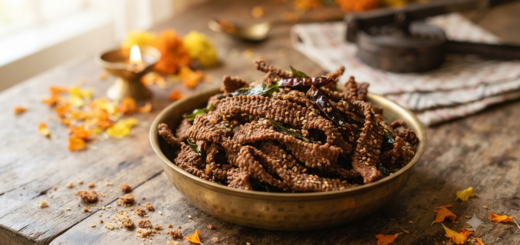
Millet Veggie Kofta Curry: Recipe, Timing & Safety
Millet veggie kofta curry pairs soft millet-and-vegetable balls with a warm tomato-onion gravy. The crucial measurement is 1 cup of already cooked millet, not 1 cup of dry grain. This refreshed method keeps the original Indian vegetarian flavours while explaining the quantities, cooling steps and common reasons koftas fall apart.
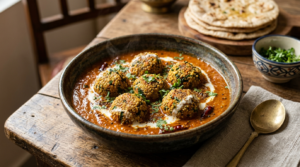
Golden millet and vegetable koftas served in a rich, spiced tomato-onion gravy, garnished with fresh coriander.
Recipe testing note: The revised quantities and method have not been independently kitchen-tested for this refresh. The cooking times and yield below are planning estimates, not measured results from a completed batch. Check the texture as you cook, especially before serving guests.
Millet veggie kofta curry at a glance
- Main grain: 1 cup cooked, cooled foxtail or little millet.
- Estimated yield: About 10–12 small koftas, serving roughly 3–4 people with rice or roti; not kitchen-verified.
- Estimated total time: Allow roughly 75–95 minutes when starting with dry millet, including cooling and frying. Using safely pre-cooked millet saves time.
- Cooking route: Shallow-fry the koftas, simmer the tomato gravy separately, then combine just before serving.
- Diet: Vegetarian; use oil and coconut milk for a dairy-free, vegan variation.
For millet veggie kofta curry, the grain supplies the soft centre while grated carrot and cooked beans or peas add texture. The gravy stays close to the original onion, tomato, cumin and garam masala combination.
Millet veggie kofta curry: cooked versus dry millet
For millet veggie kofta curry, use 1 level cup of millet after cooking and cooling for the kofta mixture. The older recipe listed cooked millet but then instructed readers to rinse and cook a full cup of dry grain. Those are not interchangeable quantities, so following both directions would produce very different batches.
The Whole Grains Council’s cooking guide lists a much larger cooked yield than the starting volume of dry hulled millet. Foxtail and little millet can behave differently, however, so the most reliable measure for this recipe is the finished cooked volume.
| Measurement | Use in this recipe | Why it matters |
|---|---|---|
| 1 cup cooked millet | Yes; measure after cooking | Sets the intended kofta mixture size |
| About 1/3 cup dry millet | Practical starting quantity | Cook, then measure out 1 cup; save any extra |
| 1 cup dry millet | No; too much for this batch | Yields several cups cooked and changes the binder ratio |
If you already have plain cooked millet in the fridge, measure out one cup and skip the grain-cooking step. Use it only if it was cooled promptly, refrigerated safely and remains within the recommended storage period.
Ingredients for millet veggie kofta curry
When preparing millet veggie kofta curry, keep the koftas fairly small because large, soft balls are harder to turn in a shallow pan. These ingredients follow the original flavour profile; the binder quantity may need adjustment after checking the moisture in your vegetables.
For the millet and vegetable koftas
- 1 cup cooked and cooled foxtail or little millet, measured after cooking
- 1/2 cup grated carrot, with excess moisture squeezed out
- 1/2 cup finely chopped green beans or peas, lightly cooked, drained and cooled
- 2 tablespoons finely chopped fresh coriander
- 1 teaspoon ginger-garlic paste
- 1/2 teaspoon garam masala
- 1/4 teaspoon turmeric
- 2 tablespoons cornflour (corn starch), with up to 1 tablespoon extra if needed; chickpea flour is an alternative
- Salt to taste
- Oil for shallow-frying
For the tomato-onion gravy
- 2 tablespoons oil or ghee
- 1 large onion, finely chopped
- 1 teaspoon ginger-garlic paste
- 2 large tomatoes, pureed
- 1/2 teaspoon cumin seeds
- 1 bay leaf
- 1/2 teaspoon turmeric
- 1 teaspoon coriander powder
- 1/4 teaspoon red chilli powder, or to taste
- 1 teaspoon garam masala
- 1/2 cup water or vegetable stock, plus more if required
- 1/4 cup dairy cream or coconut milk, optional
- 1 teaspoon crushed kasuri methi, optional
- Salt, fresh coriander and lemon wedges for finishing
Choose oil rather than ghee and coconut milk rather than cream if you want the vegan version. Check packaged ingredients when cooking for someone with an allergy or coeliac disease.
How to make millet veggie kofta curry
For millet veggie kofta curry, prepare the grain and vegetables first, then shape and pan-fry the balls. Make the gravy while the koftas rest, but add them only at the end. This order helps stop the millet balls from drinking in too much sauce and losing their shape.
Step 1: Cook and cool the millet
- For a fresh batch, rinse about 1/3 cup of dry foxtail or little millet. Follow the package’s water ratio and cooking directions, since brands and grain types vary.
- Simmer until the grains are tender. A rough planning range is 20–30 minutes, but check the actual texture and add a little water if necessary.
- Fluff the cooked grain and measure 1 cup. Spread it in a shallow, clean container so steam escapes quickly; refrigerate promptly if you are not using it at once.
- Cook the chopped beans or peas until tender, then drain them thoroughly. Allow both the vegetables and millet to cool enough to handle without leaving them on the counter for an extended period.
Do not leave the millet out for hours to become completely cold. Use shallow containers and short cooling intervals because cooked grains and vegetables need prompt chilling.
Step 2: Mix and shape the koftas
- Mix the measured millet, grated carrot, drained beans or peas, coriander, ginger-garlic paste, turmeric, garam masala and salt.
- Stir in 2 tablespoons cornflour. Press a spoonful between your fingers; it should hold together without dripping or crumbling.
- If the mixture feels wet, add the extra tablespoon gradually. If it seems dry, press and mash a small portion of the cooked millet rather than adding water straight away.
- Shape about 10–12 small balls or short oval patties, roughly 3 cm across. A flatter shape may be easier to pan-fry.
Chill the shaped koftas briefly in the refrigerator if they are difficult to handle. This is a texture aid, not a substitute for using the right amount of binder.
Step 3: Shallow-fry until firm
- Heat a thin layer of oil in a wide pan over medium heat. Add just a few koftas so you can turn them without crowding.
- Let the underside form a firm, golden crust before moving each one. Turn gently and cook all sides until the centre is hot and the binder has cooked through.
- Allow roughly 10–15 minutes for a small batch as a starting estimate, depending on size, pan and heat. Cut one open to check the centre before serving.
- Move the koftas to a plate. Avoid stacking them immediately, since trapped steam can soften the crust.
The previous air-fryer suggestion of 200°C for about 10 minutes was not supported by a documented test. Air-frying may work, but this refreshed recipe does not promise a fixed time or the same texture until that option is trialled.
Step 4: Prepare the spiced gravy
- Heat the oil or ghee in another pan. Add cumin seeds and the bay leaf, followed by chopped onion.
- Cook the onion over medium heat until soft and lightly golden, then stir in the ginger-garlic paste.
- Add the tomato puree, turmeric, coriander powder, red chilli powder and salt. Cook, stirring, until the tomato mixture thickens and loses its raw taste.
- Pour in 1/2 cup water or stock and simmer gently. Add more liquid a spoonful at a time if the gravy looks too thick.
- Stir in the optional cream or coconut milk and crushed kasuri methi. Simmer briefly, then add garam masala.
Keep the sauce spoonable rather than watery. A very thin gravy may weaken the kofta crust before the dish reaches the table.
Step 5: Combine and serve
Place the cooked koftas into the hot gravy just before eating. Spoon sauce over them gently, then warm briefly without vigorous stirring. Finish with coriander and offer lemon wedges on the side.
If you need to hold the meal before serving, keep the koftas and gravy separate. A short final soak can add flavour, but a prolonged simmer may turn the millet balls soft.
What to do if the koftas fall apart
With millet veggie kofta curry, the most likely cause of broken koftas is excess water in the cooked millet or vegetables. Another possibility is an overly large kofta that breaks when turned. Fix the mixture before frying the whole batch rather than trying to rescue every ball in the gravy.
| Problem | Likely cause | Practical adjustment |
|---|---|---|
| Mixture will not hold | Wet grains or vegetables | Drain, squeeze and add binder a little at a time |
| Breaks when turned | Crust has not formed | Cook longer on the first side; make smaller pieces |
| Falls apart in gravy | Sauce is thin or simmer is vigorous | Thicken sauce and add koftas just before serving |
| Dense, pasty centre | Too much flour or over-mashed millet | Use less binder and keep some grain texture next time |
For a low-risk trial, fry one kofta first and check how it holds together. Adjust the remaining mixture only after seeing the result. Since this revised recipe is untested, a one-piece trial is more useful than promising every millet brand will behave alike.
Allergy, gluten-free and vegan notes
The basic mixture in millet veggie kofta curry contains no dairy by design, but the gravy changes with your choices. Cream and ghee contain milk-derived ingredients, so they are not suitable swaps for someone avoiding milk allergens. Optional cashews or peanuts, mentioned in the older version, add nut or peanut allergy risks.
- Milk: Skip cream and ghee when avoiding dairy. Use suitable oil and a checked dairy-free alternative.
- Peanuts and tree nuts: Leave out optional nuts and check sauces, seasonings and shared cooking equipment.
- Chickpea: Chickpea flour is a legume ingredient and may be unsuitable for some people with legume allergies.
- Gluten: Millet itself contains no gluten, but cross-contact can occur in milling, packaged spices, flour, frying oil or utensils. Use appropriately labelled ingredients when medically necessary.
- Coconut: Coconut milk is optional, not an allergy-free solution for everyone. Check each guest’s needs before substituting.
The US Food and Drug Administration’s food-allergy guide explains why ingredient labels and cross-contact matter. For strict gluten avoidance, also follow the Celiac Disease Foundation’s guidance on shared utensils and cooking areas.
Do not label the finished curry universally gluten-free, nut-free or allergen-free without checking every ingredient and the preparation space. Also, this is a meal idea, not a treatment for diabetes or any medical condition.
Cooling, storing and reheating millet veggie kofta curry
After making millet veggie kofta curry, store the koftas and gravy separately in shallow, covered containers. Refrigerate promptly at 4°C or colder, within 2 hours of cooking; if the surroundings are hotter than 32°C, shorten that limit to 1 hour. Do not wait for a large pot to reach room temperature before chilling.
For properly handled leftovers, 3–4 days in the refrigerator is the general food-safety limit, not a promise that the texture will stay crisp. The koftas may taste best sooner. If you freeze portions, expect the texture to change; thaw in the fridge instead of on the counter.
When reheating, bring gravy to a boil and heat the koftas until their centres reach 74°C (165°F). Use a food thermometer where practical. Stir microwave-heated sauce, cover it and allow standing time to avoid cold spots. Do not rely on a low-heat warming step alone for stored leftovers.
These limits follow FoodSafety.gov’s leftover guidance and its reheating-temperature chart. Discard food left out beyond the safe cooling window; reheating cannot reliably undo every food-safety problem.
Serving millet veggie kofta curry: ideas and variations
Serve millet veggie kofta curry with steamed basmati rice, chapati or roti. Spoon enough gravy around the koftas without burying them, then finish with fresh coriander and lemon. A cucumber raita is a useful contrast if dairy suits your guests.
For an Andhra- or Telangana-inspired variation, add mustard seeds and curry leaves to the onion tempering. For a vegan plate, choose oil and coconut milk. For a less rich sauce, skip cream and thin the tomato gravy with a little water.
Keep substitutions modest until you have tried the basic mixture. Quinoa, buckwheat and brown rice have different moisture and binding properties, so they cannot replace cooked millet cup for cup with a guaranteed result.
If you like cooking with the same grains in other forms, the site’s millet pongal recipe offers a softer breakfast preparation. Its millet vegetable khichdi uses millet in a different one-pot meal.
Before you make this curry
Measure the millet after cooking, keep the vegetables well drained and fry one test kofta before finishing the batch. Allow more time than the old 50-minute estimate if you start with dry grain. Above all, treat the timing and yield as provisional until the revised method receives a recorded kitchen test.
Millet veggie kofta curry FAQs
Does the recipe use 1 cup raw millet or cooked millet?
It uses 1 cup cooked millet. Start with roughly 1/3 cup dry millet if you need to cook some, but measure the finished grain before mixing the koftas. Exact cooked yield varies by grain and method.
Can I use foxtail millet instead of little millet?
Yes. Either suits the intended flavour, although texture and water absorption may differ. Cook your chosen millet until tender, drain excess liquid and measure one cup after cooking.
How do I stop millet koftas breaking in curry?
Drain the vegetables, use the binder gradually and make small, firm balls. Fry one first to test the crust. Add the remaining koftas to thick, gently heated gravy just before serving.
Can I bake or air-fry the koftas?
Possibly, but the revised recipe has not validated a baking or air-fryer setting. The earlier 200°C, 10-minute suggestion should not be treated as a tested instruction. Start with a small trial batch and check the centre.
Is millet veggie kofta curry vegan?
It can be vegan if you choose oil instead of ghee and omit dairy cream. Unsweetened coconut milk is one possible replacement. Check the labels of any prepared stock or spice mixes too.
Is millet veggie kofta curry gluten-free?
It can be prepared without gluten-containing ingredients, but that depends on every product and the kitchen setup. Check millet, flour, spices and stock for gluten cross-contact. Use clean utensils and suitable labelled products if cooking for coeliac disease.
How long can I keep leftover kofta curry?
Refrigerate safely prepared leftovers promptly and use them within 3–4 days. Store the koftas apart from the sauce to limit sogginess. Freeze sooner if you will not eat them during that period.
How should I reheat leftover koftas and gravy?
Reheat the gravy to a boil and the kofta centres to 74°C (165°F). Use a thermometer when possible. Combine after both parts are hot, and avoid leaving reheated food sitting at room temperature.
Can I prepare the koftas the day before?
Yes. Cook the koftas and gravy the day before, then cool and refrigerate them separately in shallow, covered containers. Reheat the gravy to a boil and the kofta centres to 74°C (165°F) before combining. Overnight storage of uncooked shaped koftas has not been tested for this recipe.