Moong Dal Kheer With Milkmaid: Easy Creamy Dessert Recipe
Moong dal kheer with Milkmaid works best when the dal is cooked soft before the dairy goes in. For a balanced batch, use 1/2 cup yellow moong dal, 2 1/2 cups milk and about 250 g Milkmaid, then adjust the final thickness with warm milk. This method gives a creamy spoonable kheer without adding extra sugar.
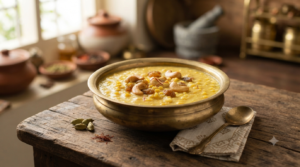
Creamy moong dal kheer with Milkmaid, cardamom, ghee-roasted cashews and raisins.
The older version of this recipe used a full can of condensed milk and cooked the dal directly in milk. Both can work, but they make sweetness and scorching harder to control. The refreshed method below separates those jobs, so the dal cooks evenly and the milk stays smooth.
Moong Dal Kheer With Milkmaid at a Glance
- Prep time: about 10 minutes
- Cook time: about 30 minutes
- Total time: about 40 minutes
- Servings: 6 small dessert bowls
- Best texture: soft moong dal in a creamy, pourable milk base
- Sweetener: Milkmaid sweetened condensed milk; no extra sugar needed
- Cooking method: pressure cooker or heavy-bottomed saucepan
NESTLÉ India describes MILKMAID as a partly skimmed sweetened condensed milk used for desserts. Since the product already contains added sugar, measure it as both dairy and sweetener rather than treating it like plain milk.
Ingredients for a Creamy Milkmaid Kheer
| Ingredient | Quantity | Why it is used |
|---|---|---|
| Yellow moong dal | 1/2 cup, about 100 g | Gives body and a soft nutty base |
| Water | 1 1/4 cups for pressure cooking | Cooks the dal without scorching dairy |
| Full-fat milk | 2 1/2 cups, plus up to 1/2 cup warm milk | Creates the kheer consistency |
| NESTLÉ Milkmaid | 250 g | Sweetens and enriches the kheer |
| Ghee | 1 1/2 tbsp | Roasts the dal and nuts |
| Cashews | 10 to 12, halved | Add crunch |
| Raisins | 1 tbsp | Add soft bursts of sweetness |
| Green cardamom powder | 1/2 tsp | Adds the classic aroma |
| Saffron | 6 to 8 strands, optional | Adds aroma and colour |
| Salt | 1 tiny pinch, optional | Balances the sweetness |
If your pack size differs, weigh the amount instead of using the whole container. That matters because a full tin can make a small batch much sweeter than expected. You can always add more Milkmaid near the end, but you cannot remove it once mixed in.
How to Make Moong Dal Kheer With Milkmaid
Cook the dal first
- Rinse and roast the dal. Rinse the moong dal until the water looks mostly clear, then drain it well. Heat 1 teaspoon ghee and roast the dal for 3 to 4 minutes until nutty. Keep stirring because moong dal can colour quickly.
- Cook the dal until soft. Transfer the dal to a pressure cooker with 1 1/4 cups water. Cook for about 3 whistles, then let the pressure settle for a few minutes. The dal should crush easily after cooking.
- Add milk after the dal is tender. Lightly mash the dal, then add 2 1/2 cups milk. Simmer on low heat for 5 to 7 minutes while stirring often, so the milk does not catch.
Finish the Moong Dal Kheer With Milkmaid
- Add Milkmaid gradually. Lower the heat before stirring in about 200 g Milkmaid. Simmer gently for 2 to 3 minutes, taste, then add the remaining 50 g for the balanced sweetness used here.
- Fry the nuts and raisins. Heat the remaining ghee in a small pan. Fry cashews until light golden, then add raisins until they swell. Add both to the kheer with the ghee.
- Finish with cardamom. Stir in cardamom, optional saffron and a tiny pinch of salt. Switch off the heat while the kheer still looks slightly loose because it thickens as it cools.
For a stovetop version of moong dal kheer with Milkmaid, cook the roasted dal with about 1 3/4 cups water until completely tender. Add hot water by the tablespoon if the pan dries too soon. Once the dal is tender, continue with the milk step above.
Why This Cooking Order Gives Better Kheer
Cooking the dal in water first makes the result more predictable because lentils soften faster in water than in a rich milk mixture. It also lowers the chance of milk sticking during the longest cooking stage. After the dal softens, milk can simmer briefly for flavour without spending half an hour over direct heat.
Adding Milkmaid near the end gives you better control over sweetness. It also means you do not need extra sugar. Since condensed milk thickens the base quickly, a short low simmer is enough after it goes in.
Why roast moong dal before cooking?
A short roast brings out a warm, nutty aroma and keeps the finished dessert from tasting flat. Stop when the dal smells fragrant and shows only light colour. If it turns deep brown, the kheer can taste toasted rather than delicate.
Should the dal be completely mashed?
No. Mash only part of the cooked dal, so the kheer becomes creamy but still has a little texture. If you want a smoother dessert for children or guests who prefer pudding-like kheer, mash it more thoroughly before adding milk.
Moong Dal Kheer With Milkmaid: Sweetness and Consistency Guide
The most common problem with moong dal kheer with Milkmaid is using the entire pack automatically. Sweetened condensed milk is concentrated, so the same amount can taste very different depending on your milk quantity and serving size. The table below gives a practical range for the base recipe on this page.
| Milkmaid amount | Sweetness | Best for |
|---|---|---|
| 180 to 200 g | Mild | Adults who prefer less-sweet desserts |
| 225 to 250 g | Balanced | Most family servings |
| 275 to 300 g | Very sweet | Small festival-style portions |
Start lower if you are unsure, because the dessert tastes sweeter after chilling. If the kheer becomes too thick, add warm milk a little at a time. If it looks too thin, simmer it uncovered for a few more minutes before adding any extra condensed milk.
Common Problems and How to Fix Them
The kheer is too thick after cooling
This is normal because cooked dal and condensed milk both thicken as they cool. Stir in warm milk, 2 tablespoons at a time, until the texture loosens. If you plan to chill the dessert, leave it slightly thinner than your final target before refrigeration.
The kheer is too sweet
Add unsweetened warm milk and a small amount of separately cooked moong dal if you have it. Do not add water alone unless the kheer is also too thick, because water weakens the milk flavour. Next time, start with 180 to 200 g Milkmaid and increase only after tasting.
The bottom tastes scorched
Do not scrape burnt milk or dal back into the dessert. Immediately pour the unburnt upper portion into a clean pan, leaving the stuck layer behind. Then continue on lower heat while stirring more often.
The kheer looks grainy or split
Keep the heat low after adding Milkmaid, since hard boiling is unnecessary. Also avoid acidic ingredients such as lemon juice or sour fruit. If the texture is only slightly grainy, whisk gently while adding a splash of warm milk.
Milkmaid, Sugar or Jaggery: Which Version Should You Make?
| Sweetener | Flavour | Texture | Best choice when |
|---|---|---|---|
| Milkmaid | Milky and caramel-like | Richest and quickest | You want a fast creamy dessert |
| White sugar | Clean, neutral sweetness | Lighter | You want precise sweetness control |
| Jaggery | Deep, earthy sweetness | Traditional payasam style | You want a South Indian jaggery profile |
For a plain-sugar method, use the site’s moong dal kheer with sugar recipe. If you prefer the jaggery and coconut profile, see the moong dal payasam with jaggery version instead.
The site also has a broader moong dal payasam with condensed milk guide. Use that page when you have a generic condensed-milk brand. This page stays focused on the Milkmaid method and its sweetness control, which helps keep the two recipes useful for different searches.
Serving Ideas That Suit This Kheer
Serve the kheer warm if you want a softer dal texture and stronger cardamom aroma. Serve it chilled if you prefer a thicker pudding-like finish. In either case, add the fried nuts just before serving if you want them to stay crisp.
For a simple festival presentation, spoon the kheer into small bowls and add a few chopped pistachios or saffron strands. Keep portions modest because condensed-milk desserts are rich. The kheer also pairs well with a savoury South Indian meal, where its sweetness works as the final course.
Storage, Chilling and Reheating
Cool leftover kheer promptly, then store it in a clean airtight container in the refrigerator. USDA food-safety guidance says cooked leftovers generally keep for 3 to 4 days when chilled properly. It also advises refrigerating perishable food within 2 hours, or within 1 hour when the surrounding temperature is above 32°C. See the USDA leftovers guidance for the general safety rule.
Reheat only the portion you need, since repeated heating and cooling hurts texture. Warm it over low heat and add a splash of milk because chilled kheer thickens. If the dessert smells sour, looks unusually separated or sat out too long, discard it rather than tasting to test safety.
What the Old Recipe Got Wrong or Left Unclear
The earlier version used one full can of Milkmaid without a sweetness-control step. That can make the result cloying, especially when pack sizes vary. The refreshed recipe measures the condensed milk by weight and gives three sweetness levels instead.
The older method also cooked the dal directly in milk for a short fixed time. That approach can work, yet it increases scorching risk and may leave the dal firm. Cooking the dal in water first gives a clearer doneness test, so the final dairy simmer stays short.
Finally, the old nutrition numbers looked more precise than the recipe supported. Brand labels, milk fat and serving size change the result, so this refresh removes unsupported per-serving figures. For exact nutrition, calculate from the labels on the products you actually use; Nestlé explains its approach to product nutrition labelling on its nutrition information page.
Before You Serve
For the best moong dal kheer with Milkmaid, stop cooking while the mixture still flows slowly from the spoon. It will thicken during resting, so a perfect hot consistency often becomes too dense later. Taste once more after the heat is off, then adjust only with warm milk if needed.
The biggest upgrade is simple: cook the dal fully before adding dairy, and do not pour in an entire pack of condensed milk by habit. Those two choices give you more control than any garnish or extra flavouring.
Frequently Asked Questions
Is moong dal kheer with Milkmaid the same as moong dal payasam?
They can refer to the same basic dessert, especially in South Indian home cooking where payasam is the common regional term. The exact recipe still varies by household. Some versions use jaggery and coconut milk, while this one uses dairy milk and Milkmaid.
How much Milkmaid should I use for 1/2 cup moong dal?
Use about 225 to 250 g for a balanced dessert with 2 1/2 cups milk. Start closer to 200 g if you prefer mild sweetness, then add more after tasting. This is safer than committing to a full pack at once.
Do I need sugar in moong dal kheer with Milkmaid?
No extra sugar is usually needed because Milkmaid is already sweetened condensed milk. Taste after the Milkmaid has simmered into the base for a few minutes. Add more condensed milk only if you want a sweeter finish.
Can I cook the moong dal without a pressure cooker?
Yes. Roast the dal, then simmer it in about 1 3/4 cups water until very soft. Add hot water when needed, since older dal can take longer. Continue with milk only after the grains crush easily.
Should I soak moong dal before making kheer?
Soaking is optional for split yellow moong dal. A 15-minute soak can shorten stovetop cooking, but pressure cooking works well without it. If you soak the dal, drain it before roasting so it does not steam in the pan.
Can I use low-fat milk?
Yes, although the kheer will taste lighter and may need a little more simmering to thicken. Full-fat milk gives the roundest texture. Avoid replacing all the milk with water because the dessert can lose its creamy character.
Can I make this vegan?
Not with dairy Milkmaid. For a vegan version, use plant milk, coconut oil and a vegan sweetened condensed-milk alternative. At that point it becomes a different recipe, so adjust sweetness and thickness according to the replacement product.
Can I freeze moong dal kheer with Milkmaid?
You can freeze many cooked foods safely, but this dairy kheer may lose its smooth texture after thawing. Refrigeration is better for quality when you plan to eat it within 3 to 4 days. If freezing, cool it quickly and use a freezer-safe container.