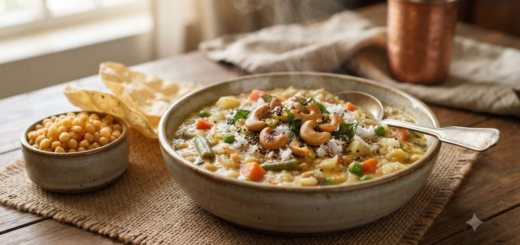
Moong Dal Kheer With Sugar: Easy Creamy Recipe
Moong dal kheer with sugar is a creamy Indian dessert made with roasted yellow moong dal, milk, sugar, cardamom, ghee, and nuts. The most reliable method is to cook the dal until tender before reducing it with milk, because that gives you a soft lentil texture without scorching the dairy. This version makes six small dessert servings and works on the stovetop or with a pressure cooker.
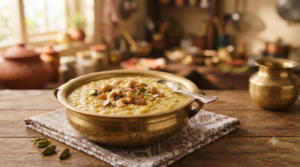
Creamy moong dal kheer with sugar, milk, cardamom, ghee-roasted cashews and raisins.
If you want a sugar-sweetened kheer rather than jaggery or condensed milk, this moong dal kheer with sugar is the version to use. The key is simple: roast for aroma, cook the dal fully, then add milk and sugar in stages.
Moong Dal Kheer With Sugar at a Glance
- Prep time: 10 minutes
- Cook time: about 35 minutes with a pressure cooker, or 45–55 minutes on the stovetop
- Total time: about 45–65 minutes
- Yield: 6 small dessert servings
- Texture: creamy and spoonable, with soft pieces of moong dal
- Sweetener: white sugar, added after the dal is tender
- Best served: warm, at room temperature, or chilled
Roasting moong dal before cooking gives the finished kheer a deeper, nutty aroma. Experienced payasam cooks also avoid over-mashing the dal, because a little texture keeps the dessert from becoming porridge-like.
Ingredients for Moong Dal Kheer With Sugar
| Ingredient | Quantity | Purpose |
|---|---|---|
| Yellow moong dal | 1 cup (about 200 g) | Body and nutty flavour |
| Water | 2½ cups, plus more if needed | Cooking the dal |
| Whole milk | 4 cups (about 950 ml) | Creamy kheer base |
| Sugar | ¾ cup (about 150 g) | Sweetness |
| Ghee | 2 tbsp | Roasting nuts and adding aroma |
| Green cardamom powder | ¾ tsp | Warm fragrance |
| Cashews | 10–12, halved | Crunch and garnish |
| Raisins | 10–12 | Sweet bursts and garnish |
| Saffron | A small pinch, optional | Colour and aroma |
For moong dal kheer with sugar, use full-fat milk for the richest result, although toned milk also works. If you prefer a lighter kheer, start with ½ cup sugar and taste near the end before adding more.
Why This Cooking Order Works Better
The old shortcut of simmering raw dal directly in a large quantity of milk can work, but it needs close attention. Milk can catch on the base while the lentils are still firm, especially in a thin pan. Cooking the roasted dal with water first is more forgiving, so the lentils soften before the dairy reduction begins.
Traditional payasam methods vary by household. Some cooks use water and milk together, while others cook fully in milk for a richer finish. The common principle is the same: roast the dal for flavour and stop cooking before it turns completely pasty.
How to Make Moong Dal Kheer With Sugar
Cook the dal first
- Roast the dry dal. Heat a heavy pan on low to medium heat. Add the dry moong dal and roast for 3–5 minutes, stirring often, until it smells nutty and turns slightly deeper yellow. Do not brown it heavily.
- Rinse and cook. Let the dal cool for a minute, then rinse it well. Add it to a pressure cooker with 2½ cups water. Cook until tender but not completely dissolved. In a stovetop pressure cooker, this usually takes about 2–3 whistles; exact timing depends on the cooker and dal.
- Reduce the milk. While the dal cooks, bring 4 cups milk to a gentle boil in a heavy-bottomed pan. Lower the heat and simmer for 8–10 minutes, stirring often so the base does not scorch.
Finish the moong dal kheer with sugar
- Combine dal and milk. Add the cooked dal to the simmering milk. Mash only a small portion with the back of a spoon, then simmer for 8–10 minutes. The mixture should look creamy but still show soft pieces of dal.
- Add the sugar. Stir in ½ cup sugar first. Once it dissolves, taste carefully and add the remaining ¼ cup only if you want a sweeter kheer. Simmer for 3–4 minutes on low heat.
- Add cardamom and nuts. Heat ghee in a small pan. Fry cashews until golden, then add raisins and cook until they puff. Pour everything into the kheer and stir in cardamom plus optional saffron.
- Rest before serving. Turn off the heat when the kheer looks slightly thinner than your final preference. It thickens as it cools, so a brief rest of 10–15 minutes gives the best spoonable texture.
If you do not use a pressure cooker, simmer the roasted and rinsed dal in water until tender. Add extra hot water in small amounts if the pan dries before the lentils soften.
What Consistency Should Moong Dal Kheer Have?
Good moong dal kheer should pour from a ladle in a thick ribbon, yet it should not sit like halwa. You should still see soft lentil grains in the milk. If the dal disappears completely, the dessert can feel heavy and pasty.
The kheer becomes thicker after cooling because both the dal and milk solids continue to absorb moisture. Therefore, stop cooking while it still looks a little loose. If chilled kheer becomes too thick, stir in a small splash of warm milk before serving.
How to Fix Common Moong Dal Kheer Problems
| Problem | Likely cause | Fix |
|---|---|---|
| Kheer is too thick | Too much reduction or cooling | Add warm milk, 2–3 tbsp at a time |
| Kheer is too thin | Not reduced enough | Simmer uncovered on low heat |
| Dal is still firm | Milk was added before dal softened | Cook longer on low heat; add hot water if needed |
| Milk scorched | Heat too high or pan too thin | Move unburnt kheer to a clean pan without scraping the base |
| Kheer tastes flat | Dal was not roasted or seasoning is low | Add cardamom and a pinch of salt, then taste again |
| Too sweet | Full sugar added at once | Add unsweetened hot milk and simmer briefly |
Do not scrape burnt milk from the bottom into the dessert, because the bitter flavour spreads quickly. Instead, transfer the clean upper layer to another pan and continue on lower heat.
Moong Dal Kheer With Sugar: Pressure Cooker or Stovetop?
A pressure cooker is the fastest way to soften the dal, while the stovetop gives you more visual control. Neither method changes the basic flavour, because most of the final aroma comes from roasting, milk reduction, cardamom, and ghee.
- Pressure cooker: best when you want a predictable tender dal with less active cooking time.
- Open pot: best when you want to watch the texture closely and avoid very soft lentils.
- One-pot milk method: richer, but it needs frequent stirring because milk can scorch before the dal becomes tender.
For beginners, the pressure-cooker-plus-milk method is the safest balance of speed and control. It also makes the final milk reduction easier to manage.
Sweetness, Milk and Flavour Adjustments
The listed ¾ cup sugar makes a clearly sweet festival-style dessert. For everyday serving, ½ to ⅔ cup may be enough. Sugar should go in after the dal is soft, because adding it later makes it easier to judge both sweetness and final thickness.
Saffron is optional, not essential. Cardamom gives the classic aroma, while a tiny pinch of nutmeg can add warmth. If you want a coconut-based version, use the site’s moong dal payasam with coconut milk rather than replacing all the dairy here without changing the method.
For a caramel-like sweetness, follow the separate moong dal payasam with jaggery. If you want a richer shortcut, the Milkmaid moong dal kheer uses sweetened condensed milk instead.
Nutrition: A More Realistic Estimate
This is a dessert, so portion size matters more than calling it simply “healthy” or “unhealthy.” Moong dal supplies protein and other nutrients, but sugar, milk, ghee, and nuts also add substantial energy. The ICMR-National Institute of Nutrition notes that pulses are important protein sources in Indian diets, while its portion tables also show that sugar and visible fat add concentrated calories.
| Per small serving | Approximate amount |
|---|---|
| Energy | About 380–420 kcal |
| Protein | About 10–12 g |
| Carbohydrate | About 50–55 g |
| Fat | About 11–13 g |
These figures are estimates for six servings and will vary by milk, ghee, nut quantity, and sugar level. For ingredient-level nutrition references, see the ICMR-National Institute of Nutrition and USDA FoodData Central.
Storage and Reheating
Cool leftover kheer promptly, cover it, and refrigerate it. The Food Safety and Standards Authority of India advises keeping leftover food cold below 5°C when it must be stored, and cooked food should be thoroughly reheated before eating.
For best quality, use the kheer within about 3 days. The United States Department of Agriculture gives a general 3–4 day refrigerator window for cooked leftovers and advises refrigerating perishables within two hours. See the FSSAI Food Safety at Home guidance and USDA leftovers guidance.
Reheat only the portion you plan to eat, because repeated heating can worsen texture. Add a little milk while reheating if the kheer has become too thick in the refrigerator.
Serving Ideas for Moong Dal Kheer With Sugar
Serve moong dal kheer with sugar warm for the strongest cardamom and ghee aroma. Chilled kheer tastes denser and sweeter, so reduce the sugar slightly if you already know you will serve it cold.
For a festive finish, top each bowl with a few roasted cashews and one or two saffron strands. Keep the garnish simple because the roasted dal should remain the main flavour.
What Beginners Usually Get Wrong
- Adding all the sugar immediately: start lower, because sweetness becomes stronger as the kheer reduces.
- Overcooking the dal: soft is correct; completely smooth is not required.
- Using high heat after adding milk: gentle heat reduces scorching and gives better flavour.
- Judging thickness while boiling: the kheer thickens after it rests, so stop a little early.
- Skipping the roast: even a short roast gives the dal a noticeably deeper aroma.
The biggest improvement is not an exotic ingredient. It is controlling the dal texture first, then controlling milk reduction and sweetness separately.
Moong Dal Kheer With Sugar: Final Notes
For a dependable result, roast the dal lightly, cook it until tender, then simmer it with milk before adding sugar. That order gives you better control over both texture and scorching. Keep the final mixture slightly loose because it will thicken as it cools.
If you prefer jaggery, coconut milk, or condensed milk, use a recipe built for that sweetener rather than swapping ingredients blindly. Each version behaves differently during cooking.
Frequently Asked Questions
Can I make moong dal kheer with sugar without a pressure cooker?
Yes. Roast and rinse the dal, then simmer it with water in a covered heavy pan until tender. Stir now and then, and add hot water if needed. Once the dal softens, continue with milk, sugar, cardamom, and the ghee-roasted nuts.
Should I soak moong dal before making kheer?
Soaking is optional for split yellow moong dal. A 15–20 minute soak can shorten open-pot cooking, but it is not essential when you use a pressure cooker. If you roast the dal first, rinse it after roasting and then soak only if you want to.
Why should I roast moong dal for kheer?
Roasting gives moong dal a nutty aroma and removes some of its raw lentil smell. Keep the heat low or medium, because dark browning can make the finished kheer taste bitter. The dal only needs to become fragrant and lightly golden.
When should I add sugar to moong dal kheer?
Add sugar after the dal has become tender and the milk has started to thicken. This timing makes sweetness easier to control and prevents you from reducing an already-sweet mixture for too long. Add part of the sugar first, taste, then adjust.
Can I use toned milk instead of full-fat milk?
Yes. Toned milk makes a lighter kheer, although it will take longer to feel rich and creamy. Simmer gently until the texture improves, or mash a small portion of the cooked dal to add body without extra cream.
Why does moong dal kheer become thick after cooling?
Cooked dal continues absorbing moisture as the kheer rests, while chilled milk also feels thicker. Therefore, stop cooking when the kheer is slightly looser than you want to serve. Stir in warm milk later if it becomes too dense.
Can I make this kheer vegan?
Yes, but the method needs a small adjustment. Use coconut milk or another plant milk and replace ghee with coconut oil or a neutral fat. For a version designed around coconut milk, the dedicated coconut-milk payasam recipe will give more reliable proportions.
How long can I keep moong dal kheer in the refrigerator?
For best quality, use refrigerated kheer within about 3 days. Cool it promptly, store it covered, and keep it cold. General food-safety guidance from USDA allows most cooked leftovers for 3–4 days when refrigerated correctly.