Nimmakaya Pulihora Recipe: Andhra Lemon Rice Step by Step
This Nimmakaya Pulihora recipe turns a bowl of plain rice into a bright, tangy South Indian meal in under 45 minutes. Nimmakaya means lemon in Telugu, so pulihora made this way stays light and citrusy rather than dark and sour like the tamarind kind.
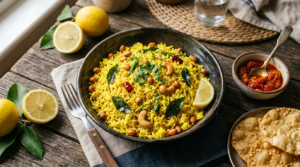
A bowl of freshly made Nimmakaya Pulihora, tangy South Indian lemon rice tempered with peanuts, cashews and curry leaves.
Below you get exact measurements, clear timings, and the small kitchen tricks that decide whether the rice comes out fluffy or sticky. Because the dish also travels well, it fills countless lunchboxes, picnic hampers and temple prasadam plates across Andhra Pradesh and Telangana. Cook it once with these ratios, and you will rarely need another version.
Nimmakaya Pulihora at a Glance
- What it is: tangy lemon rice tempered with lentils, peanuts and curry leaves.
- Total time: about 40 minutes, since most of it is hands-off rice cooking.
- Best rice: day-old or well-cooled Sona Masoori, because fresh hot rice turns sticky.
- The golden rule: add lemon juice off the heat, or it turns bitter.
- Diet: naturally vegan and easily gluten-free when the asafoetida is certified.
Recipe Card: Nimmakaya Pulihora (Lemon Rice)
| Detail | Value |
|---|---|
| Prep time | 15 minutes |
| Cook time | 25 minutes |
| Total time | 40 minutes |
| Servings | 4 |
| Difficulty | Easy |
What Is Nimmakaya Pulihora?
Nimmakaya Pulihora literally means “lemon rice” in Telugu, and it is a staple in Andhra and Telangana kitchens. The word “puli” means sour, while the souring agent here is fresh lemon rather than tamarind. In Karnataka the same idea appears as chitranna, so the dish crosses several South Indian states.
Pulihora is old. According to a historian cited by Wikipedia’s entry on Pulihora, the dish appears in Thanjavur temple-kitchen inscriptions dated to around 1010 CE. That temple link still holds today, because pulihora is one of the most common prasadam offerings in South Indian temples.
The broader pulihora family uses tamarind, kokum, raw green mango or lemon as its sour base. This lemon version is the quickest, since you skip the long tamarind-paste cooking. That speed is exactly why it became the go-to festive and travel rice.
What Makes This Nimmakaya Pulihora Recipe Different
Most online versions give you a rough method and hope for the best. This Nimmakaya Pulihora recipe pins down the water ratio, the resting time and the exact moment to add lemon, so the result is repeatable. Three details do the heavy lifting.
First, the rice must be cooked slightly firm and then cooled, because warm mushy rice will clump. Second, the lemon goes in only after the heat is off, since boiling lemon juice turns bitter and loses its fresh punch. Third, sesame (gingelly) oil carries the tempering, as it gives the nutty depth that neutral oils simply cannot.
Choosing the Right Rice
Rice choice matters more than any spice here. Sona Masoori and short-to-medium grain Kolam both work well, because they stay separate when cooled. Basmati works too, though its long grains give a slightly different, fluffier feel.
Day-old refrigerated rice is the traditional cook’s secret. When rice sits overnight, the grains firm up, so they resist breaking during mixing. If you are cooking fresh, spread it on a wide plate and let it cool fully before you start. This one habit fixes most soggy-rice complaints.
Ingredients for Nimmakaya Pulihora Recipe (4 Servings)
These quantities are calibrated for four servings, so scale them up or down as needed. The key ratio is roughly three tablespoons of lemon juice per three cups of cooked rice.
- Raw rice: 1 cup (yields about 3 cups cooked)
- Water for rice: 1.75 to 2 cups, depending on the variety
- Sesame (gingelly) oil: 3 tablespoons, for the most authentic flavour
- Mustard seeds: 1 teaspoon
- Urad dal (split black gram): 1 teaspoon
- Chana dal (split Bengal gram): 1 teaspoon
- Peanuts: ¼ cup, raw or roasted
- Cashews: 2 tablespoons, optional but recommended
- Green chillies: 2, slit
- Dried red chillies: 2, optional for heat
- Curry leaves: 12 to 15 fresh leaves
- Turmeric powder: ½ teaspoon
- Asafoetida (hing): ¼ teaspoon
- Fresh lemon juice: 3 tablespoons
- Salt: 1 teaspoon, adjust to taste
- Coriander leaves: 2 tablespoons chopped, for garnish
How to Make Nimmakaya Pulihora Recipe Step by Step
Follow the four stages below in order. Read the timings once before you begin, because the tempering moves fast once the oil is hot.
1. Cook the Rice (25 minutes)
Wash 1 cup of raw rice until the water runs clear, then soak it for 15 to 20 minutes. Soaking improves the texture and cuts the cooking time. After soaking, drain the rice and add it to a pot with 1.75 to 2 cups of water and a little salt.
Cover and simmer on medium heat for about 10 minutes, until the water is absorbed and the grains are tender but separate. Turn off the heat and rest it covered for 5 minutes. Then fluff with a fork and spread the rice on a wide plate to cool. This cooling step is not optional, since hot rice dulls the fresh lemon.
2. Prepare the Tempering (10 minutes)
Heat 3 tablespoons of sesame oil in a heavy pan over medium flame. Add the peanuts and cashews first, and fry for 2 to 3 minutes until golden. Scoop them out and set them aside, so they stay crunchy.
In the same oil, add the mustard seeds. When they start to pop, add the urad dal and chana dal together. Stir for 2 to 3 minutes until the lentils turn light golden.
Now add the slit green chillies, dried red chillies and curry leaves, and sauté for about 40 seconds until the leaves crisp. Finally sprinkle in the turmeric and asafoetida, stirring for 15 seconds so the spices bloom.
3. Combine Rice, Lemon and Tempering (5 minutes)
Turn off the heat before this stage, because the lemon must never boil. Pour the warm tempering over the cooled rice, then add the fried peanuts and cashews back in. Drizzle the 3 tablespoons of fresh lemon juice evenly across the rice.
Sprinkle the salt, then fold everything together with a light hand. Use wide, sweeping strokes so you coat the grains without mashing them. Once mixed, cover and rest it for 5 minutes, since a short rest lets the flavours settle.
4. Final Touch and Serving (2 minutes)
Taste and adjust the salt or lemon if needed. Garnish with chopped coriander, and serve warm or at room temperature. Papad, plain yogurt or a spoon of pickle round out the plate nicely.
Two Ways to Cook the Rice
The saucepan method above gives you the most control over texture. Still, a pressure cooker is faster and very common in Indian homes. Both work for this Nimmakaya Pulihora recipe, so pick the one that suits your kitchen.
For the pressure cooker, use a tighter 1:1.5 water ratio because steam adds moisture. Cook the soaked rice for 2 to 3 whistles, then let the pressure release naturally. After that, spread and cool the rice exactly as you would with the saucepan method.
Pro Tips for the Best Nimmakaya Pulihora Recipe
- In Vijayawada, cooks often stir a few drops of sesame oil into the finished rice for extra nuttiness.
- Pat the peanuts and lentils dry if they look damp, since wet nuts spit in hot oil and roast unevenly.
- Always add lemon off the heat, because high temperature makes fresh citrus bitter.
- Toast a tablespoon of sesame seeds and crush them in for the popular Nuvvula (sesame) version.
- Add a spoon of roasted dalia, also called putnalu, if you like a firmer bite.
Troubleshooting Common Problems
Soggy rice is the top complaint, and it almost always comes from hot or overcooked grains. Cool the rice fully and use a firm variety, so the grains hold their shape. If the dish turns bitter, your lemon likely hit hot rice or hot oil.
Bland pulihora usually needs more salt or a squeeze of extra lemon, not more spice. When the rice tastes flat, add salt first, because salt lifts the sourness. If it feels dry, a teaspoon of sesame oil loosens it without changing the flavour. These simple fixes keep your Nimmakaya Pulihora recipe reliable batch after batch.
Substitutions, Storage and Variations
Substitutions
If you have no chana dal, increase the urad dal slightly or skip it. Cashews can be swapped for extra peanuts, or left out for a budget version. Limes work in place of lemons when you want a sharper edge, while sunflower or peanut oil can stand in for sesame oil.
Storage Tips
Store leftover pulihora in an airtight container in the fridge for up to 24 hours. Because this is a rice dish, longer storage is not advised for safety or taste. Reheat gently on the stove or in a microwave for a minute or two before serving.
Regional Variations
Nuvvula Nimmakaya Pulihora adds roasted sesame powder for a nutty, festive twist. Some cooks blend green chillies with coriander instead of slitting them, which gives a greener, milder heat. A pinch of roasted cumin or a little grated ginger also changes the aroma nicely.
Lemon vs Tamarind vs Raw Mango Pulihora
All three belong to the same pulihora family, yet they taste quite different. The table below shows how the lemon version compares, so you can choose the right one for the occasion.
| Type | Sour base | Character |
|---|---|---|
| Nimmakaya (lemon) | Fresh lemon juice | Light, bright, quickest to make |
| Chintapandu (tamarind) | Tamarind paste | Dark, deep, longer cooking |
| Mamidikaya (raw mango) | Grated green mango | Seasonal, fruity, tangy |
Lemon pulihora wins on speed, because you skip the tamarind simmering entirely. An instant tamarind pulihora mix keeps longer, so it suits long journeys. Raw mango pulihora is a summer treat, since good green mangoes are seasonal. For a mustard-based prasadam version, try Aava Pulihora next.
Serving Ideas and Festival Context
Pulihora shines as a one-bowl meal, though it also plays well with sides. Potato fry, curd rice or a simple yogurt all balance its tang. During festivals, families prepare it in large batches as temple prasadam, because a good Nimmakaya Pulihora recipe holds up for hours without refrigeration.
For a fuller festive spread, pair it with a sweet like sweet pongal or payasam. That sweet-and-sour contrast is a classic South Indian festive combination. It is also why lemon rice appears so often on temple and celebration plates.
Make-Ahead, Lunchbox and Travel Notes
This Nimmakaya Pulihora recipe was practically designed for lunchboxes. Since it tastes good at room temperature, it needs no reheating at school or work. Pack it with a small papad, a foxtail millet pongal portion or pickle on the side for variety.
For travel, make it a little drier and slightly more sour, because flavours mellow over a few hours. Keep it out of direct heat, and eat it within the day. That practicality is a big reason this rice remains a road-trip favourite.
Allergen and Dietary Notes
This recipe is naturally vegan, since it uses no dairy or ghee. It contains peanuts and cashews, so leave the nuts out for anyone with a nut allergy. For a strictly gluten-free plate, use asafoetida labelled gluten-free, because many commercial hing brands are cut with wheat flour.
Nutritional Information Per Serving
The figures below are approximate estimates for one of four servings, and actual values shift with the exact oil and nut quantities you use. Treat them as a rough guide rather than a precise measurement.
| Nutrient | Approx. per serving |
|---|---|
| Calories | ~450 kcal |
| Carbohydrates | ~56 g |
| Protein | ~9 g |
| Fat | ~22 g |
| Fibre | ~3 g |
Fresh lemon adds a small amount of vitamin C, though most of it fades once the dish sits. The peanuts and cashews supply the protein and much of the fat. To lighten it, simply reduce the oil and nuts.
Final Thoughts
Once you nail the rice texture and the off-heat lemon, this Nimmakaya Pulihora recipe becomes a five-minute assembly job with leftover rice. Keep the ratios handy, choose a firm rice, and cool it properly every time. Do that, and you will have a bright, tangy plate that works for lunchboxes, festivals and lazy weeknights alike. Start with the lemon version, then branch into the tamarind and sesame variations as you grow confident.
Frequently Asked Questions
Can I use leftover rice for this Nimmakaya Pulihora recipe?
Yes, and leftover rice is arguably better. Cold, day-old rice has firm grains that resist clumping. Just warm it slightly so it loosens before you mix in the tempering and lemon.
Why does my lemon rice become soggy?
Soggy rice comes from grains that are overcooked or still hot when mixed. Cook the rice slightly firm, then cool it fully on a wide plate. Firm, cooled grains stay separate and soak up the flavour without breaking.
Is Nimmakaya Pulihora vegan and gluten-free?
It is naturally vegan, because it uses oil instead of ghee. It is also gluten-free as long as the asafoetida is a certified gluten-free brand, since some hing contains wheat flour.
Can I make Nimmakaya Pulihora recipe ahead of time?
Yes, it holds well for several hours at room temperature. Make it slightly more sour if you are packing it, because the lemon mellows over time. Refrigerate any leftovers and finish them within a day.
What can I serve with lemon rice?
Plain yogurt, papad and pickle are the classic partners. A potato fry or curd rice turns it into a fuller meal. The cool, creamy sides balance the tangy, spicy rice nicely.
Which rice is best for pulihora?
Sona Masoori and Kolam are ideal, because they cool into separate grains. Basmati also works if you prefer longer grains. Avoid very starchy or sticky rice varieties, since they clump easily.
How is lemon pulihora different from tamarind pulihora?
Lemon pulihora is lighter, brighter and much faster, since you add raw juice at the end. Tamarind pulihora is darker and deeper, because the paste is cooked into the tempering. Both share the same lentil-and-peanut base.
Bhimas Cook is an independent home-cooking blog. Recipes are tested in a family kitchen, and nutritional figures are estimates, not medical advice.