Bisi Bele Bath With Cooked Rice: Leftover Rice Method
Bisibelebath with cooked rice turns fresh or safely chilled leftover rice into a soft Karnataka-style meal. You do not need to cook another rice batch. First, soften the toor dal and cook the vegetables.
Then simmer the tamarind-masala base and fold in the rice near the end. This keeps the rice from breaking down before the rest of the dish is ready.

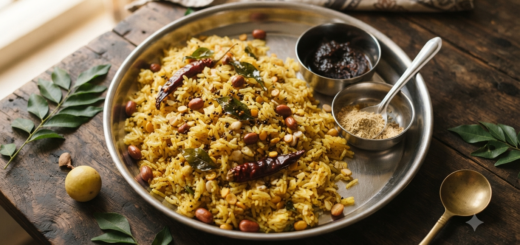
Homemade bisi bele bath prepared with cooked rice, toor dal, mixed vegetables, tamarind and aromatic Karnataka-style spices.
Karnataka Tourism describes bisi bele bath as a combination of rice, lentils, vegetables and a special spice blend. That source supports the dish’s basic Karnataka identity. However, it does not establish a royal-origin story or validate this exact shortcut method.
This page therefore treats the cooked-rice version as a practical home variation. For that reason, this bisibelebath with cooked rice method does not claim official Tourism status.
Bisibelebath with Cooked Rice at a Glance
This batch starts with 3 cups of already cooked rice and 1/2 cup of dry toor dal. It makes about four generous servings, depending on how much water you add at the end. Keep the final texture loose and spoonable because rice and dal continue to absorb liquid after you switch off the heat.
| Ingredient or step | Starting amount | Why it matters |
|---|---|---|
| Cooked rice | 3 cups | Add near the end so it stays soft, not pasty |
| Toor dal | 1/2 cup dry | Creates the creamy base |
| Mixed vegetables | 1 1/2 cups | Adds body, sweetness and texture |
| Bisi bele bath masala | 2 tbsp to start | Add more only after tasting |
| Tamarind | 1 to 1 1/2 tbsp thick extract | Provides tang; strength varies by product |
| Finishing hot water | 1 cup to start | Controls the final consistency |
These amounts are starting ratios, not a claim that this batch was kitchen-tested. Masala strength, tamarind concentration and rice moisture vary, so adjust after tasting.
Ingredients for Bisibelebath with Cooked Rice
Use soft short-grain rice if you have it, since it blends easily with dal. Sona masoori works well, but you can use another cooked white rice too. Cold rice from the refrigerator is fine only when you cooled it promptly and kept it chilled. In bisibelebath with cooked rice, the rice is a finishing ingredient, so its storage history matters as much as its texture.
- 3 cups cooked rice, preferably sona masoori or another soft short-grain rice
- 1/2 cup toor dal, rinsed
- 1/2 teaspoon turmeric powder
- 1 1/2 cups mixed vegetables, such as carrot, French beans, peas and potato
- 1 small onion, sliced, optional
- 1 small tomato, chopped, optional
- 2 tablespoons bisi bele bath masala powder, plus more after tasting if needed
- 1 to 1 1/2 tablespoons thick tamarind extract, depending on concentration
- 1 to 2 teaspoons grated jaggery, optional
- Salt to taste
- 2 tablespoons ghee or neutral cooking oil, divided
- 1 teaspoon mustard seeds
- 8 to 10 curry leaves
- 2 dried red chillies
- 1/4 teaspoon asafoetida
- 8 to 10 cashews, optional
- 2 cups water for the dal
- About 3/4 cup water for the vegetables
- About 1 to 1 1/2 cups hot water for final adjustment
If you make your own spice mix, use the Bhimas Cook bisibelebath powder recipe. If you use a packaged powder, begin with less because chilli, salt and roasted-spice intensity vary by brand.
How to Make Bisibelebath with Cooked Rice
The main goal is to finish the dal and vegetables before the cooked rice enters the pan. That order matters because the rice has already absorbed its cooking water. If it simmers for too long, it can lose structure while the dal is still firm.
- Cook the dal until very soft. Add the rinsed toor dal, turmeric and 2 cups water to a pressure cooker. Cook until the dal mashes easily with a spoon. A stovetop cooker may take several whistles, but texture is a better guide than whistle count because cookers and heat levels differ.
- Cook the vegetables. Put the mixed vegetables in a heavy pan with about 3/4 cup water. Cover and simmer until nearly tender. Add onion and tomato if you use them, then continue until everything is soft enough to eat.
- Build the sour-spicy base. Stir in 2 tablespoons masala, 1 tablespoon tamarind extract, jaggery and salt. Simmer for an estimated 3–5 minutes, until the tamarind loses its raw edge and the spice powder disperses. This range is a cooking estimate, not a kitchen-tested time.
- Add the dal. Stir the mashed dal into the vegetables. If the mixture is already very thick, add a small splash of hot water and return it to a gentle simmer.
Finish Bisibelebath with Cooked Rice Without Overcooking It
Once the dal and vegetables are ready, the final stage moves quickly. Keep the heat low because bisibelebath with cooked rice needs only enough simmering time to blend the flavours and heat the rice through.
- Fold in the cooked rice. Break up cold clumps first, then add the rice gently. Start with about 1 cup hot water and fold rather than beat the mixture.
- Simmer briefly. Cook on low heat for an estimated 5–8 minutes, stirring from the bottom so the thick mixture does not catch. This range has not been kitchen-tested; use thorough heating and the finished texture as your guides. Add more hot water in small amounts if the pot tightens.
- Finish with tempering. Heat the remaining ghee or oil, crackle the mustard seeds, then add cashews, curry leaves, dried chillies and asafoetida. Pour the hot tempering over the finished dish and stir once.
For a version that starts from raw rice instead, use the Karnataka-style bisibelebath method. Keeping the two methods separate avoids the common mistake of making already cooked rice go through a full raw-rice cooking cycle again.
Why the Cooked Rice Goes in Near the End
Cooked rice needs seasoning and reheating, not another full cooking stage. Adding it late also makes water control easier because you can see how much liquid the cooked grains actually need. Fresh rice may need less finishing water, while chilled or slightly dry rice may need more.
Do not cook the rice again from scratch, since the grains are already cooked. Simmer only long enough to combine the flavours and heat the dish through.
How Much Water Should You Add?
There is no single finishing-water number that works for every batch because cooked rice can be fluffy, soft, dry or chilled. Start with 1 cup of hot water after adding the rice. Then add another 1/4 to 1/2 cup only if the mixture stays too thick. This staged approach keeps bisibelebath with cooked rice easier to control than pouring in a large amount at once.
| Rice condition | Starting water | Adjustment |
|---|---|---|
| Fresh and soft | About 3/4 to 1 cup | Add only if it thickens quickly |
| Cold from refrigerator | About 1 cup | Add more after the rice loosens |
| Dry or firm | About 1 1/4 cups | Cover briefly, then reassess |
| Very soft | About 3/4 cup | Use gentle folding and a short simmer |
Stop when the dish looks slightly looser than you want on the plate. Bisi bele bath thickens as it stands, so a pot that looks perfect on the stove may become too stiff ten minutes later. Keep a kettle of hot water ready for the final correction.
Bisibelebath with Cooked Rice: Balance the Masala Carefully
Bisi bele bath should taste tangy, warm and gently sweet rather than sharply sour. Start with 2 tablespoons of masala and 1 tablespoon of thick tamarind extract. Taste only after the dal and rice are combined, then decide whether the pot needs more spice or sourness.
Packaged masalas can differ a lot, so a fixed “3 tablespoons for every batch” rule is less useful than staged seasoning. The same applies to tamarind. A concentrated paste can be much stronger than a fresh homemade extract, so add it gradually.
If you prefer a packaged shortcut, the readymade bisi bele bath powder method explains how to adjust around commercial blends.
What to Do When the Texture or Flavour Goes Wrong
Most problems are easier to fix when you change one thing at a time. Add water first for thickness, salt first for dull flavour, and only then change the masala or tamarind. If you adjust everything together, it becomes hard to tell what actually improved the dish.
| Problem | Likely cause | Best first fix |
|---|---|---|
| Too thick | Rice and dal absorbed liquid | Add hot water gradually |
| Too thin | Too much finishing water | Simmer uncovered briefly |
| Too sour | Strong tamarind | Add a little jaggery, then dilute if needed |
| Too spicy | Strong masala or chillies | Add more rice, dal or hot water |
| Flat flavour | Low salt or weak masala | Correct salt before adding more powder |
| Pasty rice | Over-stirring or long simmer | Fold gently and shorten stove time |
Bisibelebath with Cooked Rice: Leftover Rice Safety
Leftover rice can be used for bisibelebath, but only when it has been cooled and stored safely. According to FoodSafety.gov’s food-poisoning prevention guidance, cooked food that needs storage should be refrigerated promptly and kept at 4°C (40°F) or below. This is FoodSafety.gov guidance, not a temperature recommendation attributed here to FSSAI.
Rice deserves particular care because Bacillus cereus can cause foodborne illness. FoodSafety.gov specifically identifies rice and leftovers that have sat too long at room temperature as potential sources of this bacterium. It recommends using wide, shallow containers and refrigerating cooked food as soon as possible.
FoodSafety.gov also advises discarding perishable food left at room temperature for more than two hours. If the surrounding temperature exceeds 32°C (90°F), the recommended limit falls to one hour. This is particularly relevant in hot Indian kitchens, where cooked rice may cool slowly on the counter.
- Refrigerate promptly: Transfer leftover cooked rice into shallow containers and refrigerate it as soon as possible.
- Keep rice cold: Maintain a refrigerator temperature of 4°C (40°F) or below, following FoodSafety.gov’s cold food storage guidance.
- Follow the two-hour rule: Discard cooked rice left at room temperature beyond two hours, or beyond one hour when temperatures exceed 32°C.
- Check storage history: Do not assume that leftover rice is safe simply because it looks and smells normal.
- Reheat thoroughly: Heat leftovers throughout to 74°C (165°F), following FoodSafety.gov’s reheating advice.
- Avoid repeated reheating: Reheat only the amount you plan to eat and keep the remaining portion safely refrigerated.
Proper reheating does not guarantee that rice stored unsafely will become safe again. Bacillus cereus can produce a heat-stable toxin, so extra boiling cannot reliably correct improper storage. When the rice has spent too long at room temperature or its storage history is uncertain, discard it.
Which Vegetables Work Best?
Carrot, French beans, green peas and potato are easy choices because they suit the soft rice-and-dal texture. Cut firm vegetables into small, even pieces so they finish before the rice goes in. If you use drumstick, give it longer; if you use capsicum, add it later so it keeps some shape.
Karnataka Tourism’s South Karnataka food trail describes bisi bele bath as a rice, lentil and vegetable dish with a special spice blend. That is the limit of the attribution used here. The source is not used to claim one mandatory vegetable list, one royal origin, or one official recipe.
Cooked-Rice Bisibelebath Tips That Matter Most
Bisibelebath with cooked rice works best when you protect the cooked rice from unnecessary handling. Make the dal completely soft first, and keep hot water nearby because cold water slows the simmer. Taste in stages, since salt can make a weak-looking spice blend suddenly taste more complete.
- Keep the rice whole until the final mixing stage.
- Use a heavy-bottomed pan because thick dal and rice can catch quickly.
- Fold from the bottom instead of whisking or beating.
- Add tamarind after the dal has softened.
- Use hot water for consistency corrections.
- Add the tempering at the end so the curry-leaf and ghee aroma stays clear.
- Serve the dish a little loose because it thickens while standing.
Can You Make It Without Onion or Garlic?
Yes. Onion is optional in this method, and garlic is not required. Skip the onion, then rely on the vegetables, tamarind, spice blend and mustard-curry-leaf tempering for flavour.
If you use a packaged masala, check its label because formulas vary. This matters for people avoiding onion, garlic or other specific ingredients rather than simply adjusting flavour.
Before You Serve
The best bisibelebath with cooked rice treats cooked rice as the final major ingredient. It does not need another full cooking cycle. Make the dal soft and cook the vegetables through. Then balance the tamarind and masala before folding in the rice with enough hot water to keep it spoonable.
Serve it hot with papad, boondi, potato chips, raita or a small spoon of ghee. If you started with refrigerated rice, food-safety handling matters more than avoiding waste, so discard any batch whose storage history is uncertain.
Frequently Asked Questions
Can I make bisibelebath with already cooked rice?
Yes. Cook the dal and vegetables first, simmer the tamarind-masala base, then fold in the cooked rice near the end. That gives the flavours time to combine without putting already cooked rice through a second full cooking cycle.
Can I use leftover rice for bisibelebath with cooked rice?
Yes, if the rice was cooled and refrigerated promptly. FoodSafety.gov recommends storing cold food at 4°C or below and refrigerating cooked food promptly. Discard rice left at room temperature beyond two hours, or one hour in temperatures above 32°C.
How much water should I add to cooked rice?
Start with about 1 cup of hot water for 3 cups of cooked rice, then adjust in small amounts. Chilled or dry rice may need more, while very soft fresh rice may need less.
How much bisibelebath powder should I use?
Start with 2 tablespoons for this batch and taste after the dal and rice are combined. Add more only if needed because commercial powders vary in chilli, salt and spice intensity.
Which rice is best for this method?
Sona masoori or another soft short-grain white rice gives an easy, cohesive texture. Basmati can work, but its longer grains create a different result and can stay more separate in the finished dish.
Why did my bisibelebath become too sour?
The tamarind was probably stronger than expected. Add a little jaggery first, then dilute with more dal, rice or hot water if necessary. Do not add extra masala until the sourness is under control.
Can I prepare bisibelebath ahead of time?
Yes, but keep the pot looser than usual because rice and dal thicken as they stand. Refrigerate leftovers promptly at 4°C or below. Reheat the portion you plan to eat thoroughly to 74°C before serving.
What should I serve with bisibelebath?
Papad, boondi, potato chips, raita and a small spoon of ghee all work well. Crisp sides are especially useful because they contrast with the soft, spoonable rice-and-dal texture.