Jaggery Paal Payasam Recipe: Easy South Indian Dessert
This jaggery paal payasam recipe turns milk, rice and bellam into a creamy South Indian dessert with a deep caramel note, but the order of cooking matters. The safest home method is to cook the rice fully in milk, prepare the jaggery separately, then combine both after the pan comes off the flame. That simple change gives you a smoother payasam and lowers the chance of the milk splitting.
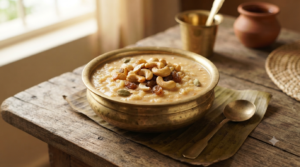
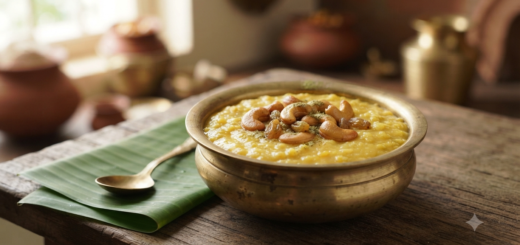
A creamy jaggery paal payasam made with slow-cooked rice, milk, cardamom, roasted cashews and raisins.
This version keeps the ingredient list short and the flavour traditional. It also explains the two problems that cause most failed batches: scorched milk and jaggery added while the milk is still boiling.
Jaggery Paal Payasam Recipe at a Glance
- Prep time: about 15 minutes
- Cook time: about 45 to 55 minutes
- Servings: 4 generous bowls
- Main ingredients: full-fat milk, raw rice and jaggery
- Best rice: Sona Masuri, Ponni or another short- to medium-grain raw rice
- Key technique: add cooled jaggery syrup only after the milk-rice mixture leaves the flame
- Texture: pourable when warm and naturally thicker after cooling
The key rule is simple: finish cooking the milk and rice before jaggery enters the pan. Jaggery varies by source and processing, so some batches behave well in hot milk while others make the mixture grainy or split.
Ingredients for This Jaggery Paal Payasam Recipe
These quantities give a creamy payasam without making it heavy. Start with the lower jaggery amount if you prefer moderate sweetness, because different jaggery blocks can taste noticeably different.
| Ingredient | Quantity | Why it is used |
|---|---|---|
| Full-fat milk | 1 litre | Creates the creamy base |
| Raw rice | 3 tbsp, about 45 g | Softens and thickens the milk naturally |
| Jaggery | 70 to 100 g | Adds sweetness and caramel notes |
| Water | 3 tbsp | Helps dissolve the jaggery |
| Cardamom powder | 1/2 tsp | Adds warm aroma |
| Ghee | 1 tbsp | Roasts the garnish |
| Cashews | 10 | Optional garnish |
| Raisins | 10 | Optional garnish |
Use clean jaggery with a flavour you enjoy. Food Safety and Standards Authority of India standards define cane jaggery as a sugar-rich product, so choose it for taste rather than treating it as a health food. The official FSSAI sweetening-agent standards set quality requirements for cane jaggery.
Which rice works best?
Short- or medium-grain raw rice works best because it softens easily and releases enough starch to thicken the milk. Sona Masuri and Ponni are practical everyday choices, while basmati gives a more separate-grain texture.
Rinse the rice until the water looks mostly clear, then soak it for 10 to 15 minutes. Soaking is optional, but it helps the grains cook more evenly and slightly shortens the simmering time.
Jaggery Paal Payasam Recipe: How to Avoid Curdling
The most reliable sequence is to cook the rice completely in milk, dissolve the jaggery separately, cool the syrup slightly, and combine the two off the heat. Read all the steps once before starting, because the last five minutes determine the final texture.
- Rinse and soak the rice. Wash 3 tablespoons of raw rice well. Soak it for 10 to 15 minutes, then drain.
- Heat the milk gently. Pour 1 litre of full-fat milk into a heavy-bottomed pan. Bring it to a gentle boil over medium heat while stirring the base now and then.
- Cook the rice slowly. Add the drained rice and reduce the heat. Simmer for about 25 to 35 minutes until the grains are very soft.
- Stir more often near the end. Milk catches easily once it reduces, so scrape the base and lower corners of the pan with a flat spoon.
- Make the jaggery syrup separately. Add 70 to 100 g jaggery and 3 tablespoons water to a small pan. Warm it on low heat only until the jaggery dissolves.
- Strain and cool the syrup. Pass it through a fine strainer if you see grit. Leave the syrup until it is warm rather than piping hot.
Finish the Jaggery Paal Payasam Recipe Off the Heat
This off-heat step makes the jaggery paal payasam recipe much more dependable. The rice should already be completely soft, while the jaggery syrup should be warm rather than boiling.
- Adjust the milk-rice texture. Lightly mash a spoonful of cooked rice against the pan if you want a creamier finish. Then switch off the flame.
- Let the pan settle. Wait about 5 to 10 minutes. The mixture should stay hot, but it should no longer bubble actively.
- Add jaggery slowly. Pour in the cooled syrup while stirring. Add cardamom and mix until the colour looks even.
- Garnish. Fry the cashews in ghee until golden, then add the raisins. Pour the garnish over the payasam.
- Rest before serving. Leave the finished dessert for about 10 minutes. The rice will continue to absorb milk as it stands.
Do not bring the finished payasam back to a hard boil after adding jaggery. If you want it hotter, warm it very gently for a short time while stirring continuously.
Why Can Jaggery Make Milk Split?
Milk proteins become less stable when strong heat combines with acidic or mineral-rich ingredients. Jaggery composition can vary, so one batch may blend smoothly while another makes very hot milk look grainy.
That is why the off-heat method is useful. It does not depend on guessing how a particular jaggery block will behave, and it also protects the milk from unnecessary extra boiling.
What if the milk still splits?
If you notice tiny grains as soon as the jaggery goes in, stop heating the pan. Whisking can make the texture look smoother, but it will not always reverse a fully split mixture.
For the next batch, cool both the milk-rice base and the jaggery syrup a little longer. Also avoid sour milk, and do not add extra acidic flavourings such as citrus.
Common Problems and Quick Fixes
| Problem | Likely reason | Best fix |
|---|---|---|
| Milk curdles after jaggery | The mixture was too hot | Add cooled syrup after switching off the flame |
| Payasam is too thin | Rice needs more cooking | Cook the milk-rice base longer before adding jaggery |
| Payasam becomes too thick | Rice keeps absorbing liquid | Loosen with a little warm milk before serving |
| Bottom tastes burnt | Milk caught on the pan | Use a heavy pan and stir the base more often |
| Jaggery feels gritty | Unfiltered particles | Dissolve and strain the syrup first |
| Dessert is too sweet | Too much jaggery | Start at 70 g and add more only if needed |
One useful habit is to stop cooking while the milk-rice mixture still looks slightly loose. Rice starch keeps thickening as the dessert cools, so a perfectly thick pot on the stove can become heavy by serving time.
Does Jaggery Make This Payasam Healthier?
Jaggery gives the dessert a deeper flavour and colour, but it remains a concentrated source of sugar. It can contain small amounts of minerals, yet that does not make a jaggery dessert low-sugar or suitable for unlimited portions.
The World Health Organization guideline on sugars intake recommends limiting free sugars as part of a healthy diet. For this recipe, jaggery is best chosen for flavour and tradition rather than as a claim of major health advantage.
Can I reduce the jaggery?
Yes. Start with 70 g if you prefer a lightly sweet dessert, especially when serving it after a rich meal. Taste the syrup before adding more because sweetness varies between brands and batches.
If you are cooking for someone who needs to control sugar intake, portion size matters more than calling the sweetener natural. Follow individual medical or dietary advice where needed.
Texture, Flavour and Serving Tips
A good jaggery paal payasam recipe should produce a dessert that pours easily from a ladle while warm. The rice should be soft enough to blend into the milk, while a few visible grains still give the payasam character.
- Serve it warm when you want the strongest cardamom aroma.
- Serve it chilled if you prefer a thicker, almost custard-like texture.
- Use roasted cashews for crunch, but keep the garnish simple for naivedyam if that matches your family custom.
- Add cardamom carefully because too much can hide the jaggery flavour.
- Skip saffron unless you genuinely enjoy the combination; it is not needed for a good result.
If you prefer a sugar-based version with a paler colour, see the Kerala-style pal payasam recipe. For a faster milk-and-rice version, the instant pal payasam method uses a different cooking goal.
Jaggery Paal Payasam Recipe Storage and Reheating
Cool leftovers promptly and refrigerate them in a clean, covered container. The United States Department of Agriculture advises refrigerating perishable food within two hours and using most cooked leftovers within three to four days. See the USDA food-safety guidance for the general rule.
For best texture, use this milk dessert within about two to three days. Reheat only the portion you need, keep the flame low, and add a small splash of milk because chilled rice payasam thickens considerably.
Can I freeze it?
You can freeze cooked payasam, but the texture may become less smooth after thawing. Rice continues to absorb liquid, while dairy can look slightly grainy after freezing and reheating.
If texture matters, refrigeration is the better option. When you do freeze it, thaw the portion in the refrigerator and then reheat it gently.
Variations for This Jaggery Paal Payasam Recipe
The basic jaggery paal payasam recipe is flexible once you understand the heat sequence. You can change the garnish or milk, but each substitution changes the flavour and sometimes the texture.
- No ghee: skip the fried garnish, or dry-roast nuts lightly.
- No raisins: leave them out and use only cashews.
- More cardamom: add only a small extra pinch so it does not dominate.
- Coconut milk: use it for a dairy-free variation, but treat it as a different style of payasam.
- Cooked rice: use it only for a shortcut version because raw rice cooked directly in milk gives a creamier result.
For a different jaggery dessert made with rice-flour noodles, try the palathalikalu recipe with jaggery. It has a separate texture and festival identity, so it serves a different search intent from this rice payasam.
What This Jaggery Paal Payasam Recipe Fixes
The biggest improvement in this jaggery paal payasam recipe is the order of operations. Older methods may add jaggery while the milk is still simmering, but that extra heat can make the final texture less predictable.
This method also avoids calling jaggery automatically healthier than sugar. It gives clear storage limits, explains why the dessert thickens after cooling, and includes fixes for curdling, scorching, grit and excessive sweetness.
Final Notes for This Jaggery Paal Payasam Recipe
This jaggery paal payasam recipe becomes easy once you control the heat. Cook the rice until fully soft, keep the milk from scorching, and add the jaggery only after the pan leaves the flame.
If the payasam looks slightly thin while hot, do not rush to reduce it further. Let it rest for 10 minutes because the rice continues to absorb liquid, and adjust only after you see the final texture.
Frequently Asked Questions
Can I add jaggery directly to hot milk?
It is safer not to add jaggery to actively boiling milk. Prepare a small jaggery syrup, cool it until warm, switch off the milk-rice mixture, and then combine them while stirring.
What is the best jaggery for paal payasam?
Use clean cane jaggery with a flavour you enjoy. Darker jaggery usually gives a deeper caramel note and colour, while lighter jaggery keeps the dessert milder.
Can I make this jaggery paal payasam recipe without ghee?
Yes. Ghee is mainly used for roasting cashews and raisins, so the payasam itself does not depend on it. Skip the garnish or dry-roast the nuts lightly.
Can I use coconut milk instead of dairy milk?
Yes, but the result becomes a different style of payasam with a stronger coconut flavour. Add thick coconut milk near the end and avoid vigorous boiling after it goes in.
Why does paal payasam become thick after cooling?
Cooked rice keeps absorbing liquid while the starch firms as the temperature drops. Keep the payasam slightly looser than your final target while it is hot, then adjust with warm milk before serving.
Can I use cooked leftover rice?
You can, but the flavour and texture will differ because the rice has already absorbed water. Fresh raw rice cooked directly in milk gives a creamier and more integrated result.
How long does jaggery payasam keep in the refrigerator?
For best quality, use refrigerated payasam within two to three days. General USDA guidance allows many cooked leftovers for three to four days when chilled promptly, but discard any portion with off smells, sourness or visible spoilage.
Is this jaggery paal payasam recipe the same as sugar paal payasam?
No. The base ingredients are similar, but jaggery changes the colour, aroma and handling. Sugar can usually simmer directly with milk, while jaggery gives more predictable results when you add it after reducing the heat.