Pistachio Besan Ladoo: Untested Diwali Recipe Trial
Pistachio besan ladoo is a festive idea for Diwali: slow-roasted gram flour, ghee, powdered sugar and pistachios in one small sweet. Recipe status: untested kitchen trial. The quantities and steps below are a proposed starting batch, not a recipe we have cooked, tasted or confirmed to work. Use the roasting cues and trial notes before deciding whether to prepare a larger batch for guests.
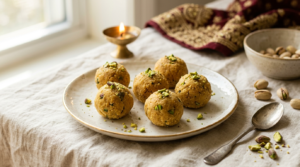
A visual concept for pistachio besan ladoo with golden gram-flour sweets and chopped pistachios. The recipe has not yet been kitchen-tested.
The appeal is simple. Classic besan ladoo already has a toasted, nutty flavour, while pistachios could add a distinct taste and a little bite. The tricky part is balance: extra nuts may change how the mixture binds, so a familiar ladoo formula cannot promise the same results here.
Pistachio Besan Ladoo at a Glance
- Recipe type: experimental Indian festive sweet, without a sugar syrup.
- Testing status: not prepared or taste-tested by this publication.
- Proposed batch: around 16 small ladoos; actual yield may vary.
- Proposed roasting window: roughly 15–25 minutes, depending on the pan and flame.
- Key technique: roast the besan gently, then cool before mixing in sugar and pistachios.
- Contains: pistachios (tree nuts) and ghee (milk-derived).
These figures describe the plan for a first test, not verified results. In particular, do not treat the proposed yield, roasting time or storage approach as a guarantee.
Why Try Pistachio Besan Ladoo for Diwali?
Most besan ladoo recipes use nuts as a garnish or a small addition. This trial gives pistachios a bigger role by dividing them between a fine crumb and chopped pieces. The fine part should spread the flavour through the mixture, while the chopped part may offer contrast.
That approach also creates a new challenge. Ground nuts bring their own oil, so the dough might feel softer than a plain besan mixture. Therefore, the first batch is deliberately modest. It should reveal whether the nut level needs adjustment before any festive gifting.
Think of this as a test kitchen brief rather than a promised festive success. The practical goal is to discover the right balance of roasted besan, pistachio flavour and easy shaping.
Pistachio Besan Ladoo Ingredients for the First Trial
The table gives weights for a proposed small batch. Weights are preferable to loosely filled cups because besan and chopped nuts settle differently. Keep a little spare ghee nearby, but do not add it unless the cooled mixture actually needs help binding.
| Ingredient | Proposed amount | Purpose |
|---|---|---|
| Besan (gram flour) | 200 g | Main roasted base |
| Ghee | 110 g | Roasting fat and binder |
| Unsalted, shelled pistachios | 80 g | 50 g fine crumb; 30 g chopped |
| Powdered sugar or finely ground boora | 125 g | Sweetness |
| Ground green cardamom | 1/2 teaspoon | Warm aroma |
| Fine salt | A small pinch | Balances sweetness |
| Extra ghee | Up to 1–2 teaspoons, only if needed | Possible binding adjustment |
The 200:110:125 besan–ghee–sugar base sits within the broad range seen in established besan ladoo methods. However, the extra 80 g of pistachios makes this a new formulation. No measured outcome has yet confirmed these proportions.
Choose the Besan and Pistachios Carefully
Use fresh besan with a clean smell. Coarse ladoo besan may give a grainier sweet, while fine besan could produce a smoother bite. Both are possible trial choices, but do not switch flour types halfway through the same test.
Choose unsalted pistachios without a stale or paint-like smell. Shelled nuts save time, and their natural colour should be enough for a garnish. Avoid green food colouring during the first trial because it would hide the natural result.
Also check the ghee and powdered sugar before starting. Lumpy sugar can create sweet pockets, so break up or sieve clumps. If you use sweetened or salted pistachios, the proposed amounts no longer describe the same trial.
How to Prepare Pistachios Without Making Nut Butter
Divide the pistachios into two portions. Pulse 50 g briefly in a dry grinder until they resemble coarse sand. Stop between pulses, since long grinding may release oil and turn them into a paste. Chop the remaining 30 g with a knife.
This split is the experiment’s main flavour decision. Pistachio dust should mix into the ladoo, while small pieces remain visible. If the nuts are already toasted, note that fact in the test log. Their flavour may differ from raw, unsalted pistachios.
Keep the prepared nuts aside while roasting the flour. Adding them too early risks over-toasting the small pieces, especially during a long besan roast. This split gives pistachio besan ladoo more nut flavour than garnish alone.
Equipment and Batch Planning
Use a heavy-bottomed kadai or a wide, thick pan, plus a sturdy flat spatula. A kitchen scale helps track the ratio, while a broad steel plate lets the hot mixture cool more evenly. Keep a clean bowl ready for the sugar and nuts.
Plan enough time for slow roasting, cooling and shaping. The entire process could take roughly an hour or longer, but it has not been timed for this formula. Start well before guests arrive rather than treating it as a last-minute sweet.
How to Make Pistachio Besan Ladoo: Proposed Method
This pistachio besan ladoo method follows the main principles of traditional besan ladoo: cook the flour thoroughly, cool it, then add sugar. The pistachio portion is an untested variation. Treat each step as a trial instruction and watch the mixture rather than following minutes blindly.
- Prepare the ingredients. Weigh everything, grind 50 g pistachios briefly and chop the rest. Sieve the sugar if it has clumps.
- Warm the ghee. Put 110 g ghee in a heavy kadai over low heat. Let it melt gently without smoking.
- Add the besan. Stir in 200 g gram flour and break up any dry pockets. Keep scraping the base and corners.
- Roast slowly. Continue stirring over low heat until the raw flour smell gives way to a deep toasted aroma. The colour should turn more golden, without dark brown flecks.
- Remove from heat. Move the roasted mixture to a broad heat-safe plate or bowl. Let it cool until warm rather than hot.
- Mix the additions. Work in the sugar, cardamom, salt, pistachio crumb and chopped pistachios. Combine evenly without overworking.
- Test one ladoo. Compress a small portion in your palm, then roll it. Check whether it holds after a short rest.
- Shape the rest. If the first piece holds, form small ladoos. Keep the batch covered as it cools, then record the result.
Do not use unroasted besan as an edible shortcut if the mixture feels loose. Raw flour needs proper cooking, and adding it at the end would alter both safety and flavour.
Roasting Besan: Watch the Pan, Not Just the Clock
Traditional recipes differ in their exact roasting method and duration. Some start by dry-roasting flour; others cook it directly with ghee. This trial uses the ghee-first approach to keep the ingredient sequence simple.
The mixture may initially look thick and clumpy. Later, as the flour cooks, it can become looser and more fragrant. Scrape the base often because a thin layer of besan can scorch even when the rest looks pale.
Stop at a pleasant toasted aroma and an even golden colour, not at a fixed minute. A bitter smell, smoke or dark flecks suggest overheating. If that happens, discard the burnt batch rather than masking it with pistachios or sugar. Pistachio besan ladoo still needs a fully cooked flour base.
Recipes from Dassana’s Veg Recipes and Raks Kitchen describe useful roasting cues and different approaches. Neither source tests this exact pistachio ratio.
Why Sugar Goes in After Cooling
Powdered sugar belongs in the warm, cooked mixture rather than the hot kadai. If sugar melts into a very hot base, the final texture may turn sticky or uneven. Cooling first also makes handling safer.
However, the mixture should not become so cold and hard that it resists pressing. Stir it occasionally as it cools, then test a small pinch carefully. You want it comfortable to handle, with no strong heat left in the centre.
Mix the sugar thoroughly so every bite has a similar sweetness. After that, add the pistachio portions and combine them gently. Note whether the ground nuts change the texture or leave oily streaks.
Shaping Pistachio Besan Ladoo Without Forcing It
The first shaping test is more useful than trying to finish all 16 sweets immediately. Take one small portion and squeeze it firmly. Then roll it with gentle pressure and place it on a clean plate.
If it holds its shape, continue with the remaining mixture. If it crumbles, give the mixture another firm press before adding anything. A tiny amount of extra warm ghee may help, but make additions gradually and record them.
If the mixture looks oily or spreads, stop adding fat. Let it cool a little further, then try again. Avoid pouring in extra besan because raw flour would need separate cooking. The batch’s final size may vary if you make these adjustments.
Pistachio Besan Ladoo Trial Scorecard
For this pistachio besan ladoo experiment, the most useful outcome is a repeatable set of observations. A sweet that looks round immediately may still break later. Therefore, check it after shaping and again after resting.
| Test | What to observe | Record |
|---|---|---|
| Aroma | Toasted besan versus raw or burnt notes | Pass / adjust |
| Binding | Holds when lifted and gently pressed | Pass / adjust |
| Texture | Grainy, smooth, dry or oily | Describe |
| Sweetness | Besan and pistachio still noticeable | Low / right / high |
| Nut flavour | Distinct throughout, not only on top | Low / right / high |
| Later check | Shape after resting in its storage container | Pass / adjust |
A batch should not be called tested simply because it can be rolled. Taste, texture, consistency and safe handling all need checking. Record any changes in grams so the next trial has a clear starting point.
Troubleshooting a Failed First Batch
An experimental sweet may need a second attempt, especially when a new nut powder enters the formula. Start with the least disruptive fix. Never hide undercooked flour with extra sugar or fragrance.
| Problem | Likely cause | Next action |
|---|---|---|
| Raw flour smell | Besan under-roasted | Do not serve; correct roasting on a fresh trial |
| Bitter flavour | Flour or nuts scorched | Discard and restart on lower heat |
| Won’t hold shape | Dry mix or insufficient pressure | Compress first; trial a little ghee if needed |
| Oily or spreading | Mixture too warm or too much fat | Cool further; reduce ghee next trial |
| Too sweet | Sugar overpowers nuts | Reduce sugar slightly in the next batch |
| Pistachio taste weak | Too little fine nut crumb | Compare a higher nut share next trial |
For meaningful comparisons, change only one major variable at a time. If sugar, ghee and pistachio amounts all change, the next result will be hard to explain. Record any oily pistachio crumb while testing pistachio besan ladoo.
Should You Use Fine or Coarse Besan?
Coarse besan is worth trying if you enjoy a sandy, slightly grainy ladoo. Fine besan may blend more smoothly with the pistachio dust, although that remains a hypothesis for this recipe. The important point is to keep the flour type consistent.
For a fair trial, make the first batch with the flour already in your kitchen, provided it is fresh. Then repeat with another texture only if the initial result gives you a reason. Note the brand and whether the flour was fine or coarse.
Do not add semolina or another flour merely to imitate a grainy texture on the first attempt. Extra dry ingredients introduce another variable and may change the binding ratio. For a different flour-based ladoo, see Bhimascook’s ragi ladoo recipe.
Adjusting Sweetness and Pistachio Strength
The proposed 125 g of sugar aims for a sweet festive ladoo without making sugar the sole flavour. Yet this has not been taste-tested. Families who prefer a less sweet mithai can test a smaller sugar amount in their next batch.
Likewise, the 80 g of pistachios is an intentional experiment rather than a known ideal ratio. Too much pistachio crumb could make the mixture richer or less cohesive. For a second trial, change the pistachios in small measured steps.
Keep cardamom restrained at first. Its scent can compete with pistachios, especially if the nuts have a gentle flavour. A useful tasting question is whether you can identify both roasted besan and pistachio without being told what is inside.
Diwali Gifting, Packing and Storage Precautions
Do not promise a shelf life for this specific pistachio variation. The Food Safety and Standards Authority of India (FSSAI) guidance on traditional sweets gives illustrative periods for different sweets. It lists ordinary besan ladoo separately from several ghee-and-dry-fruit sweets, showing why one figure cannot cover every recipe.
For an untested home batch, prepare close to the day of serving, use clean dry utensils and cool completely before packing. Refrigerate in a clean airtight box as a cautious choice, especially in warm or humid weather. No validated expiry period exists for this proposed formula.
Keep out any condensation, moisture or damp garnish. Also avoid adding milk, cream or khoya to rescue a dry mix, because that changes its safety profile. For pistachio besan ladoo, never copy a plain sweet’s expiry date onto a gift box. If you want gifting quantities, run and evaluate a small trial before scaling up.
FSSAI’s Food Safety at Home guidance stresses clean handling and safe storage. Follow those principles even for sweets that contain no fresh milk.
Allergens and Safe Serving
This recipe contains pistachios and ghee. Pistachios are tree nuts, and ghee comes from milk, so it is not suitable for people who must avoid those ingredients. Check every package for additional allergens or possible cross-contact.
The US Food and Drug Administration’s food allergy guidance explains why clear ingredient identification matters. When sharing homemade sweets, tell guests exactly what you used. Do not describe this version as nut-free, dairy-free or allergen-free.
Young children should receive age-appropriate portions, since hard nut pieces can pose a choking risk. Chop pistachios finely and supervise eating where appropriate.
What the First Kitchen Test Must Confirm
The recipe needs a real cooking session before any claim of proven results. Begin by recording the besan brand, pan size, approximate flame setting and exact ingredient weights. Note the roasting colour and aroma rather than relying on a timer alone.
After mixing, weigh a sample ladoo and photograph the texture in natural light. Taste only after the besan has cooked fully and the mixture has cooled. Then record sweetness, pistachio strength and whether the ladoo stays intact.
Repeat the test if you change the nut type, sugar or ghee. A larger gifting batch also needs its own evaluation because a crowded pan changes roasting behaviour. Once a complete batch has passed tasting and handling checks, the page can report actual findings.
Editorial status until then: proposed recipe, not kitchen-tested; no guaranteed yield, texture, timing or shelf life.
Before You Prepare a Festive Batch
Pistachio besan ladoo could offer a distinct spin on a familiar Diwali sweet, but the first batch must earn that description. Keep the flour roast slow, add sugar only after cooling and test the binding before rolling every piece. Record the results, then adjust one ingredient at a time.
Until the kitchen trial is complete, this page remains a transparent recipe proposal. It is a starting point for careful home cooks, not a verified promise of perfect ladoos. For a broader festive menu, browse Bhimascook’s Diwali special sweets recipes.
Frequently Asked Questions
Can I make pistachio besan ladoo without testing this recipe first?
You can try the proposed method at home, but it has not been kitchen-tested by this publication. Start with the small batch, follow the roasting cues and record the outcome. Do not rely on an assumed yield or promise the sweets to guests before checking them.
Can I use roasted pistachios instead of raw ones?
Yes, unsalted roasted pistachios are an option for a trial. However, they may taste stronger than raw nuts, so the result could differ. Note which type you use, and avoid roasting them further in the besan mixture.
How long should besan roast for ladoo?
Plan for a gradual roast rather than a fixed number of minutes. The proposed range here is around 15–25 minutes, but pan thickness and heat matter. Stop only when the mixture smells properly toasted and no raw flour aroma remains.
Why does my besan ladoo crumble when I roll it?
A mixture may crumble because it is dry, too cool or not firmly compressed. Press one portion before changing the recipe. If needed, test a little extra warm ghee, but add it slowly and record the amount.
Should powdered sugar be added to hot besan?
No. Let the cooked besan cool until warm before mixing in powdered sugar. Very hot fat may melt the sugar and change the finished texture. Check the centre of the mixture, not only its surface.
Will these ladoos turn bright green?
Not necessarily. Besan becomes golden during roasting, so that colour may dominate the mixture. Pistachios may provide green flecks, especially when you keep some pieces chopped. The final colour has not yet been checked in a kitchen test.
How long can I store pistachio besan ladoo?
There is no verified storage period for this untested variation. Different sweets have different shelf lives, and extra nuts may affect quality. Make the batch near serving time, handle it cleanly and refrigerate in an airtight container.
Can I add milk to help the ladoos bind?
Avoid milk in this first trial because it changes the formula and may shorten safe storage. Try firm pressing before adjusting anything. If binding still fails, test a tiny measured amount of ghee rather than adding liquid.
Is this recipe suitable for people with nut or dairy allergies?
No. It contains pistachios and ghee, which introduce tree-nut and milk-derived ingredients. Tell anyone receiving the sweets exactly what the batch contains, and check packaged ingredients for cross-contact warnings.