Rasam Recipe Fiji Style: Easy Tangy Pepper Rasam Soup
This Rasam Recipe Fiji Style is the tangy, pepper-forward tamarind broth that Fiji-Indian families have simmered for generations. Yet it tastes nothing like a plain restaurant rasam. Because it carries more cracked black pepper, and because it leans hard on fresh curry leaves, the flavour is far bolder. It also skips the tomato and rasam powder that many South Indian versions use.
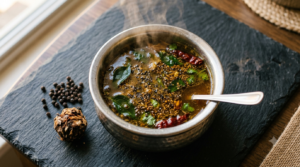
A steaming bowl of Rasam Recipe Fiji Style, a tangy tamarind-and-pepper broth topped with fresh curry leaves.
So the result is a thin, sour, warming soup. You can pour it over rice, mop it up with roti, or sip it straight from a cup. Below you get the exact measurements, eight timed steps, the local touches that make it Fijian, and the fixes for when it turns bitter.
Rasam Recipe Fiji Style at a Glance
- What it is: a thin tamarind-and-pepper broth, with no tomato and no ready-made rasam powder.
- Total time: about 45 minutes, and most of that is a hands-off simmer.
- Flavour profile: sour from tamarind, hot from cracked pepper, savoury from garlic and curry leaves.
- Serves: 4, over rice or beside a meat or vegetable dish.
- Diet: naturally vegan and gluten-free as written.
What Makes This Rasam Recipe Fiji Style Different
The short answer is history and pepper. Tamil indentured labourers carried rasam to Fiji from the 1830s onward under British rule. Then those families adapted it to what grew and sold in island markets.
Over the generations, the dish drifted away from the tomato-and-powder template of many mainland recipes. Instead, in its place came a leaner, hotter, tamarind-driven broth. That is the version islanders now simply call rasam.
So what does that mean at the stove? A true Rasam Recipe Fiji Style uses a heavy hand with cracked black pepper. Locally, that pepper is called golmirch. Moreover, the dish relies on fresh curry leaves for depth, rather than on a jar of spice mix.
Many Fijian-Indian cooks serve it beside meat curries as readily as beside a vegetable meal. That is a small but real departure from its purely vegetarian mainland roots. You can trace the shift through the wider Indo-Fijian community and its market-driven cooking.
Because the flavour rests on so few ingredients, freshness matters more here. Naturally, fresh tamarind is preferred where you can find it. Packaged tamarind still works fine when you can’t. That reliance on a few good ingredients is exactly why the technique below matters.
The good news is that this Rasam Recipe Fiji Style stays forgiving for beginners. Nothing needs precise timing beyond a gentle simmer. Instead, you taste, you adjust, and you serve. Once you learn the balance of sour and pepper, you can cook it from memory in under an hour.
🍲 Recipe Card
| Detail | Value |
|---|---|
| Prep Time | 15 minutes |
| Cook Time | 30 minutes |
| Total Time | 45 minutes |
| Servings | 4 |
| Difficulty | Easy |
| Cuisine | Fiji-Indian (South Indian origin) |
📝 Ingredients for Rasam Recipe Fiji Style (Exactly Measured)
First, these quantities make four servings. The measurements are precise, so beginners can follow along. Still, taste and adjust at the end, because tamarind sourness varies from batch to batch.
- 50 g tamarind pulp (a small lime-sized ball), soaked — roughly 2 tbsp paste
- 4 cups water (about 960 ml)
- 1 medium brown onion, finely chopped (about 100 g)
- 4 cloves garlic, crushed
- 1 tbsp cumin seeds (jeera)
- 1 tbsp crushed black pepper (golmirch)
- 4 sprigs fresh curry leaves
- 1 tbsp vegetable oil, or coconut oil for a more island flavour
- 1 tsp turmeric powder
- 1 tsp salt, to taste
- Optional: 1–2 small green chillies, deseeded if you want less heat
- Optional: ½ tsp sugar, only if the tamarind is very sour
Ingredient notes worth knowing. Fresh curry leaves are not optional here, since they carry most of the aroma. If you only have dried leaves, add a little extra to make up for the lost punch.
For the pepper, crack it coarsely instead of using fine powder. Coarse pepper releases its heat slowly as the broth simmers.
👩🍳 Step-By-Step Instructions With Timings
1. Soak the tamarind (5 mins)
Place the tamarind pulp in a small bowl. Pour in ½ cup (120 ml) hot water and let it soak for five minutes to soften. Then press it with your fingers to extract the juice.
Set the tangy liquid aside, because this is the sour backbone of the dish. If you are using tamarind paste instead, skip straight to mixing it with warm water.
2. Prep the spice base (5 mins)
Next, in a mortar or spice grinder, lightly crush the cumin seeds and black pepper together. You are not making a fine powder, so a rough crush is enough. This rough texture helps the spices release flavour slowly while cooking.
3. Heat the tempering (5 mins)
Then warm 1 tbsp oil in a medium pot over medium heat. Add the curry leaves and chopped onion. Sauté for two to three minutes, until the onion softens and turns slightly translucent. The curry leaves will crackle and perfume the oil.
4. Add the aromatics (3 mins)
Next, stir in the crushed garlic and the optional green chillies. Fry for another one to two minutes, until fragrant and lightly golden. Watch the garlic closely, since it can scorch quickly on medium heat.
5. Build the rasam base (5 mins)
Now reduce the heat to low. Add the turmeric powder, salt, and the crushed cumin-pepper mix. Stir for about 30 seconds to toast the spices gently. Keep the heat low here, because burnt spices turn the broth bitter.
6. Add the tamarind water (2 mins)
Pour in the tamarind water along with the remaining water, about 3½ cups (840 ml). Together, this becomes your liquid base. Raise the heat slightly to bring it to a gentle boil.
7. Simmer to develop flavour (10 mins)
Let the mixture simmer uncovered on a medium flame for eight to ten minutes. The aroma deepens with each minute as the pepper and curry leaves release their oils. Above all, you want it fragrant, not reduced to a thick sauce.
8. Final taste adjustment (2 mins)
Finally, taste the rasam and adjust the salt or pepper. If it is too sour, stir in the optional ½ tsp sugar to balance it. If you want more heat, add a pinch more cracked pepper. Serve it hot straight away.
🍽️ How to Serve Rasam Recipe Fiji Style
Traditionally, this Rasam Recipe Fiji Style is ladled over hot steamed rice. Typically, a small spoon of ghee or oil goes on top. In Fiji, many families serve it beside roti, or alongside a meat curry.
It also pairs with a simple vegetable dish such as boda, the long beans common in island kitchens. On cooler evenings, plenty of people skip the rice and drink it warm like a soup.
For a fuller South Indian spread, it sits well next to a sambar and steamed rice. The rasam’s thin, sour character is meant to cut through richer dishes on the plate.
Rasam Recipe Fiji Style Variations
Of course, the base recipe is only a starting point. Fiji-Indian home cooks swing this Rasam Recipe Fiji Style in several directions, depending on the meal.
- Coconut milk rasam: stir in ¼ cup coconut milk near the end for a softer, creamier island version.
- Tomato rasam: add one chopped tomato with the onion for a rounder, less sharp sourness.
- Dal rasam: whisk in ½ cup cooked, mashed toor dal for a heartier, thicker broth.
- Garlic-pepper rasam: double the garlic and pepper and skip the chillies, much like this garlic pepper rasam.
- No-garlic version: leave the garlic out entirely and lift the pepper slightly to keep the punch.
🔥 Pro Tips for Rasam Recipe Fiji Style
- Toast the cumin and pepper in a dry pan for one minute before crushing. A quick roast adds a smoky depth you can’t get otherwise.
- Start with less tamarind than you think you need. You can always add more sourness, but you can’t take it back.
- Don’t boil the broth hard after the tamarind goes in, since long boils turn rasam bitter.
- Fresh local curry leaves genuinely beat dried ones here, so use them whenever you can.
- If foam rises while it simmers, skim it off for a cleaner-tasting broth.
👨🍳 Chef’s Notes: Substitutions and Storage
Substitutions
No fresh tamarind? Use 2 tbsp tamarind paste mixed with ½ cup warm water, and add it gradually until the tanginess is right. When black pepper feels too strong, swap half of it for white pepper. If you lack fresh curry leaves, dried leaves work in a pinch, though you’ll want a slightly larger handful.
Storing Rasam Recipe Fiji Style
Leftover rasam keeps well in the fridge for up to two days in a sealed container. Warm it gently on the stove before serving, rather than boiling it hard. A vigorous reheat dulls the fresh pepper and curry-leaf aroma.
A quick stir and a fresh crack of pepper as it warms will bring it right back to life. This broth does not freeze especially well, so make it fresh and eat it within a couple of days.
💪 Nutrition Information Per Serving (Approximate)
Note that these figures are estimates for one of four servings. They will shift with your exact ingredients and portion size.
| Nutrient | Amount |
|---|---|
| Calories | 85 kcal |
| Fat | 3.5 g |
| Carbohydrates | 12 g |
| Protein | 2 g |
| Sodium | 410 mg |
| Fibre | 1.5 g |
Is Rasam Good for Digestion?
In many South Indian and Fiji-Indian households, warm rasam is traditionally served after a heavy meal. Spices like cumin, pepper and tamarind are long believed to settle the stomach. To be clear, this is culinary tradition and home wisdom, not a medical treatment. If you have a specific digestive condition, ask a doctor or dietitian rather than a recipe page.
Before You Cook This Rasam Recipe Fiji Style
A good Rasam Recipe Fiji Style is really about balance. You want enough tamarind to make it sing, and enough pepper to warm you. Similarly, a light hand keeps it from turning bitter.
Keep the boil gentle, taste at the end, and adjust the sourness with a pinch of sugar if needed. Make it once alongside rice or roti, and you’ll see why this humble broth has stayed on Fiji-Indian tables for so long.
❓ Rasam Recipe Fiji Style FAQs
What makes rasam Fiji style rather than regular South Indian rasam?
A Fiji-style rasam leans heavily on cracked black pepper and fresh curry leaves. It usually skips both tomato and ready-made rasam powder. The dish also grew out of the indentured-labour kitchens of Fiji, so families often serve it beside meat dishes too.
Can I make this rasam without garlic?
Yes. Simply leave out the garlic and increase the black pepper slightly to keep that warming kick. Indeed, the dish still works well, because the tamarind and pepper carry most of the flavour.
Is this Fiji-style rasam vegan?
It is. This rasam is naturally vegan and gluten-free as written, so long as your sides are vegan too. Use oil rather than ghee on top to keep it fully plant-based.
Why did my rasam turn bitter?
Bitterness usually comes from two things: burnt spices or over-boiling. Toast the spices only briefly on low heat. Then keep the broth at a gentle simmer once the tamarind water is added.
My rasam is too sour. How do I fix it?
Stir in ½ teaspoon of sugar and taste it. Add a touch more only if needed, or dilute it with a little hot water. Next time, start with less tamarind and build the sourness gradually.
Can I use tamarind paste instead of fresh tamarind?
Yes, packaged tamarind paste works fine. Mix about 2 tablespoons of paste with ½ cup warm water. Add it gradually until the tanginess suits your taste. Fresh tamarind is slightly brighter, but paste is a reliable everyday swap.
How long does this Rasam Recipe Fiji Style keep?
Store it in a sealed container in the fridge for up to two days. Reheat it gently on the stove without boiling hard, since a rough reheat flattens the aroma. It is best enjoyed fresh.
What can I serve with Fiji-style rasam?
Steamed rice with a spoon of ghee is the classic pairing, and roti works well too. Many Fiji-Indian families serve it beside a meat curry or a vegetable dish like boda. You can also drink it warm as a light soup.