Rasam Recipe Udupi Style: Best Authentic Saaru at Home
This Rasam Recipe Udupi Style gives you the sweet-tangy-spicy bowl that coastal Karnataka is famous for, and the secret is not a fancy ingredient. It is jaggery, a spoon of it, balanced against tamarind and a freshly ground saaru pudi. When you miss that balance you get an ordinary rasam. Get it right, and you get the frothy, aromatic saaru served in Udupi’s temple kitchens and hotels.
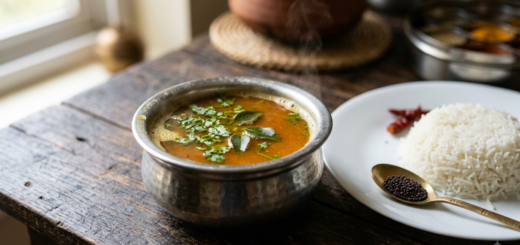
A steaming bowl of Udupi-style rasam with a coconut-oil tempering, served alongside hot rice.
Below you will find the exact spice ratios for this Rasam Recipe Udupi Style, the boiling times that actually matter, a grated-coconut finish most home versions skip, and fixes for the three mistakes that ruin the dish.
Rasam Recipe Udupi Style at a Glance
Here is the short version before you cook, so you know what makes this Rasam Recipe Udupi Style different from any other rasam on your table.
- Signature taste: sweet, sour and spicy at once, since jaggery rounds off the tang.
- The coastal touch: grated coconut and coconut-oil tempering, which Tamil and Andhra rasams usually leave out.
- Spice base: a home-roasted Udupi rasam powder, called saaru pudi, made with Byadgi chillies for deep colour and gentle heat.
- Best served with: hot steamed rice and a dry vegetable palya, or sipped on its own as a warming soup.
- Time and yield: about 45 minutes start to finish, while serving four.
Why Rasam Recipe Udupi Style Tastes Different
Udupi cuisine comes from the Tulu Brahmin community of South Canara, a coastal belt where coconut and jaggery flavour almost everything. So this rasam leans sweeter than its Tamil Nadu cousin. Because it balances tastes rather than chasing heat, the jaggery is not a garnish in a Rasam Recipe Udupi Style; it is structural, since it softens the sharp tamarind sourness into something rounded.
Coconut is the second marker. Many Udupi cooks finish the saaru with a spoon of grated coconut, while the tempering is done in fragrant coconut oil rather than ghee. Because this dish is served as prasadam in temple lunches and at South Canara weddings, it carries real culinary heritage. One honest note, though: the strict Udupi Sri Krishna Temple kitchen avoids certain vegetables, so the tomato saaru most people call “Udupi rasam” is really the household and hotel version, not the literal temple recipe.
Recipe Card
| Detail | Value |
|---|---|
| Prep Time | 15 minutes |
| Cook Time | 30 minutes |
| Total Time | 45 minutes |
| Servings | 4 servings |
| Difficulty | Easy to Medium |
| Cuisine | Udupi, coastal Karnataka |
Ingredients for Rasam Recipe Udupi Style
Fresh spices matter more than anything else in a Rasam Recipe Udupi Style, so grind the saaru pudi yourself if you can. The quantities below make a small batch of powder, while leaving plenty over for next time.
For the Udupi Rasam Powder (Saaru Pudi)
- 75 g coriander seeds (about 1 cup)
- 25 g cumin seeds (about ¼ cup)
- 20 g fenugreek seeds (about 2 tbsp)
- 100 g dried red chillies, Byadgi or Kashmiri
- 10 g dry curry leaves (about ½ cup when fresh)
- 1 tsp turmeric powder
- 1 tsp asafoetida (hing)
For the Rasam
- ½ cup toor dal (split pigeon peas)
- 1 lemon-sized ball of tamarind, soaked in ½ cup warm water
- 2 medium tomatoes, chopped
- 1 tsp jaggery, adjusted to taste
- 2 tbsp grated fresh coconut (optional, for a truer Udupi finish)
- Salt to taste
- 3 to 4 cups water
For the Tempering (Tadka)
- 2 tbsp coconut oil or ghee
- 1 tsp mustard seeds
- ½ tsp cumin seeds
- ½ tsp asafoetida
- 8 to 10 curry leaves
- Fresh coriander leaves, to garnish
How to Make Rasam Recipe Udupi Style Step by Step
Work through these seven steps in order to build this Rasam Recipe Udupi Style. Each one is short, so the whole rasam comes together in under an hour once your powder is ready.
Step 1: Prepare the Tamarind Extract
Soak the lemon-sized tamarind ball in ½ cup of warm water for about 10 minutes. Then squeeze it thoroughly and extract the juice. After that, strain out the fibre and seeds, and set the smooth tamarind extract aside.
Step 2: Cook the Toor Dal
Rinse the toor dal well under running water. Then add it to a pressure cooker with 2 cups of water and a pinch of turmeric. Cook for 3 to 4 whistles, or simmer in a pot until the dal turns soft. Once done, mash it smooth with a ladle so it blends easily later.
Step 3: Roast and Grind the Saaru Pudi
Heat a heavy pan on medium flame. Dry roast the coriander seeds first until aromatic, and then remove them. Next, toast the cumin, fenugreek, chillies and curry leaves separately, because each one browns at a different speed.
Once everything cools, grind it with the turmeric and asafoetida into a fine powder. Work gently and never let the spices darken, since burnt spices turn the whole rasam bitter.
Step 4: Build the Rasam Base
Pour the tamarind extract into a large saucepan, and then add the chopped tomatoes. Stir in the salt, jaggery and a little turmeric. Bring this to a boil on medium flame, and let it bubble for 7 to 8 minutes. This long boil is not optional, because it cooks off the raw tamarind smell and sets the flavour.
Step 5: Add the Rasam Powder
Once the tomatoes soften, stir in 2 to 3 tablespoons of your fresh saaru pudi. Keep the flame low so the spices bloom slowly instead of scorching. Then let it simmer for 2 to 3 minutes until the kitchen smells fragrant.
Step 6: Add the Cooked Dal
Now add the mashed toor dal to the simmering base. Then pour in 2 to 3 cups of water to reach a light, soup-like consistency. Stir in the grated coconut if you are using it, and boil for another 5 minutes. Finally, taste and adjust the salt before you finish.
Step 7: Finish with Tempering
Heat the coconut oil or ghee in a small pan until hot. When the mustard seeds go in, wait for them to pop. Then toss in cumin, asafoetida and curry leaves for a few seconds.
Pour this sizzling tadka over the rasam, and cover it at once to trap the aroma. Finally, garnish with coriander leaves and serve.
Pro Tips for Rasam Recipe Udupi Style
- Roast the spices lightly but precisely, the way Udupi eateries do, because over-roasting is the fastest way to a bitter rasam.
- Choose Byadgi chillies for that deep red colour with mild heat, although Kashmiri chillies work almost as well.
- Make the saaru pudi in bulk and store it airtight, so your next batch of rasam is ready in minutes.
- Balance jaggery against tamarind slowly, since a pinch more jaggery creates the sweet-sour harmony that defines this style.
- Turn off the heat the moment a frothy layer rises, because boiling it further flattens the aroma.
Rasam Recipe Udupi Style Variations to Try
This Rasam Recipe Udupi Style bends easily to your kitchen and diet. Here are the changes home cooks make most often.
- Vegan version: temper in coconut oil instead of ghee, so the dish stays fully plant-based.
- Coconut-milk saaru: stir in a splash of thin coconut milk at the end for a richer coastal flavour.
- No-dal quick rasam: skip the toor dal for a lighter, thinner rasam you can drink like soup.
- Milder or spicier: adjust the number of chillies in the powder, since heat is a matter of taste.
- Extra tang: squeeze in fresh lemon at the end instead of leaning on more tamarind.
What to Serve With Rasam Recipe Udupi Style
Rasam rarely stands alone on an Udupi plate. Traditionally it follows the sambar course, poured over hot rice with a spoon of ghee. Pair it with a dry vegetable palya, a crisp papad, and a pickle for the full meal.
Because it is light and digestive, this rasam also works beautifully as a between-courses soup. Many people sip a small bowl when they feel a cold coming on, since the pepper, cumin and hing offer gentle warmth.
Common Rasam Recipe Udupi Style Mistakes to Avoid
Three problems trip up most first-timers, although each one has a simple fix.
- Bitter rasam: the culprit is almost always burnt fenugreek or over-roasted chillies. Because of that, roast on low flame and pull the pan off early.
- Too sour: you used too much tamarind or too little jaggery. To rebalance, add a small piece of jaggery and a splash of water.
- Flat, dull taste: either the tamarind base was not boiled long enough, or the tempering went in cold. Since a hot, fresh tadka fixes both, pour it over at the very end.
Storing Your Rasam Recipe Udupi Style
Cooked rasam keeps in the fridge for up to 3 days in an airtight container. Reheat it gently on the stove with a splash of water, because a long microwave blast dulls the aroma. Avoid freezing the finished rasam, since the dal changes texture once thawed.
The saaru pudi is the real make-ahead hero. When stored in a dry, airtight jar, it stays fresh for about 6 months. So grind a big batch once, and you cut future prep down to almost nothing.
Nutrition Information (Approximate, Per Serving)
These figures are rough estimates for one serving of this Rasam Recipe Udupi Style, and they shift with how much oil, dal and jaggery you use. Treat them as a guide rather than exact numbers.
| Nutrient | Approx. per serving |
|---|---|
| Calories | 50 to 75 kcal |
| Carbohydrates | 7 to 10 g |
| Protein | 2 to 4 g |
| Fat | 2 to 4 g |
| Fibre | about 2 g |
How Rasam Recipe Udupi Style Differs From Other Rasams
South India has dozens of rasam styles, yet each region has its own personality. Knowing the difference helps you pick the right one for a meal.
- Tamil Nadu rasam: pepper-forward and thinner, usually without jaggery or coconut. See our traditional Tamil Nadu rasam recipe for that peppery style.
- Karnataka saaru: close to the Udupi version but often less sweet, while our Karnataka-style saaru shows the wider regional take.
- Kerala rasam: tempered heavily in coconut oil with a distinct aroma, as in our Kerala-style rasam.
If you are still deciding which spice blend to keep on your shelf, our guide on the difference between rasam powder and sambar powder clears up the confusion.
Before You Cook
The heart of a good Rasam Recipe Udupi Style is balance, not complexity. Roast your spices gently, boil the tamarind base properly, and treat jaggery as an equal partner to the tang. Because the coconut finish and a hot coconut-oil tempering matter so much, add both before serving. Cook it once with fresh powder, and it will earn a permanent place in your weekly rice meals.
Frequently Asked Questions
Can I make this rasam without rasam powder?
Yes, although the flavour will be simpler. Use a store-bought rasam powder, or blend cumin, pepper, coriander and a little chilli powder as a quick substitute. Still, freshly roasted saaru pudi gives the richest, most authentic taste.
Is Udupi rasam spicy?
It is more balanced than spicy. Because the jaggery and coconut soften the heat, it leans sweet-sour with gentle warmth. You can raise or lower the chillies in the powder to suit your palate.
What makes Udupi rasam different from Tamil rasam?
Two things set it apart: jaggery and coconut. While Udupi saaru is sweeter and rounder, Tamil rasam is thinner and pepper-forward. The coconut-oil tempering also gives the Udupi version its coastal aroma.
Why is my rasam bitter?
Bitterness usually comes from over-roasted spices, especially fenugreek and chillies. Because burnt spices cannot be rescued once ground, roast them on a low flame until just aromatic, and never let them darken.
Can I freeze Udupi rasam?
Freezing is possible although not ideal, because the dal texture changes after thawing. If you must, freeze it in small portions and reheat with a splash of water. Even so, fresh rasam always tastes best.
What can I serve with Udupi rasam?
Serve it over hot steamed rice with a dry palya, papad and pickle for a classic plate. It also works as a light soup on its own. A spoon of ghee over the rice-and-rasam mix lifts the whole meal.
How long does homemade saaru pudi last?
When stored in a dry, airtight jar away from moisture, the powder keeps for about 6 months. So grind a large batch, since future rasam then takes only minutes. Always use a clean, dry spoon to keep it fresh.
Do I really need to add jaggery?
Yes, because jaggery is the defining touch of this style. It balances the sharp tamarind and creates the signature sweet-sour taste. If you skip it, you lose what makes the dish distinctly Udupi.