Rasam Powder for Sambar: Can You Use It? Recipe + Fixes
The short answer to “can I use rasam powder for sambar” is yes, and this guide shows exactly how to make it taste right. Rasam powder is not built for a thick lentil stew, so a straight swap gives you a thin, peppery bowl that never quite reads as sambar. Yet with the correct quantity and two small additions, that same jar of rasam powder can rescue a sambar when you have run out of the real thing. Below you get the fix, the exact recipe, a spice-by-spice comparison, and the mistakes that quietly ruin the dish.
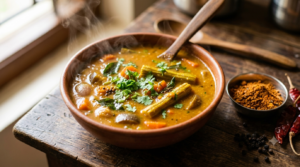
A steaming bowl of sambar made using rasam powder as a substitute, with tempering and fresh coriander.
Key Takeaways
- Rasam powder can stand in for sambar powder, but only as a backup, and the flavour will be lighter and more peppery.
- Use about 2 teaspoons of rasam powder plus a little roasted coriander and a pinch of fenugreek to mimic sambar’s body.
- Thickness comes from well-mashed toor dal and vegetables, not from the powder, so cook the dal until soft.
- Balance the extra pepper with jaggery and enough tamarind, then taste before serving.
- For guests or a festival meal, real sambar powder still wins; save the swap for everyday cooking.
Can You Use Rasam Powder for Sambar?
Yes, you can use rasam powder for sambar in a pinch, though the result tastes lighter, sharper, and more peppery than a traditional bowl. Sambar leans on coriander, fenugreek, and roasted lentils for a rounded, thick body. Rasam powder skips most of that and pushes pepper and cumin instead, so it needs help to behave like sambar powder.
Think of it as borrowing the wrong tool for a job it can still finish. The dal and vegetables do the heavy lifting on thickness. The powder only sets the flavour, and rasam powder simply flavours in a different direction. Once you understand that split, adjusting the recipe becomes easy.
Rasam Powder vs Sambar Powder: The Real Difference
Both blends start from a similar family of South Indian spices, yet their proportions send them down very different paths. According to chef Sanjeev Kapoor, sambar and rasam share a base of toor dal, tomato, tamarind, and spices, but differ sharply in texture and flavour. Sambar powder is ground fine so it melts into a creamy stew. Rasam powder is ground coarse because a clear, light broth is the goal.
The table below shows why one cannot fully replace the other without tweaks. Sambar powder carries more coriander, red chilli, and fenugreek, which build a deep, rounded taste. Rasam powder holds the highest share of black pepper and cumin of any South Indian spice mix, so it reads as tangy and hot rather than earthy and full.
| Feature | Sambar Powder | Rasam Powder |
|---|---|---|
| Dominant spices | Coriander, red chilli, fenugreek | Black pepper, cumin |
| Grind | Fine (blends into stew) | Coarse (keeps broth clear) |
| Flavour | Rounded, earthy, robust | Peppery, tangy, sharp |
| Built for | Thick lentil-vegetable stew | Thin, soupy broth |
| Fenugreek | Present, adds body | Little or none |
Because these gaps are small in ingredients but large in balance, a simple correction closes most of the distance. You can read a fuller breakdown in our dedicated guide comparing the two spice blends. For now, the fix matters more than the theory.
How to Use Rasam Powder for Sambar Correctly
To use rasam powder for sambar, keep the amount low and add back the flavours it lacks. Start with 2 teaspoons of rasam powder for a four-serving pot. Then stir in half a teaspoon of roasted coriander powder and a tiny pinch of fenugreek powder to rebuild the sambar-style base.
This ratio keeps the pepper from taking over while the coriander returns the earthy depth. If you pour in more rasam powder hoping for strength, you only add heat, not body. So resist that urge, and lean on the dal and vegetables instead. A splash of jaggery near the end rounds off the sharp edge nicely.
Recipe Card
| Detail | Value |
|---|---|
| Prep time | 15 minutes |
| Cook time | 45 minutes |
| Total time | 60 minutes |
| Servings | 4 |
| Difficulty | Medium |
Ingredients With Exact Quantities
Main Ingredients
- 1 cup toor dal (split pigeon peas), rinsed and soaked for 15 minutes
- 2.5 cups water for cooking the dal
- 1.5 cups mixed vegetables (drumstick, carrot, pumpkin, brinjal), chopped
- ¼ cup tamarind extract (soak a lemon-sized ball in ½ cup warm water)
- 1 large tomato, chopped
- 1 medium onion, finely chopped
- 2 tablespoons jaggery or brown sugar
- 1 teaspoon salt, adjusted to taste
- ¼ teaspoon turmeric
- 2 teaspoons rasam powder (the substitute), plus ½ teaspoon roasted coriander powder and a pinch of fenugreek powder
- Or 2 tablespoons sambar powder if you have it (preferred)
For the Tempering (Tadka)
- 2 tablespoons oil or ghee
- 1 teaspoon mustard seeds
- 1 teaspoon urad dal
- 2 dry red chillies
- 10 to 12 curry leaves
- A pinch of asafoetida (hing)
Step-By-Step Instructions
1. Cook the Dal
Add the soaked toor dal to a pressure cooker with 2.5 cups water and the turmeric. Cook on medium heat for 3 to 4 whistles, roughly 10 minutes. After the pressure drops, mash the dal with a whisk until smooth. This smooth dal is what gives sambar its body, so do not skip the mashing.
2. Prepare the Vegetables
Add the mixed vegetables to a pan with ½ cup water and a pinch of salt. Cook them uncovered until tender but not mushy, about 8 to 10 minutes. Firm vegetables like drumstick take longer, so add softer ones later. Drain any excess water and keep the vegetables ready.
3. Build the Tamarind Base
Stir the tamarind extract, chopped tomato, onion, jaggery, and salt into the pan. Simmer until the tomato softens and releases its juice, about 5 minutes. Now lower the flame and add your spice. If you are using rasam powder for sambar, add the 2 teaspoons here along with the coriander and fenugreek.
Let the spices bloom in the base for a minute before moving on. This short bloom deepens the aroma and takes the raw edge off the powder. Because rasam powder is coarse, give it that extra moment to open up.
4. Combine Dal and Base
Pour the mashed dal into the simmering vegetable base and stir gently. Add 1 to 2 cups of water depending on how thick you like your sambar. Bring it to a gentle boil, then simmer for 5 minutes so the flavours meld. Taste now and adjust salt, tamarind, or jaggery.
5. Finish With Tempering
Heat the oil or ghee in a small pan until it shimmers. Add mustard seeds and wait for them to splutter, then add urad dal, red chillies, curry leaves, and asafoetida. Fry until fragrant and golden. Pour this tempering over the hot sambar, turn off the heat, and garnish with chopped coriander.
What Goes Wrong (and How to Fix It)
Using rasam powder for sambar has three common failure points, and each has a quick fix. Knowing them ahead of time saves a pot from turning out flat or harsh. Here is what to watch for while you cook.
- Too thin: the powder cannot thicken, so the problem is usually undercooked dal. Simmer longer, or mash a small handful of cooked dal separately and stir it in.
- Too peppery: rasam powder is pepper-heavy, so a heavy hand makes it sharp. Add a spoon of jaggery and a little more dal to soften the heat.
- Flat or one-note: the earthy depth is missing. An extra ½ teaspoon of roasted coriander and a few curry leaves in the tempering restore it.
Is a rasam-powder sambar guaranteed to taste identical to the real thing? No, and it helps to accept that up front. It will be a good, warming bowl, but the rounded sambar depth needs true sambar powder. When it truly matters, keep a jar of sambar powder on hand instead.
Pro Tips Most Recipes Skip
In many Chennai kitchens, cooks roast the sambar spices fresh, and that aroma is exactly what a substitute cannot copy. So a few small habits go a long way when you improvise. These tips lift a backup sambar closer to the real thing.
- Dry-roast the rasam powder for 20 seconds before adding it; this wakes up the cumin and pepper.
- Balance tamarind carefully, since too much turns the stew sour, and jaggery brings it back.
- Never boil the sambar after tempering, because the aromatic oils fade quickly.
- A 2-tablespoon splash of coconut milk at the end adds a gentle creaminess for a richer pot.
Substitutions and Storage
Smart Substitutions
If you have neither powder, mix ½ teaspoon each of coriander, cumin, pepper, and red chilli powder with a pinch of fenugreek. This quick blend works better than using rasam powder for sambar on its own. For the sour note, lemon juice or a spoon of tamarind paste both stand in for fresh tamarind. Our tamarind chickpea curry shows another tangy way to use that same paste.
Storage Tips
Refrigerate leftover sambar in an airtight container for up to 4 days. You can freeze it for about a month, though the vegetables may soften on thawing. Store any spice powder in a sealed glass jar in a cool, dry spot so the aroma holds. Ground blends fade after a few months, so make them in small batches.
Nutrition Information Per Serving
The figures below are approximate, based on a standard lentil-and-vegetable sambar divided into four servings. Actual numbers shift with your oil, vegetables, and portion size. Treat them as a guide rather than an exact count.
| Nutrient | Approx. per serving |
|---|---|
| Calories | 210 kcal |
| Protein | 8 g |
| Carbohydrates | 30 g |
| Fat | 5 g |
| Fibre | 6 g |
| Sodium | 580 mg |
Toor dal makes this a protein-friendly, high-fibre dish, and you can lower the sodium by easing off the salt. For nutrition data on Indian pulses, the U.S. government nutrition portal is a reliable reference.
Final Thoughts: When the Swap Is Worth It
Reaching for rasam powder for sambar is a fair move on a busy night when the sambar jar is empty. Keep the quantity to 2 teaspoons, add coriander and a pinch of fenugreek, and let the dal carry the body. You will get a lighter, tangier sambar that still satisfies.
For a festival table or guests, though, start with real sambar powder and save this trick for everyday cooking. If you enjoy experimenting, our easy lemon rasam without dal is a good next recipe to try. For cultural background, the Sambar entry on Wikipedia traces the dish’s South Indian roots.
Frequently Asked Questions
Can I use only rasam powder for sambar?
Yes, but use only about 2 teaspoons for a four-serving pot. Since rasam powder is built for a thin, tangy broth, the sambar will taste lighter unless you add roasted coriander and a pinch of fenugreek. The thickness must come from well-cooked, mashed toor dal and vegetables, not from the powder.
What is the difference between sambar powder and rasam powder?
Sambar powder is coriander-forward with fenugreek and red chilli, ground fine to build a thick stew. Rasam powder carries the highest share of black pepper and cumin, ground coarse for a clear broth. Swapping one for the other changes both flavour and consistency, so adjust the quantity and seasoning.
How much rasam powder equals sambar powder?
Use roughly 2 teaspoons of rasam powder in place of 2 tablespoons of sambar powder, since rasam powder is more concentrated in pepper. Then add back ½ teaspoon roasted coriander and a pinch of fenugreek to close the flavour gap. Adding more rasam powder only increases heat, not body.
Why is my sambar too watery with rasam powder?
The powder does not thicken sambar, so watery results almost always mean the dal was undercooked. Simmer the dal until it is soft, then mash it well before adding it to the base. Stirring in a little extra mashed dal thickens the pot quickly.
Can I make sambar without tamarind?
Yes, you can use 1 tablespoon of lemon juice or a spoon of tamarind paste instead of fresh tamarind. The sour note is important for an authentic taste, but these substitutes work well in a pinch. Adjust the salt and jaggery once you have added the sour element.
Does rasam powder make sambar spicier?
It makes the sambar more peppery rather than chilli-hot, because pepper is the dominant spice in rasam powder. If the heat feels sharp, a spoon of jaggery and a little more dal soften it. Taste as you go and adjust before serving.
Is rasam-powder sambar good for everyday meals?
Yes, using rasam powder for sambar is a practical, quick option for regular home meals, and it pairs well with rice, idli, or dosa. It is lighter than classic sambar but still comforting and nourishing. For special occasions, real sambar powder gives the fuller, traditional flavour.