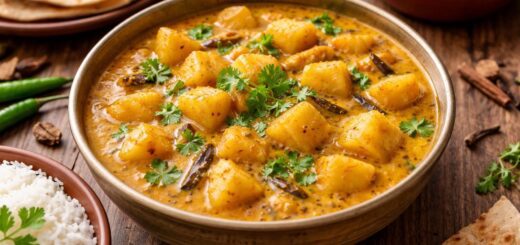
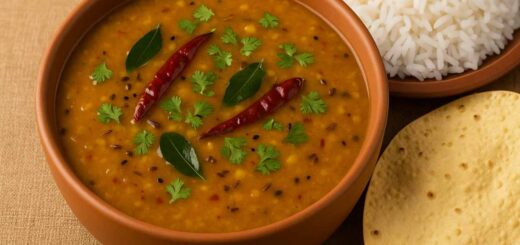
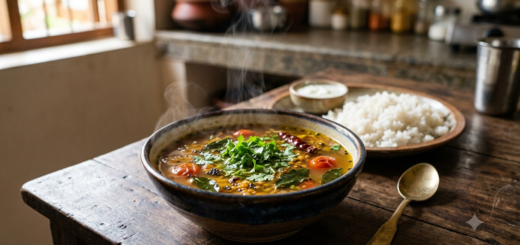
Sambar Recipe With Chana Dal: Thick, Tangy Home Method
Sambar recipe with chana dal gives you a thicker, nuttier sambar than the usual toor-dal version, but only when the Bengal gram cooks fully soft. This method keeps the familiar tamarind, vegetables, sambar powder and tempering. It also fixes the biggest timing mistake in the older recipe: the two-hour soak sits outside the active prep time.
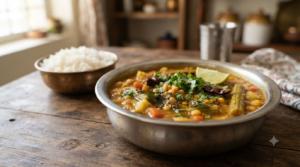
Thick home-style chana dal sambar with vegetables, curry leaves and a fresh coriander finish.
Chana dal, also called Bengal gram dal or kadalai paruppu, holds more texture than toor dal. So the finished sambar feels hearty rather than silky. That makes it especially good with idli, dosa and steamed rice.
Sambar Recipe With Chana Dal at a Glance
- Main dal: 1 cup chana dal, soaked for 2 hours.
- Active prep: about 15 minutes, excluding soaking.
- Cook time: about 40 minutes.
- Yield: 4 generous servings or 6 smaller tiffin servings.
- Texture: thick and slightly grainy, not completely smooth.
- Best with: rice, idli, dosa, uttapam or pongal.
The key is simple: soak the dal, pressure-cook it until it crushes easily, then mash only part of it. If the grains stay firm, the sambar will taste like dal suspended in broth instead of one cohesive gravy.
Recipe Card
| Detail | Time or amount | What it means |
|---|---|---|
| Soaking time | 2 hours | Hands-off; not counted as active prep |
| Active prep | 15 minutes | Chopping, tamarind and measuring |
| Cook time | 40 minutes | Dal, vegetables and final simmer |
| Servings | 4 to 6 | Depends on rice meal or tiffin portions |
| Difficulty | Easy | Pressure cooker recommended |
Ingredients for Sambar Recipe With Chana Dal
These quantities make a balanced home-style pot. This sambar recipe with chana dal uses Bengal gram as the main lentil, so the flavour stays true to the search intent. You do not need to add half a cup of toor dal to make it work.
For the dal and vegetables
- 1 cup chana dal or Bengal gram dal
- 3 cups water for pressure cooking, plus more as needed
- 1/2 teaspoon turmeric powder
- 1 medium onion, chopped
- 1 large tomato, chopped
- 1 small carrot, cut into small pieces
- 1 drumstick, cut into 5 to 6 cm pieces, optional
- 1 to 2 green chillies, slit
- 2 tablespoons tamarind pulp or thick extract, diluted in 1/2 cup warm water
- 2 tablespoons sambar powder
- Salt to taste
- 2 tablespoons chopped coriander leaves
For the tempering
- 1 tablespoon sesame, groundnut or neutral cooking oil
- 1 teaspoon mustard seeds
- 1/2 teaspoon cumin seeds
- 2 dried red chillies, broken
- 8 to 10 curry leaves
- 1/4 teaspoon asafoetida, optional
If you want a smoother body, add 2 tablespoons of toor dal with the chana dal. Keep it optional, though, because too much toor dal turns this into a regular mixed-dal sambar. For a powder-focused version, see our sambar recipe with sambar powder.
Sambar Recipe With Chana Dal: Step-by-Step Method
This sambar recipe with chana dal separates the dal, vegetables and souring stage because each needs a different cooking time. Chana dal needs the longest head start. Tamarind comes later, so the vegetables can soften before the pot turns acidic.
1. Soak the chana dal for 2 hours
Rinse 1 cup chana dal two or three times. Then cover it with plenty of water and soak for 2 hours. A longer soak is fine, but refrigerate the bowl if your kitchen is very warm.
Drain the soaking water before cooking. Soaking is not a flavour trick; it helps the thick split grains hydrate more evenly. As a result, the centre softens at the same pace as the outside.
2. Pressure-cook until the grains crush easily
Add the soaked dal, 3 cups water and 1/4 teaspoon turmeric to a pressure cooker. Cook for about 5 to 6 whistles on medium heat, then let the pressure fall naturally. Cookers vary, so use texture rather than whistle count as the final test.
Press one grain between a spoon and the side of the cooker. It should flatten without a hard centre. If it resists, add a little hot water and cook for another 1 to 2 whistles.
3. Mash only part of the dal
Use a ladle to mash about two-thirds of the cooked chana dal. Leave the rest slightly coarse because that texture is the point of this variation. Do not blend it completely smooth unless you want a restaurant-style gravy.
The older version said to keep the dal chunky, but it did not explain how much. Partial mashing gives the best balance. The mashed portion thickens the broth, while the intact grains add bite.
4. Build the tempering and vegetable base
Heat 1 tablespoon oil in a wide pot over medium heat. Add mustard seeds and wait until they pop. Then add cumin, dried red chillies, curry leaves, asafoetida and green chillies.
Add the onion and cook for 3 to 4 minutes. Once it turns translucent, add the carrot and drumstick. Stir for 2 minutes, then add the tomato and remaining turmeric.
5. Cook the vegetables before adding tamarind
Pour in 1 1/2 cups water and add a small pinch of salt. Cover and simmer until the vegetables are nearly tender, which usually takes 8 to 10 minutes. Drumstick may need a little longer depending on thickness.
Add the strained tamarind water only after the vegetables have softened. Then simmer for 5 minutes. This order matters because acidic liquid can slow the softening of some vegetables.
6. Add sambar powder and cooked dal
Stir in 2 tablespoons sambar powder and simmer for 3 minutes. Then add the partially mashed chana dal. Pour in 1 to 1 1/2 cups hot water, depending on the thickness you prefer.
Simmer gently for 8 to 10 minutes, stirring twice so the bottom does not catch. Taste only near the end because the sambar powder needs time to lose its raw edge. Adjust salt after the flavours settle.
7. Finish and rest the pot
Turn off the heat and add chopped coriander. Rest the sambar for 5 minutes before serving, since chana dal continues to thicken as it stands. Add a splash of hot water if it becomes too thick.
Why Chana Dal Sambar Tastes Different From Toor Dal Sambar
In a sambar recipe with chana dal, Bengal gram is firmer and more nutty than toor dal, so it gives the gravy a thicker body. Toor dal breaks down faster and makes a smoother gravy. Neither style is “more authentic” in every household because South Indian sambar has many regional and family variations.
| Feature | Chana dal version | Toor dal version |
|---|---|---|
| Texture | Thick, hearty, slightly grainy | Softer and more creamy |
| Soaking | Helpful for 1 to 2 hours | Optional in many recipes |
| Mashing | Partial works best | Usually mashed smooth |
| Best use | Idli, dosa, rice | Rice, tiffin and mixed-vegetable sambar |
Some kadalai paruppu sambar recipes also use coconut and fennel instead of a standard sambar powder base. That is a valid regional route. This page keeps the older Bhimas Cook angle: chana dal cooked in a familiar vegetable-and-tamarind sambar format.
Sambar Recipe With Chana Dal: Troubleshooting Guide
Most failures in a sambar recipe with chana dal come from undercooked dal, too much water or poor timing with tamarind. The fixes are easy when you diagnose the pot before adding more spice. Use the table below before you reach for extra sambar powder.
| Problem | Likely cause | Best fix |
|---|---|---|
| Dal stays hard | Short soak or insufficient pressure cooking | Cook again with hot water until grains crush easily |
| Sambar is watery | Too much water or too little mashing | Mash more dal and simmer uncovered |
| Sambar is too thick | Chana dal thickened while resting | Add hot water in small amounts |
| Tastes too sour | Too much tamarind | Add more cooked dal or a small pinch of jaggery |
| Raw spice taste | Sambar powder added too late | Simmer 5 to 8 minutes longer |
| Vegetables are firm | Tamarind went in too early | Cook vegetables first, then add the souring agent |
Do not fix a thin sambar with roasted gram flour unless you have no cooked dal left. Extra dal gives a cleaner flavour. If the pot is too thick, use hot water because it blends in quickly without dropping the temperature.
Which Vegetables Work Best?
Carrot and drumstick suit this sambar because they hold their shape while the thick dal simmers. Brinjal also works, but add it later because it softens quickly. Pumpkin gives sweetness, while radish adds a sharper aroma.
Okra needs different handling. Sauté sliced okra separately until the surface loses its stickiness, then add it near the end. Otherwise the mucilage can make an already-thick chana dal sambar feel gluey.
For a seasonal contrast, try the Andhra-style mango sambar. If you want a coconut-ground version instead, the Udupi temple sambar recipe uses a very different masala profile.
How to Adjust This Sambar for Idli, Dosa or Rice
For idli and dosa, keep this sambar recipe with chana dal slightly loose because the tiffin absorbs gravy quickly. Add 1/2 to 1 cup extra hot water after the final simmer. Then recheck salt, since dilution softens both spice and seasoning.
For rice, keep it thicker. The gravy should coat the back of a spoon but still pour easily. A spoon of ghee at the table is optional, while a dry vegetable side gives the meal better contrast.
Nutrition and Ingredient Notes
Chana dal is Bengal gram dal, a pulse listed in the Indian Food Composition Tables from ICMR-National Institute of Nutrition. It contributes much of the protein and fibre in this recipe. The final nutrition of each bowl still changes with serving size, vegetables and oil.
That is why this refresh removes the old generic calorie table. Those figures were not tied to a documented calculation for this exact pot. If you need medical or tightly controlled nutrition targets, calculate from weighed ingredients or consult a qualified dietitian.
Asafoetida also deserves a label check. Some compounded hing products use wheat flour or other carriers, so do not call the recipe gluten-free without reading the pack. The remaining core ingredients are naturally plant-based.
Storage, Cooling and Reheating
Cool leftovers promptly and refrigerate them in a covered container. The Food Safety and Standards Authority of India advises that cooked food should not remain at room temperature for more than two hours. It also advises thorough reheating before eating stored food.
For practical home use, finish refrigerated sambar within 3 to 4 days. The USDA leftovers guidance gives the same 3-to-4-day refrigerator window for cooked leftovers. Reheat only what you plan to eat, since repeated warming dulls the vegetables and spices.
Chana dal sambar thickens strongly in the fridge. Add hot water while reheating, then simmer until steaming throughout. If it smells fermented or shows spoilage, discard it rather than tasting to test it.
What Beginners Get Wrong With Chana Dal Sambar
The first mistake is treating chana dal exactly like toor dal. Chana dal needs more time to hydrate and soften, so a short cook leaves a hard centre. The second mistake is adding lots of toor dal, which hides the very texture this recipe is meant to showcase.
The third mistake is judging consistency while the pot is boiling. Chana dal thickens after resting, so stop when the sambar looks slightly looser than your ideal bowl. Finally, do not dump every vegetable into the pot at once because brinjal and okra cook far faster than carrot or drumstick.
Before You Serve
A good sambar recipe with chana dal should taste tangy and spiced, but the dal must still be the main character. Soak it properly, cook it until completely tender, and mash only part of the batch. Once those three things are right, the rest of the recipe becomes very forgiving.
Serve it hot with rice for a hearty lunch or thin it slightly for idli and dosa. The recipe also works well the next day because the flavours deepen overnight. Just loosen it with hot water before reheating.
Frequently Asked Questions
Can I make sambar with only chana dal?
Yes. You can make sambar using chana dal as the only lentil, and this recipe does exactly that. The result is thicker and more textured than toor-dal sambar, so soak the dal first and pressure-cook it until fully soft.
How long should chana dal soak for sambar?
Soak chana dal for about 2 hours for the most reliable texture. A shorter soak can work in a strong pressure cooker, but the centre may stay firm. If you skip soaking, expect a longer pressure-cooking time.
How many whistles does chana dal need?
After a two-hour soak, chana dal usually needs about 5 to 6 whistles on medium heat. Pressure cookers vary, so do not rely on whistles alone. The dal is ready when a grain crushes easily without a hard centre.
Can I add toor dal to chana dal sambar?
Yes, but keep the amount small if you want chana dal to remain dominant. Two tablespoons of toor dal per cup of chana dal is enough to make the gravy smoother. A much larger amount shifts the recipe toward regular mixed-dal sambar.
Why is my chana dal sambar too thick?
Chana dal absorbs water and thickens as it cools, so this is normal. Add hot water a little at a time while reheating. Then simmer for a few minutes and recheck salt before serving.
Can I make sambar recipe with chana dal without tamarind?
Yes. Use tomato for the main sourness, then add a small squeeze of lemon after switching off the heat. The flavour will be brighter and less deep than tamarind sambar, but the chana dal base still works.
Can I use coconut in chana dal sambar?
Yes. Some South Indian kadalai paruppu sambar versions grind fresh coconut into the gravy and may use fennel in the tempering. Add a small coconut paste near the end, then simmer gently until the raw coconut smell disappears.
Is chana dal sambar good with idli and dosa?
Yes. Chana dal sambar pairs especially well with idli, dosa and uttapam because its thicker body clings to tiffin. Add extra hot water for a looser breakfast consistency, then adjust salt after thinning.