Sweet Pongal With Chana Dal: Easy Jaggery Recipe
Sweet pongal with chana dal gives the classic jaggery-rice sweet a firmer, nutty bite because Bengal gram holds its shape better than moong dal. This version uses a short soak, pressure cooking, strained jaggery syrup, ghee, cardamom, cashews and raisins. The key is simple: cook the chana dal completely before the jaggery goes in.
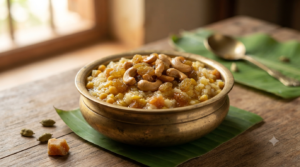
Sweet pongal with chana dal made with rice, jaggery, ghee, cardamom, cashews and raisins.
Traditional sweet pongal is more commonly made with rice and moong dal, so this is best understood as a home-style variation rather than the only traditional formula. The Ministry of Tourism describes Pongal as a harvest festival centred on gratitude for the harvest, and sweet rice remains closely tied to the celebration. See the Ministry of Tourism’s Pongal festival overview.
Sweet Pongal With Chana Dal at a Glance
This sweet pongal with chana dal recipe serves four to six people and takes about 50 minutes, including soaking and pressure cooking. Chana dal needs more time than moong dal, so a 30-minute soak gives more reliable results. Jaggery goes in only after the rice and dal are soft, because adding it too early can slow softening.
| Detail | Amount | Why it matters |
|---|---|---|
| Prep time | 15 minutes active | Most work is rinsing and measuring |
| Soak time | 30 minutes | Helps chana dal soften evenly |
| Cook time | 30 to 35 minutes | Includes pressure cooking and finishing |
| Yield | 4 to 6 servings | Suitable for a family dessert or offering |
| Texture | Soft rice with tender dal | Chana dal keeps more bite than moong |
If you want the classic softer version, Bhimas Cook also has a sweet pongal with jaggery recipe built around the more common rice-and-moong base. For a faster cooker-focused method, see the pressure cooker sweet pongal recipe.
Ingredients for Sweet Pongal With Chana Dal
The ingredient list stays close to the original post, but the method now treats chana dal differently from rice. That matters because Bengal gram is denser and slower to soften. Use clean, food-grade edible camphor only if you already cook with it, and use the tiniest pinch.
| Ingredient | Quantity | Notes |
|---|---|---|
| Raw rice or Sona Masuri rice | 1 cup | Short-grain rice gives a softer body |
| Chana dal | 1/4 cup | Rinse and soak for 30 minutes |
| Water | 4 cups | For pressure cooking |
| Jaggery, grated or powdered | 1 to 1 1/4 cups | Adjust to taste |
| Water for jaggery | 1/2 cup | Enough to dissolve and strain |
| Ghee | 3 tablespoons | Add more at serving if desired |
| Cashews | 10 to 12 | Halved or broken |
| Raisins | 1 tablespoon | Optional but traditional in many homes |
| Cardamom powder | 1/2 teaspoon | Freshly crushed tastes brighter |
| Salt | 1 small pinch | Balances sweetness |
| Edible camphor | Tiny pinch, optional | Use only food-grade camphor |
You can add 2 tablespoons of yellow moong dal if you want a creamier result, although the recipe works without it. If you add moong dal, rinse it with the rice and cook it in the same pot. The chana dal should still get its full 30-minute soak first.
How to Make Sweet Pongal With Chana Dal
For consistent sweet pongal with chana dal, soak the Bengal gram first, then cook it with rice until both are very soft. Melt and strain the jaggery separately while the cooker rests. After that, combine everything on low heat and finish with ghee-fried nuts, raisins and cardamom.
1. Soak the chana dal before you start
Rinse the chana dal two or three times, then soak it in plenty of water for 30 minutes. Meanwhile, rinse the rice separately and drain it. Keeping them separate at this stage fixes the old method’s contradiction of washing the dal and then trying to dry-roast it.
If you enjoy a roasted flavour, dry-roast the chana dal before rinsing and soaking it. Roast for two to three minutes on low-medium heat until it smells nutty, then cool it briefly. After that, rinse and soak as usual.
2. Pressure-cook the rice and chana dal until very soft
Drain the soaked dal, then add it to a pressure cooker with the rinsed rice, 4 cups of water and a pinch of salt. Cook on medium heat for about five to six whistles, then let the pressure fall naturally. The exact whistle count varies by cooker, so judge the result by texture rather than sound alone.
The rice should collapse easily when pressed, while the chana dal should be tender all the way through. If the dal still has a firm centre, add 1/2 cup hot water and cook for one or two more whistles. Do not add jaggery until the dal is fully soft.
3. Melt and strain the jaggery
While the cooker rests, place 1 to 1 1/4 cups jaggery in a small pan with 1/2 cup water. Warm it on low heat until it dissolves, but you do not need a string consistency. Strain the syrup through a fine metal sieve so grit or cane fibres do not reach the pongal.
Jaggery varies in colour, moisture and sweetness, so start with 1 cup if you prefer a balanced dessert. You can stir in a little more melted jaggery later. Avoid adding dry chunks directly to the cooked rice because they melt unevenly.
4. Combine on low heat
Open the cooker and mash only part of the rice mixture with a ladle. Leave some chana dal visible because its texture is the point of this variation. Pour in the warm strained jaggery syrup, then cook on low heat for five to seven minutes while stirring often.
The mixture will loosen at first and then thicken as it simmers. If it becomes stiff, add a few tablespoons of hot water. Sweet pongal thickens further as it cools, so stop while it still looks slightly looser than your ideal serving texture.
5. Finish with ghee, nuts and cardamom
Heat the ghee in a small pan, then fry the cashews until golden. Add the raisins and cook only until they puff, because they can burn quickly. Pour the ghee mixture into the pongal, then add cardamom and the optional speck of edible camphor.
Stir once and switch off the heat. Rest the pongal for five minutes before serving, since the rice absorbs more syrup as it sits. Add a teaspoon of warm ghee on top if you want a richer festival-style finish.
Why Chana Dal Changes the Texture
In sweet pongal with chana dal, moong is no longer the main lentil, so the Bengal gram stays more distinct. That is why this variation tastes nuttier and feels slightly more textured. If you cook the chana dal only until just tender, however, the final dish can feel underdone beside the soft rice.
The best balance comes from fully cooking the dal without turning every grain into paste. A 1:4 dal-to-rice ratio keeps the pongal recognisable while still making the chana noticeable. If you increase the dal much beyond that, you move closer to a jaggery rice-and-lentil pudding than classic sweet pongal.
Sweet Pongal With Chana Dal: Common Mistakes to Avoid
Most problems come from timing rather than ingredients. Chana dal needs more cooking than rice, while jaggery should arrive only after both have softened. Use the table below to diagnose the result before adding more sugar or ghee.
| Problem | Likely cause | Fix |
|---|---|---|
| Dal stays hard | Soak was too short or jaggery went in early | Cook dal fully before sweetening |
| Pongal turns too thick | Too little water or long simmer | Add hot water a little at a time |
| Pongal looks watery | Too much water after jaggery | Simmer uncovered on low heat |
| Jaggery feels gritty | Syrup was not strained | Always strain melted jaggery |
| Sweetness feels flat | Needs balance, not only more jaggery | Add a small pinch of salt and enough ghee |
| Cashews taste bitter | Ghee was too hot | Fry on low-medium heat and remove when golden |
Pressure Cooker, Pot or Instant Pot?
A stovetop pressure cooker is the easiest method for sweet pongal with chana dal because it softens the lentil and rice together with little attention. A heavy pot also works, although it takes longer and needs more water. An Instant Pot works well too, but pressure settings vary by model and dal age.
For stovetop cooking, soak the dal for 30 minutes and simmer the rice-dal mix until both crush easily between your fingers. Start with about 5 cups of water because more evaporates from an open pot. Add extra hot water only when needed, since cold water slows cooking.
For an electric pressure cooker, use the same ingredient ratio and cook at high pressure until the dal is fully tender. Natural release is helpful because the rice continues softening as pressure falls. If your dal is old and slow-cooking, extend the pressure time rather than adding jaggery early.
How Sweet Should the Jaggery Be?
For one cup of rice and one-quarter cup chana dal, 1 to 1 1/4 cups jaggery gives a moderately sweet to festival-sweet result. Jaggery intensity changes by batch, so a fixed quantity cannot guarantee the same sweetness every time. Start lower, taste after combining, then adjust with more dissolved jaggery.
Dark jaggery often gives a deeper caramel note, while lighter jaggery may taste cleaner and milder. Colour alone does not prove quality, so buy from a trusted food seller. Straining matters even when the jaggery looks clean because small particles can hide in the block.
Serving Ideas and Festival Context
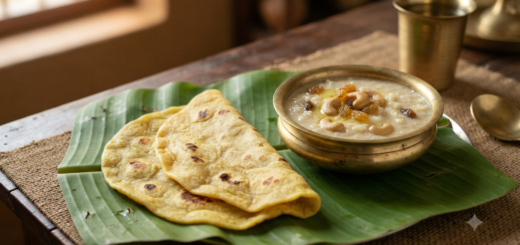
Serve sweet pongal with chana dal warm in small bowls, on banana leaves, or as part of a larger festive meal. A little ghee on top keeps the surface glossy, while roasted cashews add contrast. If you are preparing a Sankranti menu, the site’s Sankranti special recipes guide gives more sweet and savoury ideas.
Pongal is closely linked with Tamil harvest celebrations, and official tourism material describes it as a festival that thanks the Sun, nature and farm animals for a good harvest. Food customs vary by home and region, so there is no need to present the chana-dal version as universal. It is a practical variation that suits cooks who enjoy Bengal gram’s firmer texture.
Storage, Refrigeration and Reheating
Sweet pongal tastes best fresh, but leftovers can be refrigerated promptly in a clean, covered container. The Food Safety and Standards Authority of India advises keeping leftovers cold below 5°C and reheating cooked food thoroughly before eating. FSSAI’s Food Safety at Home guidance also advises preparing fresh food when possible.
For home use, cool the pongal without leaving it out for an extended period, then refrigerate it. Reheat only the portion you plan to eat, and loosen it with a spoonful of hot water before warming. Because rice desserts thicken in the fridge, extra liquid is usually more useful than extra ghee.
Discard leftovers if they smell sour, show mould, or have been stored unsafely. Food safety matters more than saving a serving. When in doubt, do not taste questionable food to test whether it is safe.
Can You Make Sweet Pongal Without Moong Dal?
Yes. This sweet pongal with chana dal uses chana dal as the main lentil, so moong dal is not required. The result is less creamy and more textured than classic sakkarai pongal. If you want some creaminess without losing the chana-dal character, add just 2 tablespoons of moong dal.
That small amount softens into the rice while the Bengal gram stays visible. It is also a useful middle ground for families used to classic sweet pongal. Keep the chana dal soak unchanged, because moong cooks much faster and does not solve undercooked Bengal gram.
Sweet Pongal With Chana Dal: Final Tips
Sweet pongal with chana dal works best when you treat the dal as the slowest ingredient. Soak it, cook it completely, and only then add jaggery. That one sequence prevents the most common problem: soft rice with firm lentils.
Keep the jaggery syrup simple, strain it, and finish on low heat. Also stop cooking while the pongal is slightly loose because it thickens as it rests. With those three controls, this variation stays rich, glossy and easy to repeat.
Frequently Asked Questions
Is chana dal traditional in sweet pongal?
Moong dal is the more common lentil in classic sweet pongal, while chana dal appears as a variation in some home recipes. It gives a firmer bite and nuttier taste. Therefore, describe this version as a chana-dal variation rather than the only traditional method.
Do I need to soak chana dal for sweet pongal?
A 30-minute soak is strongly recommended because chana dal cooks more slowly than rice. The soak helps the centre soften during pressure cooking, so the final pongal feels even. If the dal is older, it may still need extra pressure time.
Can I roast chana dal before making sweet pongal?
Yes, but roast it while dry, before rinsing and soaking. Two to three minutes on low-medium heat is enough to bring out a nutty aroma. After roasting, cool it briefly, then rinse and soak it before pressure cooking.
Why should jaggery be added after the dal is cooked?
Add jaggery after the dal is fully tender because sweeteners can make pulses take longer to soften. Cooking the rice and dal first gives you control over texture. Then the strained jaggery syrup can flavour the finished base without leaving hard lentils.
Can I use sugar instead of jaggery?
Yes, although the flavour changes noticeably. Jaggery gives sweet pongal its deeper caramel and molasses-like notes, while white sugar tastes cleaner and lighter. If you use sugar, dissolve it separately and add it after the rice and dal are soft.
How do I fix sweet pongal that becomes too thick?
Add hot water one or two tablespoons at a time, then stir over low heat. Use hot liquid because cold water can cool the mixture unevenly. Stop once the pongal is spoonable, since it will thicken again as it sits.
Can I make this recipe vegan?
You can replace ghee with coconut oil, although the flavour will no longer match classic ghee-finished sweet pongal. Use a mild coconut oil if you want jaggery and cardamom to stay dominant. Cashews and raisins can remain unchanged.
Is edible camphor necessary?
No. Edible camphor is optional, and the recipe tastes complete without it. If you use it, choose only food-grade edible camphor and add an extremely small amount because its aroma is powerful.
How long can sweet pongal be stored?
For best quality, eat it fresh or refrigerate leftovers promptly. FSSAI advises keeping refrigerated leftovers below 5°C and reheating cooked food thoroughly before eating. If storage conditions were poor or the pongal smells unusual, discard it rather than taking a chance.