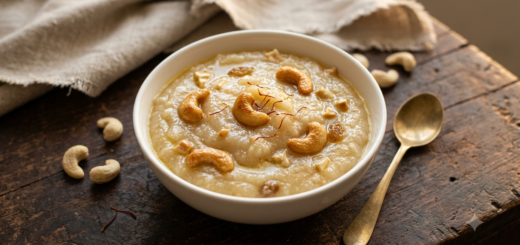
Sweet Pongal Recipe Jaggery: Easy Hotel-Style Method
Sweet Pongal Recipe Jaggery is easiest to get right when the rice and moong dal are cooked until very soft before the jaggery goes in. This version keeps the familiar South Indian combination of rice, moong dal, jaggery, ghee, cardamom, cashews and raisins, but it fixes the most common texture mistake: undercooking the base in the hope of getting a “hotel-style” finish. The result should be soft, glossy and spoonable, not grainy or dry.
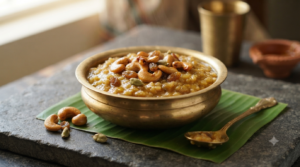
Soft jaggery sweet pongal finished with ghee-roasted cashews, raisins and cardamom.
Sweet pongal is also called sakkarai pongal or chakkara pongal in different South Indian homes. It is closely associated with harvest celebrations such as Pongal and Sankranti. India’s official tourism portal describes Pongal as a harvest festival built around gratitude for the harvest, with rice, milk and jaggery playing an important role in the celebration.
Sweet Pongal Recipe Jaggery at a Glance
- Prep time: about 10 minutes
- Cook time: about 35 to 40 minutes
- Total time: about 45 to 50 minutes
- Serves: 4 to 6
- Texture: soft, creamy and slightly loose while hot
- Sweetness: moderate; increase jaggery if your family prefers a sweeter festive pongal
- Best cooking method: pressure cooker for the softest base with the least effort
The main rule is simple: cook the rice and dal completely before adding jaggery. Once the sweetener goes in, you should only need a short finishing cook. This keeps the grains soft and prevents the final pongal from feeling chewy.
Sweet Pongal Recipe Jaggery Ingredients and Ratios
This recipe keeps the original page’s rice-to-dal balance because it gives a rich, lentil-forward pongal. Jaggery strength varies by brand and batch, so treat the amount as a working range rather than a fixed law.
| Ingredient | Quantity | Why it matters |
|---|---|---|
| Short-grain rice | 1 cup | Gives a soft, creamy base |
| Yellow moong dal | 1/2 cup | Adds body and a nutty aroma |
| Water | 4 to 4 1/2 cups | Helps the rice and dal turn fully soft |
| Grated jaggery | 1 to 1 1/4 cups, about 220 to 250 g | Sweetens and gives caramel depth |
| Water for syrup | 1/2 cup | Dissolves the jaggery for easy straining |
| Ghee | 3 to 4 tbsp | Adds gloss, aroma and richness |
| Cardamom powder | 1/2 tsp | Balances the deep jaggery flavour |
| Cashews | 12 to 15 | Add crunch |
| Raisins | 1 to 2 tbsp | Add soft bursts of sweetness |
| Cloves | 1 to 2, optional | Add warm spice |
| Edible camphor | Tiny pinch, optional | Traditional aroma; use food-grade only |
Choose clean, good-quality jaggery from a trusted food source. The Food Safety and Standards Authority of India publishes product standards for jaggery and has also conducted nationwide jaggery surveillance. If your jaggery contains visible sediment, dissolving and straining it is especially useful.
How to Make Sweet Pongal Recipe Jaggery Step by Step
- Rinse the rice and dal. Wash the rice and moong dal two or three times. Drain well.
- Roast the dal lightly. Dry roast the moong dal over low to medium heat until it smells nutty. Do not brown it deeply, because a dark roast can make the pongal taste harsh.
- Cook until very soft. Add the rice, dal and 4 cups water to a pressure cooker. Cook for about 4 to 5 whistles on medium heat, then let the pressure drop naturally. Open the cooker and check the texture. The grains should mash easily with the back of a ladle.
- Adjust before sweetening. If the rice and dal look firm, add 1/4 to 1/2 cup hot water and cook a little longer. This is the point to fix texture, because the base should already be soft before jaggery is added.
Jaggery Syrup and the Final Finish
The second half of this Sweet Pongal Recipe Jaggery method is intentionally short. Once the rice and dal are soft, the jaggery only needs dissolving, straining when necessary, and a brief simmer with the cooked base.
- Make the jaggery syrup. Warm grated jaggery with 1/2 cup water on low heat until it dissolves. Let it bubble briefly, but do not cook it to a thread consistency.
- Strain the syrup. Pour the syrup through a fine metal strainer if your jaggery has grit or sediment. Return the clean syrup to the pan.
- Combine gently. Add the jaggery syrup to the soft rice-dal mixture. Cook on low to medium heat for about 4 to 6 minutes while stirring, until the mixture looks glossy and cohesive.
- Finish with ghee and spice. Add cardamom. If using edible camphor, add only a tiny food-grade pinch.
- Fry the nuts. Heat ghee in a small pan. Fry cashews until golden, then add raisins and optional cloves. Pour everything, including the fragrant ghee, into the pongal.
- Rest before serving. Switch off the heat while the pongal is still slightly loose. Rest it for 5 minutes, because it thickens as it cools.
If you prefer a dedicated pressure-cooker method with a different ratio, see the Sweet Pongal pressure cooker recipe. For a richer dairy variation, the Sweet Pongal with jaggery and milk version keeps that variation separate from this recipe.
Why This Method Gives a Better Hotel-Style Texture
Hotel-style sweet pongal is less about leaving the rice intact and more about controlling moisture, ghee and the final reduction. A good batch looks glossy because the cooked starch, jaggery syrup and ghee come together smoothly. It should not depend on undercooked grains for structure.
That is the biggest correction to the older version of this post. The previous tip suggested keeping the rice and dal slightly undercooked. In practice, established South Indian recipe methods consistently call for a soft or mushy base before jaggery is mixed in. A soft base also makes the final pongal easier to reheat without turning chewy.
For a richer restaurant-style finish, add the ghee in two stages. This small change gives Sweet Pongal Recipe Jaggery a glossy finish without forcing extra reduction. Stir 1 tablespoon into the pongal during the final simmer, then use the remaining ghee to fry the nuts and raisins. This spreads the aroma through the dish without making one spoonful greasy.
How Much Jaggery Should You Use?
There is no single “authentic” jaggery ratio because family recipes vary widely. For 1 cup rice and 1/2 cup moong dal, 220 to 250 g jaggery gives a moderate sweetness that still lets the cardamom and ghee come through. If you like a sweeter festival-style pongal, increase it gradually after tasting the syrup.
Different jaggeries also taste different. Dark jaggery can have stronger molasses notes, while pale jaggery may taste cleaner and milder. Therefore, the best method is to start within the stated range, taste after combining, and add a little more dissolved jaggery only if needed.
Do not compare only cup measures between recipes, because grated jaggery packs differently. Weight is the more useful guide when you want repeatable results.
Sweet Pongal Recipe Jaggery Troubleshooting
If the pongal is too thick: add 2 to 4 tablespoons hot water at a time and stir over low heat. Use water rather than cold milk if you want to keep this version dairy-free apart from ghee.
If the pongal is too loose: simmer it uncovered for a few minutes while stirring often. Stop before it reaches your final serving thickness, because it will continue to tighten as it cools.
If the rice feels hard: the base needed more cooking before the jaggery went in. Add a little hot water, cover and cook gently until the grains soften. Next time, make the rice-dal mixture almost porridge-soft before sweetening.
If the jaggery tastes grainy: the syrup may have contained sediment or may have been overcooked. Dissolve it with just enough water, strain it and avoid chasing a string consistency.
If the flavour tastes flat: add a small pinch of salt and a little extra cardamom. Salt should not make the pongal taste salty; it simply sharpens the sweetness.
Common Mistakes to Avoid
- Undercooking the rice and dal. This creates a chewy texture after jaggery is added.
- Boiling jaggery syrup too long. Sweet pongal does not need a one-string syrup.
- Skipping the straining step when jaggery is gritty. A quick strain keeps the finish smooth.
- Cooking until perfectly thick in the pan. The pongal will thicken further during resting.
- Using non-food-grade camphor. Puja camphor is not a cooking ingredient. If you cannot verify that the product is sold for culinary use, leave it out.
- Adding too much spice. Cardamom should support the jaggery rather than dominate it.
For another texture variation, the Sweet Pongal with coconut recipe adds fresh coconut while keeping the jaggery base familiar.
Serving, Storage and Reheating
Serve Sweet Pongal Recipe Jaggery warm, when the ghee is aromatic and the texture is soft. A small spoonful of warm ghee on top is optional. If you are preparing it as naivedyam or prasadam, follow your family or temple tradition for ingredients and handling.
Cool leftovers promptly and refrigerate them in a covered container. For best texture, use them within about two days. When reheating, add a spoonful or two of hot water and warm gently while stirring, because chilled rice and dal become firm.
Freezing is possible, but the thawed texture is usually less appealing. Fresh or refrigerated pongal reheated gently gives a better result.
Sweet Pongal Recipe Jaggery and Festival Tradition
Sweet pongal belongs to a wider South Indian harvest-food tradition, and recipes differ between Tamil, Telugu and family kitchens. The official Incredible India description of Pongal highlights the festival’s connection with the harvest, thanksgiving and offerings made with ingredients such as rice, milk and jaggery.
That cultural context is useful, but it does not mean every household uses the same recipe. Some cooks use more moong dal, some add milk, some include coconut, and others use edible camphor only for special occasions. Treat those as regional or family variations rather than rules.
If you are cooking for a religious offering, use ingredients that match your own tradition. The method here focuses on texture and flavour, not on prescribing ritual practice.
Before You Serve
The best Sweet Pongal Recipe Jaggery starts with one decision: make the rice and dal fully soft before sweetening. Then keep the jaggery syrup simple, use enough ghee for aroma, and stop cooking while the pongal still looks slightly loose. Those three choices solve most texture problems before they start.
For a first batch, stay with the moderate jaggery range and adjust only after tasting. Once you know how sweet your jaggery is, the recipe becomes very easy to repeat.
Frequently Asked Questions
Can I make Sweet Pongal Recipe Jaggery without a pressure cooker?
Yes. Use a heavy-bottomed pot and cook the rice and moong dal with extra hot water until both are very soft. Stir more often near the end, because the thickening starch can catch on the bottom.
Why does my sweet pongal become hard after adding jaggery?
The rice and dal were usually not soft enough before sweetening, or the finished pongal was reduced too far. Cook the base until mashable, then add jaggery and stop while the pongal is still slightly loose.
How much jaggery should I use for 1 cup of rice?
For this recipe, use about 220 to 250 g jaggery with 1 cup rice and 1/2 cup moong dal. The final sweetness depends on the jaggery, so taste and adjust rather than assuming every block has the same strength.
Do I need to make one-string jaggery syrup?
No. Sweet pongal needs dissolved jaggery, not a candy-stage syrup. A brief simmer is enough, and overcooking can make the final texture sticky or grainy.
Can I use milk in this sweet pongal?
Yes, but milk creates a different variation and also changes storage needs. If you want that version, use the dedicated milk recipe linked above so the ratios stay balanced.
What rice is best for sweet pongal?
Short- or medium-grain rice such as Sona Masoori works well because it softens easily. The key is not the brand; it is cooking the grain until it becomes mashable before jaggery is added.
Is edible camphor necessary?
No. Edible camphor is optional and should be used only when the package clearly identifies it as food-grade. Never use camphor sold for puja or burning in a recipe.
Can I make sweet pongal ahead of time?
Yes. Make it a little looser than your ideal serving texture, then refrigerate after cooling. Reheat gently with a small amount of hot water and add fresh ghee-roasted cashews if you want to restore the just-made aroma.
Can I replace jaggery with sugar?
You can, but the flavour will change because jaggery gives the dish its deeper caramel character. If you want a sugar-based version, it is better to follow a recipe designed around sugar rather than swapping by volume without adjustment.