Sweet Pongal Recipe With Milk & Jaggery | Easy Method
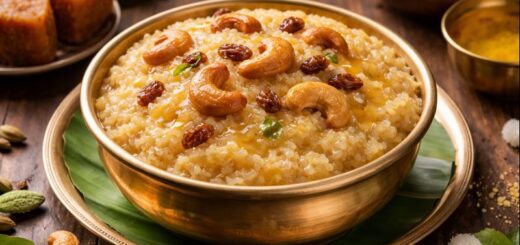
Sweet pongal recipe with milk is a rich South Indian festive sweet made with soft rice, moong dal, jaggery, ghee, cardamom and warm milk. The key is balance: cook the rice and dal until very soft, dissolve and strain the jaggery separately, then combine everything on low heat so the milk stays smooth and the pongal turns glossy rather than grainy.
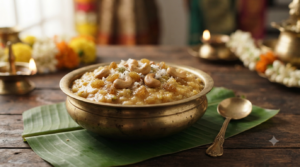
Creamy sweet pongal made with soft rice, moong dal, jaggery, warm milk, ghee, cashews and raisins.
This refreshed version keeps the pressure-cooker method simple while fixing two common problems: excessive sweetness and milk curdling. It also gives flexible jaggery levels, so you can make a mildly sweet family version or a richer festival-style batch without guessing.
Sweet Pongal Recipe With Milk: Quick Summary
- Prep time: about 10 minutes
- Cook time: about 30 to 35 minutes
- Servings: 6 small dessert servings
- Rice: 1 cup short- or medium-grain raw rice
- Moong dal: 1/4 cup yellow split moong dal
- Jaggery: 1 1/2 cups grated or powdered jaggery for a balanced sweetness
- Milk: 1/2 cup full-fat milk, warmed before use
- Water: 4 cups for pressure cooking, plus a little for dissolving jaggery
- Texture: soft, spoonable and slightly loose while hot because it thickens as it rests
Sweet Pongal, also called Sakkarai Pongal or Chakkara Pongal, is closely linked with the harvest festival of Pongal. The Government of India tourism portal describes Pongal as a Tamil harvest festival in which rice is traditionally allowed to boil over as a sign of abundance. You can read that cultural background on Incredible India.
Ingredients for Sweet Pongal With Jaggery and Milk
| Ingredient | Quantity | Why it matters |
|---|---|---|
| Raw rice | 1 cup | Short- or medium-grain rice gives the softest texture. |
| Yellow moong dal | 1/4 cup | Adds body, nuttiness and creaminess. |
| Water | 4 cups | Helps the rice and dal cook until mashable. |
| Jaggery | 1 1/2 cups | Gives deep caramel sweetness. Adjust to taste. |
| Full-fat milk | 1/2 cup | Adds richness without making the pongal overly milky. |
| Ghee | 4 tablespoons | Creates gloss, aroma and a smooth finish. |
| Cashews | 12 to 15 | Add crunch and roasted flavour. |
| Raisins | 1 tablespoon | Add small pockets of sweetness. |
| Cardamom powder | 1/2 teaspoon | Gives the classic warm aroma. |
| Salt | 1 small pinch | Balances the sweetness. |
| Edible camphor | Optional, tiniest pinch | Use only food-grade edible camphor, never household camphor. |
For this sweet pongal recipe with milk, one important change from the old version is the jaggery quantity. The earlier post used 2 1/2 cups for 1 cup of rice, which creates a very sweet festival-style pongal. That ratio can work, but it is too intense for many home cooks. Starting at 1 1/2 cups gives a more balanced result, while you can still increase it if your family prefers a sweeter pongal.
How Much Jaggery Should You Use?
| Jaggery | Sweetness level | Best for |
|---|---|---|
| 1 to 1 1/4 cups | Mild | Everyday dessert or less-sweet preference |
| 1 1/2 cups | Balanced | Most home kitchens |
| 2 to 2 1/2 cups | Very sweet | Traditional festive style if that is your family preference |
In this sweet pongal recipe with milk, jaggery blocks can vary in sweetness, moisture and flavour, so the same cup measure can taste different from one brand to another. If you are unsure, start lower. You can add a little more dissolved jaggery before the final ghee tempering, but it is difficult to correct a pongal that has become too sweet.
How to Make Sweet Pongal Recipe With Milk
- Rinse and roast the dal. Rinse the rice well and drain it. Dry-roast the moong dal for 2 to 3 minutes on low to medium heat until fragrant, but do not brown it deeply.
- Pressure-cook until very soft. Add rice, roasted dal, 4 cups water and a pinch of salt to the pressure cooker. Cook for about 4 whistles on medium heat, then let the pressure fall naturally.
- Mash the base. Open the cooker and mash the rice-dal mixture lightly. Sweet pongal should be softer than ordinary cooked rice, so add a little hot water if the mixture looks dry.
- Dissolve the jaggery separately. Put the jaggery in a small pan with about 1/3 cup water. Warm it on low heat until dissolved, then strain it through a fine sieve to remove grit or impurities.
- Combine on low heat. Pour the strained jaggery syrup into the cooked rice and dal. Stir on low heat for 4 to 5 minutes until the mixture looks glossy and begins to thicken.
Finish the Pongal Without Curdling the Milk
- Add the warm milk carefully. Warm the milk separately. Lower the flame, then stir the milk into the rice-jaggery mixture in two or three additions. Do not pour cold milk straight into a vigorously boiling jaggery syrup.
- Finish with cardamom and ghee. Add the cardamom. Heat the ghee in a small pan, fry cashews until golden, then add raisins until they puff. Pour everything into the pongal and mix.
- Rest before serving. Turn off the heat and rest the pongal for 5 minutes. Serve it warm while the texture is soft and spoonable.
This sweet pongal recipe with milk is designed for a pressure cooker because the method is quick and dependable. If you prefer a dedicated pressure-cooker version with more cooker-specific detail, see our Sweet Pongal pressure cooker guide.
Why Milk Can Curdle in Sweet Pongal
Milk can split when it meets a concentrated jaggery syrup under high heat, especially if the jaggery carries natural acidity or impurities. That is why this recipe keeps the milk away from the jaggery syrup until the syrup has already been mixed into the rice and dal.
For the smoothest result, warm the milk first and keep the flame low. Then add the milk gradually while stirring. The rice-dal mixture acts as a buffer and makes the combination more forgiving.
What if the Milk Still Splits?
If you see tiny curds forming, lower the heat immediately and stop adding milk. A small amount of splitting usually affects appearance more than taste, so do not keep boiling in an attempt to fix it.
For the next batch, use fresh milk, warm it separately and add it only after the jaggery has blended with the cooked rice. You can also reduce the milk to 1/4 cup and loosen the pongal with hot water instead.
Sweet Pongal Recipe With Milk: Common Mistakes
Using Rice That Is Still Firm
The rice and dal should be much softer than normal steamed rice before jaggery goes in. Jaggery can slow further softening, so do not expect firm rice to turn creamy after the sweetener is added. If needed, cook the base longer with extra hot water first.
Boiling the Jaggery Syrup Too Long
You only need to dissolve the jaggery and strain it. A thick, candy-like syrup can make the finished pongal sticky or grainy. Keep the heat low and avoid chasing a one-string or soft-ball stage for this recipe.
Adding All the Ghee at Once
Adding ghee in stages gives a cleaner finish. Use a little while roasting the nuts, then stir the rest into the pongal near the end. This way the fat coats the grains instead of pooling on top.
Making It Too Thick on the Stove
Sweet pongal thickens quickly as it cools, so switch off the flame while it is still slightly loose. If it becomes stiff before serving, stir in a few tablespoons of hot milk or hot water until it loosens again.
Pressure Cooker, Pot or Instant Pot?
| Method | Approx. cooking time | Best feature |
|---|---|---|
| Pressure cooker | 30 to 35 minutes total | Fast, reliable soft texture |
| Heavy pot | 40 to 50 minutes | Easy visual control |
| Instant Pot | About 30 minutes including pressure release | Hands-off cooking |
For an Instant Pot, cook the rice and dal with water on High Pressure for about 10 minutes, then allow a natural release for at least 10 minutes. Add jaggery, milk and ghee only after pressure cooking. Use Sauté on Low while combining, because high heat can scorch the sweetened mixture.
How to Adjust Texture Without Losing Flavour
The ideal texture in a sweet pongal recipe with milk depends on when you plan to serve it. For immediate serving, keep the pongal loose enough to fall slowly from a spoon. If it will sit for 20 to 30 minutes, make it slightly looser because the rice and dal continue absorbing liquid.
Use hot water when you want a lighter finish. Use hot milk when you want more richness. Either way, add liquid a few tablespoons at a time, because too much can dilute the jaggery and cardamom flavour.
Can You Make It Without Moong Dal?
Yes. A rice-only version is softer and more pudding-like, while the standard recipe has a faint nutty taste from moong dal. If you want that variation, use our Sakkarai Pongal without moong dal recipe rather than simply removing dal from this formula.
Festival Serving and Prasadam Notes
This sweet pongal recipe with milk also works well for Pongal, Sankranti and other puja occasions, although exact ingredients vary by household and tradition. Some use more ghee, some add cloves, and some include a tiny amount of edible camphor. Treat those as family or regional choices rather than fixed rules.
If you are planning a larger festive menu, our Sankranti special recipes guide pairs sweet pongal with other traditional sweets and savoury dishes. For naivedyam or prasadam, follow the ingredient customs used in your own home or temple tradition.
Storage, Reheating and Food Safety
Because this version contains milk, cool leftovers promptly and refrigerate them in a clean, covered container. The Food Safety and Standards Authority of India notes that milk-based sweets generally have a shorter shelf life because they are more prone to microbial growth. Its milk-products guidance says such sweets commonly fall in a roughly 1-to-4-day shelf-life range, depending on the product and handling. See the FSSAI milk-products guidance note.
For a home batch, using it within 2 days gives the best texture and freshness. FoodSafety.gov also advises refrigerating cooked leftovers within 2 hours and using refrigerated leftovers within 3 to 4 days. See its leftover food-safety guidance.
Reheat only the portion you need. Add a splash of hot milk or water, then warm gently while stirring. Avoid repeated heating and cooling because the texture deteriorates and food-safety risk increases.
Sweet Pongal Recipe With Milk: Useful Substitutions
- No milk: Replace the 1/2 cup milk with hot water. The pongal will still be traditional in flavour, just less creamy.
- No raisins: Skip them without replacing them.
- No cashews: Use chopped almonds if your household uses them, or leave nuts out entirely.
- No edible camphor: Omit it. Cardamom alone gives plenty of aroma.
- More richness: Add 1 extra tablespoon of ghee near the end instead of increasing milk.
- Less sweetness: Start with 1 cup jaggery, taste after combining, then adjust before finishing.
Do not treat jaggery as a sugar-free ingredient. It is still a concentrated sweetener, so portion size matters if you are limiting added sugars. The main reason to use jaggery here is flavour and tradition, not because the dessert becomes low-sugar.
Why This Refreshed Version Works Better
The old recipe had a useful base, but it left several decisions unexplained. It gave one very high jaggery quantity, one milk quantity and a nutrition estimate that did not match the ingredient load. This refresh replaces that false precision with adjustable sweetness, clearer sequencing and practical troubleshooting.
It also separates the two technical jobs that matter most: softening the rice-dal base and safely combining jaggery with milk. Once those are under control, the recipe becomes much easier to repeat from one batch to the next.
Before You Serve
A good sweet pongal recipe with milk should taste rich without becoming cloying, and the rice should be soft enough to hold the jaggery syrup evenly. Keep the mixture slightly loose while hot, add warm milk gently and adjust sweetness to your jaggery rather than following a rigid cup count.
Serve it warm with the roasted cashews and raisins added at the end. If the pongal sits before serving, loosen it with hot milk or water rather than reheating it aggressively.
Frequently Asked Questions
Can I make sweet pongal with milk and jaggery together?
Yes. Cook the rice and dal first, dissolve and strain the jaggery separately, then combine the jaggery with the cooked rice. Add warm milk gradually on low heat rather than pouring cold milk directly into boiling jaggery syrup.
What is the best rice for sweet pongal?
Short- or medium-grain raw rice such as Sona Masoori works well because it softens easily and gives a creamy texture. Basmati can work in an emergency, but its long, separate grains are less suited to the classic pongal texture.
How much jaggery should I use for 1 cup of rice?
Start with about 1 1/2 cups jaggery for a balanced sweet pongal. Use closer to 1 cup if you prefer mild sweetness, or increase toward 2 cups or more for a sweeter festival-style result.
Why did my sweet pongal become hard after cooling?
Rice and dal continue absorbing moisture as they rest, so sweet pongal always thickens after cooking. Reheat it gently with a few tablespoons of hot milk or water until the original soft texture returns.
Can I make this sweet pongal recipe with milk in an Instant Pot?
Yes. Pressure-cook the rice and dal with water first, then add jaggery, warm milk and ghee after the pressure releases. Keep Sauté on Low while finishing so the sweetened mixture does not scorch.
Is edible camphor required?
No. Edible camphor is optional and should only be used if you have a food-grade product intended for cooking. Never use puja or household camphor in food. Cardamom alone gives the recipe a classic aroma.
Can I make sweet pongal without milk?
Yes. Replace the milk with hot water and follow the same method. The result will be slightly less creamy, but jaggery, ghee and cardamom will still give the dish its familiar flavour.
How long can sweet pongal with milk be refrigerated?
For best quality, use homemade milk sweet pongal within about 2 days and keep it chilled in a covered container. More generally, food-safety guidance recommends refrigerating cooked leftovers promptly and using them within 3 to 4 days.