Sakkarai Pongal Without Cooker: Easy Stovetop Recipe
Sakkarai pongal without cooker is easy to make on the stovetop when the rice and moong dal are cooked until very soft before jaggery goes in. This method needs more water and a little more patience than pressure cooking, but the result can be just as creamy, glossy and festive. The key is to use a heavy pot, keep extra hot water ready and add the jaggery only after the grains mash easily.
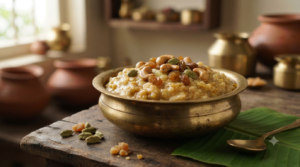
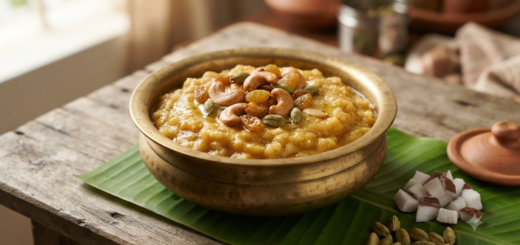
Creamy sakkarai pongal made on the stovetop with rice, moong dal, jaggery, ghee, cashews and raisins.
This refreshed method keeps the familiar rice, moong dal, jaggery, ghee, cardamom, cashews and raisins. It also fixes the open-pot water ratio and adds clear texture checkpoints. Therefore, you know what the mixture should look like at every stage.
Sakkarai Pongal Without Cooker: Quick Recipe Card
| Detail | Amount |
|---|---|
| Prep time | 10 minutes |
| Cook time | 45–55 minutes |
| Total time | 55–65 minutes |
| Servings | 4–5 |
| Method | Heavy-bottomed pot on stovetop |
| Texture | Soft, spoonable and slightly loose when hot |
The finished pongal should look slightly looser than your ideal serving texture because it thickens as it rests. If it looks dry while still on the stove, add hot water a little at a time instead of cooking it harder.
Ingredients for Stovetop Sweet Sakkarai Pongal Without Cooker
- 1 cup raw short-grain rice, such as Sona Masuri or Ponni
- 1/4 cup yellow moong dal
- 4 1/2 cups water for cooking, plus 1 cup hot water kept nearby if needed
- 1 cup grated or finely chopped jaggery for medium sweetness
- 1/2 cup water for melting the jaggery
- 3 to 4 tablespoons ghee
- 1/2 teaspoon cardamom powder
- 8 to 10 cashews
- 1 tablespoon raisins
- 1 small pinch salt
- Optional: a tiny pinch of food-grade edible camphor
Jaggery varies in sweetness, colour and moisture, so 1 cup is a practical starting point. If your family likes a sweeter sakkarai pongal without cooker, increase it to 1 1/4 cups. Use only edible camphor sold for food use, and add very little because its aroma is powerful.
Why the Open-Pot Water Ratio Matters
Pressure cookers lose little water, while a normal pot releases steam throughout cooking. Therefore, a ratio that works under pressure can leave stovetop rice and dal firm or dry. Starting with about 4 1/2 cups water gives the grains enough liquid to break down. Therefore, you should not need repeated additions from the beginning.
Pot width, lid fit and flame strength still change evaporation. Keep a kettle or small pan of hot water ready, because cold water can slow the simmer. Add 1/4 cup at a time only when the mixture tightens before the grains are fully soft.
How to Make Sakkarai Pongal Without Cooker
- Rinse the rice and dal. Wash the rice and moong dal two or three times, then drain. You can lightly dry-roast the moong dal for two minutes before washing if you want a nuttier aroma, but this step is optional.
- Start the open-pot cooking. Put the rice, dal, 4 1/2 cups water and a pinch of salt in a heavy-bottomed pot. Bring it to a boil over medium heat, then reduce to a gentle simmer.
- Cook until very soft. Cover partly so steam can escape without violent bubbling. Stir every 7–10 minutes, especially near the base, and add hot water if the mixture becomes thick before the grains mash easily.
- Make the jaggery liquid. While the rice cooks, warm 1 cup jaggery with 1/2 cup water over low heat. Stir until dissolved, then strain the liquid if your jaggery contains visible grit or residue.
Finish the Pongal After the Grains Turn Soft
- Mash before sweetening. After about 35–40 minutes, press a spoonful of rice and dal against the side of the pot. If the grains mash with almost no resistance, stir firmly for a minute to create a creamy base.
- Add jaggery. Pour in the warm jaggery liquid and stir over low heat. The mixture may loosen at first, so keep stirring for 6–8 minutes until it becomes glossy and cohesive.
- Finish with ghee and nuts. Fry cashews in 1 tablespoon ghee until pale golden. Add raisins, switch off once they puff, and stir this mixture into the pongal with the remaining ghee and cardamom.
- Rest before serving. Switch off while the pongal is still slightly loose. Let it stand for 5–10 minutes because the rice and dal continue to absorb moisture.
How soft should the rice and dal be before jaggery?
They should be softer than normal cooked rice. The grains should mash into a porridge-like base with the back of a ladle. This matters because sweeteners make further softening slower. If you can still feel firm rice centres or distinct dal grains, continue cooking with a little hot water before adding jaggery.
Should you strain jaggery syrup?
Strain it when using block jaggery that contains visible grit, fibre or dark residue. If you use clean powdered jaggery from a trusted pack, straining may not be necessary. Either way, you only need to dissolve the jaggery. You do not need a one-string or thick sugar-syrup stage for this recipe.
Sakkarai Pongal Without Cooker: Texture Troubleshooting
The most common problem with sakkarai pongal without cooker is texture, not flavour. A heavy pot gives you more control, but it also exposes the rice and dal to steady evaporation. Use the fixes below before adding more ghee or jaggery.
| Problem | Likely cause | Fix |
|---|---|---|
| Rice stays grainy | Too little water or jaggery added too soon | Add hot water and cook until mashable before sweetening |
| Pongal is too thick | Too much evaporation or long resting | Stir in hot water 1–2 tablespoons at a time |
| Pongal turns watery | Extra water added late | Simmer uncovered on low, stirring often |
| Bottom catches | Thin pot or high flame | Move to low heat and stir more often |
| Jaggery tastes flat | Too little salt or cardamom | Add a tiny pinch of salt and fresh cardamom |
| Cashews burn | Ghee too hot | Use medium-low heat and remove when pale golden |
How to Get Creamy Sakkarai Pongal Without Cooker
For a creamy finish, focus on the rice-and-dal base before thinking about ghee. Short-grain rice releases enough starch to create body, while moong dal softens the texture. Once both are mushy, vigorous stirring for a minute helps the mixture become smooth without a blender.
Add ghee in two stages for better control. First, use a little for the cashews and raisins. Then stir the rest into the finished pongal, because the fat coats the soft grains and gives the surface its glossy look. If you add all the ghee early, much of the visual effect disappears into the long cooking stage.
Sweetness, Jaggery and Flavour Adjustments
One cup jaggery gives this batch a balanced sweetness, but jaggery strength is not standardized. Darker blocks can taste more intense, while some powdered jaggery tastes milder. Start with the listed quantity, then add a little more dissolved jaggery if needed.
Cardamom is the main aroma in this version. Nutmeg is optional, and cloves are also used in some homes. If you use edible camphor, keep it to a tiny food-grade pinch because excess camphor can overwhelm the dish.
Can I add milk?
Yes, but milk is not needed for this basic stovetop version. If you want a richer variation, use the separate sakkarai pongal with milk recipe. Keeping this page water-based makes the no-cooker method easier to control and also avoids scorching milk during the long simmer.
What Beginners Usually Get Wrong
- Using a small saucepan: the mixture bubbles and thickens, so a deeper heavy-bottomed pot is safer.
- Starting with too little water: open-pot cooking needs more liquid than pressure cooking because steam escapes.
- Adding jaggery while the rice is still firm: finish the softening stage first, then sweeten.
- Cooking until serving-thick: the pongal will tighten after resting, so stop while it still moves easily off the ladle.
- Frying raisins too long: raisins need only a few seconds after the cashews are nearly done.
- Using non-food camphor: only camphor clearly labelled for edible use belongs in food.
If you would rather use pressure, the site also has a sweet pongal pressure cooker method. If you need a version without lentils, use the sakkarai pongal without moong dal recipe instead of simply omitting dal from this one.
Festival Context Without Overcomplicating the Recipe
Sakkarai pongal is closely associated with the Pongal harvest festival in Tamil Nadu. India’s official tourism portal describes Pongal as a harvest celebration and explains that the name refers to boiling over, a symbol of abundance. You can read more on the Incredible India Tamil Nadu page.
Traditional festival cooking may use a new pot and allow the rice mixture to boil over ceremonially. A home stovetop batch does not need to copy that setup. For everyday cooking, use a pot with enough headroom and control the simmer so cleanup stays manageable.
Serving and Storing Sakkarai Pongal Without Cooker
Serve sakkarai pongal without cooker warm rather than piping hot. The jaggery and cardamom flavours become easier to notice after a short rest. A small drizzle of ghee on top is enough for serving, while extra fried cashews work well for festive meals.
For leftovers, cool the pongal promptly and refrigerate it in a clean covered container. The Food Safety and Standards Authority of India advises keeping cooked leftovers cold below 5°C and reheating them thoroughly before eating. See its Food Safety at Home guidance for general safe-storage advice.
For this sakkarai pongal without cooker, cold leftovers will become firm because the rice starch sets as it chills. Reheat gently with 1–2 tablespoons of water per serving, then add more only if needed. If you added milk, be especially careful to refrigerate promptly and reheat only the amount you plan to eat.
Final Notes for Reliable Stovetop Pongal
The success of this sakkarai pongal without cooker comes down to one checkpoint. The rice and dal must be fully soft before the jaggery goes in. Once that base is right, sweetness and ghee are easy to adjust. Keep hot water nearby, use low heat after sweetening and switch off while the mixture still looks slightly loose.
This approach takes longer than a pressure cooker, but it gives you clear control over consistency. It also works well when you do not own a cooker. Likewise, it suits anyone who prefers a traditional open-pot style.
Frequently Asked Questions
Can I make sakkarai pongal without cooker in a steel pot?
Yes. A thick stainless-steel pot works well, especially if it has a heavy base. Keep the heat low after boiling because thin steel heats quickly and can catch at the bottom. Stir more often during the final 15 minutes.
How much water should I use for sweet pongal in an open pot?
For 1 cup rice and 1/4 cup moong dal, start with about 4 1/2 cups water in a heavy pot. Keep another cup of hot water nearby because evaporation varies by pot and flame. Add only enough to keep the grains cooking until they mash easily.
Why should jaggery be added after the rice is fully cooked?
The rice and dal soften more reliably in plain water. Once jaggery enters the pot, the sweetened liquid can slow further softening. Therefore, cook the grains until very mushy first, then add the dissolved jaggery and finish the dish.
Can I skip moong dal?
Yes, but the texture and flavour will change because moong dal adds body and a mild nutty note. Use a recipe designed for that variation rather than removing the dal without changing the water. The no-moong-dal version linked above gives a better starting ratio.
Can I use sugar instead of jaggery?
Yes, but it becomes a different flavour profile. Jaggery gives the deeper caramel and mineral notes associated with classic sakkarai pongal. If sugar is all you have, add it only after the rice and dal are fully soft.
Why does sweet pongal become hard after cooling?
Rice starch firms as it cools, while the grains continue absorbing moisture. This is normal. Stop cooking while the pongal is still slightly loose, and reheat leftovers with a spoonful or two of water to restore the soft texture.
Do I need milk for sakkarai pongal without cooker?
No. Water alone gives a creamy result when the rice and dal cook until very soft. Milk can add richness, but it also increases the chance of scorching during a long open-pot simmer, so it is better treated as a separate variation.
Is edible camphor necessary?
No. Cardamom alone gives a familiar festive aroma. If you choose camphor, use only a tiny pinch of food-grade edible camphor. Never use camphor sold for lamps, rituals or non-food purposes in a recipe.