Sambar Recipe With Sambar Powder: Exact Ratio, Method & Fixes
A sambar recipe with sambar powder is what most South Indian kitchens actually cook on a weekday, because the spice blend already sits ready in a jar. Freshly roasted powder still wins on aroma, so both routes are covered below. You also get the exact powder-to-dal ratio, the timing mistake that leaves a raw spice taste, and a corrected nutrition estimate calculated from this recipe rather than copied from a generic chart.
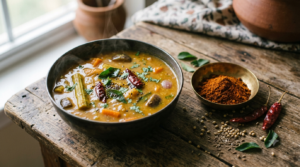
Home-style sambar simmered with 2 tablespoons of freshly ground sambar powder per cup of toor dal.
Sambar Recipe With Sambar Powder at a Glance
- Ratio that matters: 2 tbsp sambar powder for 1 cup toor dal, which serves four.
- Store-bought powder works, though you should cut the quantity by about a quarter since commercial blends run saltier and hotter.
- Simmer the powder in liquid for at least eight minutes, otherwise the sambar tastes chalky.
- Total time is roughly 55 minutes when you grind fresh powder, or 30 minutes when you use a jar.
- Most packaged hing contains wheat flour, so check the label before you call this dish gluten-free.
Recipe Card
| Detail | Value |
|---|---|
| Prep time | 15 minutes, or 5 if the powder is ready |
| Cook time | 40 minutes, since the dal needs a full cooker cycle |
| Servings | 4 generous bowls |
| Difficulty | Medium, because the roasting stage needs attention |
| Cuisine | South Indian, Andhra home style |
How Much Sambar Powder Does Sambar Actually Need?
Use 2 tablespoons of homemade sambar powder for 1 cup of dry toor dal, which yields four servings. That works out to roughly 1.5 teaspoons per person. If you are using a commercial packet instead, start with 1.5 tablespoons, because factory blends carry more chilli and often added salt.
Every sambar recipe with sambar powder lives or dies on this one number. It is where most home cooks go wrong. Too little powder and the sambar tastes like plain tamarind dal. Too much, and the fenugreek turns the whole pot bitter.
Taste the pot after it has simmered for eight minutes, not before. The powder needs that time to bloom, so an early taste always reads harsher than the finished dish.
Ingredients for This Sambar Recipe With Sambar Powder
For the homemade sambar powder (makes about 1 cup)
- ¼ cup coriander seeds
- 1½ tbsp chana dal (Bengal gram)
- 1½ tbsp urad dal (split black gram)
- 1 tbsp toor dal
- 10 dried red chillies, adjusted to your heat preference
- 2 tsp cumin seeds
- ¾ tsp fenugreek seeds, and no more, because fenugreek turns bitter fast
- ¼ tsp turmeric powder
- ⅛ tsp asafoetida (hing)
- 1 tsp black peppercorns, optional
- 2 sprigs curry leaves, optional but worth adding
For the sambar
- 1 cup toor dal (split pigeon peas)
- 3 cups mixed vegetables such as drumstick, carrot, brinjal and okra, cubed
- 1 medium onion, chopped
- 1 large tomato, chopped
- 2 tbsp tamarind, soaked in ½ cup warm water
- 2 tbsp sambar powder from above
- 1 tsp jaggery, optional
- Salt to taste
- 2 tbsp oil, ideally sesame or coconut
- ½ tsp mustard seeds
- ½ tsp cumin seeds
- 2 dried red chillies
- 10 to 12 curry leaves
If you are using store-bought powder
You can still follow this sambar recipe with sambar powder from a packet. Skip the first section entirely and use 1.5 tablespoons of it. Then add ¼ teaspoon of extra coriander powder near the end, since packaged blends lean chilli-heavy and lose their coriander sweetness on the shelf. Check the salt line on the label before you season the pot.
Sambar Recipe With Sambar Powder: Step-by-Step Method
Step 1: Roast and grind the powder (15 to 20 minutes)
- Heat a wide pan on low flame. Dry roast the chana dal, urad dal and toor dal until golden, which takes about three minutes. Keep stirring.
- Next add the coriander, fenugreek and cumin seeds. Roast until fragrant, roughly four minutes.
- Add the chillies and peppercorns. Roast another three minutes until the chillies crisp.
- Turn off the heat and cool the spices completely, because warm spices grind into a paste rather than a powder.
- Grind with turmeric and asafoetida to a fine powder, then store in an airtight jar.
Step 2: Pressure-cook the dal (about 15 minutes)
- Rinse the toor dal until the water runs clear.
- Add the dal, 2 cups water and a pinch of turmeric to the cooker. A few drops of oil stop it foaming over.
- Cook for three to four whistles, or five if the dal was not soaked.
- Mash the cooked dal lightly and set it aside.
Step 3: Extract the tamarind (about 10 minutes)
- Soak the tamarind in warm water for ten minutes, then squeeze and strain out the pulp.
- Discard the fibres and seeds so the sambar stays smooth.
Step 4: Cook the vegetables and combine (about 15 minutes)
- Heat the oil in a deep pan. When the mustard seeds splutter, add cumin, dried chillies and curry leaves.
- Sauté the onion until translucent, roughly three minutes.
- Add the harder vegetables first and cook five to seven minutes until they soften slightly.
- Now add the tomato, tamarind extract, sambar powder, jaggery and salt.
- Pour in 1 to 1½ cups water and simmer for eight to ten minutes. This is the stage that cooks off the raw spice edge.
- Stir in the mashed dal and cook five more minutes on low flame.
- Adjust the consistency with hot water, never cold, since cold water dulls the aroma.
The Timing Mistake That Makes Sambar Taste Raw
In a sambar recipe with sambar powder, the blend belongs in the simmering tamarind liquid rather than the hot tempering oil. Many recipes tell you to fry the powder with the mustard seeds. That scorches the ground coriander in seconds and leaves a bitter, dusty finish.
The blend needs wet heat and time. Once it goes into the pot, hold a gentle simmer for a minimum of eight minutes before the dal joins in. During that window the tamarind acid softens the fenugreek and the coriander turns sweet.
If your sambar has ever tasted chalky at the back of the throat, this timing was almost certainly the reason.
Troubleshooting Your Sambar Recipe With Sambar Powder
| Problem | Cause | Fix |
|---|---|---|
| Bitter aftertaste | Too much fenugreek, or spices browned too far | Add a teaspoon of jaggery, then dilute slightly |
| Chalky, raw spice edge | Powder simmered under eight minutes | Simmer longer before adding the dal |
| Too sour | Tamarind over-extracted | Add jaggery, or stir in extra cooked dal |
| Watery and thin | Dal under-cooked, so it never thickened | Mash more dal, then simmer uncovered |
| Flat and dull | Old powder, since ground spices fade after months | Roast a fresh teaspoon and stir it through |
| Vegetables mushy | Everything went in together | Stagger them by cooking time, as shown below |
Which Vegetables to Add, and When
Staggering the vegetables is what separates a home-style sambar recipe with sambar powder from hotel-style mush. Drumstick and carrot need real time in the pot, while okra and brinjal collapse quickly.
| Vegetable | Add at | Note |
|---|---|---|
| Drumstick | First, 12 to 15 minutes | Classic choice, because it perfumes the whole pot |
| Carrot, radish, pumpkin | First, 10 to 12 minutes | Radish needs a covered pan |
| Brinjal | Middle, 7 to 8 minutes | Cut it last so it does not brown |
| Okra | Sauté separately, then add at the end | Otherwise it turns slimy |
| Shallots | First, with the tempering | Sweeter than onion once caramelised |
Three cups of mixed vegetables is the upper limit for 1 cup of dal. Beyond that the sambar loses its lentil body and starts behaving like a vegetable stew. If you would rather skip them altogether, the plain sambar without vegetables method adjusts the ratios properly.
Sambar Powder Versus Rasam Powder and Packet Blends
These three blends are not interchangeable in a sambar recipe with sambar powder, although the shelves make them look similar. Sambar powder leads with coriander and chana dal, which gives body. Rasam powder leads with pepper and cumin, so it stays thin and sharp.
Swapping rasam powder into sambar produces a peppery, watery result that never thickens. If that is all you have, use it at half quantity and add a tablespoon of roasted gram flour for body.
Commercial blends sit somewhere between the two. They are consistent and convenient, yet they lose volatile aroma within weeks of opening, since pre-ground spices oxidise fast. Buy small packets rather than large ones.
Nutrition Estimate for This Recipe
The figures below come from the ingredient list in this sambar recipe with sambar powder, divided across four servings. Earlier versions of this recipe carried a generic per-cup chart, which understated both the calories and the protein for a pot built on a full cup of dal.
| Per serving (approximate) | Amount |
|---|---|
| Energy | 270 to 300 kcal |
| Protein | 11 to 13 g |
| Carbohydrate | 34 to 38 g |
| Fat | 7 to 9 g |
| Fibre | 9 to 11 g |
Toor dal supplies most of that protein. Raw split pigeon pea carries about 22.3 g of protein per 100 g according to the Indian Food Composition Tables published by the ICMR National Institute of Nutrition. Because the recipe uses roughly 200 g of dry dal for four people, each bowl lands near 11 g.
A restaurant ladle of thin sambar is a different thing entirely, since it is mostly liquid. That serving sits closer to 100 to 140 kcal. These are estimates from standard composition tables, not laboratory analysis of your pot.
Hing, Allergens and Dietary Swaps
Most packaged asafoetida is not pure resin. Manufacturers compound it with wheat flour or maida to make it free-flowing, and that filler can account for a large share of the jar. Anyone cooking for coeliac disease should therefore buy rice-flour hing or pure resin, and read the ingredient panel rather than trusting the word natural on the front.
Other useful swaps are straightforward. Mix moong dal into the toor dal for a lighter texture. Use Kashmiri chillies for colour without heat. For a no-onion, no-garlic version there is a dedicated sambar without onion and garlic method, and the Udupi Krishna temple sambar follows the same tradition with coconut in the masala.
If tamarind does not suit you, tomatoes plus a squeeze of lemon carry the sourness instead. The sambar without tamarind version explains how to rebalance the powder for it.
Storage, Reheating and Making It Ahead
Any sambar recipe with sambar powder keeps three days in the refrigerator in a covered container. Cool it fully before it goes in, because trapped steam speeds up souring. Reheat gently on the stove and loosen it with hot water if it has thickened.
Freezing works, although the vegetables suffer. Freeze the dal-and-tamarind base without vegetables for up to two months, then add fresh vegetables on the day you serve it.
Homemade sambar powder stays aromatic for about three months in a cool, dark cupboard. Do not refrigerate the jar unless your kitchen is genuinely humid, since condensation on a cold jar clumps the powder and dulls it faster than room temperature ever would. Guidance on spice storage and labelling is published by the Food Safety and Standards Authority of India.
Serving Suggestions
This sambar recipe with sambar powder goes over steamed rice with a spoon of ghee and a papad. For breakfast it pairs with idli, dosa, uthappam or vada, though tiffin sambar is usually made thinner and sweeter than this one.
A drier side balances the plate well. Something like a stir-fried okra curry gives the meal texture against the soupy sambar.
What Most Sambar Guides Get Wrong
The origin story repeated under almost every sambar recipe with sambar powder is the biggest one. Countless posts state flatly that Sambhaji, son of Shivaji, invented sambar in the Thanjavur court. That legend has no documented proof behind it, and the timeline is shaky, since Shahuji I ruled Thanjavur from 1684 to 1712.
Food historian K.T. Achaya traced an earlier reference to a tamarind-and-toor-dal curry called huli in a 1648 Kannada text, Kanthirava Narasaraja Vijaya.
In other words the dish appears to predate the naming legend, as summarised in the documented history of sambar. So present the story as tradition, not as settled fact.
Two smaller myths also travel widely. Roasting every spice together in one batch is wrong, because dals, seeds and chillies brown at different rates. And a fixed 1 teaspoon of powder per serving ignores dal quantity entirely, which is why so many pots come out flat.
The Bottom Line
A good sambar recipe with sambar powder rests on two decisions rather than a long ingredient list. Get the ratio right at 2 tablespoons per cup of dal, then give the powder eight full minutes of simmering before the dal goes in. Everything else is preference.
Grind your own blend when you have twenty spare minutes, since the aroma difference is obvious in the first spoonful. On a busy evening a packet works perfectly well at three-quarters the quantity. Either way, stagger the vegetables and taste only after the simmer.
Frequently Asked Questions
How much sambar powder per cup of dal?
Use 2 tablespoons of homemade sambar powder for 1 cup of dry toor dal, which serves four. Reduce that to about 1.5 tablespoons for a commercial packet, because factory blends are hotter and often salted. Adjust only after the pot has simmered.
Can I use store-bought sambar powder instead of homemade?
Yes, and a sambar recipe with sambar powder from a packet works well for everyday cooking. Use roughly three-quarters of the homemade quantity, then check whether the packet already contains salt before you season. Buy small packets, since ground blends lose aroma within weeks of opening.
Why does my sambar taste bitter?
Excess fenugreek is the usual culprit, followed by over-roasted spices. Keep fenugreek to ¾ teaspoon per cup of blend and roast on a low flame only. A teaspoon of jaggery softens bitterness that has already developed.
Can I make sambar without tamarind?
Yes. Use extra tomato with a squeeze of lemon added off the heat, because lemon turns bitter if it boils. The sourness reads brighter and less deep, so many cooks add a little extra jaggery to compensate.
Is sambar healthy?
A sambar recipe with sambar powder is nutrient-dense, since it combines lentil protein with vegetable fibre in one pot. A serving of this recipe provides roughly 11 to 13 g of protein and 9 to 11 g of fibre. Oil quantity and salt are what shift it, so adjust both to your needs.
How long does homemade sambar powder last?
About three months in an airtight jar kept in a cool, dark place. It stays safe well beyond that, though the aroma fades noticeably. Grind smaller batches more often rather than one large batch a year.
Is sambar gluten-free?
The core ingredients are naturally gluten-free, yet most compounded asafoetida contains wheat flour as a carrier. Choose pure resin or rice-flour hing if gluten matters, and confirm on the label. Packaged sambar powders may also list wheat, so check those too.
Can I use rasam powder instead of sambar powder?
Only as a stopgap. Rasam powder is pepper-forward and lacks the coriander and chana dal that give sambar its body. Use half the quantity and add a tablespoon of roasted gram flour, otherwise the result stays thin and sharp.
Should the sambar powder go into the tempering oil?
No. Ground coriander scorches within seconds in hot oil, which produces a bitter, dusty taste. Add the powder to the simmering tamarind liquid instead and hold it there for at least eight minutes before the dal joins.