Baked Beetroot Murukku: Untested Diwali Recipe Trial
Baked beetroot murukku could bring a bright, earthy twist to a Diwali savoury plate, but this formula has not passed a kitchen test. The quantities and oven settings below are a proposed first trial, not a proven recipe. In particular, no finished yield, reliable baking duration or safe storage life has been established.
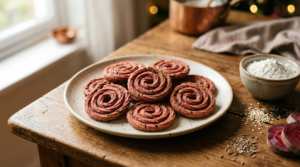
Illustrative baked beetroot murukku concept showing the intended spiral shape and colour; the recipe has not yet been kitchen-tested.
Traditional murukku usually cooks in hot oil. This version instead explores whether rice flour, lentil flour and cooked beetroot puree can form a crisp spiral in a home oven. The key question is whether the centre dries before the thin outer ridges become too hard.
Baked Beetroot Murukku Trial at a Glance
- Status: Untested recipe trial; no batch has been prepared or verified for this article.
- Style: An oven-baked adaptation of a South Indian savoury, not a traditional fried murukku.
- Proposed base: Rice flour, roasted urad dal flour, smooth cooked beetroot puree and a little oil.
- Starting oven setting: 180°C, conventional top-and-bottom heat; unverified for this dough.
- First inspection: Around 12 minutes, then frequent checks; this is not a finished cooking time.
- Target texture: A clean snap after cooling, with no soft or floury centre.
- Yield and storage life: Both unknown until the finished snack undergoes real testing.
Why Beetroot Makes This Murukku Trial Different
In baked beetroot murukku, beetroot brings colour, a mild earthy taste and extra moisture. That moisture is useful for binding dough, yet it creates the central baking problem. A spiral may look dry outside while still holding a soft core.
Rice flour offers the familiar murukku base, while roasted urad flour may help shape and bite. Oil could keep the texture from turning unpleasantly hard. These are recipe-development choices, not confirmed results from this exact blend.
What Does Baking Change Compared With Frying?
With baked beetroot murukku, an oven transfers heat mainly through hot air and the tray, unlike frying in hot oil. The same dough can therefore dry, crack and brown quite differently. Simply taking a fried murukku formula and adding an oven time would be an unreliable shortcut.
For this trial, use a thin, even spiral with space between its turns. That gives hot air more access to the dough, although the actual effect still needs testing. A wider or thicker star plate should count as a separate trial.
Provisional Baked Beetroot Murukku Ingredients
The following baked beetroot murukku weights form an untested starting formula. They are not measurements from a successful baked batch. Weigh the flour and cooked puree because household cups can conceal large changes in moisture.
| Ingredient | Proposed trial amount | Reason for inclusion |
|---|---|---|
| Fine rice flour | 160 g | Main crisp dough base |
| Roasted urad dal flour | 40 g | Traditional lentil-flour support |
| Cooked, cooled beetroot puree | 80 g | Colour, flavour and moisture |
| Neutral edible oil | 25 g | Fat for a potentially less hard bite |
| White sesame seeds | 1 tsp | Nutty aroma and texture |
| Cumin seeds | 1/2 tsp | Warm savoury note |
| Red chilli powder | 1/4 tsp | Modest heat for the baseline test |
| Fine salt | 3 g | Starting seasoning level |
| Warm water | Start with 30 ml; add only as required | Adjusts pressability; final amount unknown |
| Oil for tray or light brushing | As little as needed | Reduces sticking; quantity untested |
The proposed 160:40 rice-to-urad flour ratio stays fixed for the first run. Beetroot puree and added water are the bigger uncertainties. In later trials, you can change one variable at a time without losing track of what helped.
Prepare the Beetroot Puree Without Guessing Its Moisture
Wash the beetroot under running water before peeling or cutting it. The US Food and Drug Administration recommends rinsing produce even when the peel will not be eaten. Do not use soap or household detergent on vegetables.
Steam the beetroot until tender, cool it safely, then blend it smooth without adding extra water if possible. Weigh 80 g of the finished puree, not 80 g of raw beetroot. If the puree pours like juice rather than sitting on a spoon, record that difference before mixing the dough.
Tools and Oven Setup for the First Trial
Use a sturdy murukku press with a medium star-shaped disc, a digital scale, a mixing bowl and a flat baking tray. Baking paper or a lightly greased tray may help release the spirals. Check the paper’s temperature limit against your oven setting.
Preheat a conventional oven to a proposed 180°C using top-and-bottom heat. This setting is a starting experiment, not a verified recommendation for this precise formula. Fan ovens can behave differently, so do not assume the same setting will give the same result.
How to Make Baked Beetroot Murukku: First-Test Method
This baked beetroot murukku method is a proposed sequence for one controlled run. It does not guarantee a crisp or fully cooked result. Treat the first tray as a trial, and stop if the dough or baking behaviour raises concerns.
- Prepare safely. Wash your hands, utensils and work area. Keep uncooked flour away from ready-to-eat snacks.
- Mix dry ingredients. Combine rice flour, roasted urad flour, salt, cumin, sesame and chilli powder. Break up all visible flour lumps.
- Rub in the oil. Add 25 g oil and mix until the flour looks evenly coated. Note any dry pockets.
- Add the beetroot. Work in the measured cooked puree. Mix before reaching for extra water because the puree already contributes liquid.
- Adjust carefully. Add the first 30 ml warm water in small portions. If the dough still cracks when pressed, add more by teaspoons and record the total.
Press the Spirals and Check the Oven
- Test the press. Load a small portion into the murukku maker. Press one short strand onto the tray and inspect its edges.
- Shape a few spirals. Coil them without piling strands on top of one another. Keep their size consistent for a fair baking comparison.
- Preheat and load. Place the small trial tray in the fully preheated oven. Start your timer when it enters the oven.
- Inspect early. Open the oven for a first check around 12 minutes, then check in short increments. The final bake time remains unknown.
- Test a cooled sample. Once a piece appears fully cooked, let it cool on a rack before assessing its snap and centre. Never taste raw dough; the Centers for Disease Control and Prevention warns that uncooked flour can harbour harmful germs.
If the centre remains visibly raw or pasty, the piece has not passed the cooking check. Continue controlled baking if the edges allow it, or discard the unsuccessful batch. Do not serve an uncertain centre to guests.
How Should the Murukku Dough Feel?
The dough should push through the star plate in a steady, ridged strand without breaking into dry fragments. It should also hold its coil after pressing. Those are proposed handling targets, not observations from an actual batch.
If it splits, first check whether the puree has mixed evenly. Then add water a teaspoon at a time. If the ridges slump into a flat rope, record the problem rather than adding flour blindly; too much added flour could create a hard finish.
Baking Temperature, Time and Doneness: What Remains Untested
For baked beetroot murukku, the 180°C oven setting and 12-minute first check are provisional trial controls. They do not establish a complete cooking duration. No temperature-and-time combination has yet been confirmed to cook the centre safely and create the desired crisp texture.
Start with a small tray, watch the outer ridges, and note each further cooking interval. A burnt edge does not prove the centre has cooked. Also, a dry-looking surface can conceal a soft middle because cooked beetroot adds moisture.
Judge texture only after a sample cools. Break it across the thickest section and examine the centre for a wet, gummy or floury patch. A clean snap supports a texture assessment, but appearance and crispness alone cannot verify microbiological safety or shelf life.
Can Baked Beetroot Murukku Keep Its Pink Colour?
A pink or reddish shade is a visual target, not a guaranteed outcome. Beetroot colour can shift with heat, moisture and ingredient conditions. Therefore, do not bake longer just to chase a certain colour or stop early because the spiral looks attractive.
Trial Controls and Actual Yield Recording
Finished yield is not tested. This formula gives measured starting ingredients, but it does not establish how many spirals will survive pressing, baking and cooling. Size, damaged pieces and water loss all affect the final count and weight.
| What to record | How to record it | Why it matters |
|---|---|---|
| Actual water added | Total ml after mixing | Shows dough hydration |
| Puree consistency | Thick or loose; note method | Explains moisture changes |
| Press disc | Shape and hole width | Controls strand thickness |
| Oven mode | Conventional or fan; rack level | Helps repeat the bake |
| Heating record | Set temperature and actual intervals | Establishes trial cook time |
| Final quantity | Count and weigh only cooled pieces | Establishes real yield |
| Next-day quality | Texture, odour and moisture notes | Tracks quality, not safety approval |
Why the First Batch May Fail
The most useful experiment tests one change at a time. For example, adding extra water and reducing the oven heat together makes it impossible to tell which adjustment affected the final texture. The following fixes are hypotheses for a second batch.
| Observed issue | Possible cause | Next test |
|---|---|---|
| Strands break in the press | Dry or uneven dough | Rest briefly; measure tiny water additions |
| Spirals slump | Too much puree or water | Reduce liquid in a new batch |
| Dark edges, soft centre | Thick strand or aggressive heat | Test a thinner strand first |
| Hard, dense bite | Low fat, high flour or over-drying | Change one factor next time |
| Soft after cooling | Excess retained moisture | Review thickness and full bake record |
| Colour turns brown | Heat exposure or beetroot variation | Record colour; avoid early removal |
Discard badly scorched pieces and any that remain undercooked. If the batch never achieves a cooked centre before the edges burn, that starting formula has failed. The next experiment should change the strand thickness or recipe design, not conceal the failure.
Is Baked Beetroot Murukku a Healthier Diwali Snack?
Baking avoids immersing the dough in deep-frying oil, but that alone does not make this a proven healthy snack. The trial still includes oil and salt, while beetroot content does not justify a medical or weight-loss claim. No calories or nutrient figures have been calculated for a tested portion.
Actual oil uptake in fried versions varies, so a precise calorie-saving claim would need comparable measured batches. This experiment does not have that evidence. Present the snack as an oven-baked variation chosen for flavour and cooking preference.
Sesame is a recognised allergen, and people with legume allergies should check whether urad dal suits them. Check all packaged spice ingredients for cross-contact and wheat-based additives before claiming the snack is gluten-free. Do not make such a claim for this unverified version.
Storage and Shelf Life of Baked Beetroot Murukku
No shelf life has been established for baked beetroot murukku. It would be misleading to promise a week or two in a room-temperature jar. Cooked beetroot puree introduces moisture, and the first trial has not measured the finished product’s water activity or long-term safety.
Let fully cooked pieces cool on a clean rack without trapping steam. If the centre seems moist or the product may be perishable, refrigerate promptly rather than treating it like a dry commercial snack. The US Department of Agriculture advises refrigerating perishable leftovers within two hours, or within one hour above 32°C.
Use a clean container, keep handling utensils dry, and avoid gifting or posting the snacks while their keeping quality remains unknown. Refrigeration guidance for ordinary leftovers does not establish a safe shelf life for this particular formulation. Discard pieces that show mould, off odours or damp spoilage signs; those checks cannot detect every food hazard.
Can You Prepare the Dough Ahead of Diwali?
Advance dough storage has not been tested either. Cooked beetroot makes the dough a different storage problem from dry murukku flour. For the first trial, mix only what you can press and bake promptly, and do not leave wet dough on the counter through a long festive cooking session.
If you need reliable make-ahead snacks, use an established tested recipe rather than assuming this one will keep. Later trials can study chilled dough separately with food-safe handling and a recorded timeline. Do not silently extend the shelf life from the finished snack to its unbaked dough.
Serving This Trial with a Diwali Spread
If the cooked sample passes your practical texture checks, offer a small portion as an experimental savoury beside tea. A chilli-forward dip might overwhelm the beetroot flavour, so taste the plain spiral first. Keep any uncertain batch away from guests, especially children and people at higher risk from foodborne illness.
For a more established savoury reference, compare Bhimas Cook’s rice-flour chekkalu. The site’s ragi ribbon pakoda trial offers another example of recording appliance settings before claiming a finished result.
For sweets alongside this experimental savoury, see the Diwali sweets guide.
Baked Beetroot Murukku: What to Verify Before Publishing
For baked beetroot murukku, the next meaningful step is a real small-batch test, followed by a repeat using the same measured ingredients. Record how the press behaves, how long cooking actually takes and how many intact pieces remain. Replace provisional values only when a cook has confirmed them.
This trial is useful because it separates what a recipe developer can predict from what a home oven must prove. Until then, the honest description remains untested baked beetroot murukku, with no promised yield, guaranteed crunch or storage duration.
Frequently Asked Questions
Can you make beetroot murukku without deep-frying?
This article proposes an oven version, but the specific recipe has not been kitchen-tested. The proposed trial uses a rice-flour and urad-flour dough with cooked beetroot puree. Whether it produces a crisp, fully cooked murukku needs verification in an actual oven.
What oven temperature should I try for beetroot murukku?
A conventional oven setting of 180°C is the provisional starting point, not a proven result. Make a small tray and inspect it from about 12 minutes onward. Record the real time and avoid serving pieces with raw or gummy centres.
Does beetroot puree replace all the water?
Not necessarily. The first formula proposes 80 g of thick, cooked puree plus a cautious starting quantity of warm water. Actual extra water is unknown because beetroot moisture and flour absorption vary. Add liquid only after judging how the dough presses.
Why does the murukku break while pressing?
A dry dough or unevenly mixed puree may make the strands split, although this formula has no confirmed failure data. Check mixing first, then record small water additions. A different disc can also change the way the dough comes out.
How many pieces does this trial make?
The finished yield is untested and no piece count is promised. The number will depend on spiral size, strand thickness, breakage and moisture lost during cooking. Count and weigh the cooled pieces after an actual trial before adding a yield to the recipe card.
How long does oven-baked murukku last?
There is no verified safe storage life for this formulation. Do not assume it lasts as long as traditional fried murukku or a commercial dry snack. Prompt refrigeration may be needed for moist pieces, but it does not prove a particular shelf-life period.
Can I use raw beetroot juice instead of puree?
That substitution should be a separate experiment. Juice can change hydration and dough structure because it lacks the body of a thick puree. The provisional ingredients here specify cooked, cooled puree, not raw juice.
Is this beetroot-based snack gluten-free?
The main proposed flours do not use wheat, but a gluten-free claim requires checking every ingredient and cross-contact risk. Some seasoning blends contain wheat-based additives. Do not label the untested batch suitable for coeliac disease without appropriate controls.